
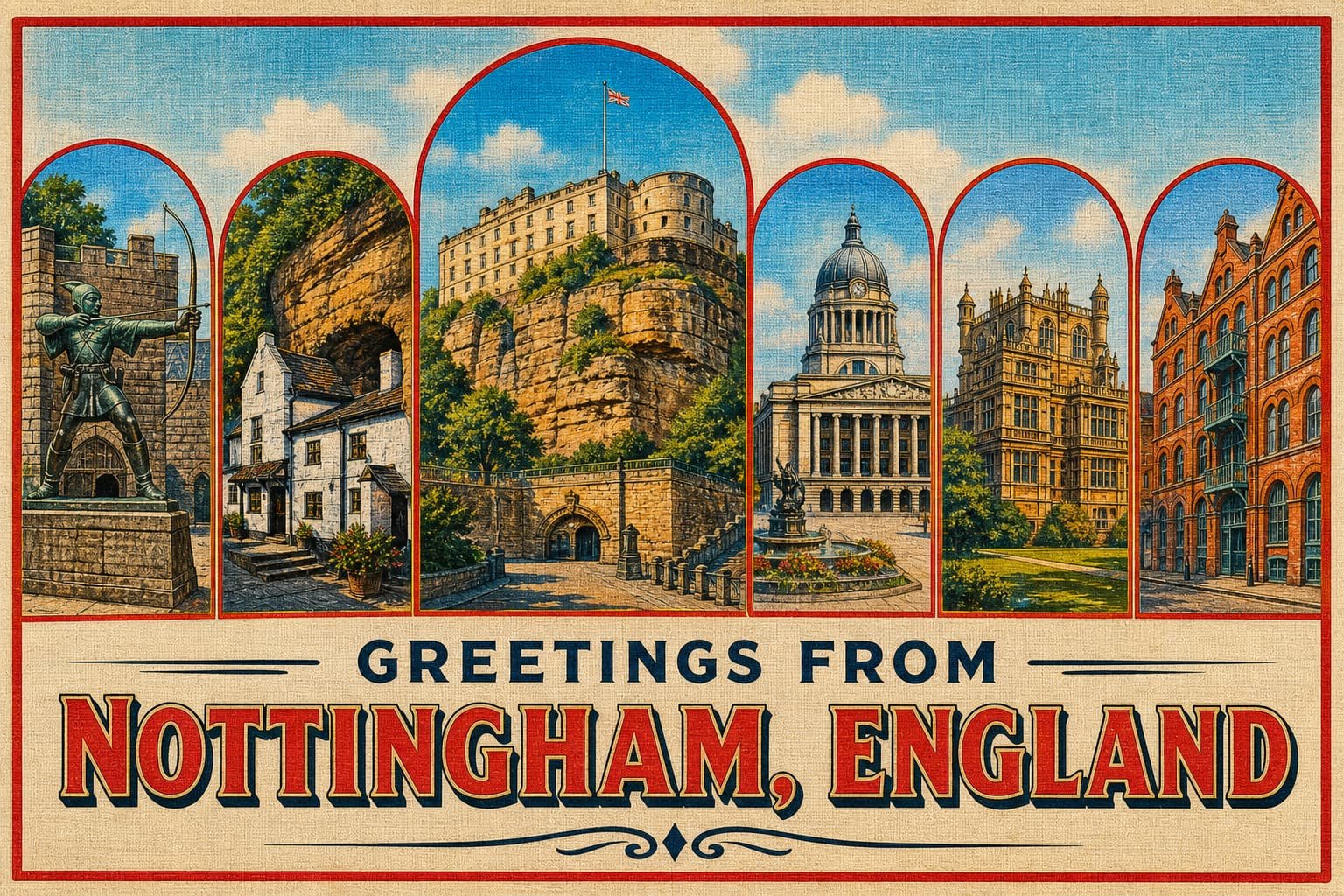
Most first visits to Nottingham start with the same short list: Castle Rock, Ye Olde Trip to Jerusalem, a Robin Hood silhouette, Old Market Square under the Council House dome. Fine for an hour. What gets skipped is the short walk east of Hockley, where the Lace Market’s warehouse cliff gives way to a grid of 1930s market avenues, a neighborhood hill called Sneinton, and a working tower mill that still throws sails over Windmill Lane.
Give the fruit sheds, the mill, and the ridge a half-day before another castle circuit. Start when the avenues are open and the coffee is on, climb only when you want the Trent view, and leave the gift-shop outlaw for later. The caves will wait.
East of Hockley, before the fruit sheds
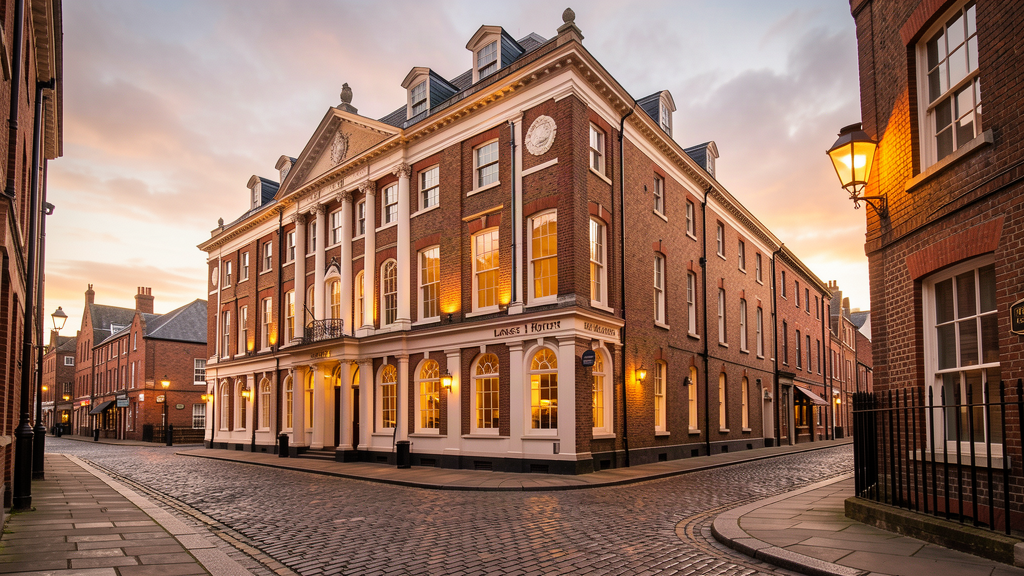
Nottingham’s center is two towns glued together: the castle hill and the older English borough on the ridge that became the Lace Market. Stoney Street, High Pavement, and Broadway still carry the tall red-brick warehouses where lace was finished, stored, and sold. This was never a stall market. It was a warehouse quarter. Iron railings, narrow cuts, and vertical brick do more work than any plaque. Walk them once as the approach road to something quieter, not as a checklist.
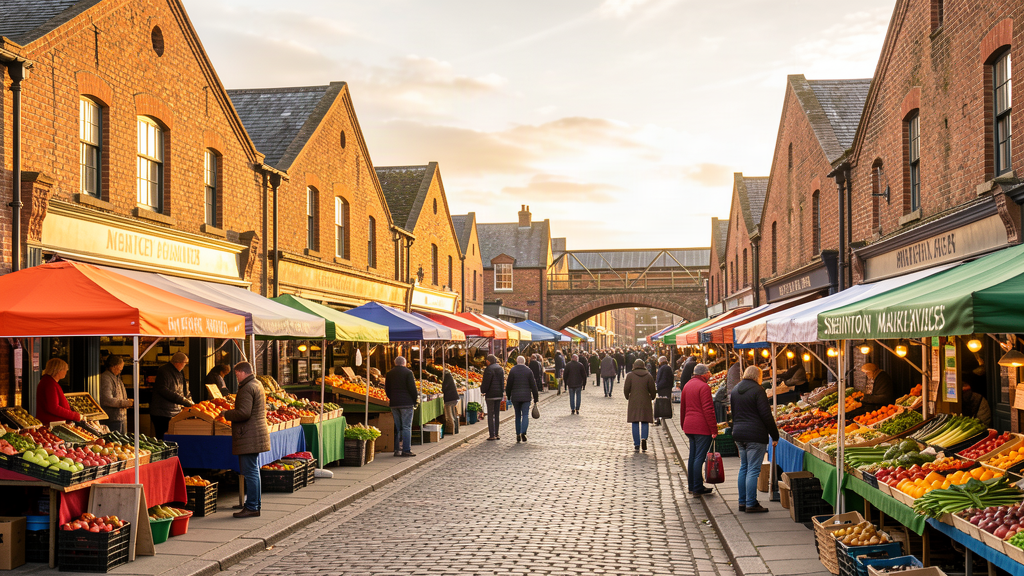
Cross Lower Parliament Street where Hockley thins and the city loosens. Sneinton Market sits just beyond that edge: a set of gabled avenues built for wholesale fruit and veg, left half-empty for years, then slowly filled again with independents. No tourist logo on the gates. Just a working grid of units where paint shops sit next to chocolate makers, record shelves next to pizza ovens, and people who live nearby actually buy things.
You can reach it on foot from Nottingham station in about fifteen minutes via the Lace Market, or drop in from the tram and bus spine on Lower Parliament Street. Either way beats circling for parking on a Saturday when the avenues fill. The site was never laid out for cars, and that still works in your favor.
The avenues, the mill, and the ridge walk
Once you are inside the avenues, the day unfolds in short hops. Coloured fronts, outdoor tables, skate noise from a nearby plaza, and a density of small businesses that still feels local rather than staged. Blend on Avenue C does Stewart’s coffee and grilled-cheese toasties without the brochure voice. Working Man’s Kitchen on Avenue A turns out cheap pizza and the city’s odd pizza-dog mash-up opposite the Neon Raptor tap room. Wander the side streets for studios, a gin still, a print shop, a plant counter — then leave before you try to cover every unit like a mall.
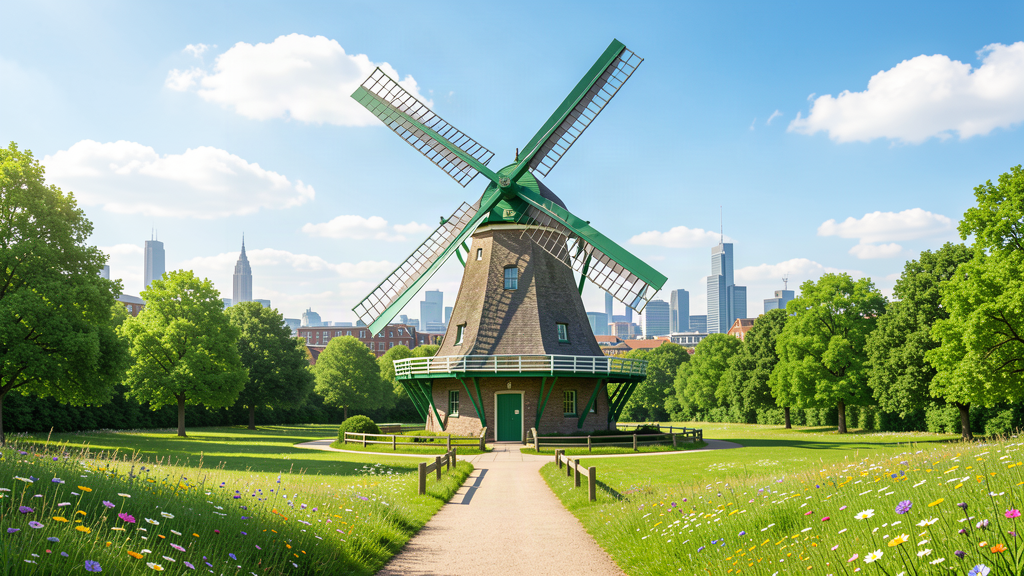
From the market edge, Sneinton climbs. Sneinton Hermitage still shows the sandstone cut where rock houses and caves once ran; the Sneinton Dragon sculpture marks the junction without needing a speech. Keep going up toward Windmill Lane and Green’s Windmill: a restored early-nineteenth-century tower mill once owned by the mathematician George Green, with a small science center and garden beside it. When the sails turn, you read the place as a hill village the city grew around, not a suburb bolted on later. Entry to the science side is free on open days; check before you climb if the mill building itself is under works.
If legs still have something left, Colwick Woods opens east of Sneinton with slopes, sandstone, and views over the Trent valley and the racecourse. The Sneinton Greenway — old railway line turned path — is the soft way back toward the Island Quarter and the station without rejoining the retail crush. You do not need a themed heritage script here. Slow down, and the brick, the slope, and the mill are enough.
Lace Market edge and what to leave alone
High Pavement still holds St Mary’s and the old courts (now the National Justice Museum) in a Georgian line above the cliff. Nottingham Contemporary sits in the same ridge zone if you want one serious gallery stop without turning the afternoon into a culture binge. Hollowstone drops hard toward the canal and station — useful when you are done climbing.
Skip the full Robin Hood industrial complex unless someone in your group insists. The castle rock and the Trip are real enough; the gift-shop outlaw is not the reason to cross England. Old Market Square is handsome when empty and loud when full. Pass through. Do not base the day there. The City of Caves tours are fine if underground sandstone is your hook; book ahead and treat them as one stop, not the whole story.
What holds up is the ordinary grain: warehouse brick on Stoney Street at mid-morning, a coffee on Avenue C, sails over Sneinton, a path through Colwick Woods with the Trent below. That stretch is Nottingham without the costume.
Places to Stay
ibis Nottingham Centre — 16 Fletcher Gate, Nottingham NG1 2FZ. Lower bracket base on the Lace Market edge, a short walk from the avenues and the station. Simple rooms, 24-hour desk, no theatre. Choose it when the budget matters and you still want to be on foot into Sneinton before midday coach density on the square.
Lace Market Hotel — 29–31 High Pavement, Nottingham NG 1HE. Mid bracket rooms in the warehouse quarter itself, next to St Mary’s and a short drop to the station. The Cock & Hoop next door covers a pint and a plate without a taxi. Useful when you want to sleep inside the brick that made the city’s money and walk east to the fruit sheds without a bus.
Hart’s Hotel — Standard Hill, Park Row, Nottingham NG1 6GN. Higher bracket independent boutique on the old castle rampart line — modern build, garden, serious kitchen, quieter than anything on the square. Longer pleasant walk across to the Lace Market and Sneinton when you keep a morning free. Best when the room and the meal are part of the trip, not just a bed.
Where to Eat
Blend — Avenue C, 30 Sneinton Market, Nottingham NG1 1DW. Coffee from Stewarts of Trent Bridge, toasties, cakes, outdoor tables when the weather holds. Go early while the avenues are still waking. This is fuel and people-watching, not a reservation sport.
Working Man’s Kitchen — 9 Avenue A, Sneinton Market, Nottingham NG1 1DT. Paddy Sneath’s pizza counter opposite Neon Raptor — cheap, fast, local, known for the pizza dog if you want the joke once. Use it when you have walked the sheds and need something hot without leaving the grid.
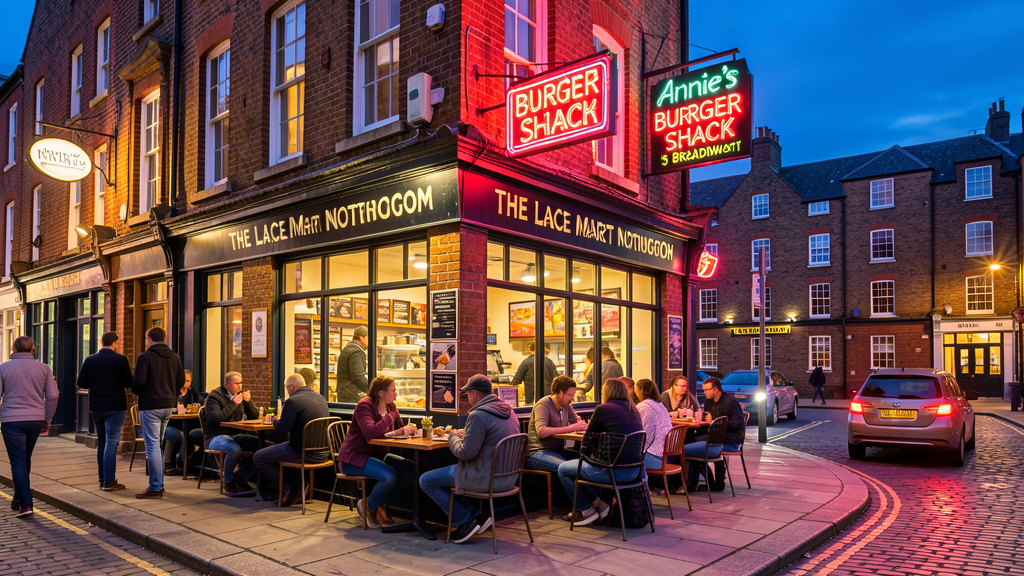
Annie’s Burger Shack — 5 Broadway, The Lace Market, Nottingham NG1 1PR. American diner energy in a Lace Market unit: big burgers, shakes, a room that fills with people who live here as much as people passing through. Book or expect a wait at peak times. Save it for the evening after the mill and the woods, when you want a proper sit-down on the warehouse streets before walking back to High Pavement or Fletcher Gate.
For cheaper fuel between those stops, grab something baked on the avenues and eat on a dry step with the gables above you. Save the real meal for Annie’s or a Lace Market kitchen; save the last light for a pint near High Pavement or back at Neon Raptor if the tap room is open.
Getting around and leaving room
Nottingham station is the right rail arrival — Midland main line and local services, tram stop above the platforms, easy walk into the Lace Market and on to Sneinton. The NET tram and city buses cover the wider basin; the center and the avenues are compact once you are on foot. Skip the car inside the market grid. Park once at the edge if you must, then walk.
The castle, the Trip, the square, and the arena will pull every first visitor. Give them a slot if you must. Do not let them replace the fruit sheds and the mill. Early on Avenue C beats midday queues for the obvious outlaw photograph. Winter wet makes Sneinton honest; summer market days and craft-beer weekends make the avenues loud in a good way. Carry a layer either way. Check Green’s Windmill opening times before you climb Windmill Lane if the tower is the hook.
Nottingham is more than a green-tights silhouette, a castle selfie, and a pie in a chain pub. Cross Hockley until the gabled avenues start. Stand under the fruit-shed roofs while someone still sells paint, records, or pizza from a unit that used to hold apples. Climb to the sails on Windmill Lane. Drop through Colwick Woods if the light holds. Eat on Avenue A or Broadway. The east side still works for people who live on the ridge — leave half a day for it.
