
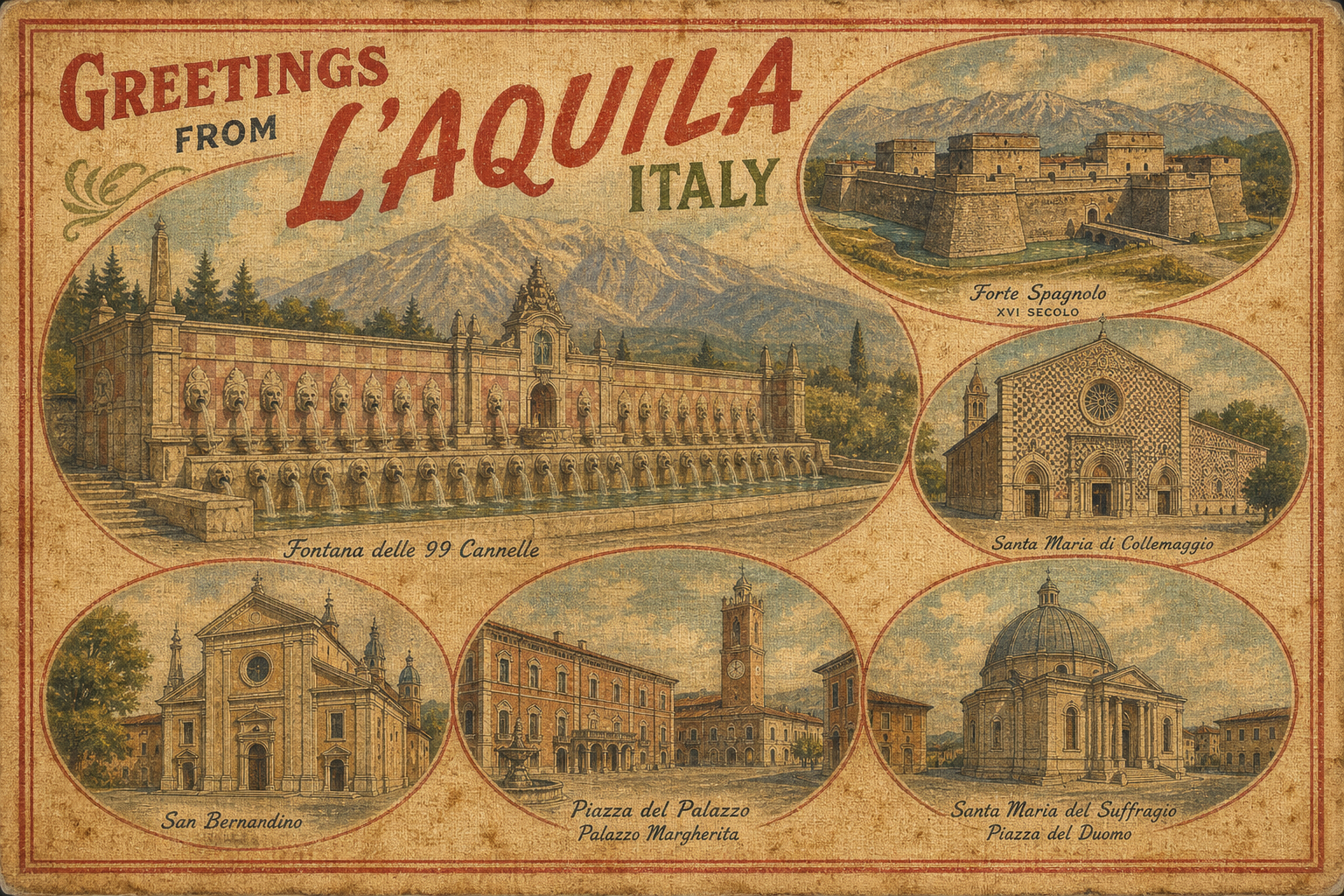
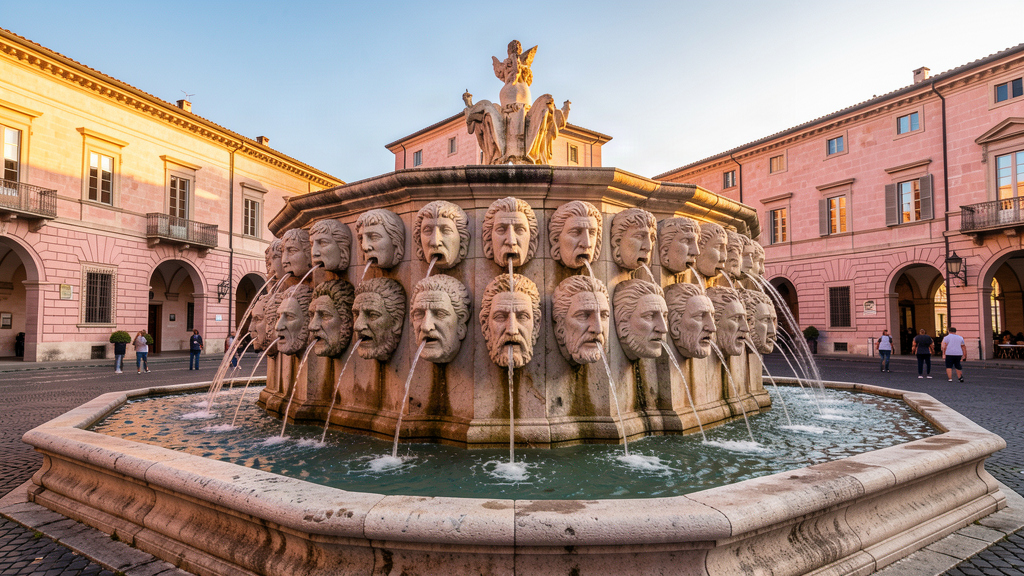
You hear the water before you see the faces. Down in Borgo Rivera, where L’Aquila slips toward the Aterno, the Fontana delle 99 Cannelle wraps three sides of a small square in pink and white stone. Masks spit thin streams into a long trough. Some look almost human. Others look like half-remembered animals. A few are blank enough that you invent the expression yourself.
Locals still call this lower edge of town the Rivera. It sits under the historic center the way a basement sits under a house: cooler, damper, a little more practical. The fountain was a public washhouse long before it became a postcard. Women scrubbed linen here. Mules drank. The number ninety-nine stuck later, tied to the castles that, in medieval story, banded together to found the city on the ridge above. You do not need the full legend to feel the point. L’Aquila was never one village. It was a coalition that decided to live uphill together.
I like starting here because the rest of the city makes more sense once you have stood at its wet foundation.
Climbing from the spouts
From the 99 Cannelle, the walk into the center is short and uphill. Stairs and lanes pull you toward Corso Vittorio Emanuele, the spine from the lower market square up toward the Fontana Luminosa and the Spanish fort park. After 2009, this stretch used to feel interrupted: scaffolding, closed doors, dust in the joints. It still has scars. What has changed is the rhythm. Shutters open. Voices spill from bar counters. Stone that once looked provisional now looks worked-on, which is different from polished.
Piazza del Duomo opens wide at the lower end of the corso. On market mornings the square fills with stalls: damp greens, cheeses in paper, olives in plastic tubs, someone arguing gently over chicory. Not a performance market. People buy lunch. Arrive early, take a coffee at the edge, and watch the city wake without a checklist.
Further up, porticoes throw shade even in hard light. Shops mix hardware, books, Abruzzese wool, and the ordinary goods a regional capital needs. L’Aquila is the seat of Abruzzo. That means offices, students, and weekday seriousness, not only weekend visitors hunting “authentic Italy.” You feel it in how people walk: purposeful, slightly brisk, mountain weather always somewhere in the forecast.
The pink basilica at the edge
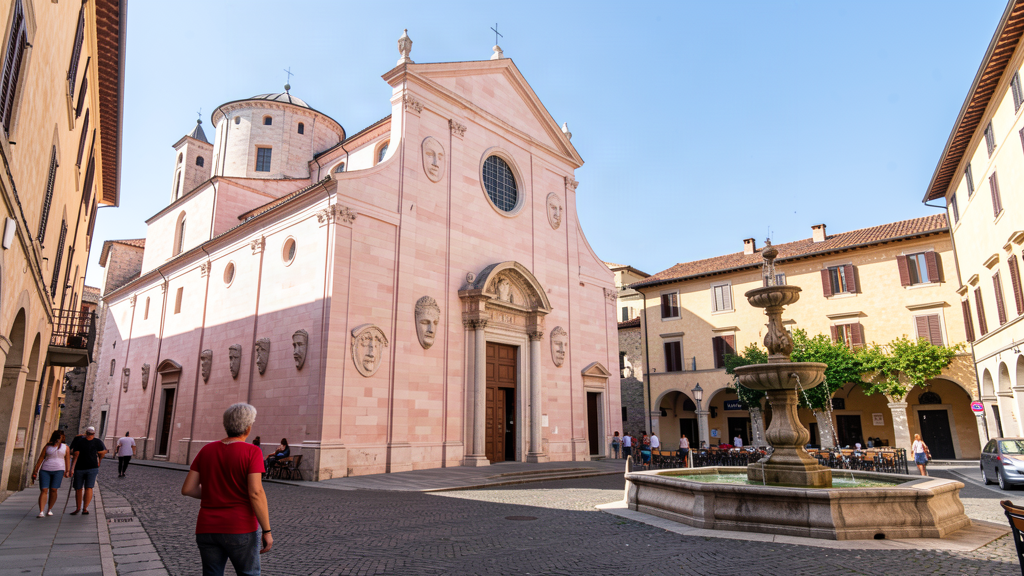
Leave the commercial spine and walk southeast toward Santa Maria di Collemaggio. The basilica sits apart from the densest center on open ground that makes the façade feel larger than it is. Pink and white limestone in geometric bands. A rose window that holds the sky. Inside, the light goes cool and steady.
Collemaggio is tied to Celestine V and the late-August Perdonanza. Even outside feast week, it feels used, not only photographed. Sit on the steps if the doors are busy. Gran Sasso often shows as a pale ridge beyond the rooftops. The mountain is not decoration. It is why winters bite and summer nights cool.
I try not to make the earthquake the whole story, but Collemaggio’s restored stone carries the work that put it back: masons and years, not abstract policy. Parts of the center still look unfinished. Life has moved back into them anyway.
Fort, fountain light, and evening air
At the opposite end of the corso, the Fontana Luminosa marks a kind of upper gate. In the evening the water takes color; kids circle the basin; someone always seems to be meeting someone else. Behind it, the Forte Spagnolo holds the high ground and the Museo Nazionale d’Abruzzo. The fort’s bulk is Spanish-era muscle, all angles and ditch. On a clear day the park around it is one of the best places in town to read the setting: city on a hump of hill, mountains ringed close, weather moving fast.
If you only have one unscheduled hour, take it here near dusk. The light goes soft on the stone. Office workers cut across the grass. You can hear ordinary city noise without anyone performing it for you.
Food that tastes like altitude
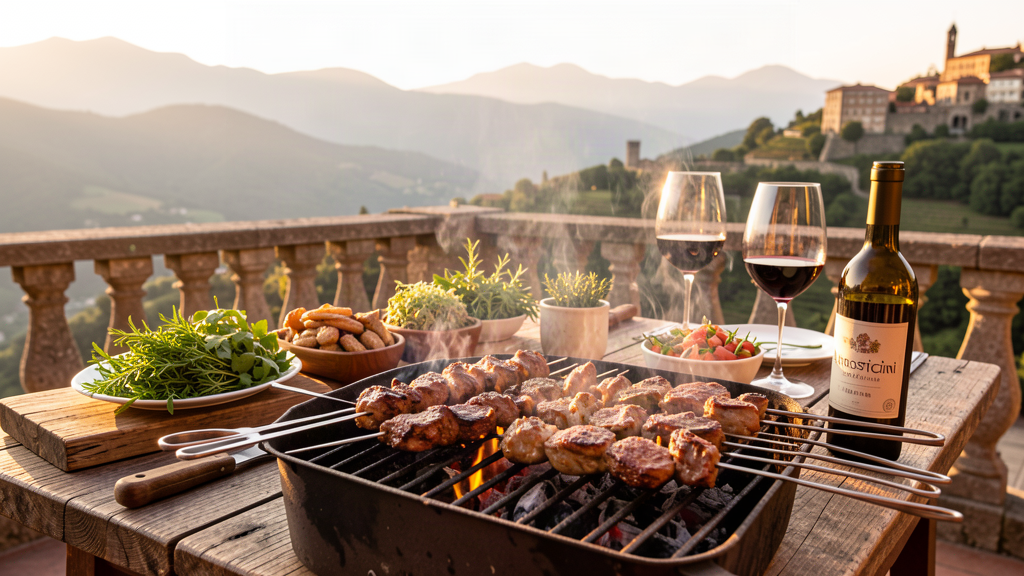
Abruzzo cooks like a place that still remembers shepherds and short growing seasons. In L’Aquila that means lamb, sheep’s milk cheeses, saffron from the Navelli plain, and pasta cut on a chitarra. Arrosticini (small sheep skewers over coals) show up on weeknights as often as they do for visitors. A lot of evenings end that way.
Antica Trattoria dei Gemelli Via Rosso Guelfaglione 27/29, 67100 L’Aquila AQ, Italy
A historic-center trattoria that still feels like a family table more than a concept. Order seasonal primi (ricotta and saffron show up for a reason) and a second course that sounds closest to the mountains that day.
Arrosticini Divini Via Castello 13/15, 67100 L’Aquila AQ, Italy
Come for skewers done properly, with the smoke still on your clothes afterward. Classic sheep arrosticini are the point; other meats if your table splits. A board of local salumi helps while the grill catches up.
La Grotta di Aligi Osteria Corso Vittorio Emanuele 9, 67100 L’Aquila AQ, Italy
Right on the main spine after a long walk. Osteria pacing: a few thoughtful plates, local wine by the glass, conversation louder than the playlist. Good when you want more than a quick bite and less than a long production.
Between meals, look for saffron in small packets, mountain honey, and pecorino that tastes like pasture. I usually come home with food that does not look gift-shop perfect.
Places to stay
Stay inside or at the edge of the centro if you can. L’Aquila rewards evening walks, and a car is a nuisance in the ZTL more often than a help.
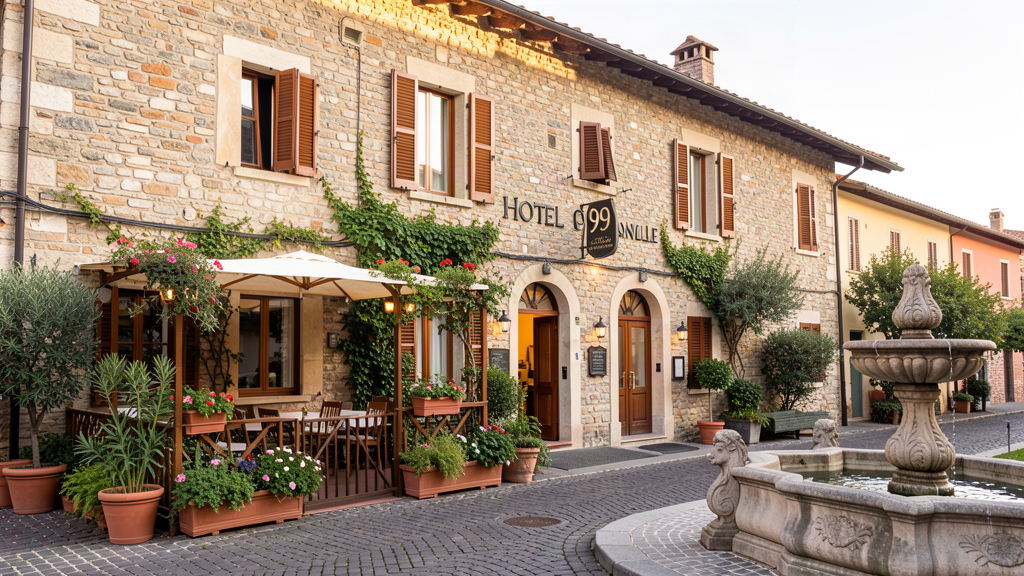
Hotel 99 Cannelle (value, fountain side) Via Borgo Rivera 21/23, 67100 L’Aquila AQ, Italy
Sleep near the spouts. You trade a bit of uphill walking for starting and ending the day in Borgo Rivera, where the city feels older and less formal. Simple, practical, well placed if the fountain is your anchor.
Palazzo Rustici charme B&B & garden spa (mid, historic rooms) Piazza San Marciano 8, 67100 L’Aquila AQ, Italy
An eighteenth-century palazzo feel in the restored center: courtyard quiet, careful interiors, a small spa corner after the day’s climbs. Character without a big-hotel footprint, close to the Duomo lanes.
Hotel Castello (higher comfort, upper gate) Piazza Battaglione Alpini, 67100 L’Aquila AQ, Italy
Four-star ease at the Fontana Luminosa end of town, outside the tightest traffic limits, with the fort and corso both nearby. Reliable comfort and a base that works for a Gran Sasso day as easily as a slow city weekend.
A slow day that works
Morning at the 99 Cannelle while the stone is still cool. Coffee and a walk through Piazza del Duomo as the market finds its noise. Midday at Collemaggio, then a long lunch. Late afternoon along the corso toward the Spanish fort: museum if your feet allow, park bench if they do not. Dinner of arrosticini or a saffron-laced first course. Night walk under façades that still show their joins.
If you have a second day, leave for Campo Imperatore or a village under Gran Sasso, but sleep back in L’Aquila. The capital has a gravity the hamlets do not. It is a working city learning how to be whole again, and you see that in ordinary places: a reopened bookshop, a repaired cornice, a fountain that kept running when half the ridge above it went quiet.
Getting there and around
L’Aquila sits inland from Rome on the A24. Buses from Rome are straightforward; trains exist but are slower for many visitors. In town, walk. The historic center is compact if you accept hills. A car helps for the mountains and Navelli’s saffron country; it hinders you in the core unless your hotel has clear parking.
Pack a layer even in July. Winter bites, with snow on the high ridges and cold evening air around the fort.
Why the masks stay with you
Plenty of Italian cities offer a fountain and a corso. What sticks with me in L’Aquila is simpler: cold water on stone faces, a founding story about castles that chose the ridge, and a center that still shows the work of being put back together. Those faces in Borgo Rivera do not smile for visitors. They just keep pouring. Above them, a regional capital keeps market days and office hours under a mountain sky.
Go for the 99 Cannelle. Stay long enough to climb away and come back down. Spouts, living center, Collemaggio, evening light at the Luminosa. That loop is the city when you stop treating it as a stopover.
The masks will still be there when you leave. Someone filling a bottle. Someone cutting across the square without looking up. That ordinary traffic around the trough is what I trust more than any viewpoint.
