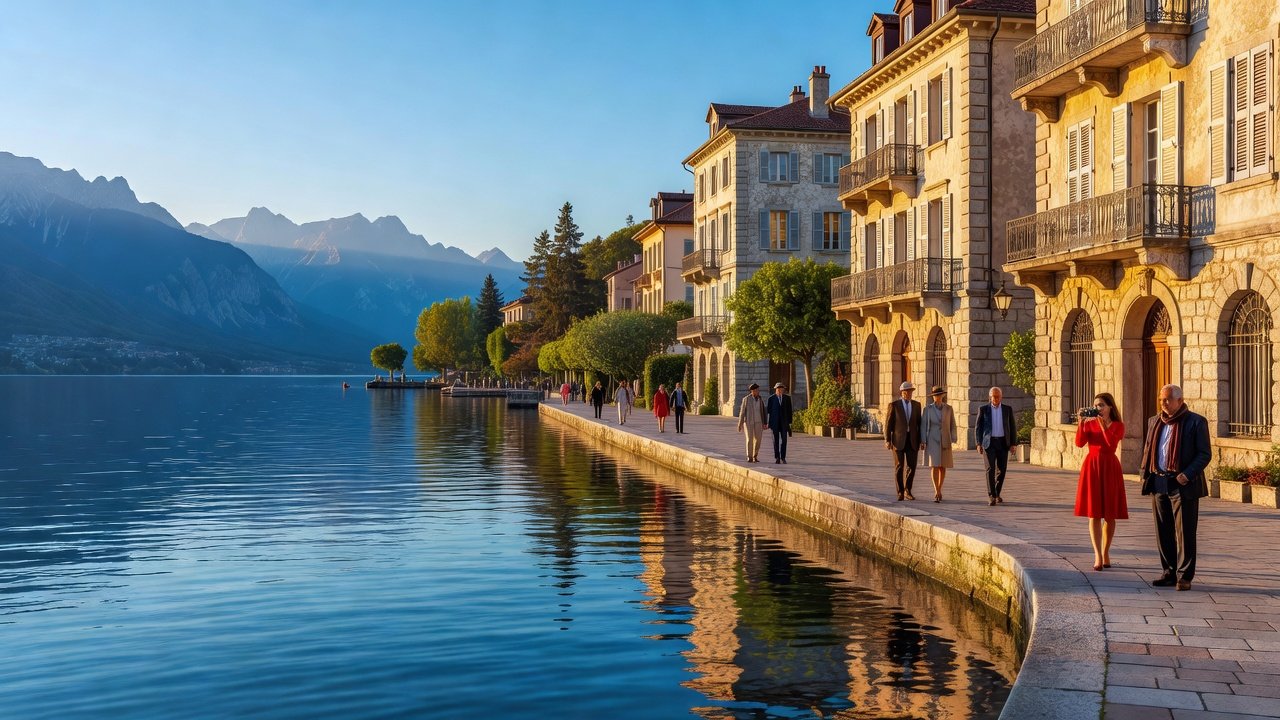
Mornings on the Quays of Lake Bourget in Aix-les-Bains
The train from Chambéry pulls in early, and the first thing you notice stepping out is the light. It slants across the mountains and hits the water of Lake Bourget in that particular Savoie way — silver and soft at the same time. Aix-les-Bains sits right on the edge of France’s largest natural lake, but it never feels like a resort that’s trying too hard. The Belle Époque buildings still stand, the thermal springs still bubble, and the daily rhythm belongs more to the locals than to the tour buses that occasionally rumble through.
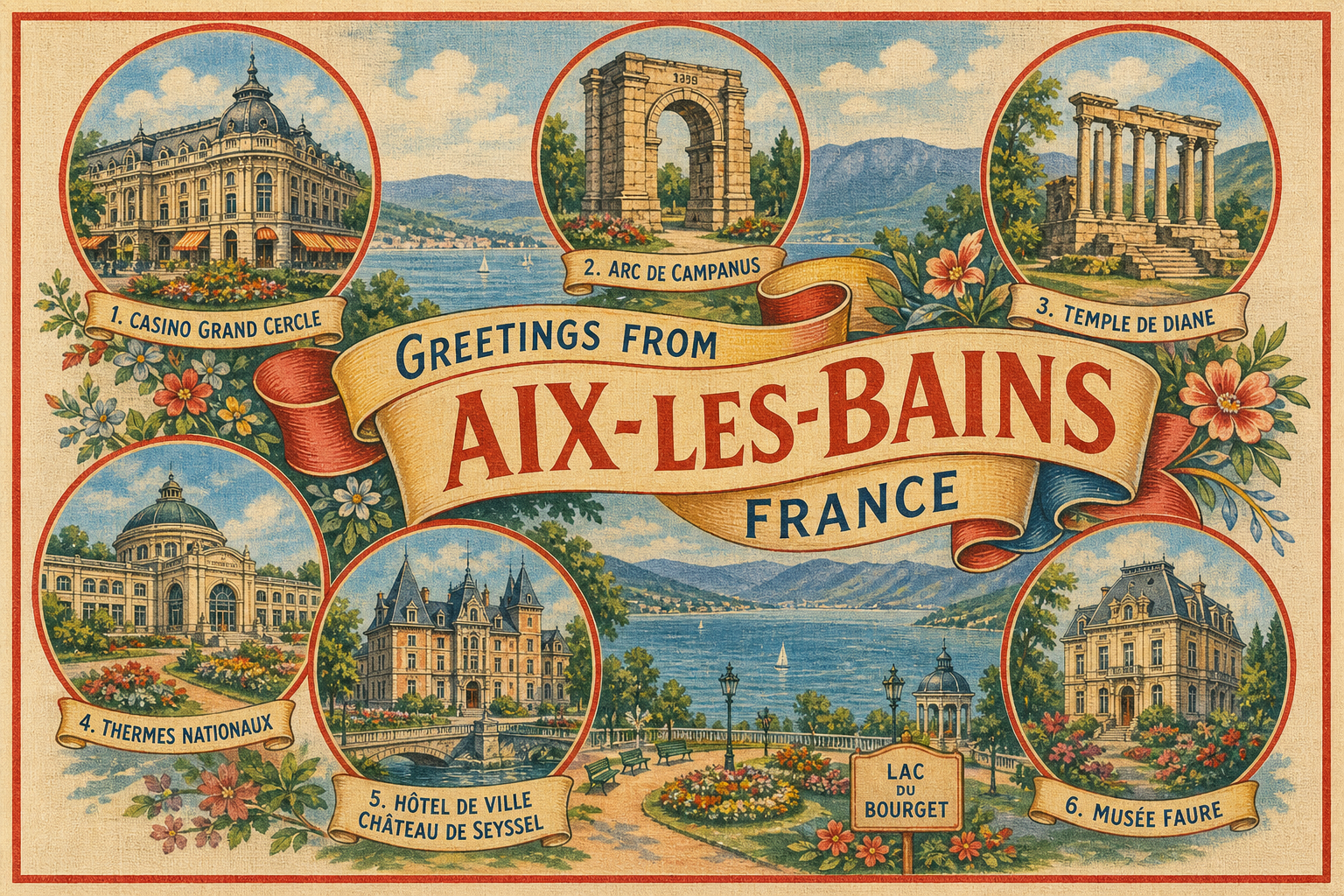
I came here looking for the quieter side of a spa town. Not the grand casino or the big hotel lobbies, but the parts where the arcades meet the water and the market stalls go up before most visitors are awake.
The Quays and the Water
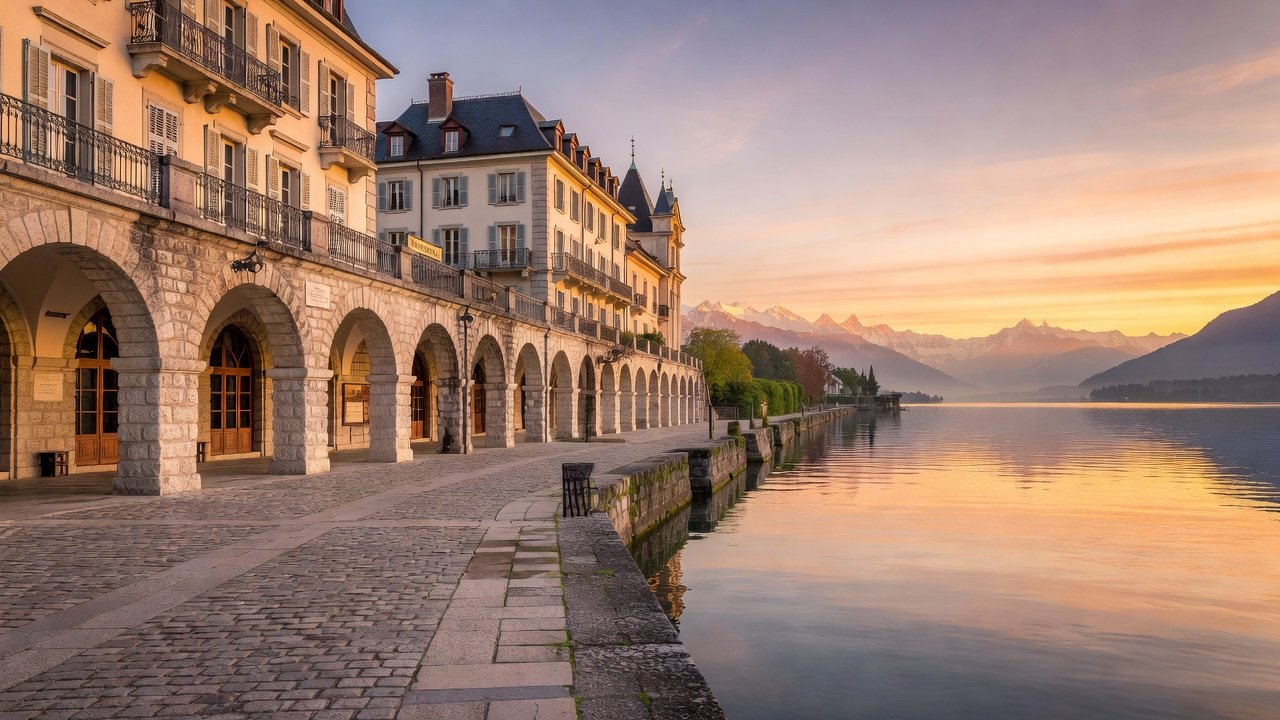
The best way to start a day here is simply to walk the quays. Quai de l’Europe runs along the lakefront with plane trees and benches that face the water. In the morning the only sounds are the soft slap of water against the stone and the occasional creak of a small boat. Further along, the path opens toward the old port area where a few fishing boats still tie up. Locals walk their dogs or jog the flat stretch toward the beach at the Plage municipale. It’s not dramatic, but that’s the point. The lake stretches out toward the hills of the Bauges and the Revard, and you can sit for an hour watching the light change without feeling you need to be anywhere else.
If you keep walking south, you eventually reach the Parc de l’Europe and the more manicured gardens that lead toward the thermal district. The contrast between the open water and the formal paths feels exactly right for this town — half nature, half 19th-century order.
Thermal Arcades and Roman Stones
Aix-les-Bains has been a bathing place since the Romans. The remains of the ancient baths sit near Place Carnot, and you can still see sections of the original walls and foundations. The modern thermal establishments — the Thermes Nationaux and the smaller private spas — occupy the same quarter. In the early morning the arcades around the thermal buildings are almost empty. The stone and ironwork feel cool, and the only people about are residents heading to the springs or the small cafés tucked under the arches.
The old thermal quarter has a lived-in elegance. Rue des Bains and the surrounding streets keep their Belle Époque façades, but they’re not polished for show. A pharmacy, a bakery, a newsstand — daily life continues between the grander buildings. It’s easy to spend a quiet morning wandering these streets, stopping for a coffee, and letting the history sit lightly around you rather than turning it into a formal visit.
Markets and the Old Town
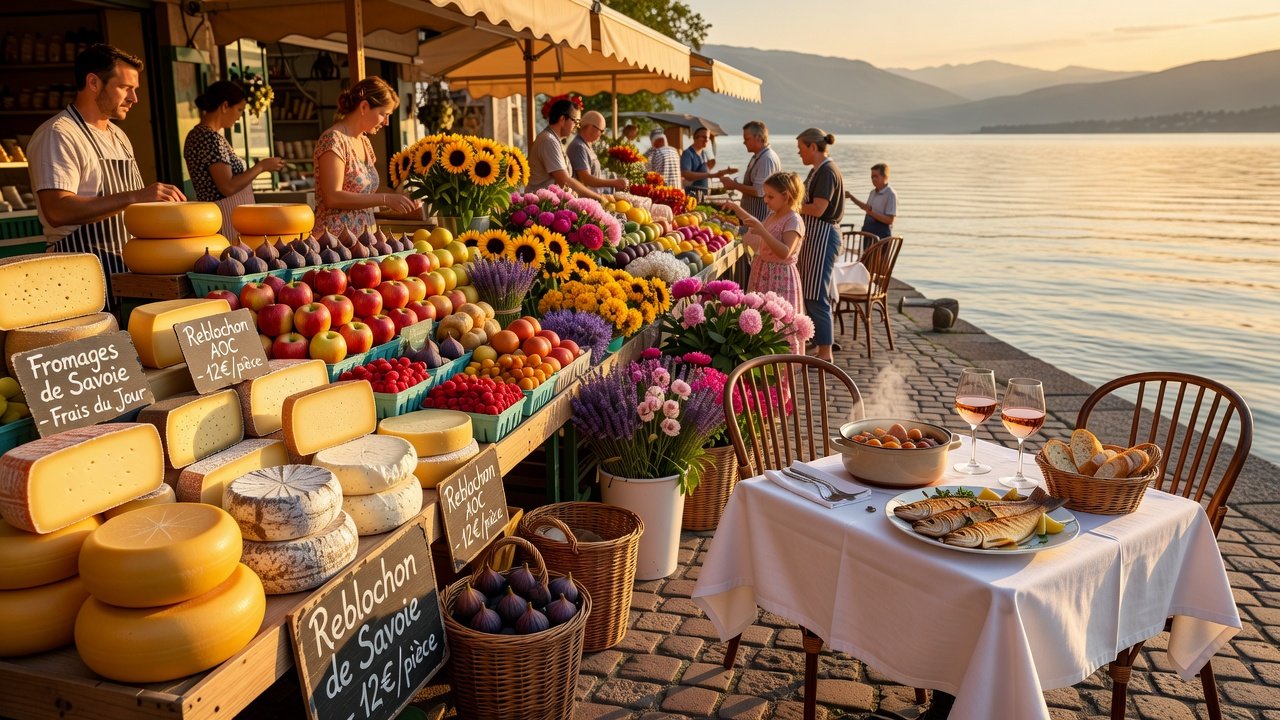
Wednesday and Saturday mornings bring the market to Place Clemenceau and nearby streets. Stalls sell local Savoie cheese, cured meats, fresh vegetables from the surrounding valleys, and the inevitable bunches of flowers. The market isn’t large, but it’s genuine. You hear the Savoie accent more than tourist French. A few steps away on Rue de Genève the shops open for the day — small clothing boutiques, a chocolatier, a couple of bakeries that still make the classic pain au chocolat with the corners properly sealed.
Place Maurice Mollard and the surrounding lanes hold the older heart of the town. The arcades here are narrower, the buildings a little more lived-in. It’s the kind of neighborhood where you can sit outside a café and watch the same people pass twice in an hour — the retired couple walking their terrier, the woman who runs the flower stall, the man delivering bread. Nothing dramatic happens, and that’s precisely why it feels worth staying.
Places to Stay
Three stays that match different budgets and moods:
Budget option — Hôtel du Poète (roughly €70-95). A modest, family-run hotel in the center with simple, clean rooms and a small terrace. It sits close enough to the thermal quarter and the market that you can walk everywhere without needing the car. The atmosphere is unpretentious; the owners know the town’s quieter corners and are happy to point them out.
Mid-range — Best Western Aquakub (roughly €110-150). Located just 200 meters from Lake Bourget, this modern hotel offers lake views from many rooms and a small wellness area. The design is clean and contemporary while still feeling connected to the water. It’s an easy base for morning walks along the quays and evening drinks with a view.
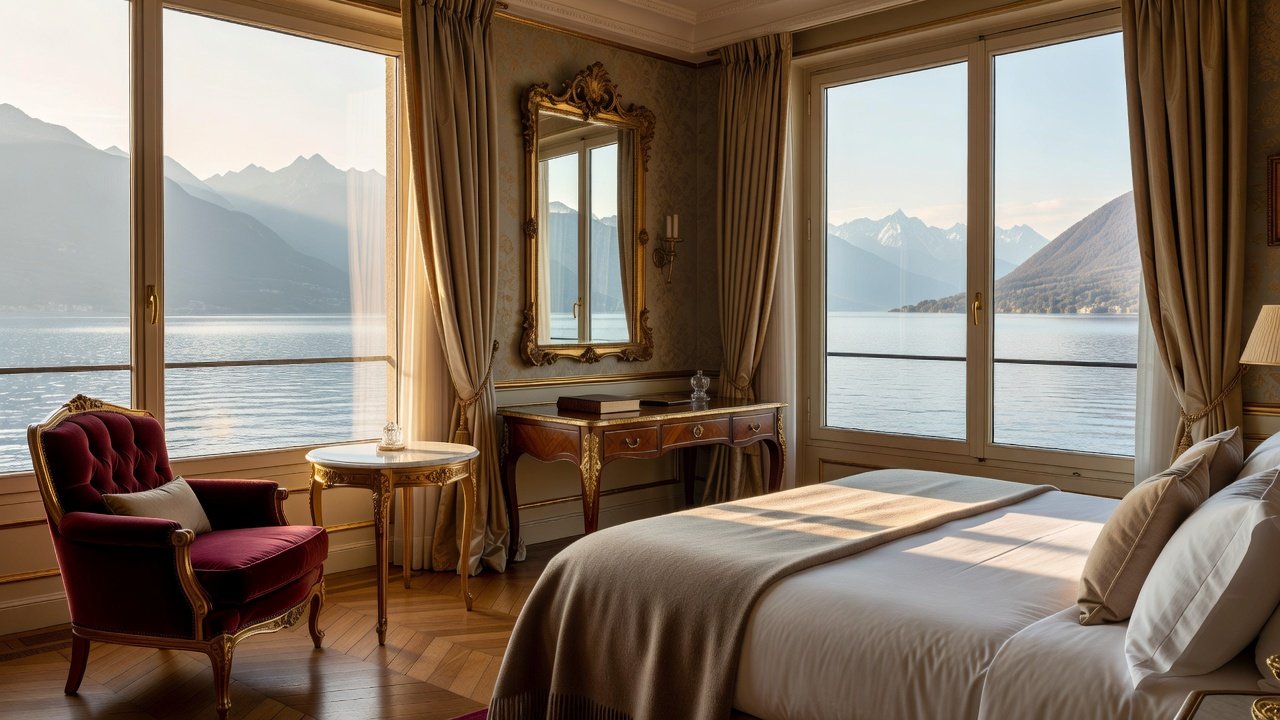
Higher-end — Grand Hôtel du Parc – Teritoria (roughly €180-250). A classic 4-star property set in its own grounds between the lake and the mountains. The building retains its Belle Époque charm with high ceilings and a lovely garden. The restaurant focuses on regional produce, and the location lets you feel both in town and slightly removed from it. The pool and spa facilities are an added draw after a day of walking.
Where to Eat
Food here leans toward honest Savoie cooking rather than haute cuisine.
M. Charles (28 Rue de Chambéry) serves refined but unfussy dishes in a small, welcoming dining room. The menu changes with the seasons and often features lake fish or mountain cheeses. It’s the sort of place where locals celebrate birthdays and where you can linger over a bottle of local wine without feeling rushed.
Les Loges (8 Avenue Charles de Gaulle) offers a slightly more contemporary take on regional ingredients. The setting is bright and modern, and the terrace works well in good weather. The tartiflette is excellent, as is the emphasis on fresh vegetables from nearby producers.
L’Estrade sits near the lake with views that make the simplest meal feel special. The cooking stays true to Savoie traditions — diots, crozets, local wines — while the service remains relaxed and friendly. It’s the kind of spot where you can watch the light fade over the water and feel you’ve found the right pace for the town.
For something quicker, the market stalls and the bakeries along Rue de Genève supply excellent picnic material. A baguette, a wedge of Beaufort, a few slices of saucisson, and you have everything you need for a bench on the quay.
Getting There and Moving Around
Aix-les-Bains is easy to reach by train from Chambéry (about 15 minutes) or Annecy (around 40 minutes). The station sits in the center, so most hotels are walkable. For the lakefront or the Marlioz thermal area, local buses or a short taxi ride work well. Renting a bike lets you follow the lakeside paths farther in either direction — toward the beach or north toward the more wooded sections.
The town rewards slow movement. You don’t need a strict itinerary. A morning market visit, an afternoon walk along the water, an evening glass of wine under the arcades — that’s the rhythm that suits Aix-les-Bains best.
I left with the sense that this is a place that has learned how to be both a destination and a real town. The thermal heritage and the lake give it beauty, but the daily life in the arcades and on the quays gives it staying power. If you come looking for the version of Savoie that doesn’t shout, you’ll find it here, especially in those early hours when the only company on the quay is the light on the water and the quiet company of people who live by it.