
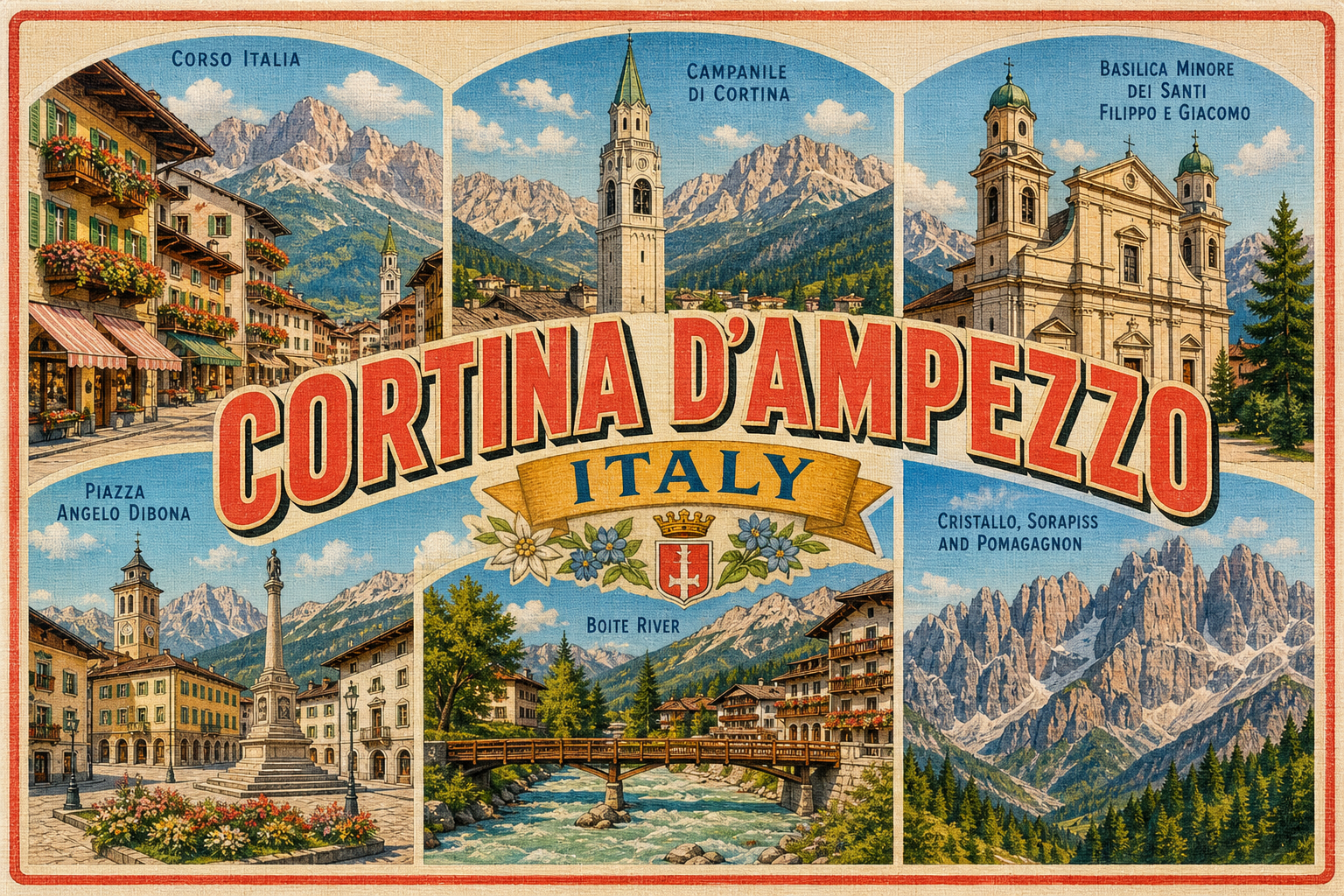
Cortina d’Ampezzo has a reputation that gets there before you do. Ski fashion, magazine spreads, the hard white of the Tofane in winter light. Fair enough. That stuff is real. I just don’t spend most of my time chasing it.
What I keep coming back for sits a little lower: the old railway bed that once tied the Ampezzo basin to everywhere else, the Boite running under the bridges, and a morning pace that has nothing to do with lift queues. Give the place only a glamorous afternoon, and you leave with the postcard. Give it a full day on foot—early on Corso Italia, then out along the former tracks toward Faloria and Cademai—and the valley under the brand starts to show.
The walk that still feels local
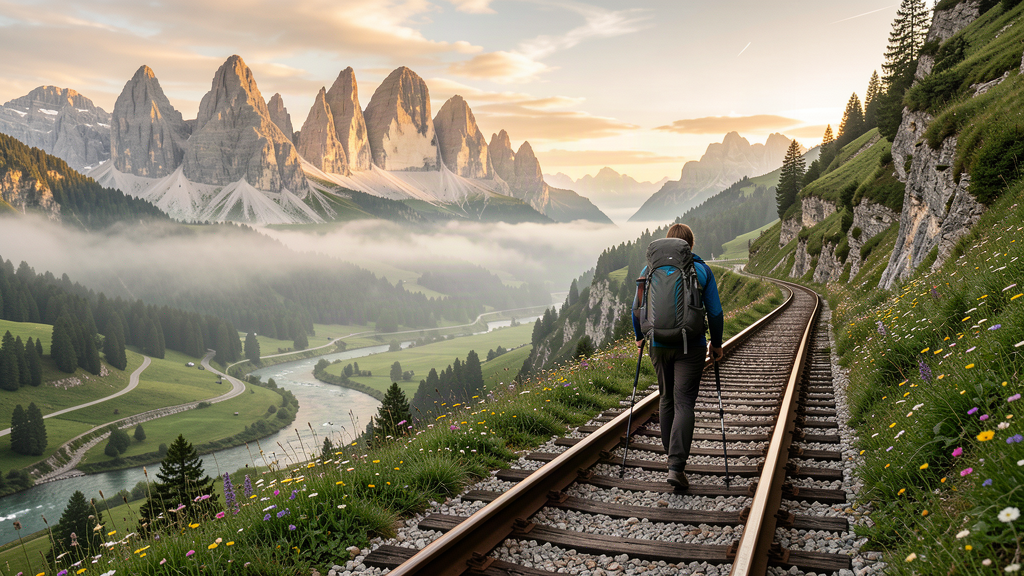
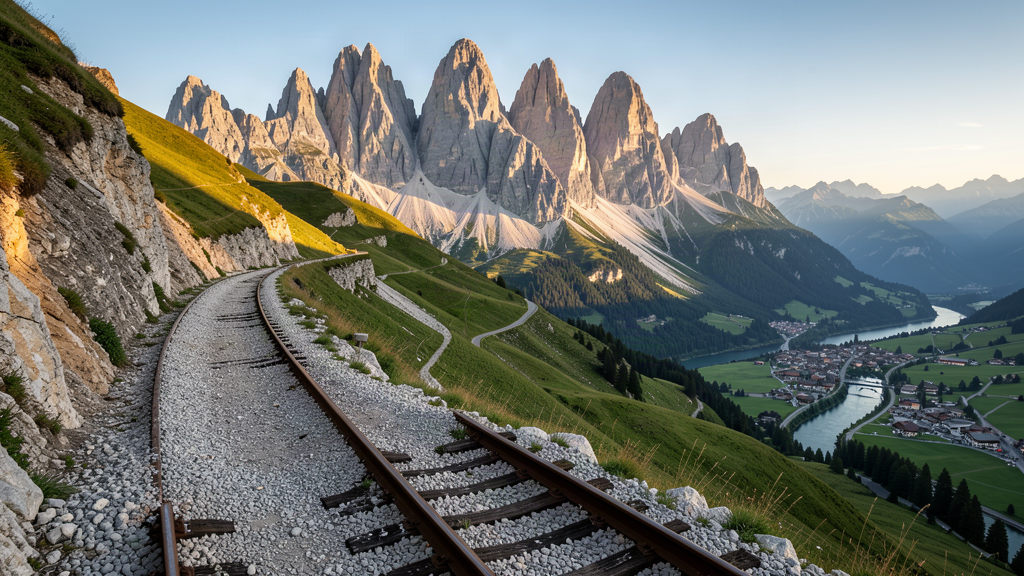
The former railway path is not some secret wilderness trail. Locals use it for dogs, strollers, and the kind of after-lunch loop that doesn’t need a map app. That’s the point. You leave the polished shopfronts, cross toward the Faloria cableway side of town, and the surface settles into the gentle grade trains once used. Iron bridges open sudden views of the Boite. The ring road hums somewhere below. Above you, the pale rock of Cristallo and Faloria holds the sky in place.
I like this route best in shoulder season, or on a midweek summer morning before day-trippers pour in from the passes. The air smells like cut grass and cold water. You pass people who aren’t performing a hike—they’re just moving through their valley. Near the Faloria station and on toward Cadin, it just feels like a mountain town again—chores, school runs, a river that doesn’t care about your itinerary.
An hour out and back is enough. If you want more, the same corridor links into wider Ampezzo trails toward Rio Gere, or it simply dumps you back in town with warm legs and a real appetite.
Corso Italia before the performance
Corso Italia is Cortina’s pedestrian spine. By late afternoon it can look like a luxury catalog. Come earlier. Before the boutiques fully wake, the street belongs to coffee cups, delivery carts, and people who live here year-round. Wooden balconies, painted facades, shutters going up—that’s when the Ampezzo character still cuts through the designer glass.
I walk the length slowly, not really shopping. Mostly listening. Italian, German, a little Ladin in the greetings. The mix has always defined this borderland between Veneto habits and Alpine life. Duck into a bakery or bar for a quick cappuccino. Save the big meal for later. Morning on Corso Italia is for orientation: where the mountains sit relative to the street, how light hits the peaks, which side streets drop you toward the river.
When the crowds thicken, leave. The glamorous center works better as a base camp than as the whole trip.
Food that tastes like the valley
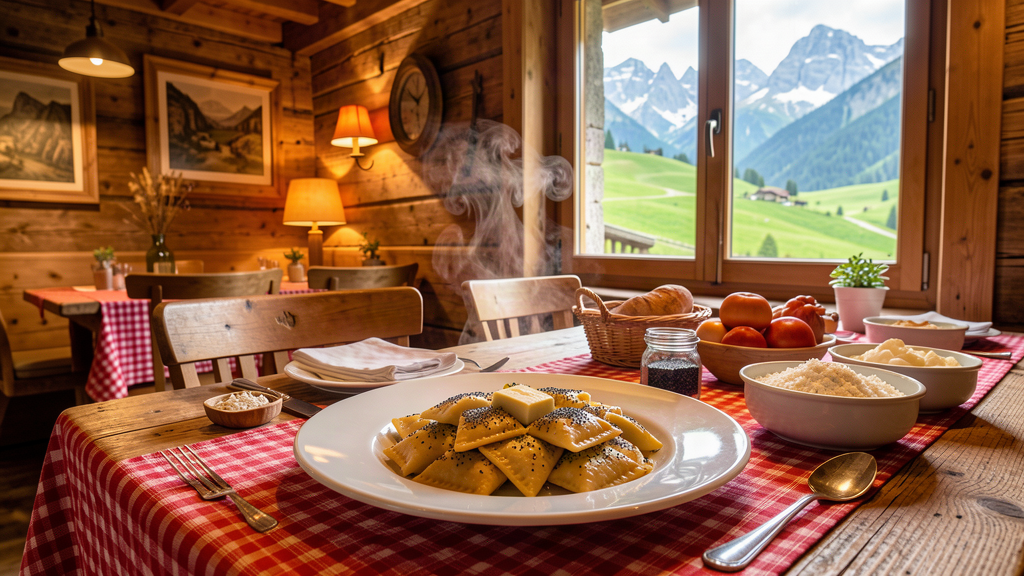
Ampezzo cooking sits between Venetian memory and mountain thrift. The dish I tell people to order first is casunziei rossi—half-moon pasta filled with beet, finished with melted butter and poppy seeds. Sweet, earthy, a little spare in a way that suits the place. Canederli, polenta, game, speck, and sharp local cheeses fill out the rest of the table. Skip menus that sound like they were written for a generic alpine resort chain. Look for kitchens that still cook like someone’s nonna might walk through the door.
Baita Fraina
Via Fraina 1, Località Fraina, 32043 Cortina d’Ampezzo
A short hop from the center toward the Faloria side, Baita Fraina sits at the edge of woods rather than on the main promenade. You come for country cooking done carefully—classic Ampezzo plates, good wine, a room that feels like an actual baita. Casunziei and seasonal mountain dishes make more sense here than another international tasting menu. Book when you can. Hikers take lunch; town diners show up for dinner.
Ristorante El Zoco
Località Cademai 18, SS51 di Alemagna, 32043 Cortina d’Ampezzo
Reachable on foot or by bike along the old railway alignment toward Dobbiaco, El Zoco rewards the small effort of leaving the center. Quieter setting. Less about being seen. Come hungry for straightforward mountain cooking. Getting there on foot or by bike is part of why it tastes better. On a clear day the walk alone is worth it: Boite air, tree shade, then a table.
Ristorante Pizzeria 5 Torri
Largo delle Poste 7, 32043 Cortina d’Ampezzo
Right by the post square, a short step off Corso Italia, 5 Torri is useful when you want something unfussy after a long walk. Wood, stube warmth, room for a mixed group. Order casunziei if they have them, or keep it simple with polenta and a second course. Nobody here is trying to reinvent Cortina. After ridges and railway grades, that’s fine with me.
For one sharper night in the center, Il Vizietto di Cortina at Corso Italia 53 is the composed option.
Places to stay
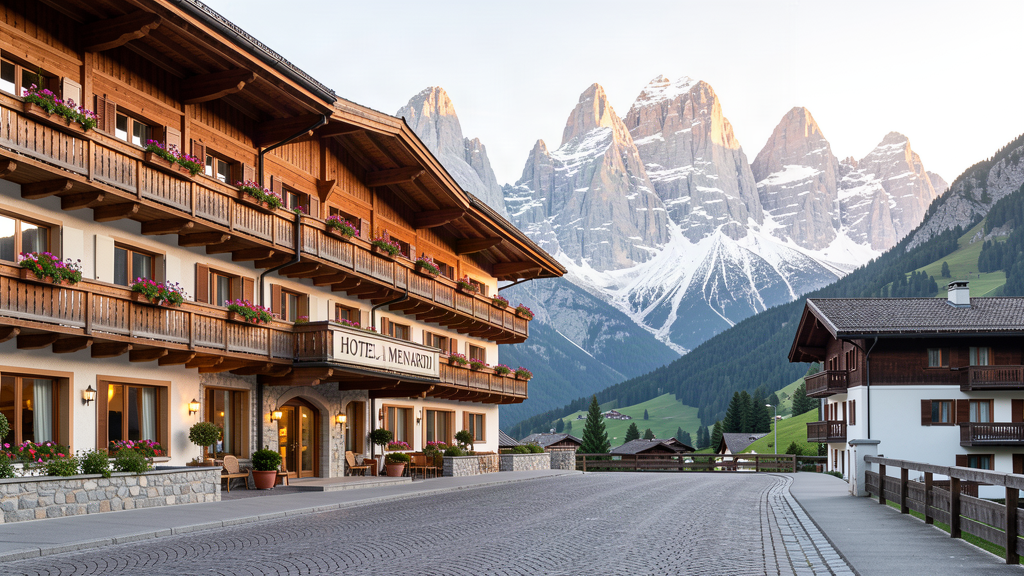
Cortina prices swing hard with ski weeks and event calendars. Shoulder seasons are kinder. Wherever you book, ask how long it takes to walk to Corso Italia and to a grocery. The town is compact, but not every “near Cortina” listing is actually in the walkable core.
Hotel Villa Argentina (value / quieter base)
Località Pocol 43/44, 32043 Cortina d’Ampezzo
Up at Pocol, between town and the Falzarego/Giau road world, Villa Argentina suits travelers who want mountain air first and nightlife second. Rooms are straightforward, the setting open, and you can start walks into the Dolomiti d’Ampezzo without the pedestrian crush. Plan on a car or bus for easy center evenings—fine if your trip is more ridge than retail.
Hotel Menardi (mid-range, family-run feel)
Via Majon 110, 32043 Cortina d’Ampezzo
A few minutes from the historic center, Hotel Menardi has the calm of a place that grew out of a family home. Garden space, a proper restaurant, rooms that feel lived-in rather than staged. It works well if you want to walk into town for coffee and still sleep somewhere with a little breathing room. Good base for mixing railway-path mornings with Corso Italia evenings.
Hotel de la Poste (splurge, in the middle of it)
Piazza Roma 14, 32043 Cortina d’Ampezzo
If you want the classic Cortina address—terrace life, history in the walls, zero friction to Corso Italia—this is the easy yes. You pay for location and atmosphere. Use it as a soft landing after hard days outdoors: drop the boots, walk fifty meters, and you’re back in the social current of the square. Best when you’re staying only a couple of nights and want the town at your door.
A simple day that doesn’t chase every peak
Start with coffee on Corso Italia while shutters are still going up. Walk the former railway grade toward Faloria until the Boite views open and you stop checking the time. Turn around when you’ve had enough of the valley, not when some plan says you should. Lunch at Baita Fraina, or keep going toward El Zoco if the legs feel good. Afternoon: a short indoor pause if the weather turns, or a bench with Tofane off to the side. Evening: a simple plate and an early night. Climb higher the next day if you want. The town will still be there when you come down.
In winter the same skeleton holds, only colder and brighter. I still start with the old grade above the Boite either way. It’s steadier than the first postcard, and closer to how the valley actually runs.
Practical notes
Cortina sits in the Province of Belluno, Veneto, high in the Ampezzo valley. Buses and seasonal links reach Venice, Belluno, and the surrounding passes. Driving is common, though core parking takes patience in peak weeks. Bring layers even in July. Weather changes fast on the Dolomite walls; a gentle railway walk can still leave you underdressed if wind drops off Cristallo. Learn a few food words—casunziei, canederli, speck—and order like you mean to stay for dinner.
Yes, the town has a glittering surface. Stay on the old line above the river long enough, and you get the other Cortina too, the one that still belongs to the valley first.
