
Rapallo does not try to be Portofino. It is bigger, a little louder, and more useful. Trains stop here without much fuss. People buy shoes on Thursday. The gulf opens wide enough that you can stand on the lungomare and see three towns at once without feeling you paid for a postcard.
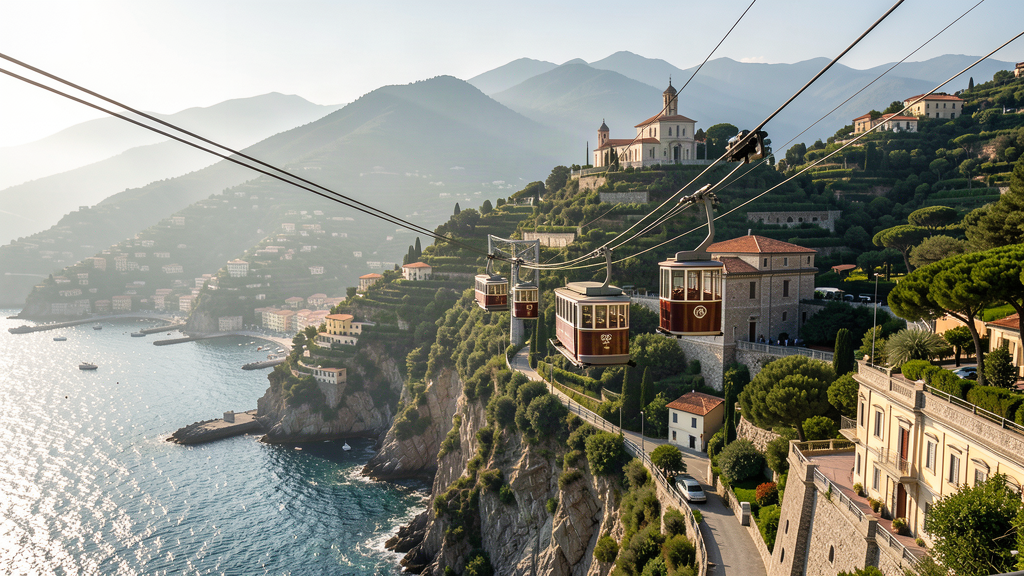
What keeps me here is not the shiny marina. It is the funivia that leaves from a plain square inland and climbs in about seven or eight minutes to the Sanctuary of Our Lady of Montallegro, six hundred meters above the water. The line opened in 1934. It is still the only cable car of its kind in Liguria, built for pilgrims and locals long before anyone needed a viewpoint experience. You board near Piazzale Solari, the cabin sways, and the bay drops away in layers: roofs, then olive slopes, then a hard blue line of sea. Santa Margherita and the Portofino headland show up as small shapes, not as destinations you have to chase that same hour.
Arriving without the day-trip rush
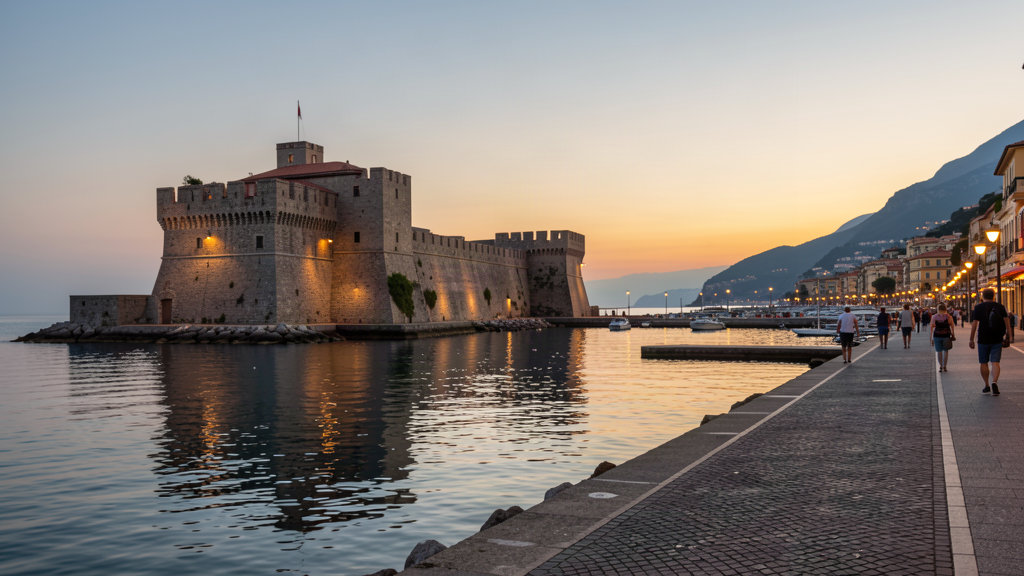
Most visitors treat Rapallo as a transfer point. That is fine if you only want a boat to Portofino. Stay a night or two and the town settles into a different shape. Early, before the coastal trains unload, Lungomare Vittorio Veneto is mostly walkers and dog owners. Palms throw long stripes on the pavement. The Castello sul Mare sits on its rock at the eastern end of the promenade, a small fort built in the mid-1500s after a pirate raid, still squatting over the water like it means business.
Walk west toward the marina and you pass fountains, benches, and ordinary shops. Walk inland a few blocks and the scale tightens: narrower streets, laundry, hardware stores, focaccia smell before noon. Rapallo’s old core is not a museum. People still queue for bread there.
If you come by train, the station is a short walk from the water. If you come by car, expect the usual Riviera mess of parking and one-way streets. Plenty of visitors leave the car and use feet, buses, and the coastal rail. Ferries link the gulf towns in season, but the funivia is still the cleanest way off the sea-level scramble.
Riding up to Montallegro
Buy a ticket at the lower station and do not overthink the weather. Clear days give you the full gulf. Light haze turns the water silver and makes the sanctuary feel farther than it is. The ride is short enough that cabin chat rarely gets past the first polite remarks before the doors open on cooler air and a wide terrace.
The sanctuary is a working pilgrimage site, not a chapel built for photos. Step inside if a service is not underway. Sit on the steps outside if you prefer the view. Paths lead into the hills above Rapallo, more mule track than park loop. You do not need a full hike. Even a twenty-minute walk along the ridge roads changes the sound: fewer scooters, more wind in the pines.
Come down the same way, or walk part of the descent if your knees agree. Either way, sea level hits differently after the altitude. The lungomare noise comes back all at once. The castle looks small again. That back-and-forth is what I come for: hill and harbor in the same afternoon without hiring a driver.
The lungomare, the castle, and Thursday
On an ordinary morning I start at the castle rock and walk the full curve of Lungomare Vittorio Veneto. Swimmers use the ladders when the season allows. Old men claim the same benches they claimed last year. If you hit a Thursday, the Mercato del Giovedì takes over stretches of the promenade with clothes, household goods, and stalls that have nothing to do with olive-oil gift sets. It is not charming in a brochure way. It is useful, which I prefer.
Duck behind the frontage into the lanes near the central churches. You will find bar counters where the coffee is ordinary and correct, and bakeries where focaccia comes thin and salty or taller and stuffed. Eat standing up. Watch who else is standing up. That is usually better guidance than a ranked list.
In late afternoon the light hits the castle from the west and the water goes greener near the rocks. Day-trippers thin out. Rapallo keeps more of its own hours then. Aperitivo here is less about being seen than about claiming a table before the evening breeze turns cool.
Places to Stay
Three stays, three price bands, all inside the actual town.
Hotel Italia e Lido (value)
Lungomare Castello, 1, 16035 Rapallo GE
Beside the castle end of the waterfront. Practical base if you want sea air without a palace bill. Rooms are straightforward; the location does the work. Step out for coffee and walk the lungomare before breakfast crowds form. Good if you plan to move on foot and by funivia.
Hotel Vesuvio (mid-range)
Lungomare Vittorio Veneto, 29, 16035 Rapallo GE
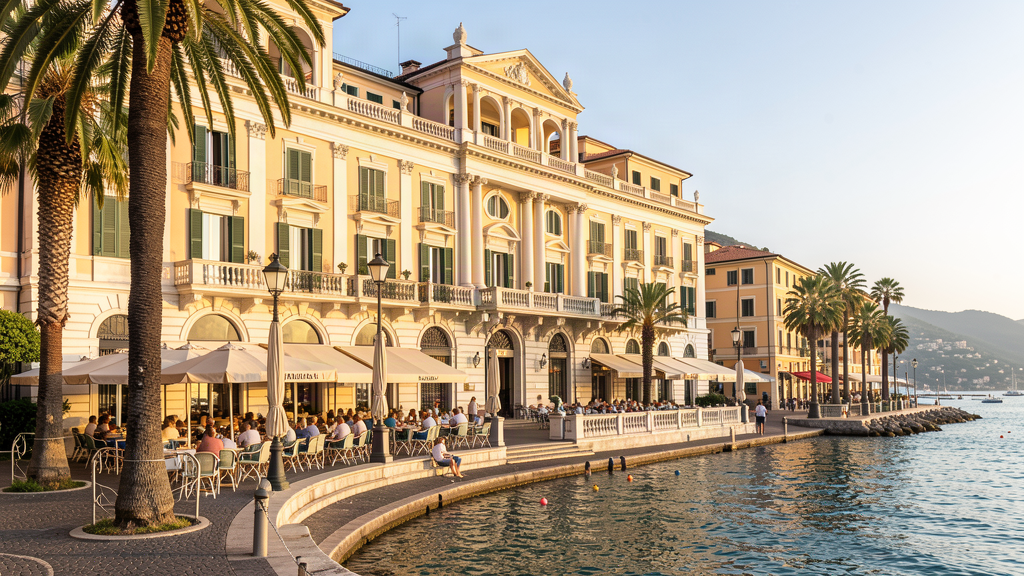
A classic seafront address with balconies facing the Gulf of Tigullio. Mid-promenade, close to evening tables, far enough from the station bustle to sleep. Choose it when you want water in the window and a short walk to almost everything in this piece.
Excelsior Palace Hotel (splurge)
Via San Michele di Pagana, 8, 16035 Rapallo GE
Belle Époque hotel on the San Michele di Pagana side of town, with gardens and that old Riviera lobby scale. A little apart from the densest center, which helps at night. Pools, sea views, quieter hours than the busiest stretch of the lungomare. Book here when the trip is as much about slowing down as covering ground.
Where to Eat
Liguria rewards simple orders: focaccia, anchovies, pesto done with restraint, fish that still looks like fish.
Trattoria U Giancu
Via San Massimo, 78, 16035 Rapallo GE
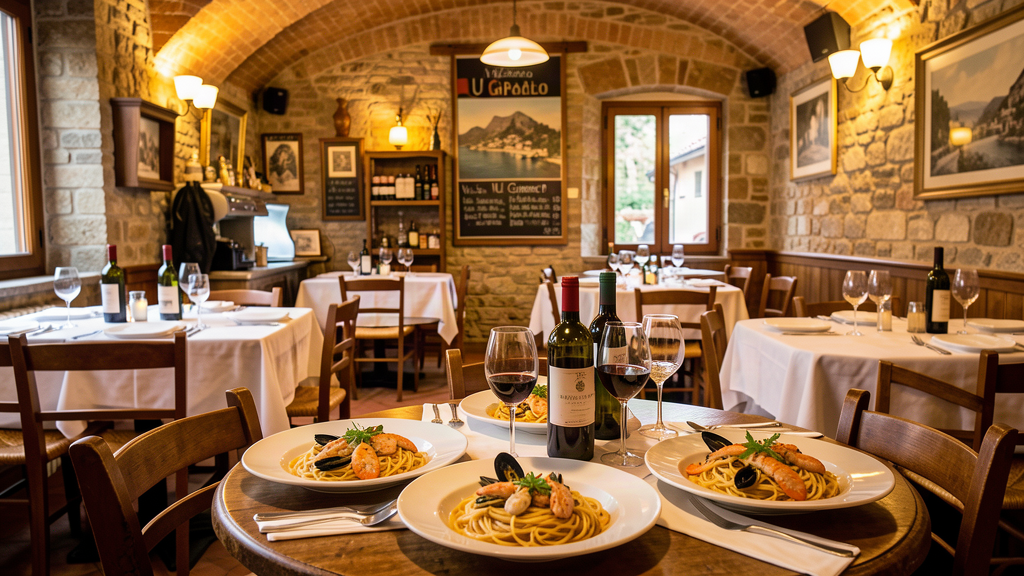
Uphill from the water, this is the meal that reminds you Rapallo is not only a promenade. The room has been feeding people a long time: a bit cluttered, warm, Ligurian rather than international. Go for pasta with pesto or seasonal greens, and whatever fish the kitchen is honest about that night. Reserve if you can.
Ristorante Pizzeria Nettuno
Lungomare Vittorio Veneto, 28, 16035 Rapallo GE
On the seafront, useful when you want seafood or pizza without leaving the evening circuit. Locals use it; that matters more than the view, though the view does not hurt. Share a fritto or a simple grilled catch. Outdoor tables fill first when the weather holds.
Taverna Gallo Nero
Via Magenta, 10, 16035 Rapallo GE
A few streets in from the water, quieter when the lungomare feels busy. Classic Ligurian plates, honest portions, more neighborhood than resort. Good for a slower lunch after the funivia or a dinner that does not require a waterfront premium.
Drink water. Order wine by the carafe if the house white smells clean. Save elaborate tasting menus for another town. Rapallo’s better evenings are plate, bread, and conversation.
Getting around and small practical notes
The coastal railway is the spine of this stretch of Liguria. From Rapallo you can hop to Santa Margherita Ligure in minutes and continue toward Camogli or the Cinque Terre with patience and an early start. Buses climb inland. Boats fan out across the gulf in season. Check funivia hours before you build a day around it, especially outside summer, and bring a layer for the cooler air at the sanctuary.
Thursday market mornings are busier on the lungomare. If crowds bother you, walk at dawn and shop later. Summer weekends bring more day visitors aiming for Portofino: start uphill first, seafront second. English is widely managed in hotels and seafront restaurants. A few Italian phrases still help in the back streets. Cards are common; small bakeries sometimes prefer cash for a single focaccia.
Two nights by the gulf
I like Rapallo best as a two-night pause. Day one: lungomare, castle rock, old-town lunch, an unhurried funivia ride before the light goes flat. Day two: a morning market if the calendar allows, a long coffee, maybe a short boat hop, then dinner uphill at U Giancu and a final walk when the promenade lamps come on.
You will still see the famous silhouette of the Portofino promontory. You do not have to stand in its piazzetta to understand the gulf. From Montallegro the whole Tigullio looks like one stretch of water, terraces, and towns that share the same trains. Rapallo is the largest of those towns, and the easiest place here to move at ordinary speed: cable car up, bread in hand, castle on the rocks, night air off the Ligurian Sea.
