
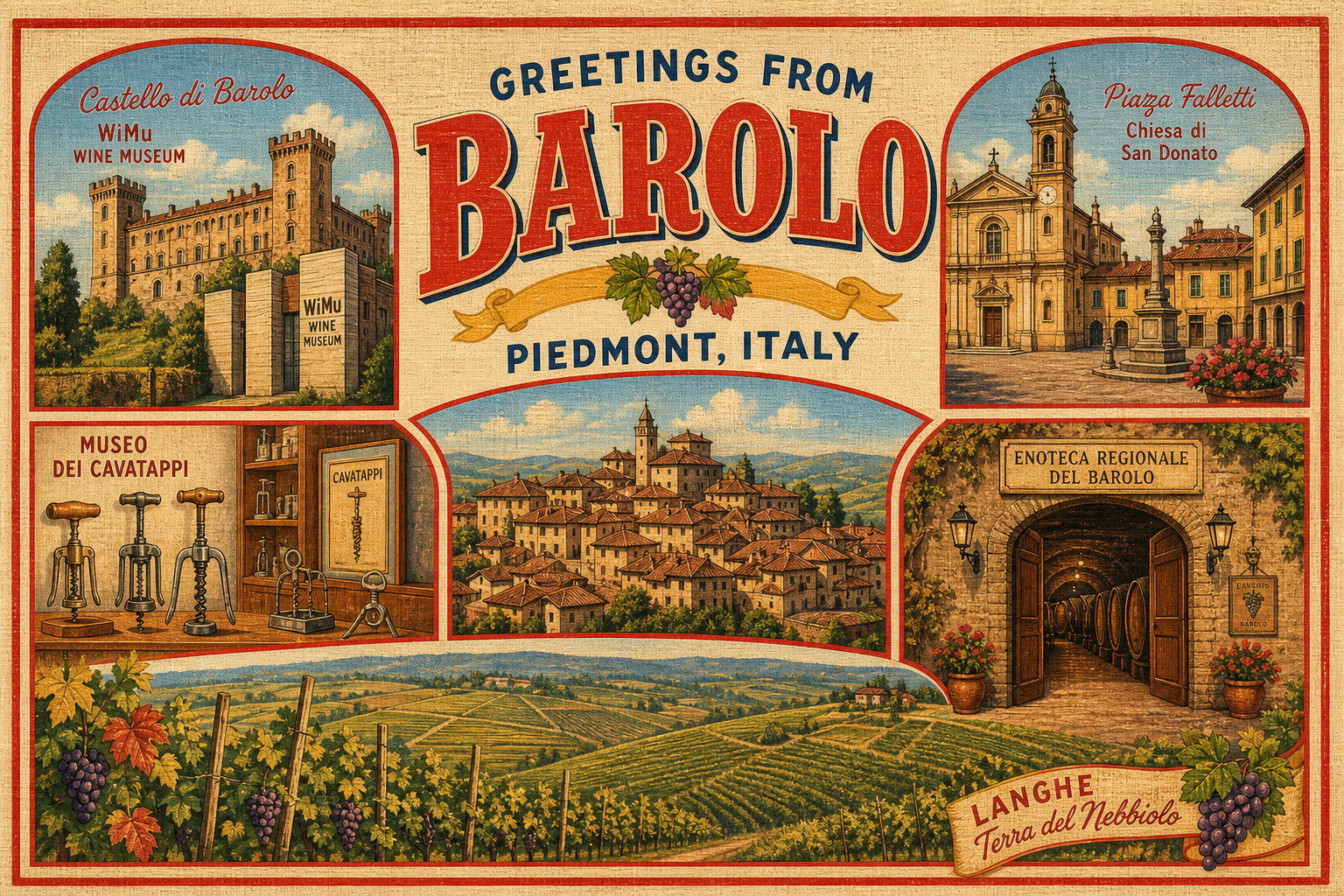
Barolo is smaller than the wine label in your head. You park once, and the whole place folds into a few streets that climb toward a castle and drop again toward vine rows. The name does heavy work on wine lists worldwide. The village itself works more quietly: stone, shutters, a dog asleep in a doorway, a delivery van easing past tables already set for lunch.
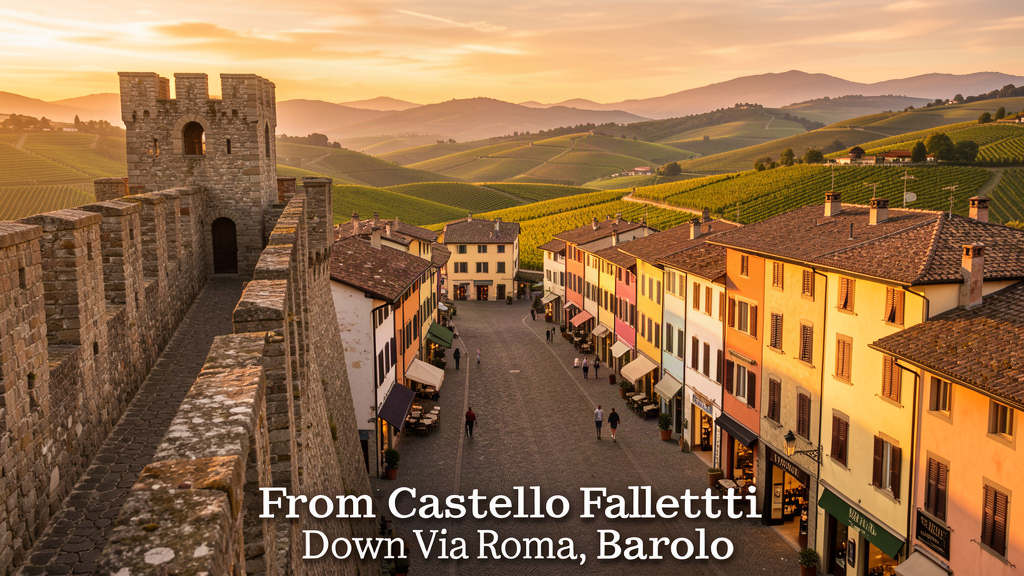
I like arriving midmorning, after the first rush of day-trippers has photographed the view and before lunch locks every table. Stand in Piazza Falletti and look up. Castello Comunale Falletti di Barolo sits above the roofs like a patient relative at the head of a table, not flashy, just unavoidable. Inside is WiMu, the wine museum, a scenography-heavy walk through Nebbiolo's long argument with these hills. Even if museums usually drain you, give this one an hour. The rooms are cooler than the street. The story moves. When you step back out, Via Roma is waiting like a short chapter you can read on foot.
A village that fits in one slow circuit
Via Roma is Barolo's spine. It runs from the castle area down through shops, tasting rooms, and cafés where the espresso is more functional than theatrical. Walk it without a checklist. Notice how often the street opens sideways onto a slice of vineyard, then closes again into stone. This is not a city pretending to be a countryside resort. It is a working wine village that happens to look good, which is a different mood.
A short walk from the center takes you toward the Marchesi di Barolo complex on Via Alba, where the old Falletti cellars still age wine and receive guests. Book ahead if you want a proper visit; drop-in tasting culture here is not the free-pour carnival some wine regions became. People are cordial. They are also busy. That mix is part of why the place still feels like itself.
If you only have one afternoon, do this: castle and WiMu first, Via Roma second, a cellar third, then a late lunch that does not rush you. Leave the car where it is. Barolo rewards the person who stops treating the village as a photo stop between La Morra and Monforte.
Vine rows, and the chapel that does not belong
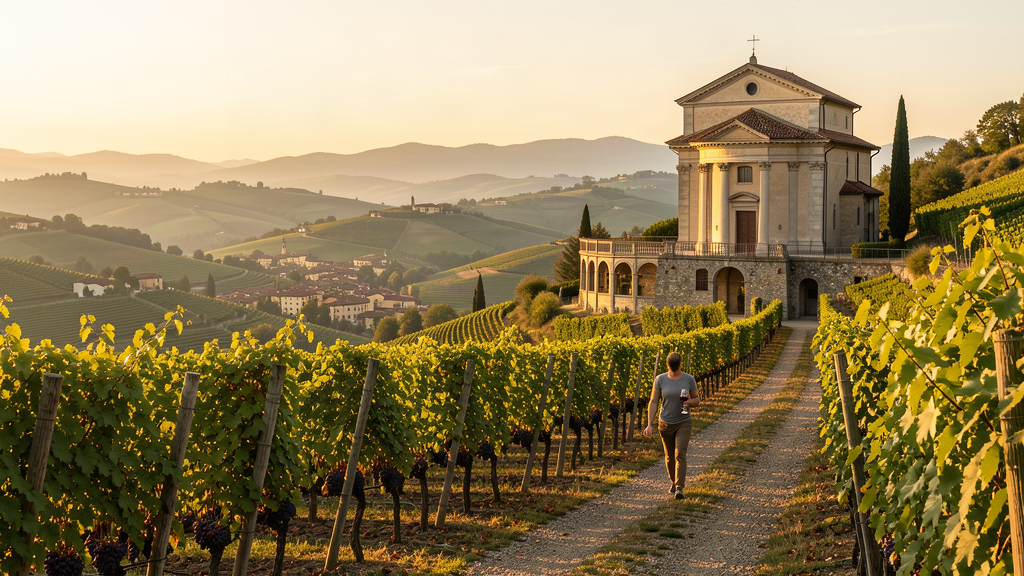
Outside the stone core, the land takes over. Paths and farm lanes thread the cru names you have seen on bottles. Cannubi is the famous neighbor hill, close enough that the vines feel like part of town rather than a separate excursion. On a clear day the rows look almost orderly, green geometry on clay and marl. On a foggy morning they disappear into soft gray, and Barolo becomes quieter, more private.
A favorite short outing is the walk or short drive toward the Cappella del Barolo (also called the Brunate chapel), the small structure Sol LeWitt and David Tremlett wrapped in primary color among the vines near La Morra. It is not in the village center, and that is the point. You leave the stone streets, follow vineyard edges, and suddenly there is this bright interruption in a landscape otherwise devoted to serious wine. Go early or late if you can. Midday weekend traffic can turn a simple chapel into a parking puzzle.
I am happy with an hour among the rows, shoes dusty, phone mostly away. The Langhe hills do not require you to conquer them. They ask you to notice slope, light, and how often a tractor still matters more than a tour bus.
Places to Stay
Barolo's lodging stock is limited and books up in truffle season and fine-weather weekends. Reserve early, especially if you want to sleep inside the village rather than commute from Alba.
Casa Svizzera Agriturismo — Via Roma 65, 12060 Barolo CN
A renovated historic house on the main street, once linked to the old Albergo Svizzero and now run with the calm of a family property that knows the town's rhythms. Rooms feel residential rather than corporate. You step out onto Via Roma and you are already in the walk. Good middle ground for travelers who want village nights without hotel formality.
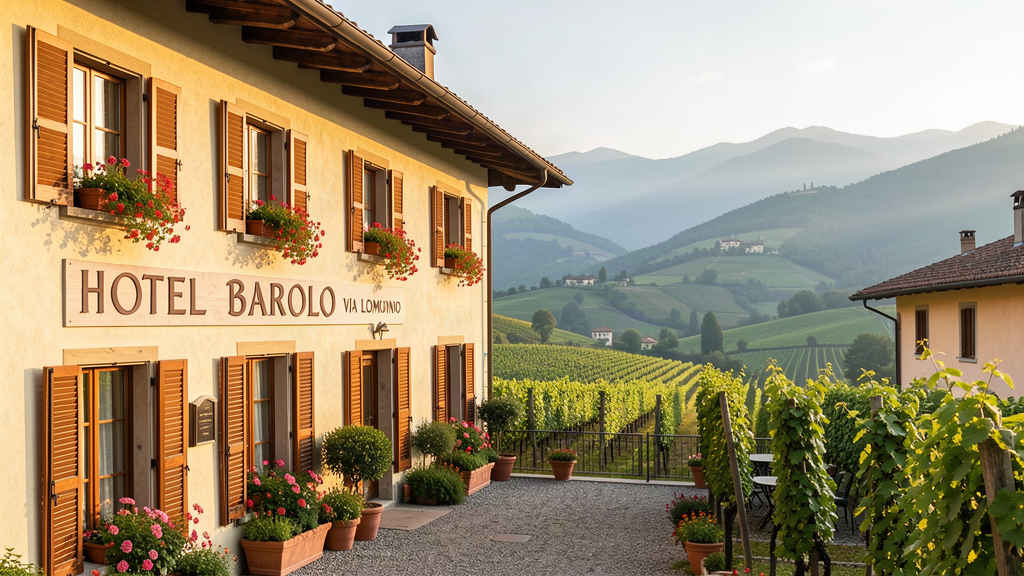
Hotel Barolo — Via Lomondo 2, 12060 Barolo CN
The Brezza family's long-running hotel and restaurant sits right in town. Three generations of local work show in small ways: steady service, vineyard views from some rooms, a restaurant that does not treat Piedmontese cooking as a museum piece. This is the practical in-village base if you want parking, a proper front desk, and dinner downstairs on nights you do not feel like choosing.
Locanda in Cannubi — Via Crosia 14, 12060 Barolo CN
Out on the Cannubi side, an 18th-century farmhouse among the vines rather than on the castle square. Rooms here suit a slower stay. You trade a few minutes' walk (or a short drive) into the center for the feeling of sleeping inside the appellation itself. Book the restaurant when you book the room; the hill gets quiet after dark in a way I like.
Where to Eat
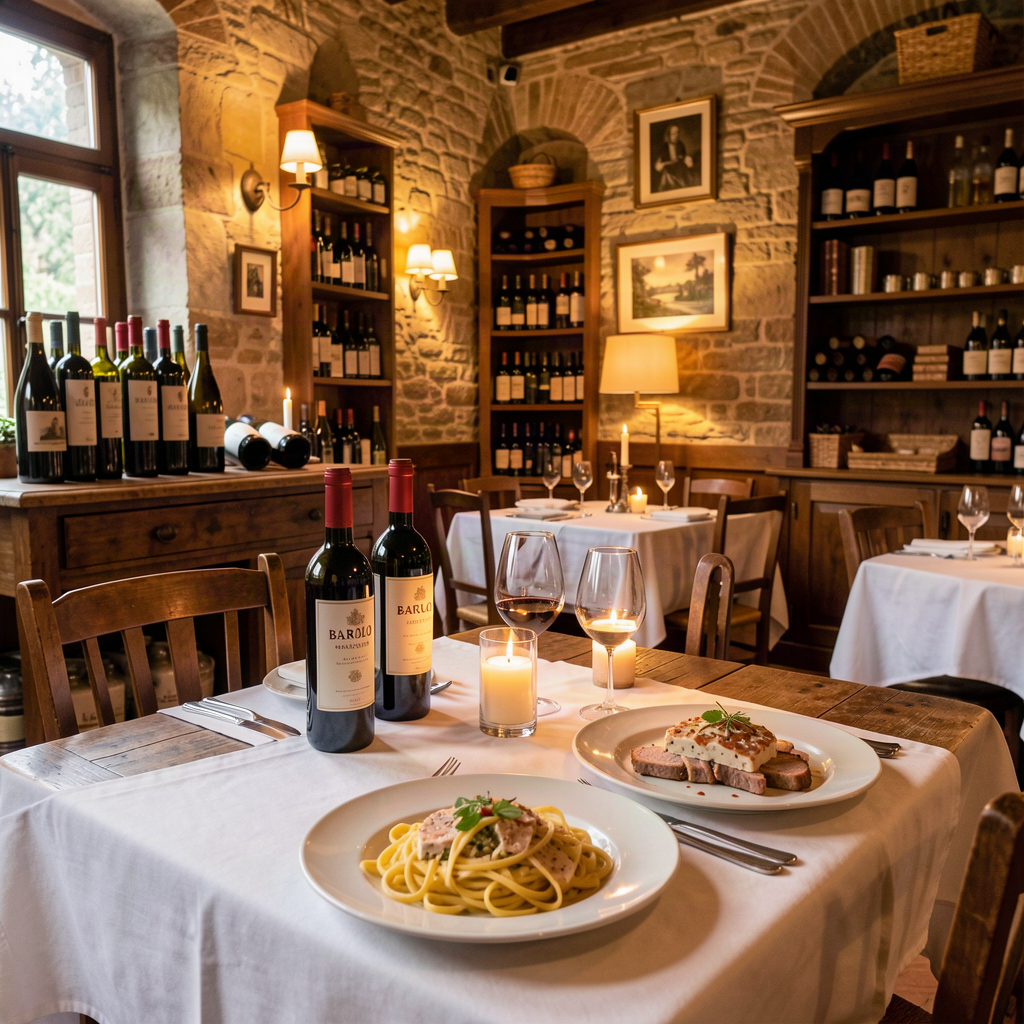
Barolo dining is serious without needing a tuxedo. Portions lean traditional. Nebbiolo on the list is not a side note. Reserve for dinner, and for lunch on weekends.
Osteria Rossobarolo — Via Roma 16, 12060 Barolo CN
Right on the main street, useful when you want good cooking without a pilgrimage. Expect Piedmontese plates done with confidence (tajarin, plin, brasato when the season calls for it) and a room that fills with people who actually live in wine country, not only people collecting stamps in a passport. Come hungry and let the server steer the wine if the list looks deep.
La Cantinetta — Via Roma 33, 12060 Barolo CN
A reliable village table for classic Langhe cooking. I come here when I want plin that taste like someone's nonna still has veto power in the kitchen, and a bottle that matches the hills outside rather than a trend. Service tends to be warm and unhurried. If truffle season has the whole region vibrating, book anyway and accept that the room will hum.
Osteria La Cantinella — Via Acqua Gelata 4/a, 12060 Barolo CN
A slightly tucked-away feel compared with the pure Via Roma frontage, which I like after a day of cellar doors. The cooking stays rooted: antipasti spreads, pasta with substance, meats that understand Barolo as food wine, not only cellar wine. Good choice for a longer dinner when you want conversation to stretch past the last glass.
If you have a fourth meal free, Locanda in Cannubi's restaurant (same Via Crosia address as the rooms) is worth the short hop into the vines at sunset.
A practical day, without turning it into a drill
Morning: coffee on or near Via Roma, then WiMu in the castle before lines thicken. Midday: walk the village loop, duck into one producer you booked, buy a bottle you will actually drink this year. Afternoon: vines and the colored chapel, or a slow drive through neighboring ridgelines if your legs are done. Evening: early dinner, then a second pass through quiet streets when day-trip cars have left.
Getting here is simplest with a car. Trains serve Alba; from there you need a bus, taxi, or rental to climb into Barolo proper. Inside the village, walking wins. Between villages, the roads are beautiful and occasionally narrow. Take the curves seriously after tasting. Autumn brings fog, truffles, and crowds. Spring and early summer often feel more generous with space. Winter is for empty tasting rooms and bare vines.
A note on pace: Barolo will sell you as much wine tourism as you request. It will also let you do almost nothing. Some of my best hours here were unpaid. Sitting on a low wall with a sandwich, watching cloud shadows move across Cannubi, listening to church bells argue softly with a distant tractor.
What stays with you
I do not leave Barolo with a single bottle score. I leave with the scale of the place set against the scale of its reputation: the castle above the roofs, Via Roma's short street life, cellar air after sunshine, a loud chapel among disciplined vines, dinner plates that treat Nebbiolo like a neighbor.
The wine is a fine door in. What I keep returning for is how ordinary the village still acts while the label goes everywhere. Walk from Castello Falletti down Via Roma once without rushing. Do it again later the same day. The second pass is quieter, and that is usually the one worth hearing.
