
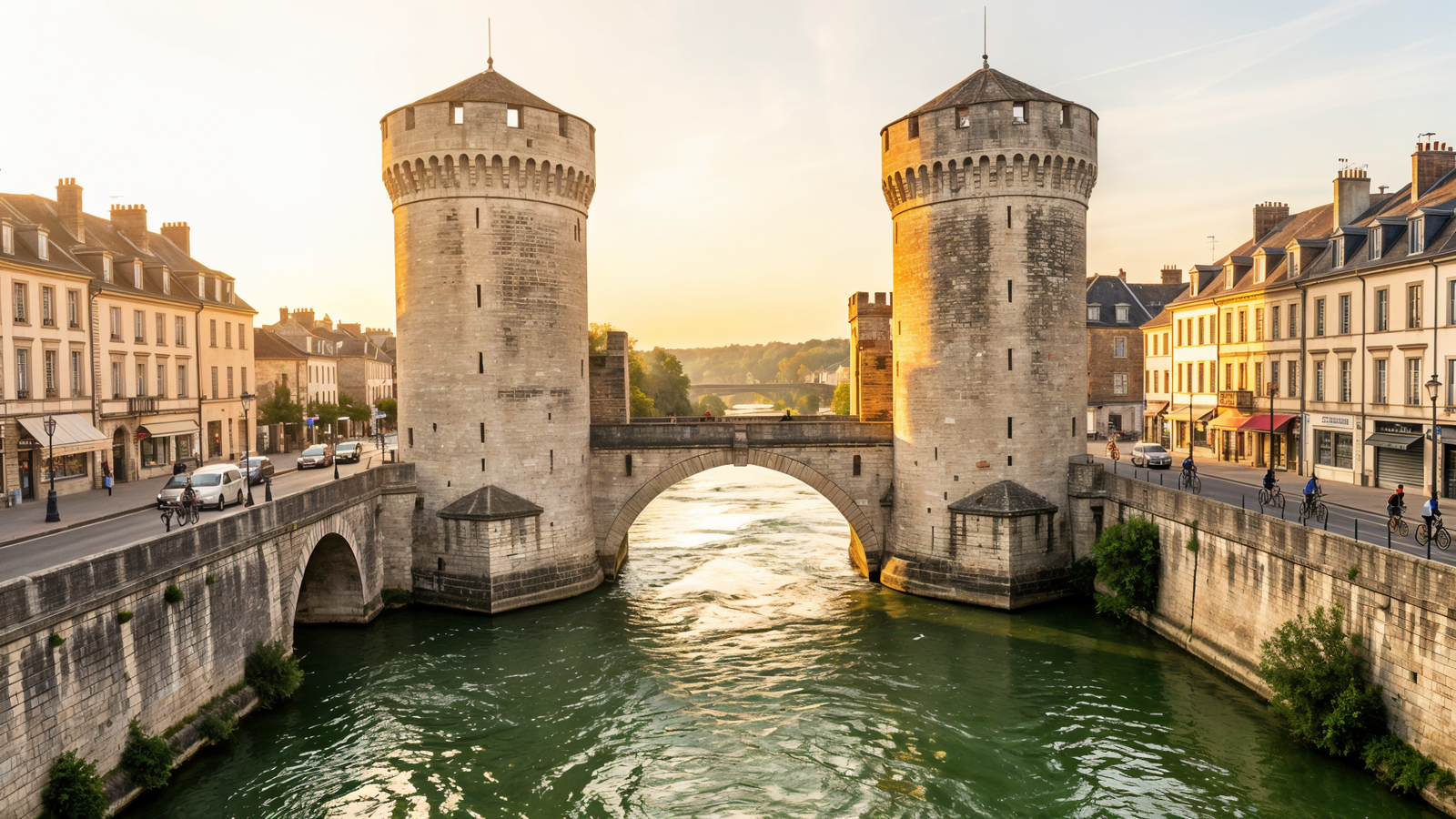
I stopped first at the Porte Chaussée, not at a memorial parking lot. Two round stone towers sit in ordinary traffic, straddling the old road that once crossed the Meuse into the walled town. Cars slide under the arch. A cyclist rings through. The river moves slow and greenish under the bridge, and for a minute Verdun just looks like a working Meuse town with a medieval gate still doing gate work, not only a name from history class.
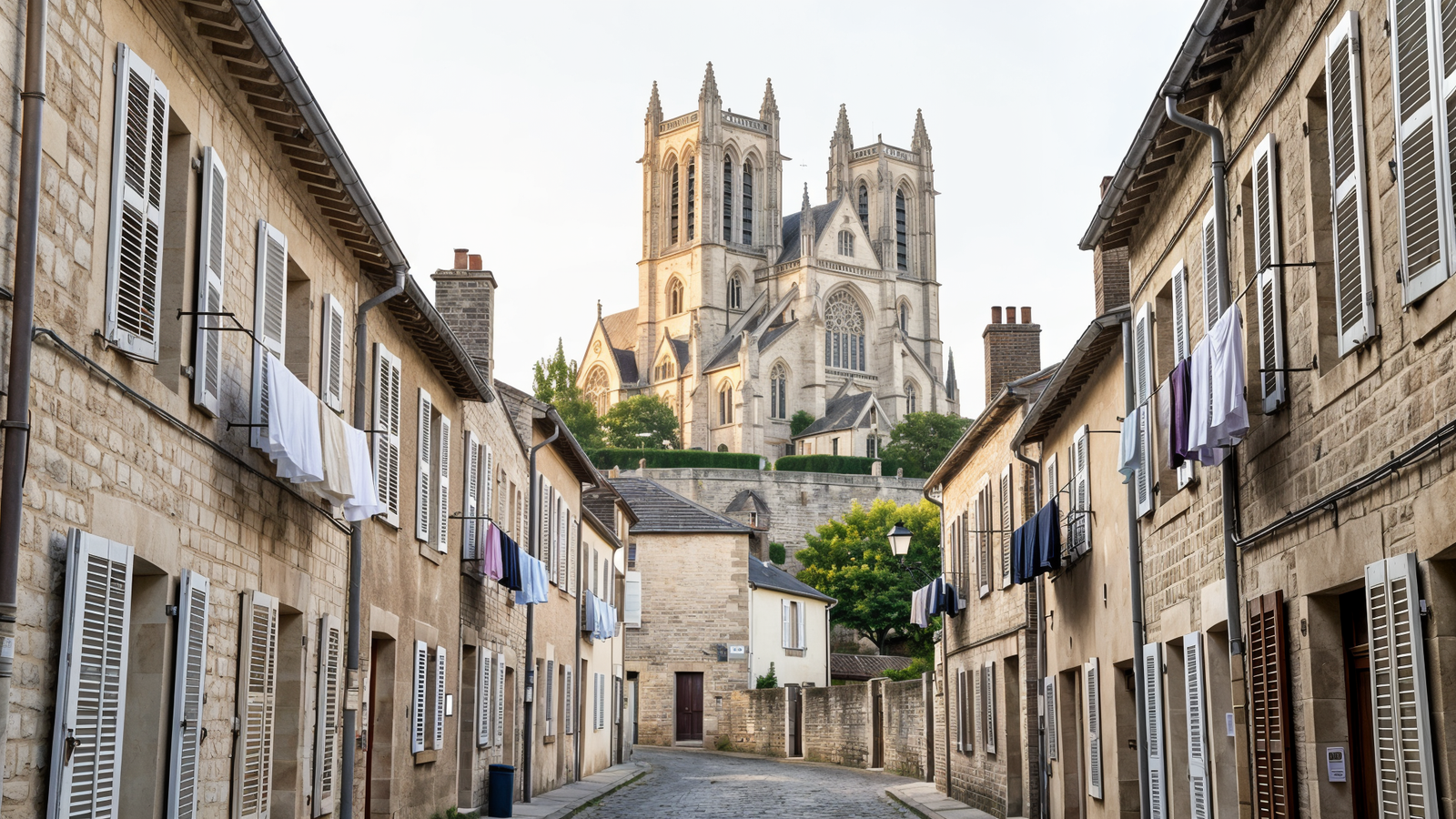
That was the cut I wanted. Verdun sits in the Meuse département of Grand Est, east of Reims, north of Nancy, easy off the A4. Most people drive straight for Douaumont, the ossuary, the Mémorial, the forts. Those sites matter. What held me longer was the town between the battlefield roads: twin towers on the water, quays with tables, a citadel in the rock, and a cathedral hill with laundry still hanging in the side streets.
The gate before the battle map
The Porte Chaussée went up in the late fourteenth century as one of the big gates of the Grand Rempart. Twin cylindrical towers, a passage between them, later seventeenth-century touches, years as a military prison, then a monument the town took back. You don’t need the full plaque. Stand on the bridge side. This thing was built to control a river crossing, not to decorate a roundabout.
I walked it twice in one afternoon. Midday it’s a traffic funnel. Early evening the stone cools and people pause for photos without blocking the lane. From here the Meuse pulls you along the quais. If your only picture of Verdun is grey shell craters, this gate resets the palette: limestone, water, bicycles, a bakery bag under someone’s arm.
Quai de Londres and the working river
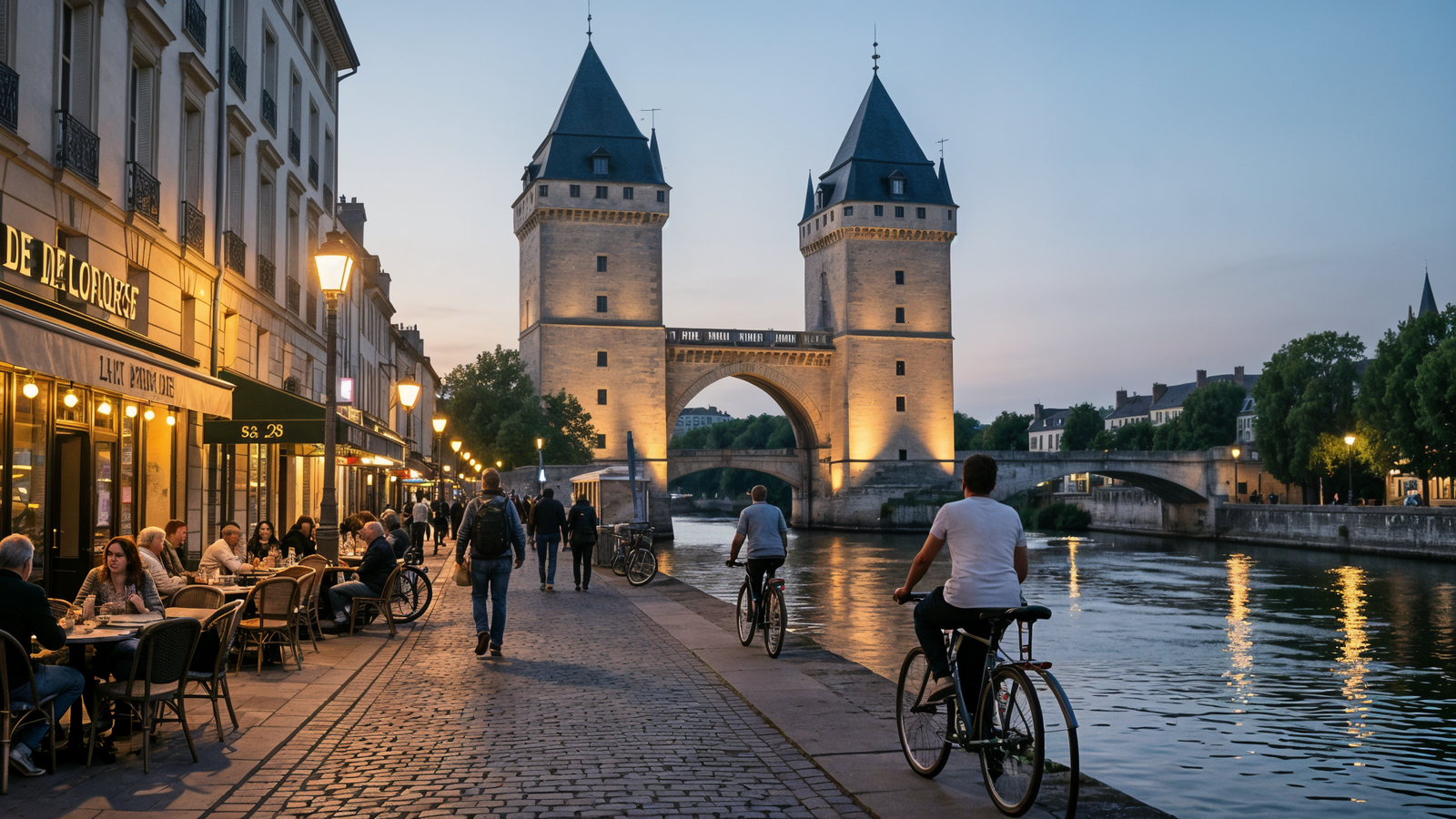
Quai de Londres is where Verdun loosens up. Bars and brasseries line the water. Locals take the terraces when the weather holds. Tour groups thin out once the coaches shut off up toward the citadel. I sat with a coffee and watched the Meuse take its time. Dogs on leashes. Kids on scooters. A delivery van negotiating a tight turn. This isn’t a postcard canal. It’s a real waterway with working edges and a promenade that still belongs to the town.
Walk both banks if you’ve got the legs. The view back to the Porte Chaussée changes every hundred metres. Late light turns the towers soft gold. Rain turns them almost black, and the water picks up the street lamps early.
I used the quay as a hinge between heavier sites. Memorial mornings leave a weight in the chest. Coming back to the Meuse for lunch isn’t disrespect. It’s how the town lives with the weight: remember, then buy bread, then sit by the water.
Up to the cathedral and into the rock
Above the river the streets tighten and climb. Verdun’s old core stacks itself toward the Cathédrale Notre-Dame and the citadel mass. The cathedral has Romanesque bones and later layers; go inside for cool stone and a break from the quay noise. Outside, the upper lanes hold smaller houses and shutters, quiet again after the morning coach wave.
The Citadelle souterraine is the other half of the hill. Long tunnels cut into the rock, used heavily in 1916. You move through galleries on a small train or on foot, depending on the visit. The temperature drops. The story is military and civilian at once: a town that kept functioning underground while the surface burned. I’m not going to replay the whole battle here. Stand in the cool and let the length of the tunnels do the work. Then come back into daylight and notice how ordinary the street sounds are.
If you only do one paid indoor site in town, make it the citadel. Save the ridge forts and the ossuary for a separate half-day when you have room for them.
Outside the walls without losing the town
The battlefield landscape north and northeast of Verdun is huge: Fort Douaumont, Fort Vaux, the Douaumont ossuary, the Mémorial de Verdun, scarred woods that still won’t grow a neat canopy. Go. Give it time. One ridge loop done slowly beats racing through a checklist.
What I liked was coming back into town afterward instead of driving straight to the motorway. Verdun isn’t only a base camp for dark tourism. It’s a Meuse préfecture with markets, schools, and people who live here when the coaches leave. Evening on Quai de Londres after a Douaumont morning holds both truths in one day.
No car? Stick to the urban core, the Porte Chaussée, the cathedral hill, and the citadel. The town alone is enough for a night or two.
Ordinary Verdun between the plaques
Bakeries matter. Pharmacies matter. The pedestrian centre fills with strollers and shopping bags on ordinary weekdays. I ducked into side streets off the tourist funnel and found the usual French small-city mix: a bookshop window, a coiffeur, a café where nobody was speaking English.
Memorial tourism can flatten a place into one mood. Buy something you’ll eat later. Sit where locals sit. Ask the hotel desk which bakery they actually use. The twin towers will still be there when you walk back to the river.
Evenings, the quais take the social load. Summer means longer terraces. Shoulder season means easier tables. Winter is sharp on the bridges. The Porte Chaussée still photographs well in low light.
Places to stay
Budget-friendly edge of centre — Cit’Hôtel du Tigre 22 Avenue de Paris, 55100 Verdun Simple two-star base on the Paris avenue approach if you arrive by car and want an easy in-and-out without quay prices. Rooms are straightforward. Walk or short-drive to the Porte Chaussée and the Meuse terraces. Ask about parking and quieter rooms off the avenue.
Character mid-range in the old core — Hôtel de Montaulbain 4 Rue de la Vieille Prison, 55100 Verdun Small historic hotel in the old town, close enough to walk the cathedral hill and drop to the river without a plan. Rooms feel personal rather than chain-standard. Stairs and older layouts come with the address; pack light if you hate lifting bags. Good when you want to wake up already inside the stone pattern.
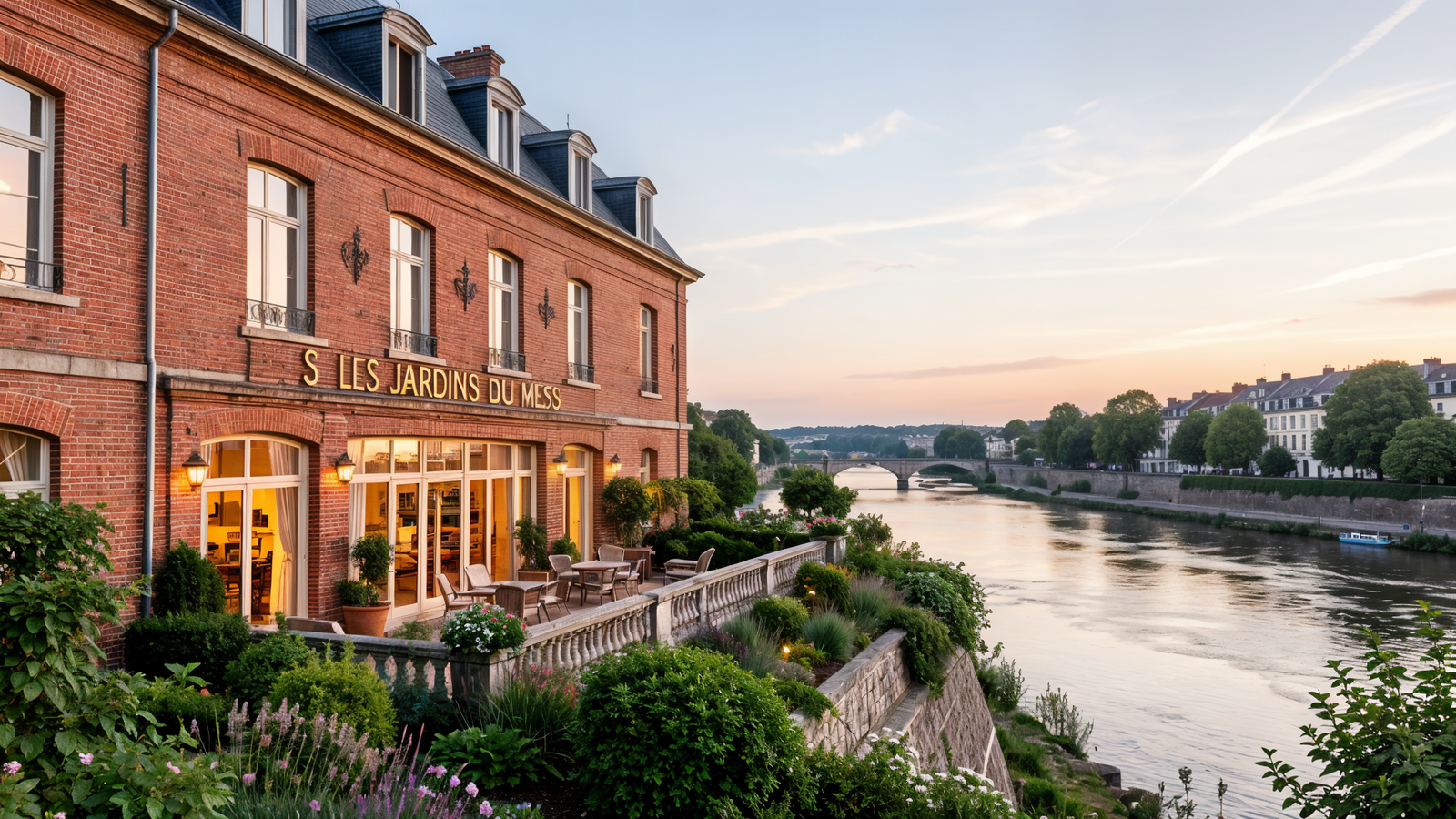
Comfort on the Meuse — Les Jardins du Mess 22 Quai de la République, 55100 Verdun Four-star conversion of a striking brick building on the river, facing the life of the quais. Larger rooms, restaurant on site, useful buffer after a long ridge day among the forts. You pay for location and finish. Worth it if the Meuse view is half why you came into town.
For apartments, look along the centre streets near the river rather than the commercial zones by the big roads.
Where to eat
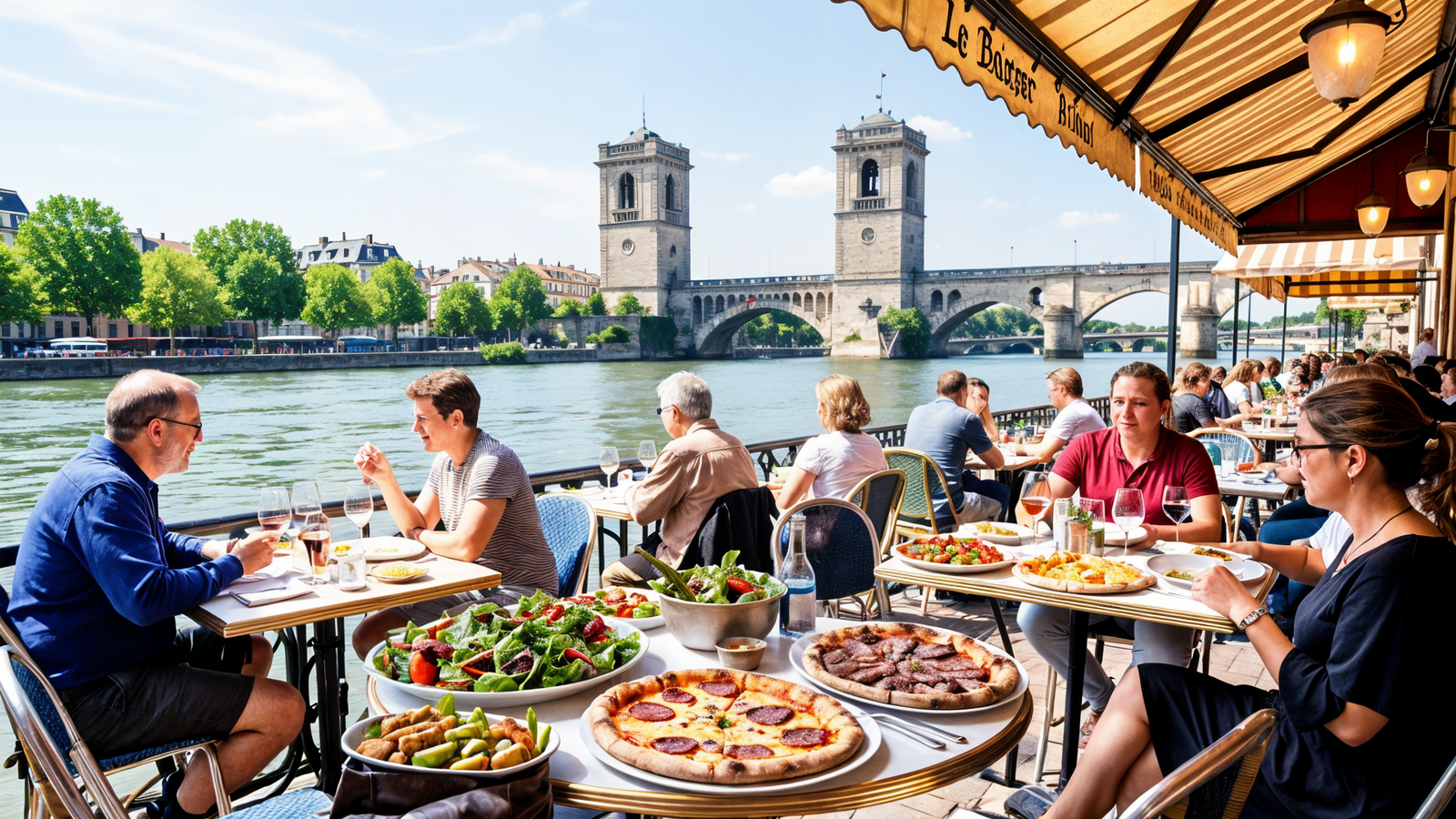
Le Boucher du Quai 19 Quai de Londres, 55100 Verdun Brasserie energy on the water: salads, grilled meats, pizzas, the easy meal after stone and tunnels. Terrace when the weather plays along. Fine for lunch when you don’t want a ceremony.
Le 29 29 Quai de Londres, 55100 Verdun Another quay address with a warmer, smaller-room feel. Burgers and solid plates, friendly staff, river promenade at the door. Good when you want to stay in the Meuse air without walking uphill again. Weekend evenings book up in season; call ahead.
Bar L’Estaminet 45 Rue Rouyers, 55100 Verdun Local bar-brewery feel off the main quay strip. House beers, small room, the owner often in the mix. Come for a glass and a simpler plate when you want Verduners around you rather than a tourist menu board. Hours can be their own.
For a step-up dinner, eat at Les Jardins du Mess on Quai de la République and walk the river after. Skip the generic coach-stop boards.
A day that keeps the Meuse in view
One night works if you’re threading Grand Est by car. Two if you want the ridge sites without rushing the town. Start at the Porte Chaussée in soft morning light, when the towers are quiet and the river still looks private. Climb toward the cathedral late morning. Citadelle before lunch if tickets line up. Long pause on Quai de Londres. Afternoon slow in the upper lanes, or out toward Douaumont with a clear plan to come back. Early evening back under the twin towers; dinner on the quay or at the Mess.
Summer stacks visitors on the memorial road and the citadel slots. Shoulder seasons mean emptier tunnels and easier tables. Winter is cold on the bridges; dress for wind off the water.
I left Verdun with river damp on my shoes and those two towers still stuck behind my eyes. The forts stay in the body longer. The gate stays in the town. The Meuse keeps moving under the arch either way.
