
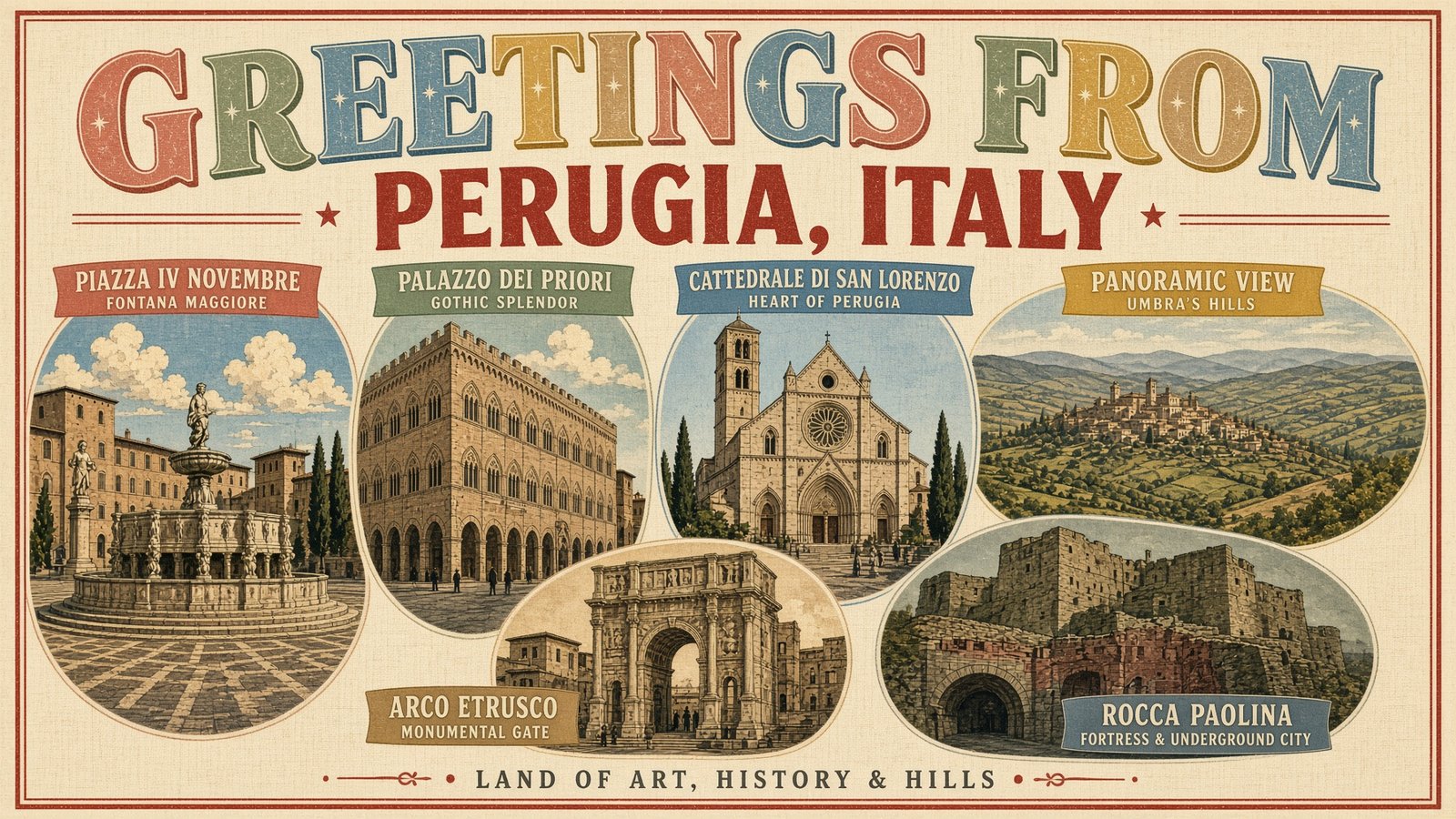
Perugia does not open like a postcard. It opens like a hill that stacked centuries on itself and then put in escalators so students could still make class. You arrive below the ridge — station, ring road, the usual scramble — and the city lifts you. Bus, Minimetrò, or the climb that reminds your calves who is in charge. At the top: stone, bells, espresso cut with chocolate from a window you have not opened yet.
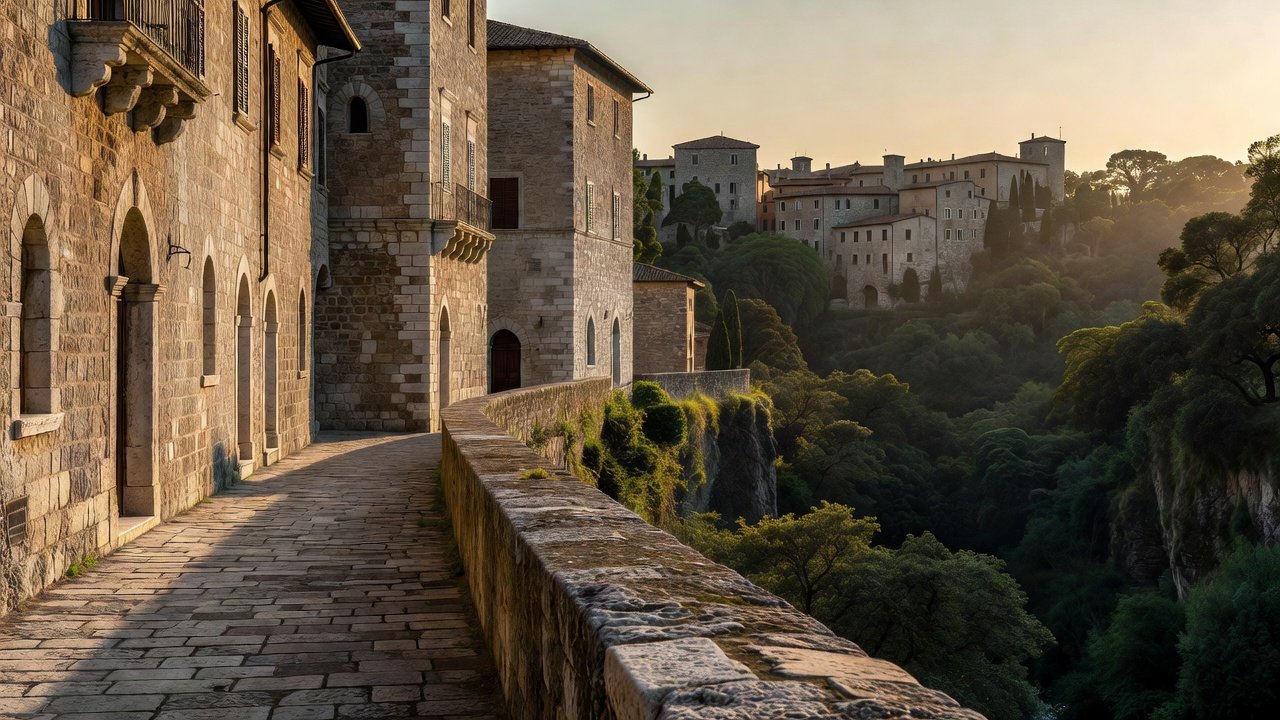
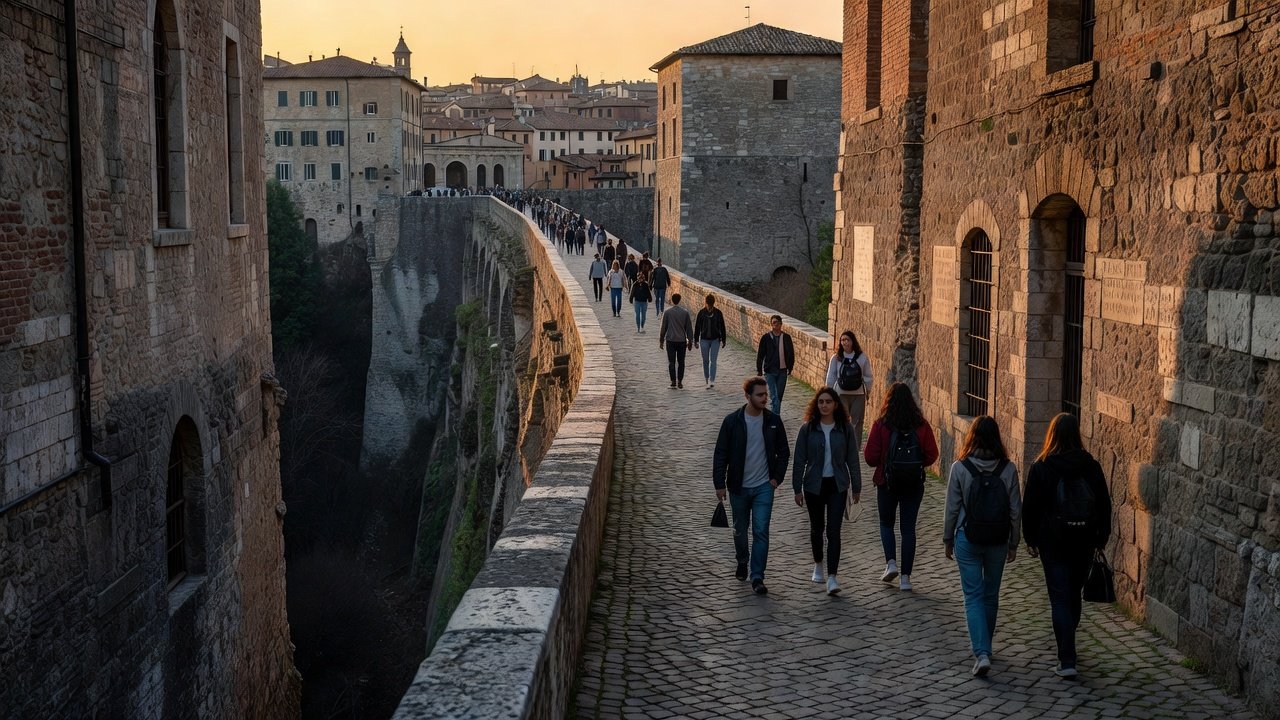
I did not come for a greatest-hits loop of Umbria’s capital. I came for the walk that still feels like borrowed infrastructure: Via dell’Acquedotto, the parapet path on a medieval water channel, hanging above a green ravine between the centro and Borgo Sant’Angelo. People use it to get home. That alone is reason enough to walk it.
Corso Vannucci without the performance
Start where everyone starts, then refuse to stay. Corso Vannucci is the living room — pedestrian spine from Piazza Italia to Piazza IV Novembre, where the Fontana Maggiore still throws water older than most of the groups photographing it. Sit once. Watch the evening passeggiata thicken. Students claim benches. Someone sells roasted nuts.
Then leave before the corso becomes your whole visit. Slip west onto Via dei Priori, where the street drops and the light cools between tall façades. Or cut toward Maestà delle Volte and let the vaults slow you down. Perugia’s center is not one square; it is a braid of ridges and seams. Use Corso Vannucci as a hinge, then peel off, and the city opens sideways.
Chocolate is not a joke here. Perugina put the place on confectionery maps, and Baci still show up in foil like small civic mascots. A factory tour can wait for rain. In town, gelato or a handful of kisses from a proper cioccolateria is enough. Eat standing up. Keep walking.
The aqueduct path that still carries people
The piece I keep returning to is not a museum ticket. It is the aqueduct walk.
From the university side of the ridge, Via dell’Acquedotto runs thin and stone above the drop. In the thirteenth century this structure pushed water toward the city’s fountains. Later centuries added parapets and turned the upper run into a pedestrian link. Now it stitches Borgo Sant’Angelo — student kitchens, laundry lines, evening noise that does not care about your itinerary — back to the historic core.
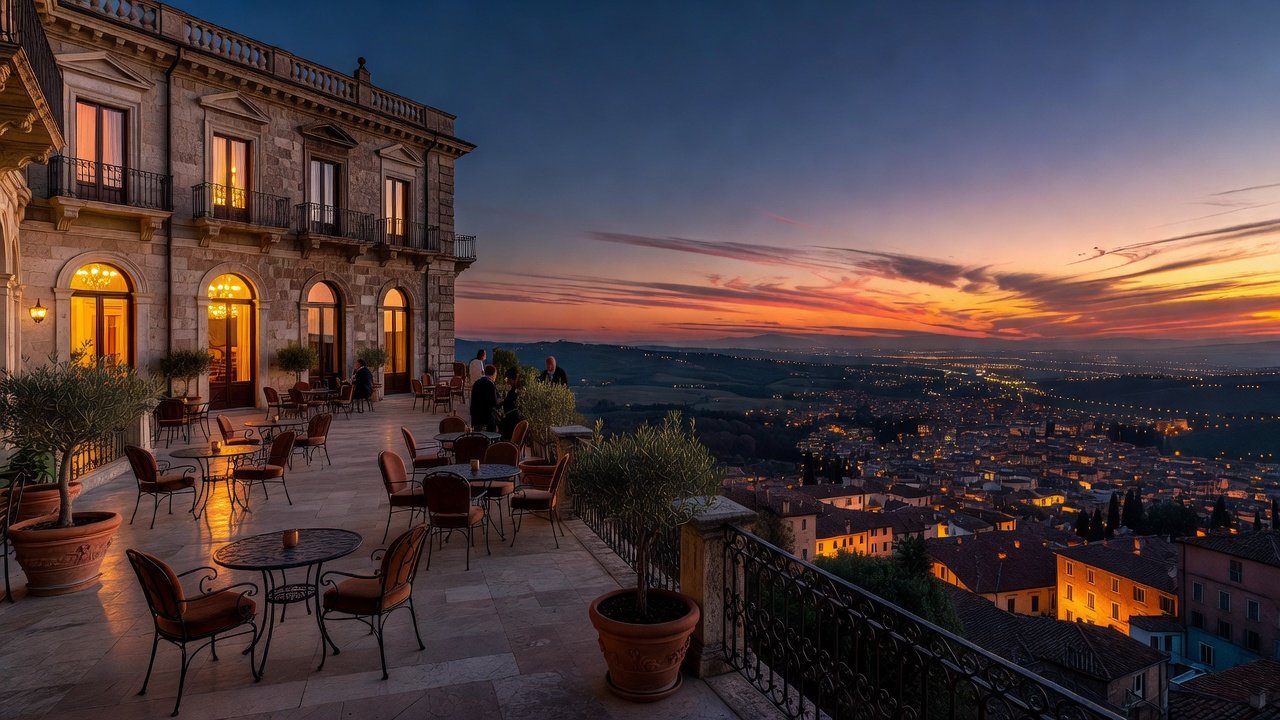
Cross it late afternoon if you can. The valley side goes soft green. Roofs step down in uneven shelves. You hear scooters somewhere you cannot see. Couples meet in the middle because the path is barely wide enough for courtesy. No gift shop at either end. You are on a working shortcut that happens to be beautiful.
On the Sant’Angelo side, keep going toward Porta Sant’Angelo and the round church of Sant’Angelo, one of the oldest Christian buildings in the region — spare in a way that makes later baroque feel loud. Students cut across the grass. Someone practices guitar badly and sincerely. University town, Etruscan and medieval bones, no fridge-magnet version required.
Walk back after dark if lighting and balance agree. The ravine becomes a black pocket. City lights read warmer and lower.
Under the hill: Rocca Paolina
Perugia’s other essential move is downward. Rocca Paolina is the papal fortress that swallowed a neighborhood. In the 1540s, after the Salt War, papal power punched through the Baglioni quarter. Houses, towers, whole streets went under vaults. What you walk now is brick arches and ghost lanes, with the odd feeling that another street plan is still down here under the one you booked.
Enter from Piazza Italia and ride or walk the escalators that thread the fortress. Locals use them like a subway with better masonry — groceries, not audio guides. Follow until you understand that “old town” here is vertical: above, beside, and under.
When you surface, give twenty minutes to the National Gallery of Umbria inside Palazzo dei Priori if the line is kind — Piero, Perugino, Umbrian faces. Or skip it on a first pass and stand in Sala dei Notari if open. Perugia is better on a second look than on a first checklist pass.
Etruscan wall and gate fragments sit under and around all of this. You do not need to master the archaeology. Just notice the hill was already stubborn before the Middle Ages showed up to argue about it.
Markets, oil, and ordinary errands
If timing hits a market morning, follow the bags. Fruit, farro, pecorino that smells like a sheepfold, greens that need garlic and little else. Umbria cooks from the land with less performance than Tuscany’s postcard version. Truffle in season; lentils and sausage when not. An honest glass of local red with lunch is enough.
Duck into a norcineria or alimentari for bread, oil, and something sliced. Eat on a wall with a view you did not plan. The best meals here are sometimes the ones without a reservation number.
Evenings belong to students as much as visitors. Aperitivo spills near the faculties and along the centro edges. You can play tourist on the corso, or drift toward quieter streets where the spritz costs less and the Italian does not slow down for you. The second option is how you catch the city’s actual tempo.
Where to eat
Dal Mi’ Cocco
Corso Giuseppe Garibaldi 12, 06123 Perugia PG, Italy
Fixed-menu energy, Umbrian and proud — sit down and accept what the kitchen decided today. Portions are serious. Payment habits can be old-school; check before you settle in. Good first night when you want feeding more than plating. Lines form for a reason.
Osteria a Priori
Via dei Priori 39, 06123 Perugia PG, Italy
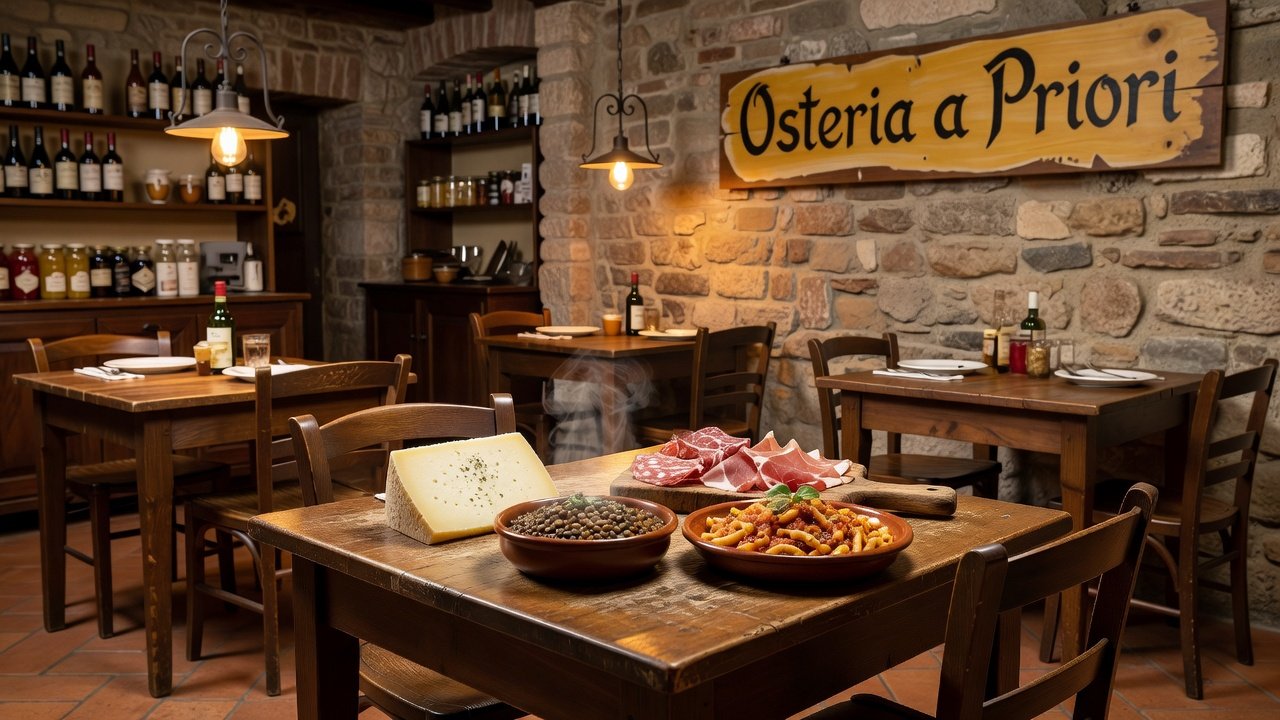
On the drop away from the corso, a room that treats Umbrian products as the point rather than a garnish. Pecorino, lentils, cured meats, pastas that taste like someone still knows a farmer. Book on weekends. Proper sit-down without white-tablecloth stiffness.
La Taverna
Via delle Streghe 8, 06123 Perugia PG, Italy
Tucked on a lane whose name (Witches’ Street) does half the inviting. More polished than Dal Mi’ Cocco, still rooted — seasonal plates, a wine list that can stretch an evening. Reserve. Order the thing that sounds most local and least translated.
Between meals: espresso standing up, a pastry you point at, gelato walked slowly toward the fountain. October oil on bread if someone offers. Say yes.
Places to stay
Sleep on the ridge if you want stone underfoot and no taxi home. Sleep near Piazza Italia for fortress escalators and views that fall off the hill. Bring a bag that can handle uneven brick.
Hotel Fortuna — value / centro practical
Via Luigi Bonazzi 19, 06123 Perugia PG, Italy
A short fold off the main pedestrian flow — old bones, simple comfort, rooftop terrace for a cheap skyline. Good for walkers who care more about location than design magazines. Ask about room quiet; street life has opinions after dark.
Locanda della Posta Boutique Hotel — mid-range, on the corso
Corso Pietro Vannucci 97, 06121 Perugia PG, Italy
Small hotel on the main spine — step out into the passeggiata, step back in when you have had enough. Updated rooms in a historic shell. Ideal for two or three nights when Perugia is the stay, not a day pad from Assisi.
Sina Brufani — splurge, edge of the hill
Piazza Italia 12, 06121 Perugia PG, Italy
Grand hotel manners since the nineteenth century, on the piazza where the city tips toward the valley and the Rocca. Serious beds, escalators home after dinner instead of hunting a garage. Book when you want the hilltop to feel like an arrival.
Two nights minimum. Three if you add Trasimeno or Assisi without turning Perugia into a suitcase dump. Give the aqueduct a late afternoon of its own.
Getting there and moving around
Trains reach Perugia Fontivegge; buses and the Minimetrò climb toward the center. The Minimetrò is half transit, half amusement — small automated cars on a guideway — and it spares your knees. By car, expect ZTL restrictions in the centro. Park lower and come up.
Once on the ridge, walk. Buses stitch neighborhoods. Taxis exist for the night you misjudge the climb after rain. Day trips radiate easily: Assisi, Lake Trasimeno, wine towns south if you have a driver.
Shoes with grip. A light layer even in summer — hill wind at night is real. Perugia will not flatten itself for your itinerary.
I keep thinking about that aqueduct path when students cross with grocery bags and the ravine goes blue. Water used to move there because engineers ordered it. People still move there because it is the sensible way home. Stay long enough for one ordinary errand on the ridge. The fountain and the fortress will still be there when you get back.
