
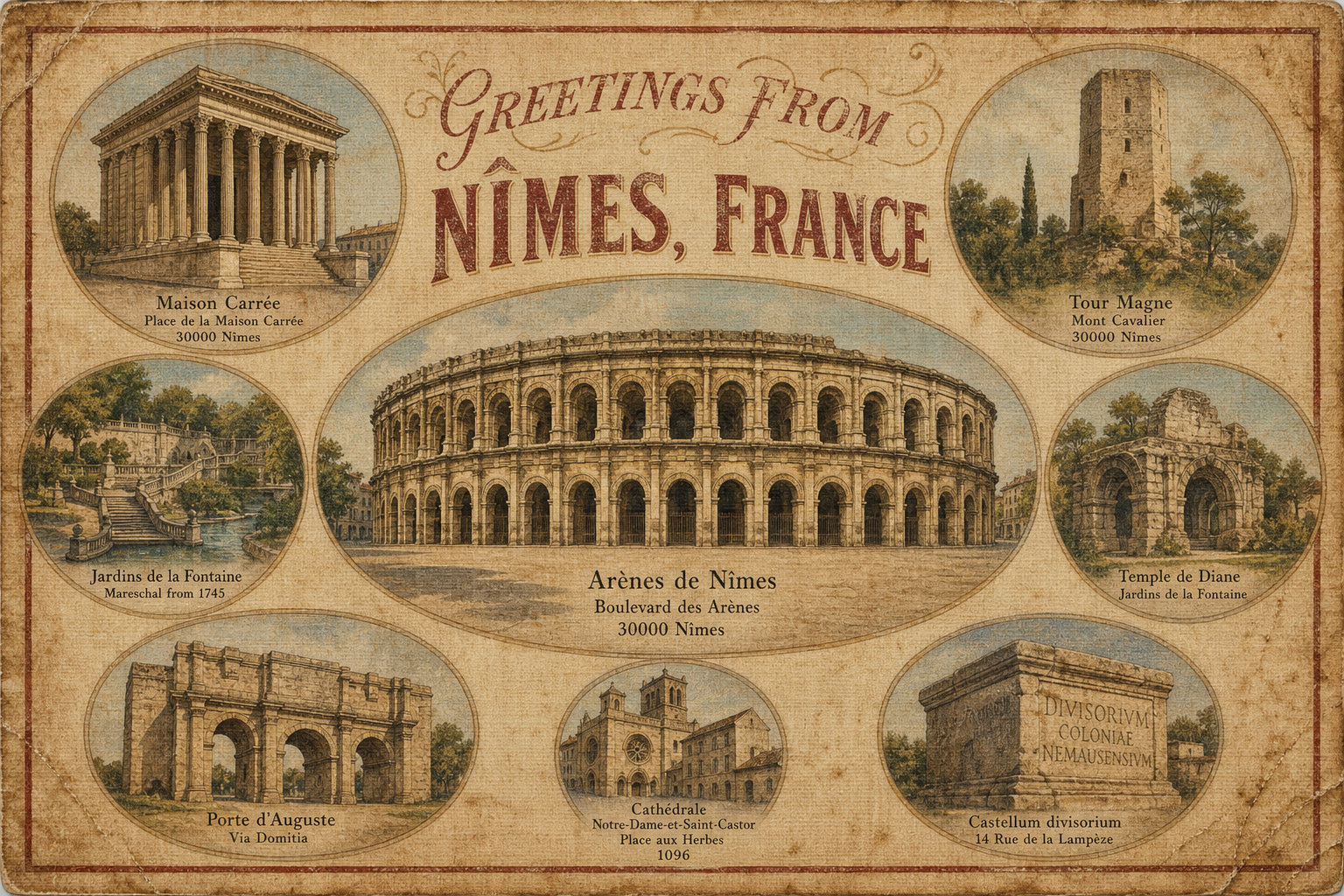
Nîmes puts its Roman stone out front — the arena, the Maison Carrée, the Tour Magne on the hill — and those pieces earn the ticket. What keeps me longer is smaller: a covered market where the fish counter remembers a second visit, a canal-edged garden that cools the afternoon better than any museum café, and Écusson streets that empty for lunch because people actually go home to eat.
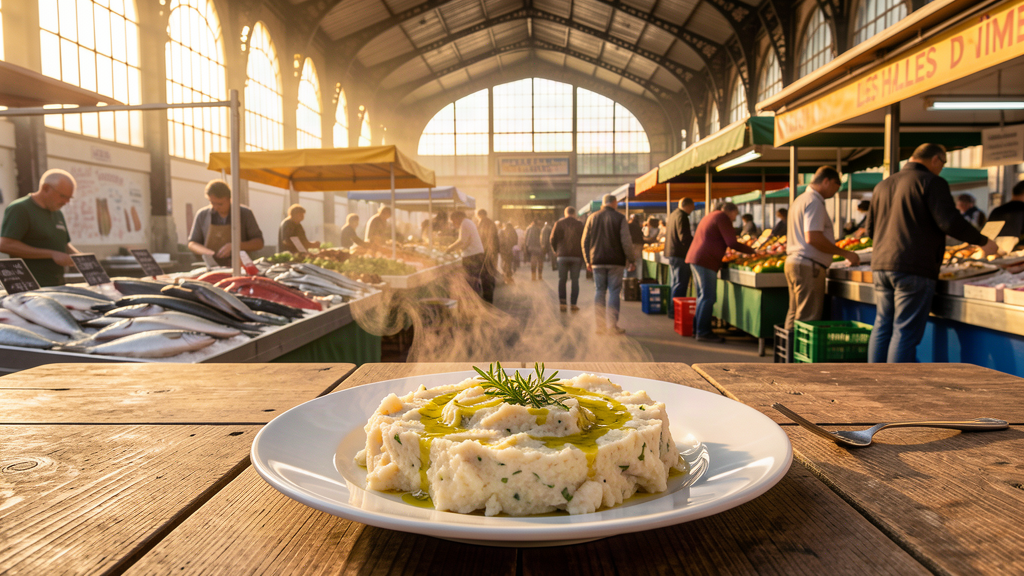
I start at Les Halles. Not because the monuments are overrated, but because brandade and a paper of olives put you on Nîmes time faster than another audio guide.
Les Halles before the lunch rush
Les Halles de Nîmes sits at 5 Rue des Halles, a short walk from the Maison Carrée and La Coupole. Inside: iron roof, cool air even in July, stalls for cheese, butchers, fish, flowers. Locals shop with lists. Visitors hover. Both work if you do not block the aisle with a suitcase.
Come mid-morning. Watch knives move through salt cod. Ask for brandade de morue — cod worked with olive oil and milk or cream, depending on who is making it — to take away or at a counter where stools fill first. La Pie qui Couette and Halles Auberge keep the market from being only a grocery run. You can eat without leaving the building, which matters on a hot day.
Buy something that will not travel well: soft cheese, fruit already soft at the shoulder, olives that oil the paper. Eat standing if you must. It feels like grocery day with better light, not a photo set.
When you leave, the Écusson feels different. You have already bought lunch the same way everyone else did.
The Écusson between errands
The historic center is a knot of lanes, not one postcard street. Rue de l’Aspic, Rue de la Madeleine, the feeds into Place du Marché and Place d’Assas — this is where errands happen. Shutters stay closed until late morning. Delivery vans argue with pedestrians. A hardware shop sits next to a clothing chain that could be anywhere, which is fine; living towns are not rows of boutique façades.
I walk without a checklist. Courtyards when doors stand open. Pale stone that holds the night’s cool until noon. The Maison Carrée appears at the edge like a temple someone forgot to fence — you turn a corner and Corinthian columns are just there, traffic and skateboards included. Go inside if you want the story. Or sit on the steps with a market peach and watch school groups rearrange for photos.
Place d’Assas is a hinge: water, open sky, a reset before the arena or the gardens. Quiet afternoons feel almost residential. Feria weeks do not. Check the calendar if you came for calm; Nîmes rewrites the center when it parties.
Jardins de la Fontaine when the stone is hot
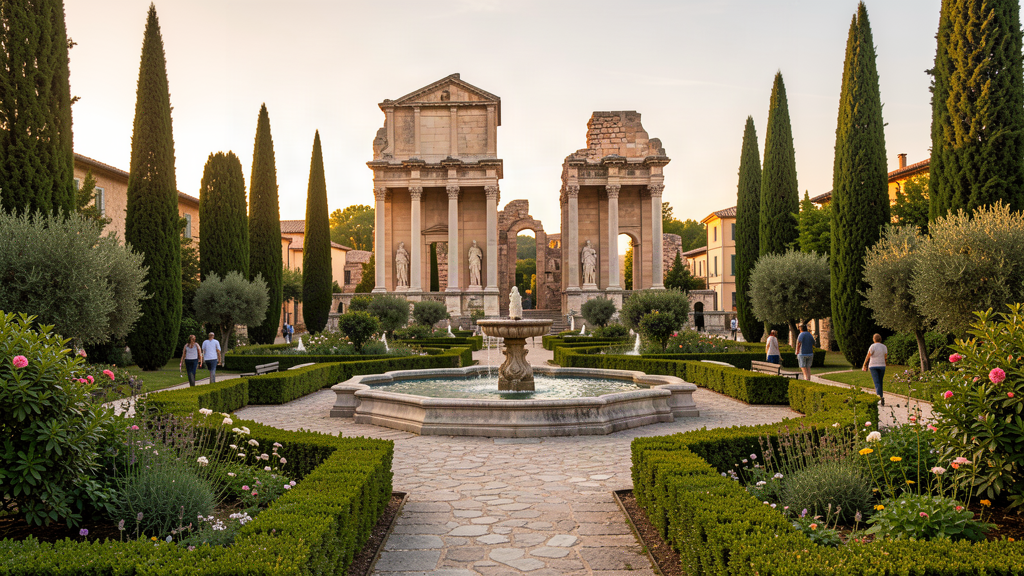
When the center radiates heat, walk toward Quai de la Fontaine and the Jardins de la Fontaine — eighteenth-century gardens over the spring the Romans already knew. Plane trees. Canals. Stairs and statues that look staged until teenagers eat chips on the same marble the guidebooks revere.
Enter from the quai and let the water work. Paths climb toward the Temple of Diana’s ruins and, higher, the Tour Magne if your knees agree. You do not need the full ascent. Shade and moving water are enough. Locals use the lower gardens as a park; treat them that way. Sit. Watch dogs negotiate the gravel.
The quai is a strip of hotels and restaurants facing the green. Evening light here is kinder than the arena gates while a tour bus still idles. My loop: halles morning, Écusson drift, garden afternoon, quai walk when the air softens.
The arena once, on your terms
You cannot write honestly about Nîmes and skip the Arènes. One of the best-preserved Roman amphitheaters still standing, still used, still able to hold a crowd that cares more about bulls or concerts than your quiet hour. Go early or late. Walk the galleries. Then leave before the midday queue turns the visit into a chore you resent.
The Musée de la Romanité across the way helps if you want context without another outdoor line. Glass against the arena’s bulk — some people hate the contrast; I find it honest about a city that never stopped building. Pair it with the arena or skip it if your feet are done.
What I avoid is stacking every Roman site in one punishing morning. Maison Carrée, arena, Tour Magne, Pont du Gard as a same-day trophy hunt. Pick two. Save the Pont du Gard for a half-day of river water outside town. Nîmes itself is enough for a long weekend if the market and gardens set the pace.
A loose two-night shape
Night one near the center. Morning at Les Halles with brandade or oysters if the counter looks right. Aimless Écusson walking, coffee on Place d’Assas or wherever a free table appears. Late afternoon in the Jardins de la Fontaine. Dinner back toward the halles or the quai.
Day two: arena early, then the museum or a slow return to streets you rushed. With a car or decent bus, the Pont du Gard in late light. Without, climb toward the Tour Magne and come down through residential edges where laundry still hangs and nobody is selling a gladiator keychain.
That is enough. Camargue day trips and Avignon exist. They are not required to justify the train ticket.
Places to stay
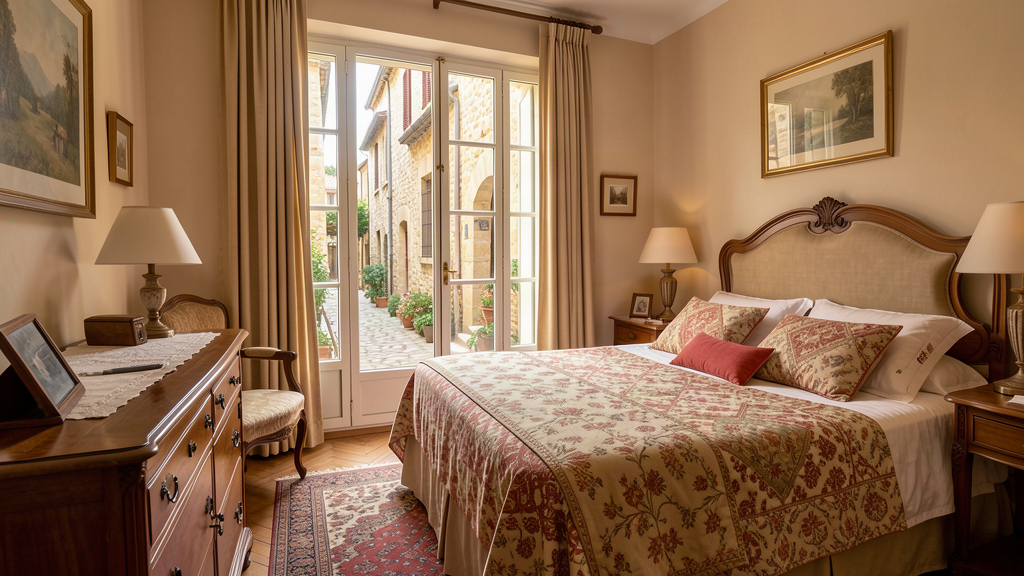
Three bases, three budgets — walkable to Les Halles, the Écusson, and the gardens.
Maison Albar Hôtels – L’Imperator (splurge) 15 Rue Gaston Boissier, 30900 Nîmes Grand address on the Quai de la Fontaine side: pool, spa, serious restaurants, rooms that make the gardens feel close. You pay for polish. Book early for feria and high summer. Best for dusk walks along the quai without a taxi.
Hôtel de l’Amphithéâtre (mid-range) 4 Rue des Arènes, 30000 Nîmes Two linked townhouses in the pedestrian center, about fifty meters from the arena. Charm over corporate uniformity — rooms vary, which is the point of old buildings. My default when friends want atmosphere and short walks to monuments and market streets without the Imperator bill.
ibis budget Nîmes Centre Gare (value) 2 Avenue du Général Leclerc, 30900 Nîmes Straightforward chain bed opposite the train station. Clean enough, predictable, euros left for brandade and tickets. Walk into the center with light bags, or take a taxi when you do not feel noble. Solid arrival-night base if you roll in late.
Summer weekends and festival weeks fill the center first. Shoulder months — April through early June, September into October — are kinder on rates and patience.
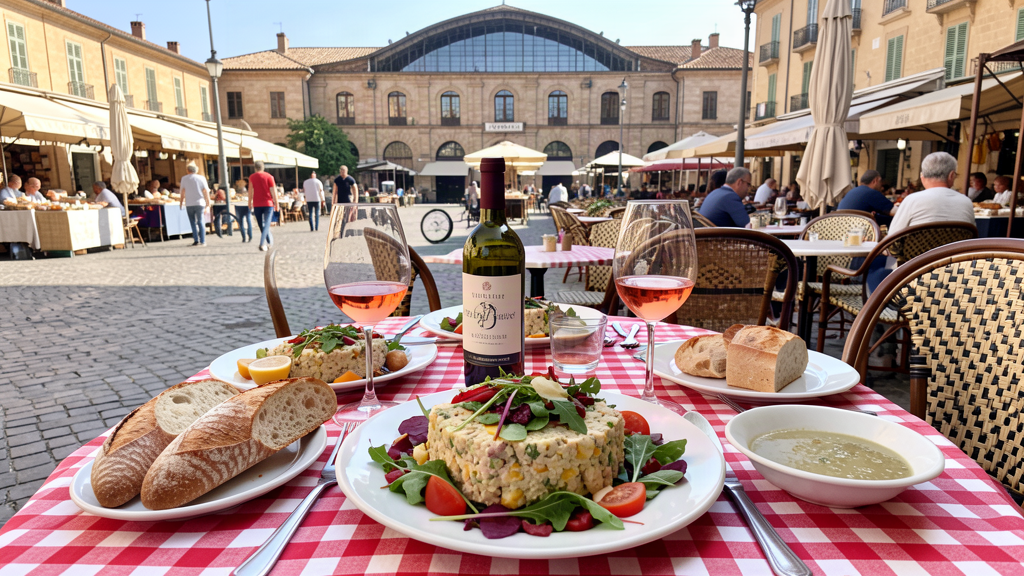
Where to eat
Reserve when you care. Nîmes is smaller than the Roman résumé suggests, and the good counters know it.
La Pie qui Couette Les Halles de Nîmes, 5 Rue des Halles area, 30000 Nîmes Market cooking with the stalls as pantry: brandade, aged meat, tartare, desserts that do not apologize for cream. Lunch energy, not white-tablecloth ceremony. Come when the halles are alive. Book if the guidebooks have been loud that week.
Halles Auberge 5 Rue des Halles, 30000 Nîmes Traditional plates in the market building — tripe and offal for the committed, regional cooking and tapas-style picks for mixed tables. Locals use it. Sit at the counter if the room is full.
Les Tables de la Fontaine 9 Quai Georges Clemenceau, 30900 Nîmes Garden-and-quai side when you want evening air after the canals. Regional cooking, slower than the market crush. Check closing days; independent kitchens keep their own calendars.
For no-reservation afternoons: oysters or a sandwich from a halles stall on a bench toward Place d’Assas, or bakery bread and market tomatoes when heat makes a dining room feel like a mistake.
Getting here, getting around
Gare de Nîmes Centre is walkable with light bags; Nîmes Pont-du-Gard on the TGV line needs a shuttle or taxi — know which station your ticket names. Montpellier and Marseille catch more flights, then train.
Once here, walk. The story is compact: halles to Maison Carrée to arena to quai and gardens. Buses help for outer neighborhoods and Pont du Gard links; a car is useful for Camargue roads and a nuisance for parking near anything you want on foot.
French gets warmer service at the market counters. English appears in hotel lobbies and at the big monument desks. At Les Halles at 10:15 a.m., a few phrases and a finger pointed at the brandade beat a phone held between you and the person working the knife.
Nîmes works better when the arena is one chapter, not the whole book. Start with salt cod and olive oil under the market roof. Let the gardens take the afternoon. The stone will still be standing when you are ready for it.
