
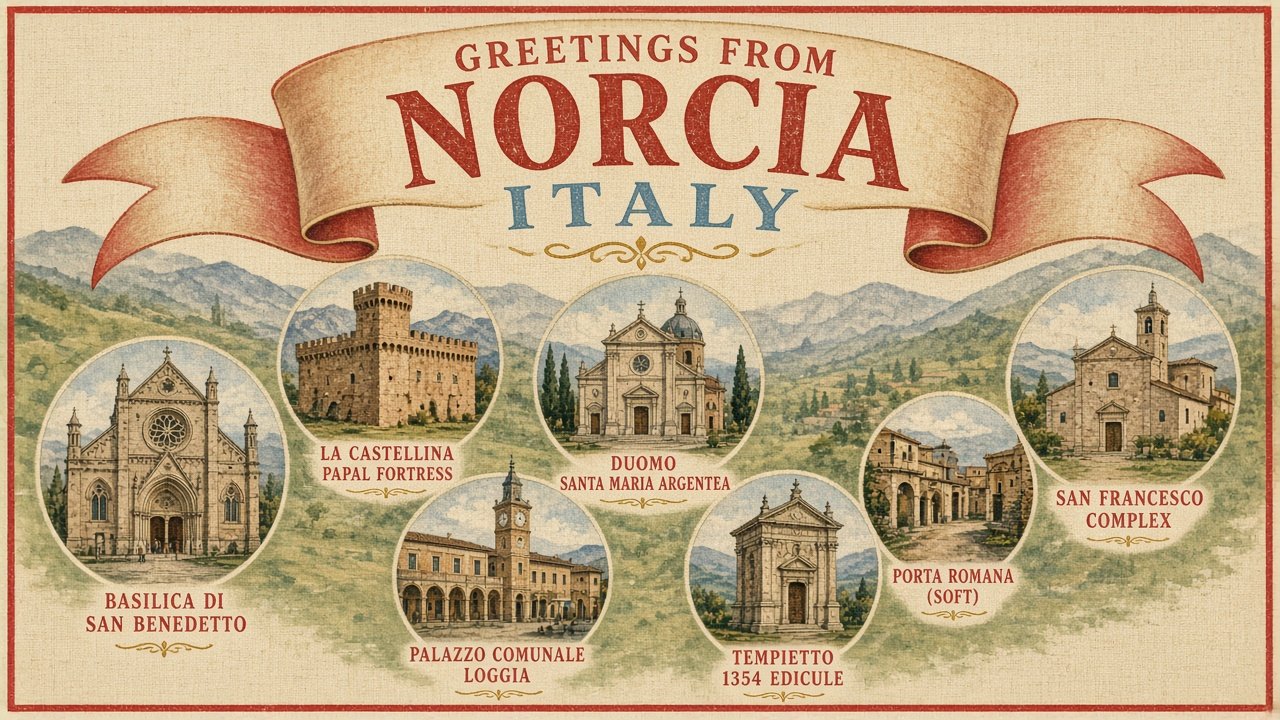
Norcia sits flat under the Sibillini, a walled town that never needed a hilltop to look serious. The mountains do the drama. Inside the gates, the story is pork, truffle, Benedict, and a 2016 earthquake that still shows in scaffolding and missing interiors. You smell the place before you finish reading a map: cured fat, black winter fungus, espresso cut with cold mountain air.
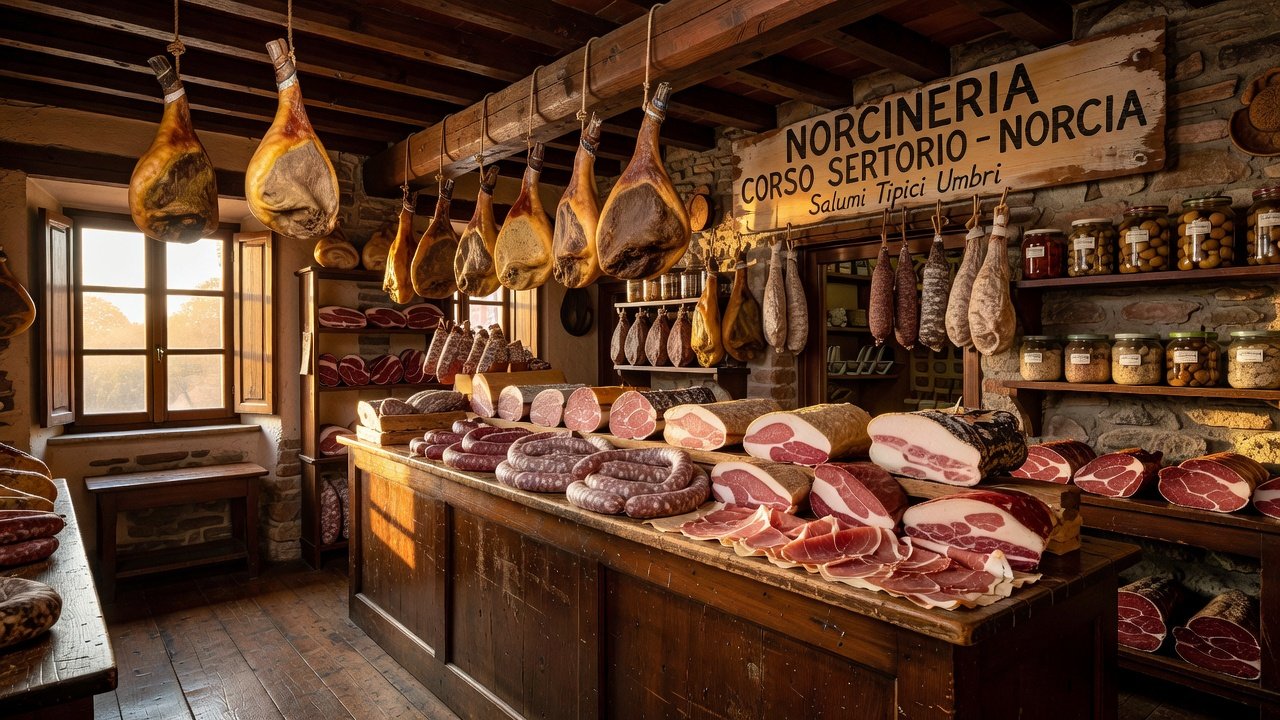
I did not come for another Umbrian postcard. I came because the craft named after this town — norcineria — still hangs whole from hooks along Corso Sertorio, and because people here kept slicing meat while the basilica lost its nave.
Corso Sertorio, where the knives stay honest
Enter through Porta Romana when you can and walk the long spine toward the center. Corso Sertorio is not a museum street. It is a working row of salumerie, some old enough to feel inherited, some rebuilt or shifted after the quake into cabins and temporary fronts that still sell the same product.
Duck into a shop like Brancaleone da Norcia on the corso, or Norcineria Laudani at Corso Sertorio 49. Ceiling hooks hold prosciutto. Counters hold lonza, corallina with its white fat cubes, mazzafegati if you ask for the sweet-savory liver sausage that confuses first-timers. The norcino tradition is not a tasting menu. It is a trade: salt, time, air, knife skill. Buy thin slices for a picnic. Taste before you load the bag.
Between shops, the street keeps ordinary life — a bar stool, hardware, someone arguing about parking that never quite works inside the walls. That mix is the point. Norcia’s food fame never floated free of daily errands.
Piazza San Benedetto and the facade that waited
The corso empties into Piazza San Benedetto, the civic living room under the mountains. Saint Benedict and his twin Scholastica were born here; the square still feels like theirs even when buildings look half-finished.
The Basilica of San Benedetto took the October 2016 shock hard. The facade stood. Much of the interior did not. Years on, reconstruction is still a lived fact — fences, works, a holy space you may meet as a shell or a staged recovery depending on the week. Do not treat the damage as dark tourism. Stand in the square, look at what held, and notice how stubborn the place is. Shops reopened. Stone was braced. This is a community finishing a long job, not a theme-park rebuild.
Sit for a coffee when a table is free. Watch delivery vans negotiate corners built for mules. The square is not large. Give it an hour without a checklist.
Black truffle, Castelluccio lentils, and the plain above town
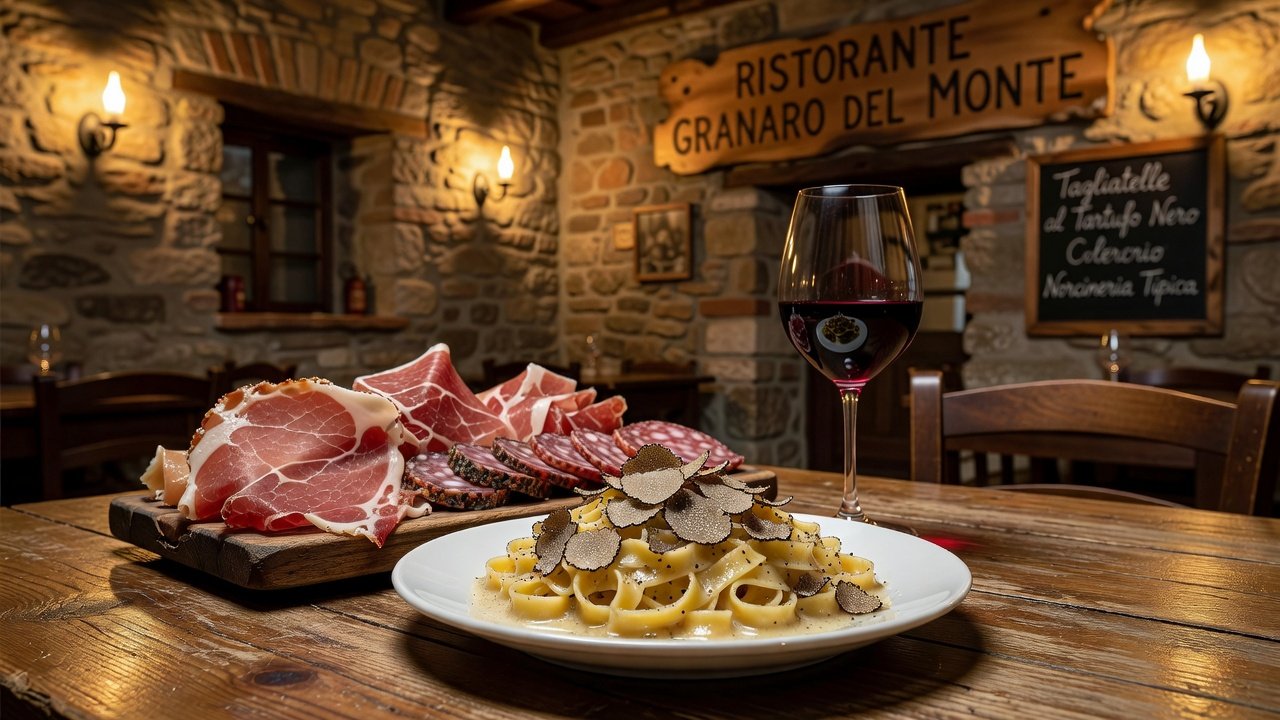
Norcia’s other pull is underground and seasonal. Winter brings the black truffle — Tuber melanosporum — into the same shops that sell ham. December through March, bags and fresh knobs show up beside the cured meat. You will see “tartufo” on nearly every menu; some of it is generous, some of it is perfume. Ask what is local and in season. A simple pasta with real shavings beats a dozen truffle-oil gimmicks.
Up the road, the Piano Grande opens under Castelluccio — a high plain that turns wild when the summer fiorita paints it, and the rest of the year is lentils, wind, and sheep. Castelluccio itself was wrecked in 2016 and has been slowly re-stitched; visiting is half landscape, half support for a frazione that still sells dried lentils and cheese from rebuilt stalls. Drive up if the weather holds. Bring a sweater even in July.
Back in Norcia, Castelluccio lentils turn up in soups and sides that need no apology. Order them. They taste like altitude.
A slow circuit of walls and ordinary doors
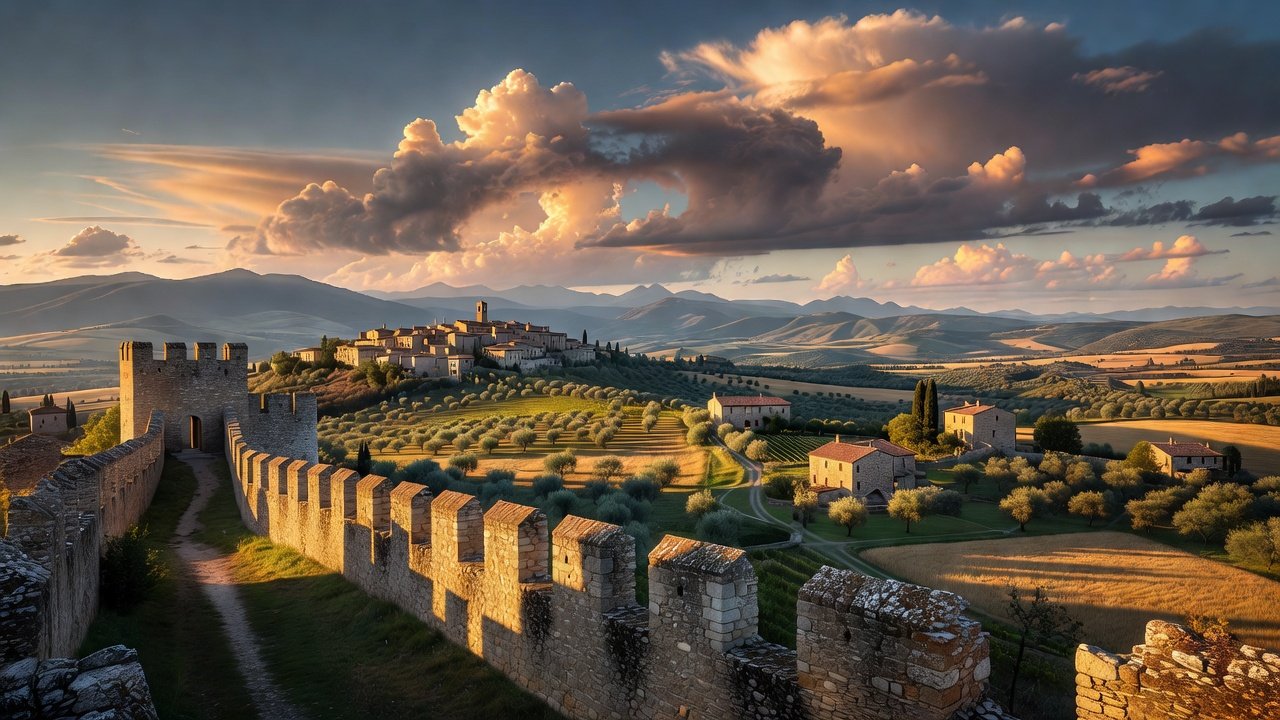
Norcia’s walls still frame a walkable core. You do not need a guided tour. Loop the perimeter when light softens, duck side lanes off the corso, notice how new plaster sits against older stone. Earthquake recovery is visible without being theatrical — braces, empty lots, a church closed “for now” that has meant years.
If a small museum is open, go in. If not, keep walking. The best hour may be late afternoon when the salumerie quiet and the mountains take the last sun. Norcia at that light feels less like a food brand and more like a town that happens to feed people well.
Where to eat
Ristorante Granaro del Monte, Via Alfieri 12, 06046 Norcia PG, Italy
Long-running Bianconi-family room — one of the longest-running restaurant rooms in town, back tight to the center after quake years of shifting. Expect cured meats to start, pasta with truffle when the season is real, lentils, grilled meats, local wine. Book. First night if you want the house that still teaches visitors what this plateau tastes like.
Ristorante Vespasia Via Cesare Battisti 10, 06046 Norcia PG, Italy
Inside Palazzo Seneca — finer plates, quieter room, the same territory (pork, truffle, mountain herbs) treated with more ceremony. One good long dinner when you want cloth napkins after a day at counters. Reserve ahead; it fills with people who planned for it.
Ristorante Pizzeria Il Tartufo Piazza San Benedetto, 06046 Norcia PG, Italy
Simpler door on the main square — pizza, pasta, the word tartufo used without shame. Useful second night or lunch when you want a table facing the square while it rebuilds. Confirm open hours; mountain towns still close when they close.
Between meals, stand at a norcineria counter with bread and a few etto of whatever they sliced last. That may be the best food money you spend all week.
Places to stay
Sleep in or against the historic core if you want to walk to dinner and wake to bells and delivery noise. Sleep on the ring roads if you want easier parking and a car for Castelluccio at dawn. The centro is compact; do not promise yourself street parking at the hotel door.
Hotel Garden — value / easy edge of town Viale XX Settembre 2/B, 06046 Norcia PG, Italy
Straightforward rooms just off the densest fabric — parking that does not require a prayer, a short walk to Porta Romana and the corso. Good base when Norcia is one stop on a Sibillini loop and you need the car ready early. Confirm breakfast hours.
Hotel Grotta Azzurra — mid-range, in the Bianconi orbit Via Alfieri 6, 06046 Norcia PG, Italy
Historic hospitality tied to the same family story as Granaro del Monte — central enough to walk everywhere that matters, traditional rooms, a desk that has been sending guests into Norcia for a long time. Ideal when the town is the stay, not a drive-by from Spoleto. Ask about restaurant packages.
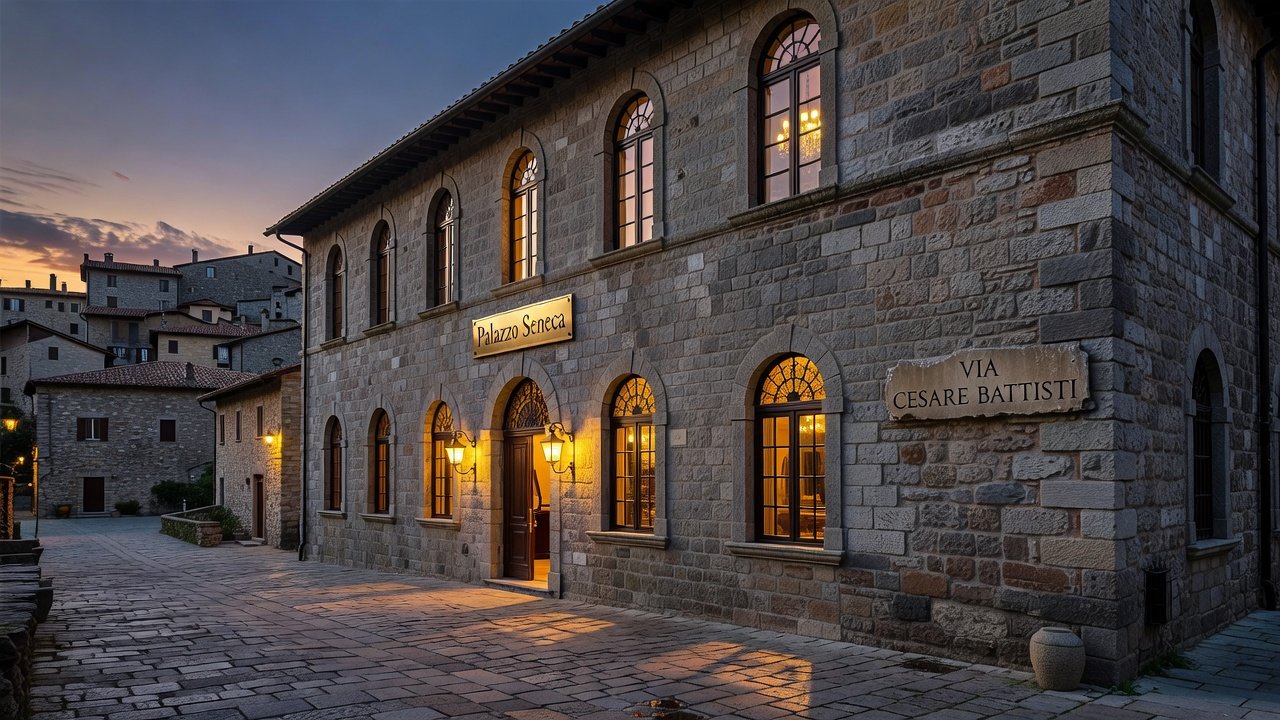
Palazzo Seneca — splurge, restored palazzo Via Cesare Battisti 10/12, 06046 Norcia PG, Italy
Renaissance bones, careful rebuild, spa and rooftop calm when cobbles and scaffolding wear you down. Vespasia is in-house. Full-stop base: corso morning, piazza coffee, long dinner, quiet return through lanes that empty early. Book ahead for weekends and truffle months.
Two nights beat one. One day for the corso and the square; one morning for the Piano Grande if roads and weather agree; one evening when you eat slowly and stop treating the earthquake as the only story.
Getting there and moving around
Norcia sits in southeastern Umbria, Province of Perugia, under the Monti Sibillini National Park. A car is the honest tool. From Spoleto, the drive is under an hour on winding roads; from Perugia, it’s longer. Rome is doable as a long day but better as a stay. Winter can mean snow on the approaches and on the road to Castelluccio — check before you commit to the plain.
Trains do not drop you on the piazza. The closest useful rail is often Spoleto or other valley stops, then bus or taxi; schedules reward double-checking. Once in Norcia, walk the core. Save the car for the mountains and for sleeping outside the tightest streets.
Wear shoes with grip. Stone gets slick. Bring a layer even in summer — evening air off the Sibillini cuts through a T-shirt fast. In truffle season, bring cash for small shops that still prefer it.
Norcia will not invent a softer Italy for you. It will hand you a counter of hanging hams, a saint’s facade that refused to fall, a plain of lentils above the roofs, and a craft so tied to place that the rest of the country borrowed the town’s name for the knife work. That is enough reason to come through Porta Romana, buy what they slice, and stay the night.
