
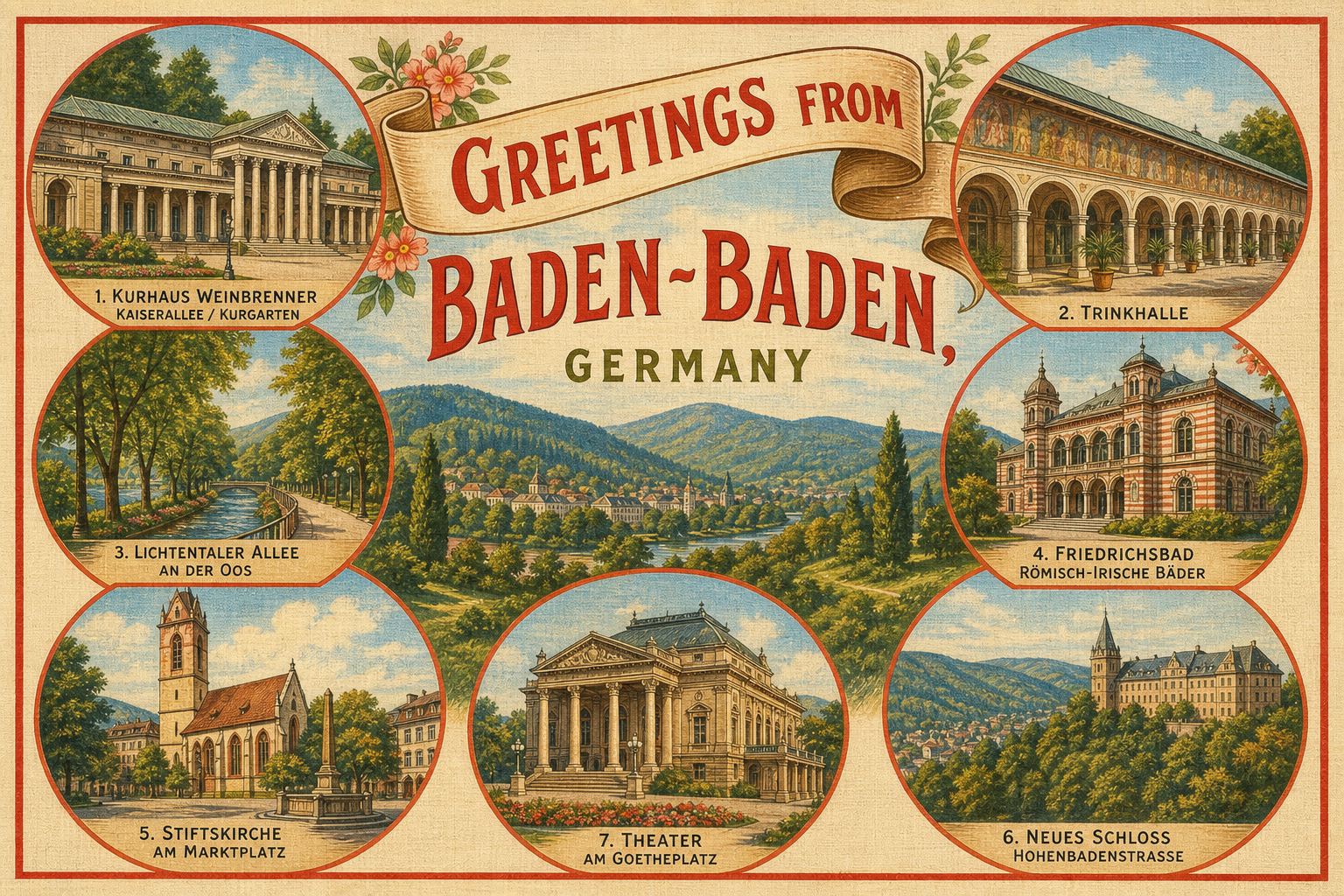
Baden-Baden does not hide its reputation. The casino still glows after dark. Thermal water still comes out hotter than you expect. Grand hotels still face the park as if the nineteenth century never quite left. What changes the visit is how little of that you need.
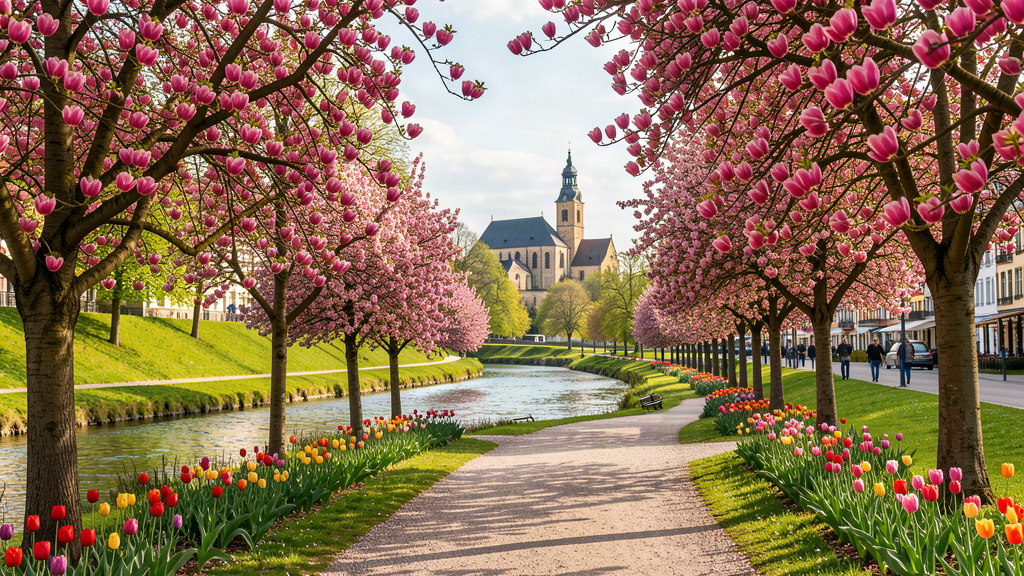
I start with the Oos. It is a small river — more a green thread than a drama — running the length of Lichtentaler Allee from the spa core out toward Kloster Lichtenthal. Locals walk dogs before work. Joggers pass the museum glass without stopping. The water is shallow enough that you hear gravel and ducks more than current. I treat the river as the day’s main line and let the rest of town fall into place around it.
Goetheplatz to the first bridges
Begin near Goetheplatz, where the Kurhaus and Trinkhalle still pull the postcard crowd. Duck them if you want; the Allee is free and open around the clock, and the better light is usually earlier than the casino doors. The first stretch is the museum mile: Theater, Kulturhaus LA8, Staatliche Kunsthalle, Museum Frieder Burda. Architecture shifts from plaster and colonnade to pale modern boxes without much warning. Spa polish next to concrete that does not apologize. That mismatch is just how the town looks up close.
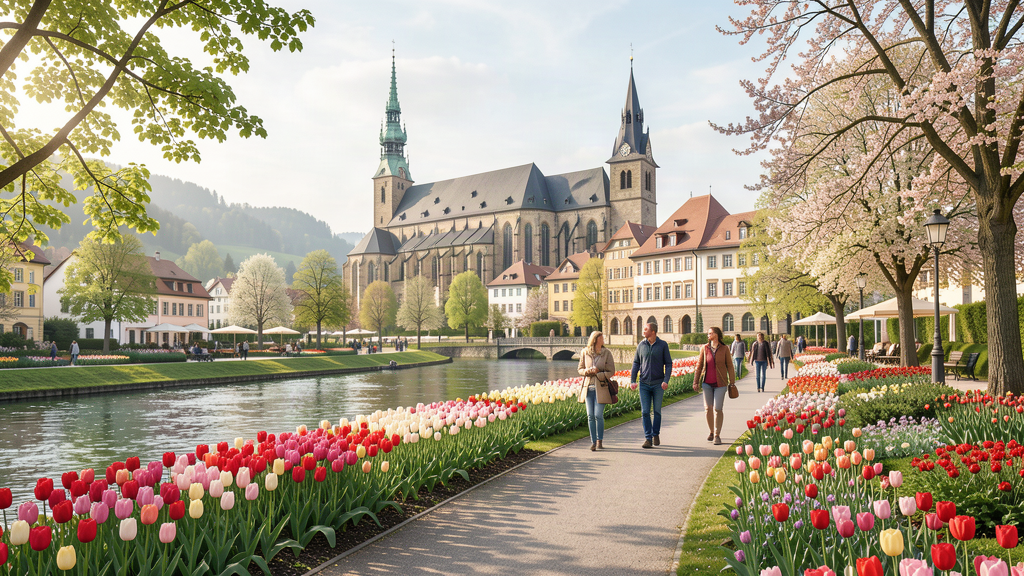
Cross a footbridge when you feel like it. The Oos is never far. Tulip trees and old oaks throw shade that actually cools the path in July. In March the crocuses come up hard in this northern section; people crouch with phones, then keep walking. Midweek mornings work best. Delivery vans still work the side streets. The park feels like it belongs to residents first, coach tours second.
Augustaplatz sits across the water with the congress hall and the long facade of Brenners. You do not need a room key to enjoy the view. Stand on the bank, watch the path empty and refill, then keep south.
Roses, dahlias, and the quieter third
Past Fremersbergstraße the middle of the Allee loosens. Tennis courts appear for Tennisclub Rot-Weiß — one of the older clubs in Germany, still more neighborhood than spectacle. The Josefinenbrücke leads into the Gönneranlage, a formal rose garden with something like four hundred varieties when the season holds. June is the obvious month. Even in a cooler spring the paths smell like cut stems and wet soil.
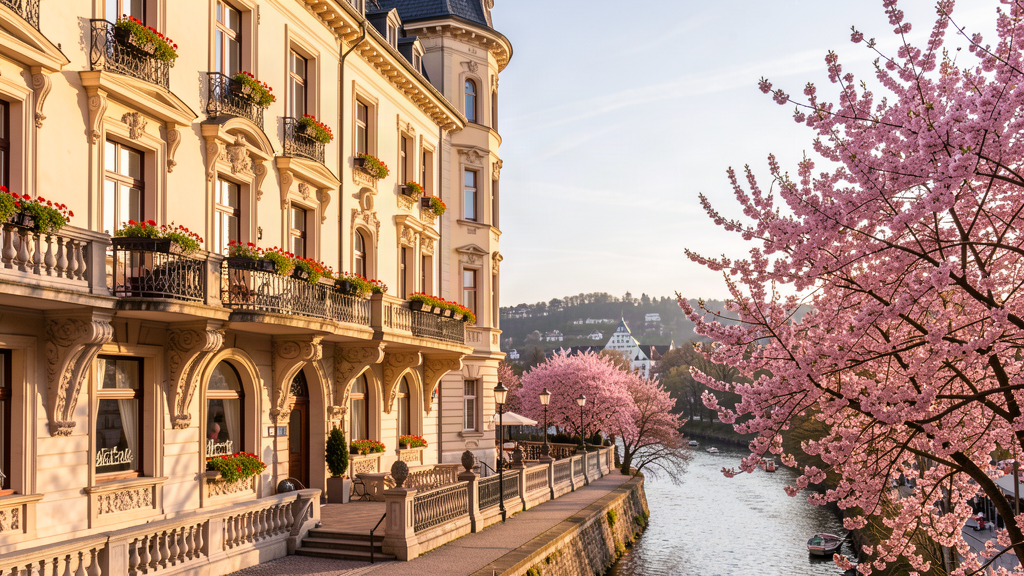
Farther on, after Gunzenbachstraße, the Klosterwiese opens and the avenue becomes the third section — silver lindens, a one-way ribbon of road, Swiss-chalet villas across the Oos, the little Hirtenhäuschen near where an 1861 attempt on King Wilhelm of Prussia went wrong and left him mostly unharmed. The Dahlia Garden peaks later, from late summer into early autumn, yellows and oranges almost reckless against the green. Busts of Clara Schumann, Brahms, and Robert Stolz sit near the Bénazet Pavilion if you care about names; if you do not, the color is enough.
This southern third is where I stop thinking about Baden-Baden as a performance. Dog walkers outnumber luggage. Kids on scooters cut across the meadow. The villas still look expensive, but the path feels ordinary in a way that makes me slow down.
Kloster Lichtenthal and the end of the green line
The Allee ends at Klosterplatz in front of Kloster Lichtenthal, a Cistercian abbey with roots in the thirteenth century. The church is baroque now; the courtyard stays quieter than anything near the Kurhaus. Café Lumen in the monastery yard does cake and coffee under old trees when it is open — a soft landing after the walk. The shop sells small things that travel well: honey, candles, something wrapped in paper.
From here reverse the Allee, ride a bus back toward the center, or wander Lichtental’s quieter streets. I reverse on foot more often than not. The light on the return is different, and you notice bridges you missed the first time.
Heat without the brochure
The baths are real. Caracalla Therme is the large modern complex with outdoor pools; Friedrichsbad is the older ritual, marble and timed stations, more formal about silence and sequence. The water comes from local springs around 68°C at the source. You do not have to do both. One long soak after the Allee walk is enough to understand why the town exists.
I go to Friedrichsbad when I want the historical weight and Caracalla when I want sky overhead. Book or arrive with patience in peak season. Skip the steam photos if you can. Being warm to the bone is the whole point of a town built on that feeling.
If steam is not your mood, ride the Merkurbergbahn. The funicular has run, with interruptions, since 1913 and still feels improbable on the grade. From the top the Black Forest edges look close. Baden-Baden sits down in its basin, a spa town that grew into something denser without quite deciding to.
A half-day out to Geroldsau
When the polished center starts to feel closed-in, take a bus or short drive south into the Grobbach valley. The Geroldsauer Wasserfall drops about nine meters over granite. Rhododendrons bloom around it in April and May. Wooden walkways give angles without scrambling. The Waldgaststätte Bütthof nearby does the forest-inn job: beer, simple plates, hikers in damp socks.
This side of Baden-Baden belongs to the Panorama Trail network and to people who live in Geroldsau, not only to casino weekends. Go on a weekday if you can. Bring a layer; the valley holds cool air even in summer.
Places to stay
Stay walkable to the Oos if you can. Spa weekends and festival dates push rates up fast.
Hotel am Markt (value / old town) Marktplatz 18, 76530 Baden-Baden Family-run house on the elevated Marktplatz beside the Stiftskirche and Rathaus, a short climb above the pedestrian lanes and a few minutes from Friedrichsbad and Caracalla. Rooms are individual rather than chain-identical; breakfast leans local and homemade. You pay less than the park-front palaces and wake inside the living Altstadt.
Hotel Beek by Anna (mid-range / spa quarter) Gernsbacherstraße 44–46, 76530 Baden-Baden Small hotel in the UNESCO-listed spa quarter, roughly a hundred meters from Caracalla and an easy walk to Friedrichsbad. About two dozen rooms, some with balconies; breakfast runs in the in-house café and patisserie. Practical base if baths are half the reason you came and you still want the Allee on foot.
Hotel Belle Epoque (splurge / boutique) Maria-Viktoria-Straße 2c, 76530 Baden-Baden Thirty-odd rooms and suites in period style set in a small park a short stroll from Lichtentaler Allee and the museum strip. Each room is dressed differently; the house sells quiet and fabric more than gadgetry. Book early for high season.
Where to eat
Menus in five languages cluster near the Kurhaus. A few blocks off, the food gets more useful.
Leo’s Luisenstraße 8–10, 76530 Baden-Baden Café, restaurant, and wine bar in one long day. Good for a late breakfast that turns into lunch, or a glass and something small before an evening walk. Locals between errands mix with visitors who got the address from someone else. Order simply; the room works better without a performance.
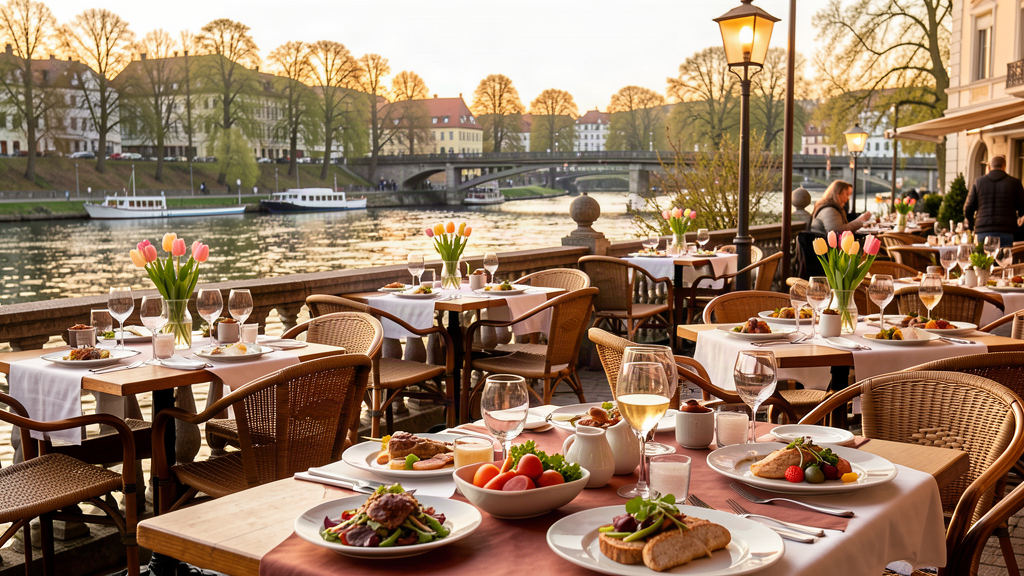
RIZZI Augustaplatz 1, 76530 Baden-Baden In Palais Gagarin, facing the park edge of Lichtentaler Allee. Mediterranean cooking with seasonal produce, a serious wine list, terrace when weather allows. Splurge meal after a full Allee walk — book ahead on weekends. Come for the room and the view as much as any single plate.
Al Pergolato at La Société Jagdhausstraße 5, 76530 Baden-Baden In the Oosscheuern quarter, in a house that has been hospitality since the 1890s. Italian cooking, neighborhood pace, less spa-theater than the center. Stay for dinner if you want a table used by people who live here. Leaving the polished strip is half the point.
On market-energy mornings, pick up fruit, bread, and cheese near the old town and eat on a bench above the Oos. The river does not mind crumbs.
Getting around without fuss
Baden-Baden’s core is walkable once you are off the train. The Hauptbahnhof sits a few kilometers from the spa center; buses bridge the gap if you skip the taxi. Inside town, feet beat cars. Parking exists under Augustaplatz, but circling for curb space wastes a short stay.
Trains put you in Karlsruhe, Strasbourg, or deeper Black Forest towns without a rental. For Geroldsau and trailheads, check local buses or plan one half-day with a car.
A slower shape for the day
Walk the Oos south in the morning while the lindens hold cool air. Coffee at the abbey end or back toward the museums. One bath in the afternoon. Dinner off the casino axis. With a second day, trade the park for Merkur or the Grobbach valley and let the forest knock some of the spa polish off.
Baden-Baden will keep selling elegance whether you buy the full package or not. What I keep is smaller. A free promenade along a river that barely makes a sound. Heat from the ground after the walk. Neighborhoods that keep going after the colonnades empty.
