
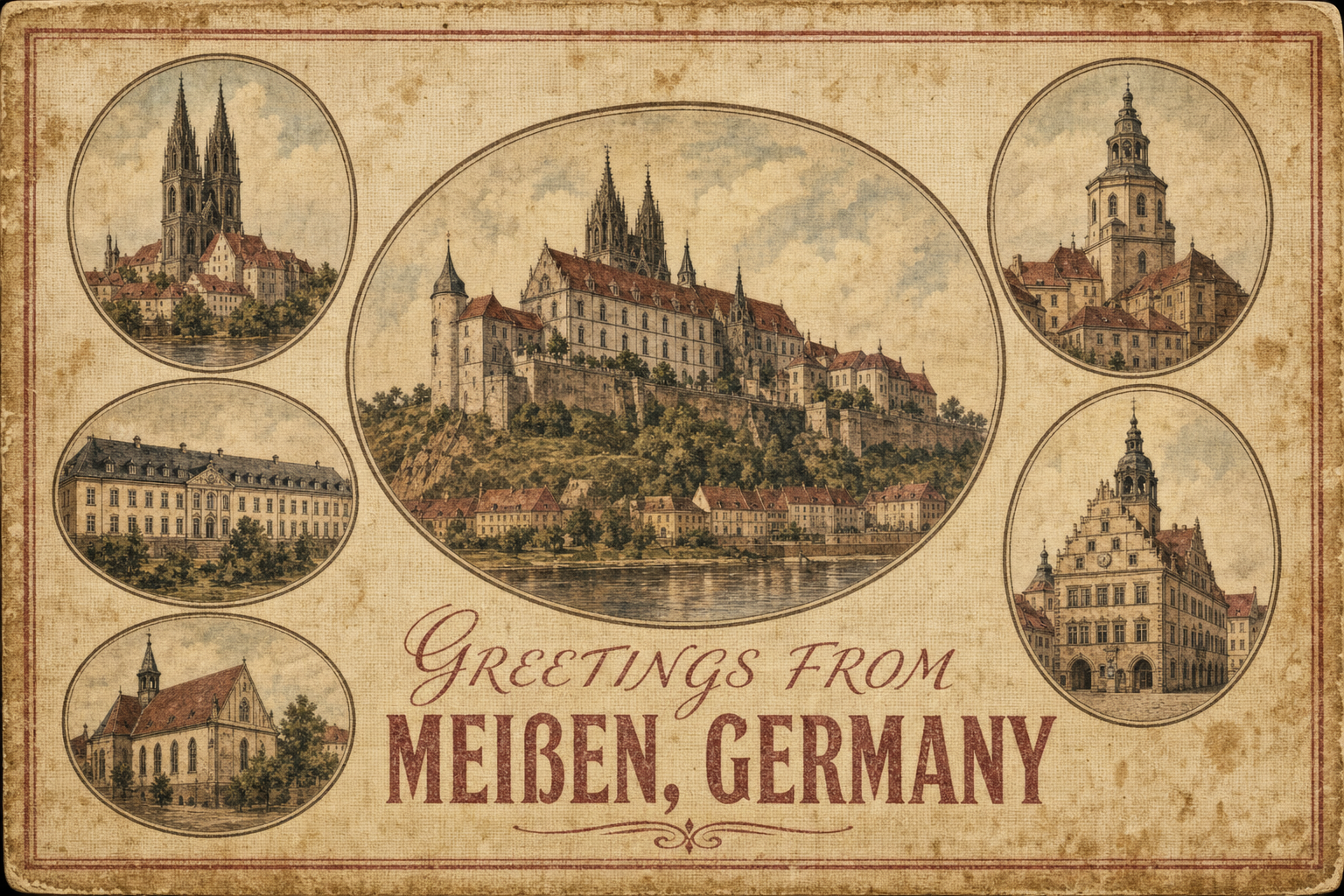
Most visitors treat Meißen as a porcelain day trip from Dresden: S-Bahn out, manufactory tickets, photo of the castle ridge, train back before dinner. Fair if you only have four hours. I get off at Meißen-Altstadt instead, leave the crossed-swords shop windows for later, and start climbing the Schloßstufen toward Domplatz. The Dom and Albrechtsburg sit above the Elbe roofs. The hillside still feels like a town people live in.
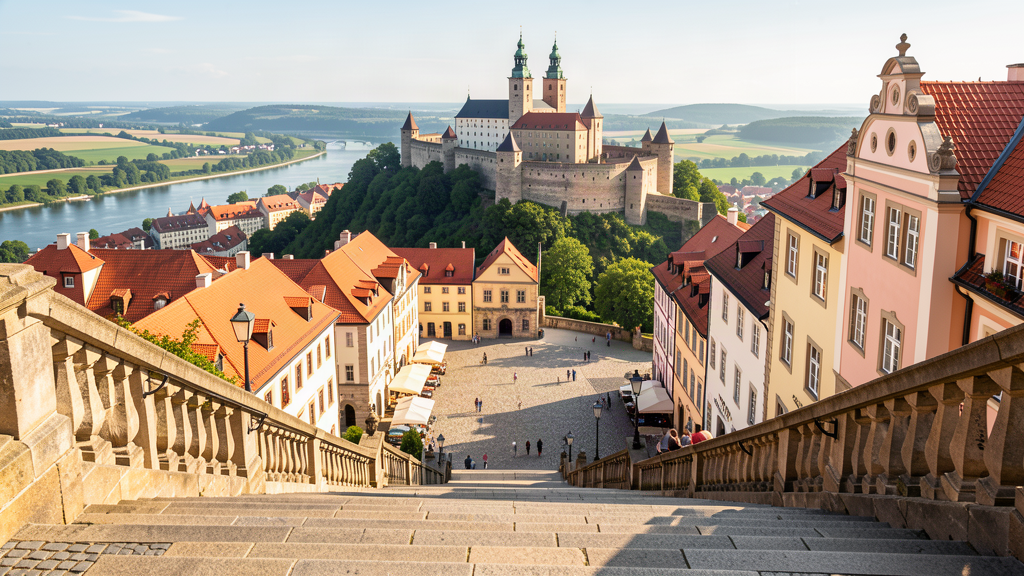
Meißen is Sachsen’s oldest town and the place where European hard-paste porcelain was first made. The Burgberg shapes the skyline: stairs, tight lanes, and a stone square that catches wind off the river. I walk that climb first, then drop back into the Markt, then follow Talstraße when I want kiln heat and porcelain.
Schloßstufen, Domplatz, and the Burgberg
The Schloßstufen rise from the Altstadt toward the castle hill. They are ordinary stone steps people use to get home, to work, to mass. Early is better. Delivery crates still sit by doorways. A baker’s bag swings past. Later the same stairs carry tour groups aiming for the Albrechtsburg ticket desk.
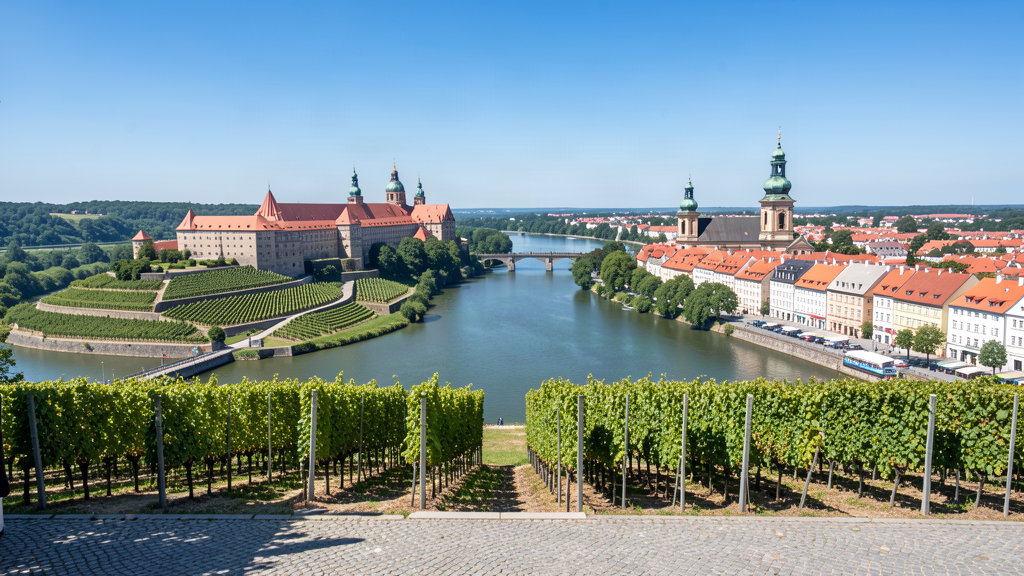
Domplatz opens at the top: late Gothic Dom zu Meißen on one side, Albrechtsburg on the other. The Albrechtsburg is often called Germany’s first castle built as a residence rather than a pure fortress. Roots go back to 929; the late Gothic building you see now is the one on the postcards. Stand long enough to hear a bicycle lock and a bus door below. The view is Elbe, roofs, vineyards on the far slopes.
I walk the Dom exterior, then the castle approaches, then decide if the day wants museum rooms or more street. Interactive exhibits inside the Albrechtsburg work when the weather turns or when you care about Sachsen origin stories. I go after my legs have already done the ridge. The panoramic lift from near the Elbe quay climbs about thirty-three meters if stairs are not your friend. I still prefer the Schloßstufen when knees allow. The town makes more sense when you feel the grade.
From Domplatz you can loop down other lanes toward the Markt without retracing every step. The Burgberg is small. Better to walk it twice slowly than once with a rushed list.
Markt, Frauenkirche, and porcelain hours
Below the ridge, the Markt holds the usual Sachsen mix: town hall, cafés, and shops that lean tourist. Opposite the tourist information, the Frauenkirche is the late Gothic hall church people climb for views. The porcelain glockenspiel, the first playable set made of Meissen porcelain, rings out several times a day. I time one pass if I am already on the square. 193 steps in the tower if you want the altitude without another Burgberg lap. Check current climb hours; they shift.
Porcelain is why the world knows the name. The State Porcelain Manufactory and “House of Meissen” sit on Talstraße 9, a walk or short hop from the denser Altstadt toward the Triebisch side. Workshops, museum rooms from 1710 forward, the crossed swords mark everywhere you look. Guided tours are the useful version if you care how slip becomes plate. I go for the heat and the hands more than the gift shop. Buy something small if you must; leave room in the bag for bread later.
Wine sits beside porcelain on the same hill. Vineyards around Meißen go back centuries; the Elbland slopes show themselves from the Burgberg and from walks out of town. Sachsen bottles are mostly white and local, the kind of glass that makes sense after stairs. I lock one Altstadt Weinstube meal and leave lunch flexible.
Elbe edge, Triebisch, and how the town moves
The Elbe is the wide floor under the ridge. Paddle steamers and the Elberadweg bring cyclists through; the quay is pleasant without needing a full cruise. Meißen-Altstadt station drops you closest to the old town. Meißen station sits on the eastern bank; Meißen-Triebischtal serves the manufactory side and the valley. S-Bahn from Dresden runs about every half hour. For a short stay I use Altstadt, walk, and forget the car.
The Triebisch meets the Elbe on the town side. Talstraße runs toward porcelain and quieter pensions. Less postcard than Domplatz, more useful when you want breakfast near the museum. The old town is compact and steep. Escalators and lifts are not always running; plan legs or the panoramic lift instead of counting on every mechanical shortcut.
Drivers meet one-way lanes, limited doorstep parking, and competition on event weekends. Neumarkt Arkaden parking is a practical dump-and-walk for Altstadt hotels. I leave the car once bags are inside. Two nights cover Burgberg light twice, a full porcelain block, and an evening table without racing the stairs.
A clean day arc if bags are already down: Schloßstufen and Domplatz before the groups thicken, coffee on or below the Markt, Frauenkirche bells if the timing lines up, Talstraße manufactory when workshops are open, Elbe edge or a short vineyard look when the light softens, dinner back in the lanes. Second morning reverse the order or add a slower hour inside the Albrechtsburg.
Confirm rest days. Porcelain complex, castle, and restaurants do not share one calendar. Weekend dinners want a reservation more often than weekday lunches. Burgberg mornings do not.
Places to Stay
Pension Triebischtal (value, Talstraße / manufactory side) Talstraße 60, 01662 Meißen Simple pension rooms in a historic house near the Triebisch, a short walk from the porcelain manufactory and close to Meißen-Triebischtal S-Bahn. Practical beds, breakfast, quiet enough after kiln hours. I use it when budget matters and the day already points toward Talstraße. Not a Domplatz doorstep; plan the hop into the Altstadt once. Book ahead around wine festival and summer weekends.
Meissen Lodge (mid, Altstadt Rosengasse) Rosengasse 11, 01662 Meißen Sixteen rooms in a restored sixteenth-century building a few minutes from Markt, Burgberg approaches, and Meißen-Altstadt station. Historic shell, modern rooms, bike storage that matters if you are on the Elberadweg. No hotel-door parking; unload and use Neumarkt Arkaden. My default when I want evening tables and morning Schloßstufen without a valley walk first.
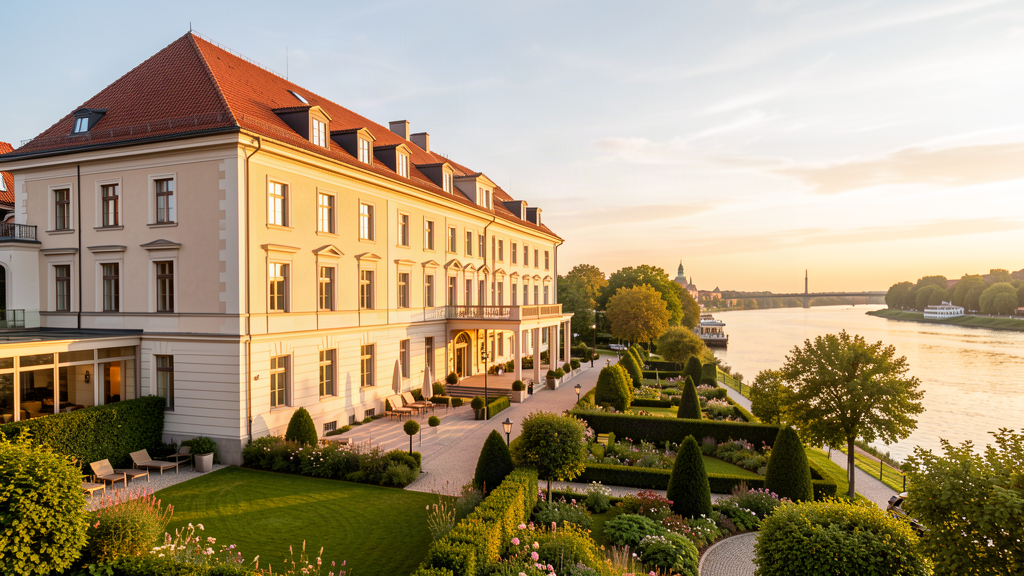
Dorint Parkhotel Meißen (upper, Elbe bank) Hafenstraße 27–31, 01662 Meißen Parkhotel on the river with views back to Albrechtsburg and Dom, full-service rooms, restaurant in the Ohm villa, terrace when weather holds. You trade pure Altstadt doorstep for water, sauna, and the skyline from bed height. Short walk or hop into the old town. Book when you want the ridge as a view as much as a climb.
Restaurants and food
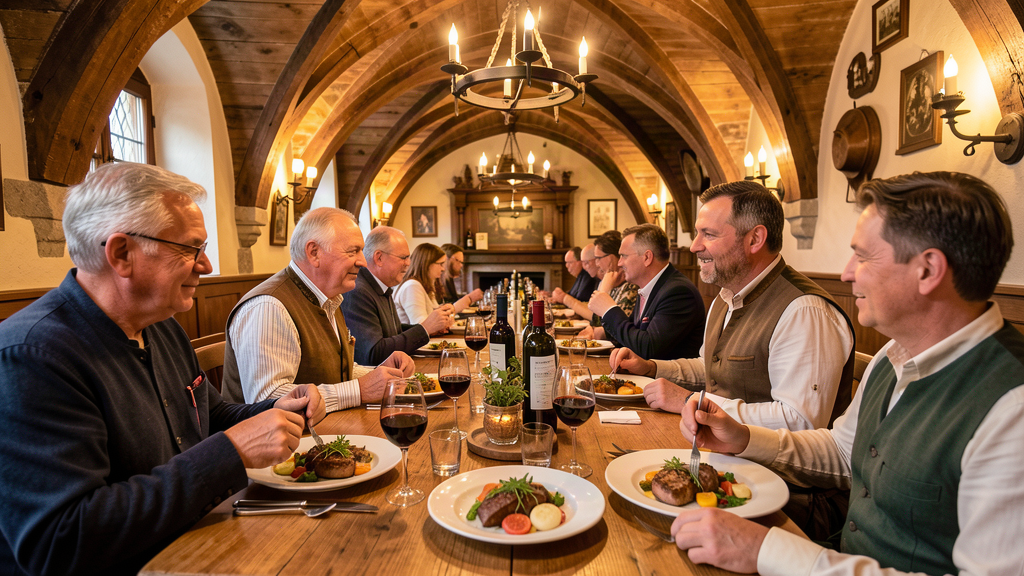
Schloss-Taverne (mid, on the Schloßstufen) Schloßstufen 1, 01662 Meißen German and local plates in a historic house directly on the climb to Albrechtsburg, vault traces and a room that fits after Domplatz wind. My pick when the day ends on the Burgberg and I refuse to descend hungry only to climb again. Confirm hours before you count on a late kitchen. Evenings need a call more often than lunches.
Weinstube & Restaurant Vincenz Richter (mid-upper, by the Frauenkirche) An der Frauenkirche 12, 01662 Meißen Traditional wine house since the nineteenth century, Saxon cooking, Meissen wine from the family estate, rooms thick with old wood and glass. Sits next to the Frauenkirche on the Markt side. I use it for the proper sit-down when porcelain day is done and the table should feel local rather than hotel. Closed Mondays on the usual pattern; reserve for weekend nights.
Café & Restaurant Meissen (mid, House of Meissen / Talstraße) Talstraße 9, 01662 Meißen On-site café-restaurant at the porcelain complex: Saxon classics, Winzerschinken, Elbe Valley cheese, regional wine, cake when you only want coffee. Open through the main visitor day more than late nightlife. Handy after workshop tours when leaving the site for the Altstadt feels like one errand too many. Groups should book; solo travelers can often walk in off-peak.
Bakeries around the Markt cover rolls before the Schloßstufen. Wine bars and simpler Gaststätten fill gaps when the three above are closed or full. Saxon plates stay grounded: bread, pork when you want it, river fish on good days, wine that matches the hill. I lock one dinner and leave lunch open to whatever the climb timing allows.
Walk the Schloßstufen early enough that Domplatz still has empty benches. Hear the porcelain bells once without filming the whole sequence. Stand on Talstraße long enough to remember the kilns and the hands behind the shop windows. That is enough Meißen for two nights.
