
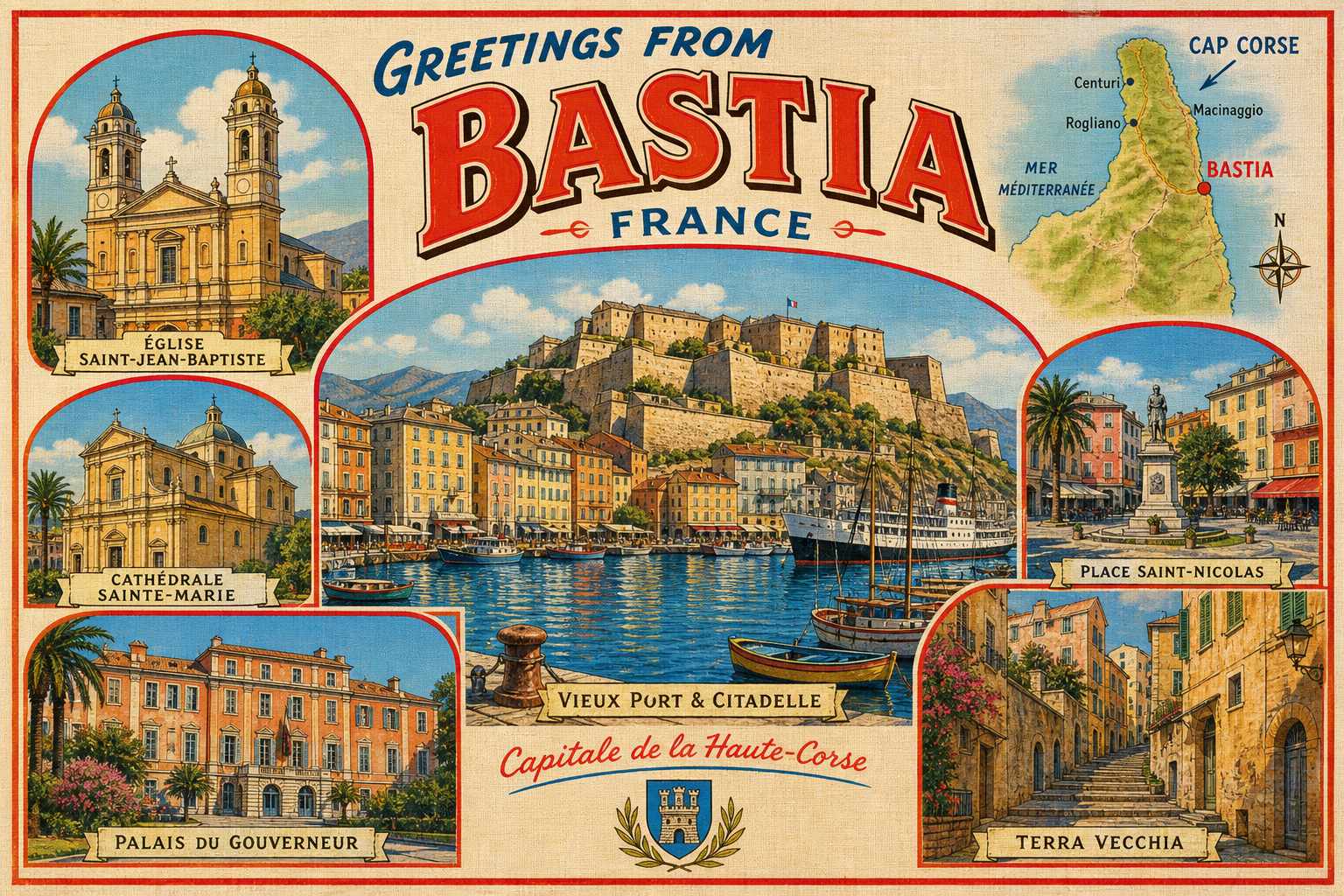
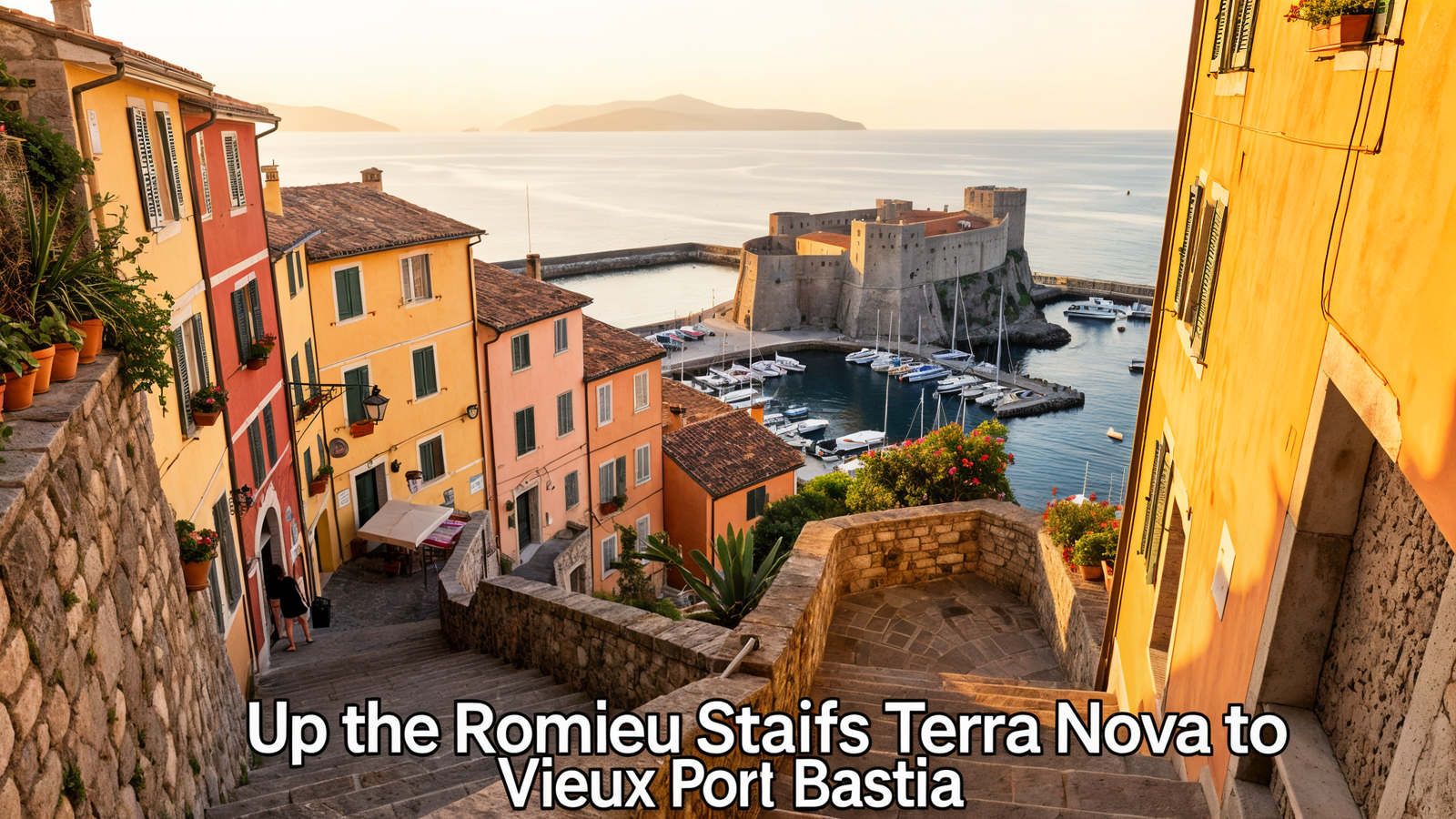
Ferry day in Bastia often means a glance at the big place, a coffee facing the water, and the road north toward Cap Corse. Fine if the timetable is tight. The Bastia I come back for is slower and more vertical: the old harbor under ochre façades, the morning market under Saint-Jean-Baptiste, and the climb from the quay through Jardin Romieu into Terra Nova, the Genoese citadel quarter that still feels residential more than ticketed.
Bastia is the working capital of Haute-Corse, a port city still earning its living from boats, offices, and Cap traffic. Guidebooks flatten it into a gateway stop. Useful for logistics. Incomplete as a map. The lived town is Terra Vecchia around the Vieux Port, Terra Nova above the walls, and Place Saint-Nicolas as the long civic lawn. I come for the stairs between harbor and citadel, the early market, and the hour when the old port belongs to errands more than day-trip clusters.
Why the Romieu climb still organizes the day
The Genoese built the citadel between the late fourteenth and sixteenth centuries and planted their governors in what is now the Palais des Gouverneurs. Terra Nova means “new land,” slightly funny when you stand on stone that has watched the Tyrrhenian for centuries. Below it, Terra Vecchia kept the older harbor life. The old problem was simple: how to move between the two without turning the hill into a car problem.
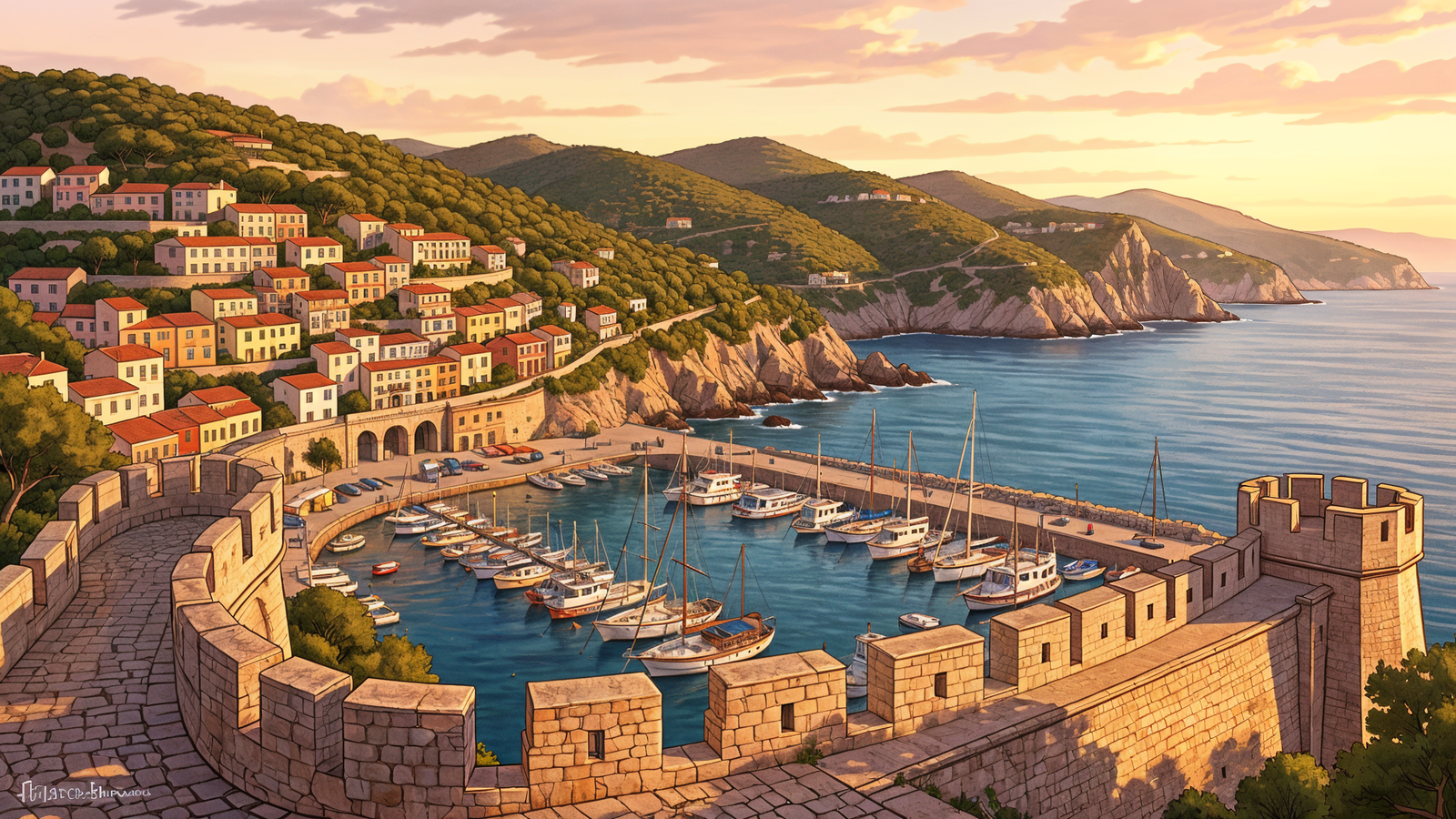
Jardin Romieu and its staircase answer that in the old way. From the south quay of the Vieux Port you climb under trees, past railings and planted vases, toward the citadel. The view opens in pieces: masts, then the harbor bowl, then Saint-Jean-Baptiste across the water. You do not need a full museum circuit on the first pass. Walk the stairs, enter Terra Nova through the citadel gate, and take twenty quiet minutes on Piazza di a Corte and the lanes around the governors’ palace. The museum inside is worth a later hour if the history pulls you. The first pass is simpler. Height, sea air, and a residential citadel that has not emptied into souvenir rows.
If you have already done Bonifacio’s cliffs or Calvi’s postcard ramparts, Bastia’s fortress is less theatrical and more urban. It plugs into streets people still use. That alone is worth a slow morning instead of a drive-by photo from the ferry terminal.
Walking the Vieux Port into Terra Vecchia
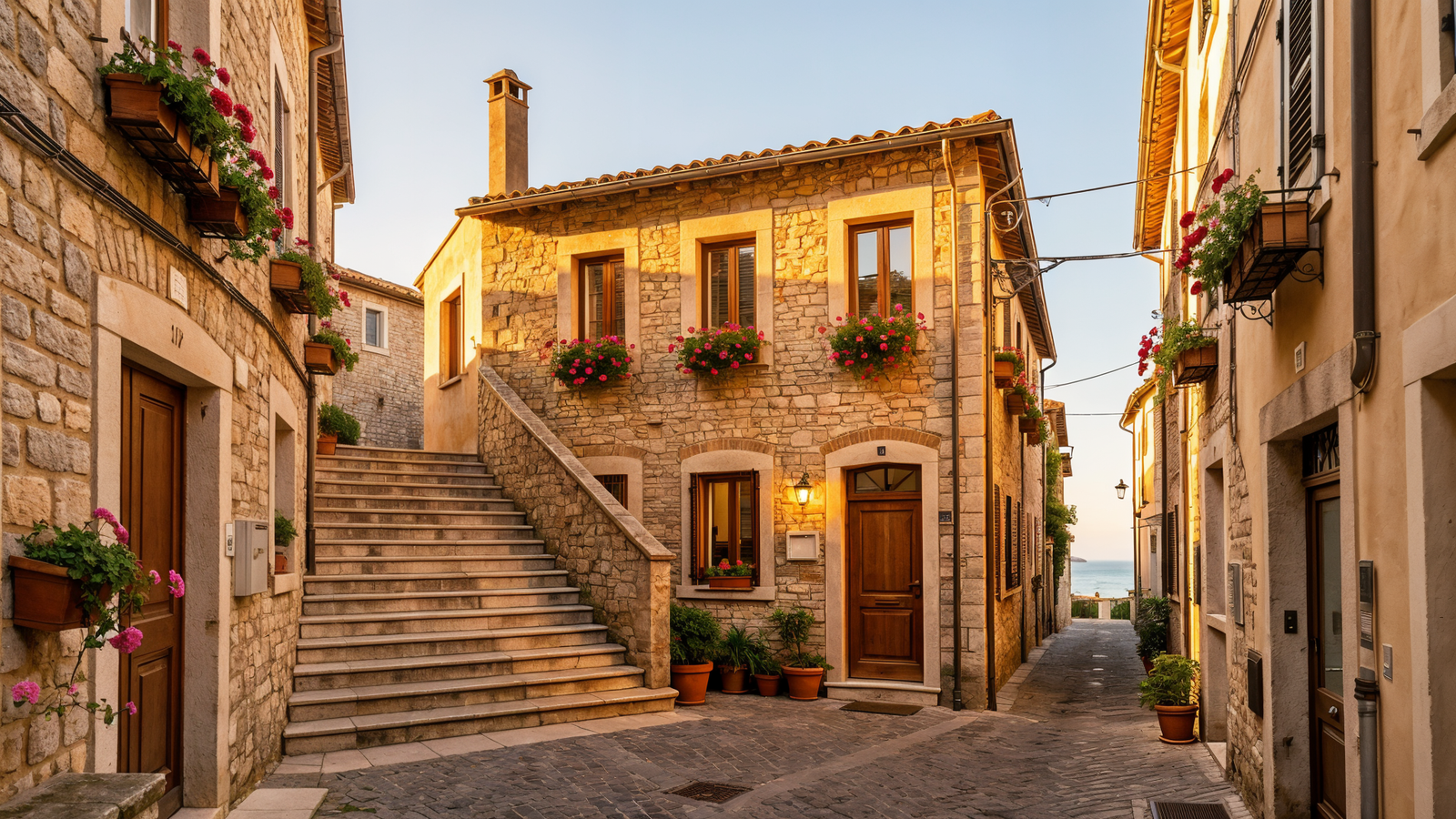
Start on the old harbor when the light is still low. Fishing boats, a few pleasure craft, diesel and salt, café tables that fill later. The buildings lean in close, tall and a little tired in the honest way of a working port. From here Terra Nova is the obvious bulk above the south side. Do not rush the climb. Walk the quay first. Notice which doors still mean apartments and which mean kitchens.
Saint-Jean-Baptiste dominates the skyline from the water: Corsica’s largest baroque church, twin towers, heavy presence. Step inside if the doors are open; the scale is the point. A few minutes away, the Oratoire de la Confrérie de Saint-Roch sits in the old fabric as a smaller, darker counterpoint, confraternity stone rather than civic showpiece. I walk without a shopping list. Counter coffee facing the street. When a tour group thickens on the quay, step one lane inland and wait it out. Bastia thins again faster than the big mainland ports.
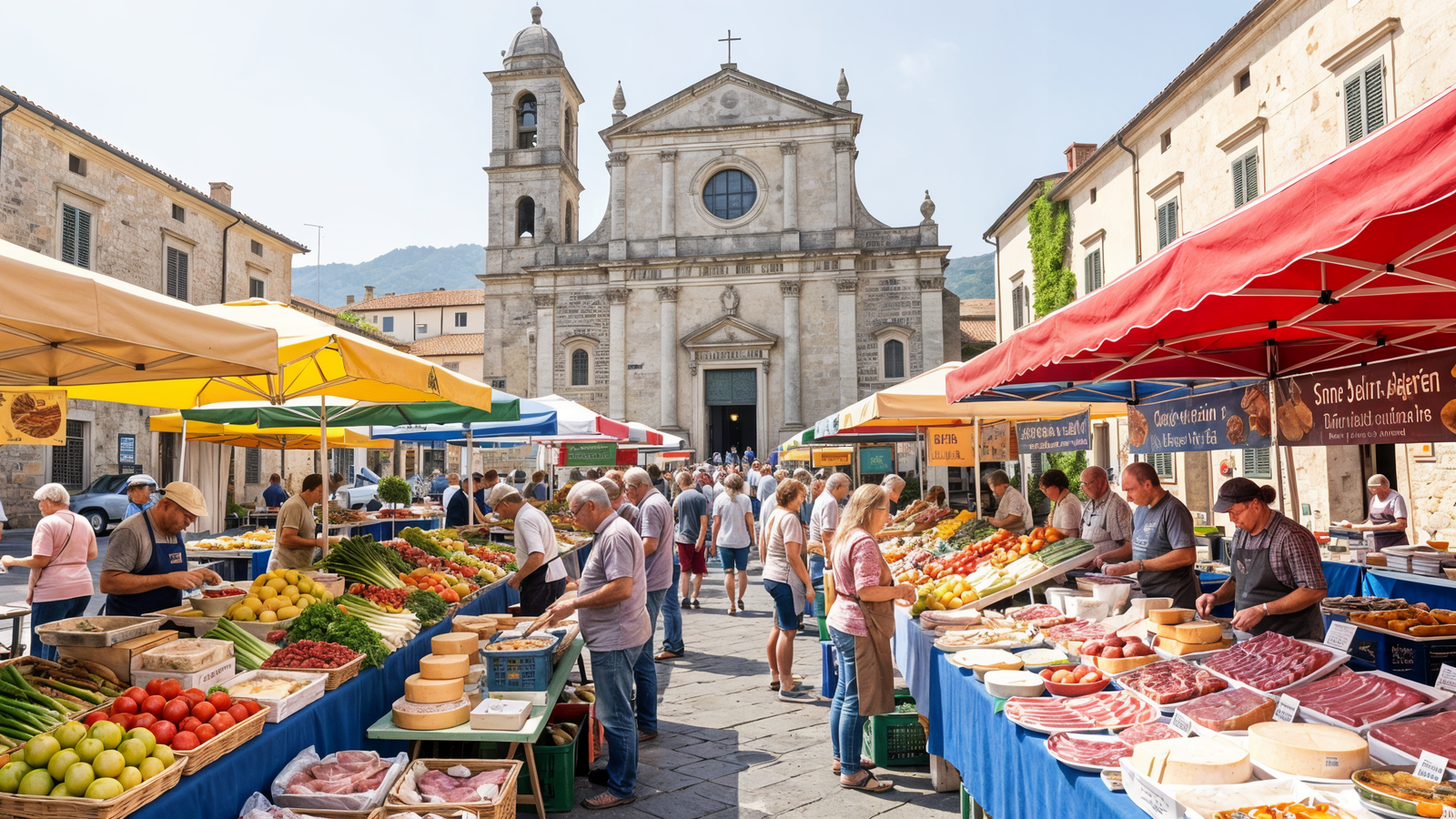
Place du Marché, hard by the church, is where the morning makes sense. Covered and open stalls run early; think roughly seven to early afternoon for the serious produce, with Monday quieter depending on the season. Come hungry. Look for seasonal fruit, garden vegetables, charcuterie that smells of the island (lonzu, coppa, figatellu when it is in season), and cheeses including brocciu when it is right. Fish if the boats have been out. This is not a staged food hall. It is how Bastia stocks the week. Buy what you will eat that day. Say bonjour first.
Place Saint-Nicolas is the long civic room to the north: palms, benches, the slab of open air every visitor finds and every local still uses. Early it belongs to people crossing town. Midday it thickens. Evening it softens under café light. I use Saint-Nicolas as orientation, the market as the edible hour, and the Romieu stairs as the stone end of the walk. Those stops keep you from spinning only through ferry logistics and Cap Corse day trips.
Figatellu, harbor plates, and rooms that still cook Corsican
Bastia feeds ferry crews, office workers, and people who landed for the Cap. The honest plates are Corsican first: charcuterie, stews, fresh cheese, seafood when it is local. Not generic Mediterranean paste. Book Friday and Saturday nights in season. Confirm midday closures; some kitchens rest midweek.
A Casarella
6 Rue Sainte-Croix, 20200 Bastia, France
Inside the citadel fabric above the old port, a small room for Corsican cooking without the pure waterfront markup. Good when you want island stews, charcuterie, and a table that still feels tied to Terra Nova rather than a quay photo op. Book if the lane is busy; the room is not endless.
Chez Huguette
Quai Sud du Vieux Port (Rue Laurent Casanova), 20200 Bastia, France
A long-running harbor address for fish and shellfish when you want the port in your peripheral vision. Come for the day’s catch more than for a chef’s monologue. Check hours before you build the night around it; harbor kitchens follow their own calendar.
A Scaletta
4 Rue Saint-Jean, 20200 Bastia, France
Tucked into the old-town weave near the church and market, useful when you want Corsican plates and a terrace feel without committing the whole evening to the busiest quay tables. Better for a dinner you sit through than for a rushed lunch between buses. Reserve in high season.
Between meals, any ordinary bar on or just off Place Saint-Nicolas will do for coffee. Sit facing the square. The morning market is a better identity check than a cocktail list.
Places to stay
Sleeping in Bastia turns the city from a transfer into a base. You climb Romieu at blue hour, hit the market before the best cheese is gone, and decide whether a half-day into Cap Corse is worth the car. Ask about parking; the historic grid is tighter than the airport road implies. Bastia-Poretta airport sits south of town; the ferry port is part of the city’s weather.
Hôtel Napoléon (lighter bill, central footing)
43 Boulevard Paoli, 20200 Bastia, France
Straightforward rooms a short walk from Place Saint-Nicolas, the old port, and the citadel approach without boutique prices. Choose it for a clean base and money left for A Casarella and a harbor dinner. Street noise is the trade; request a quieter room if you are a light sleeper.
Hôtel Posta Vecchia (midrange, old-port edge)
8 Rue Posta-Vecchia, Quai des Martyrs, 20200 Bastia, France
A long-standing three-star in a former post office building between the sea edge and the historic core. Solid default if the Vieux Port is why you came and you want to walk to market, Romieu, and Terra Nova without a taxi ritual.
Best Western Montecristo Bastia Centre (higher comfort, modern base)
Avenue Jean Zuccarelli, 20200 Bastia, France
A fuller-service stay a short walk above the densest old-town lanes, with newer rooms and easier logistics when you want comfort after citadel stairs and Cap drives. Book when you will mix town days with northern outings and prefer a quieter night than the quay itself. Better for two nights than a single rushed overnight.
One night fixes the map: market, Romieu climb, one serious Corsican dinner. Two nights let you add Cap Corse at golden hour, a second pass through Terra Nova when the day-trippers have thinned, and a morning swim somewhere south or north of the ferry weather when the water is kind.
Practical notes
The center is walkable if you accept slopes and stone. Grip shoes help on Romieu and citadel approaches. A car helps for Cap Corse and the Nebbio and becomes a nuisance if you only circle Terra Vecchia hunting parking. Do stairs and market early in summer heat. July and August stack holidays and ferry traffic; May–June and September–October keep the water and empty more tables. Winter is quieter; some restaurant hours shrink.
French is the working language; a little Corsican appears on signs and in pride. Cards are widely taken; small market stalls may prefer cash. Shops close, kitchens rest, boats wait on weather. Push less. Eat when the place is open.
Bastia will keep offering gateway logistics and a quick photo of the big place. Fine. Leave room for the other version: salt on the Vieux Port, market bags under Saint-Jean-Baptiste, and the Romieu stairs still connecting harbor life to the Genoese hill after the last day-trip car leaves for the Cap.
