
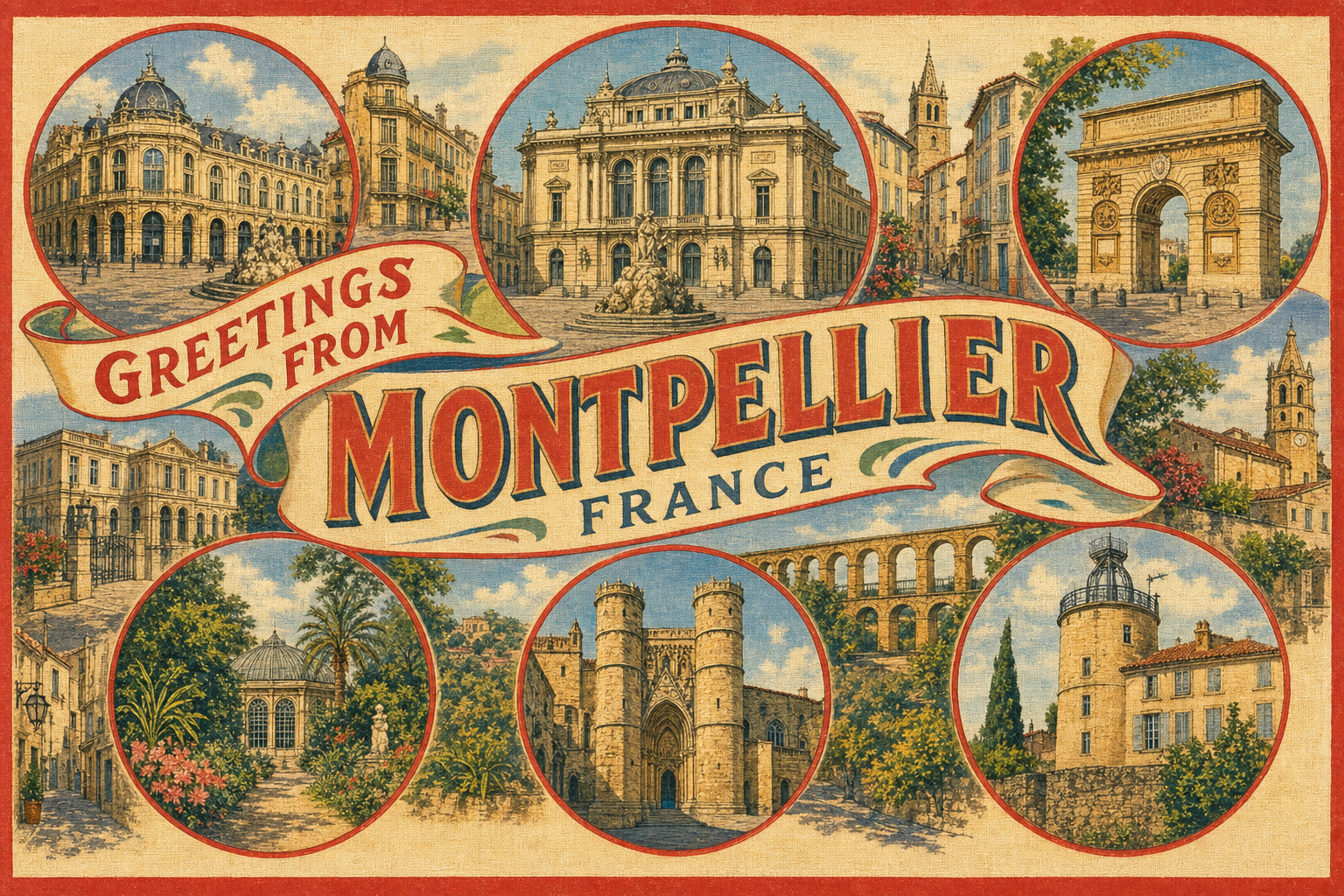
Montpellier does not open with a single postcard. It opens with shade and stone. On a Saturday before nine, the Aqueduc Saint-Clément — everyone just says les Arceaux — throws long stripes of cool across Boulevard des Arceaux, and the market sets up in that borrowed light. You hear crates first, then the low bargaining over peaches from the Hérault plain, then a radio somewhere under the arches that no one asked to turn down.
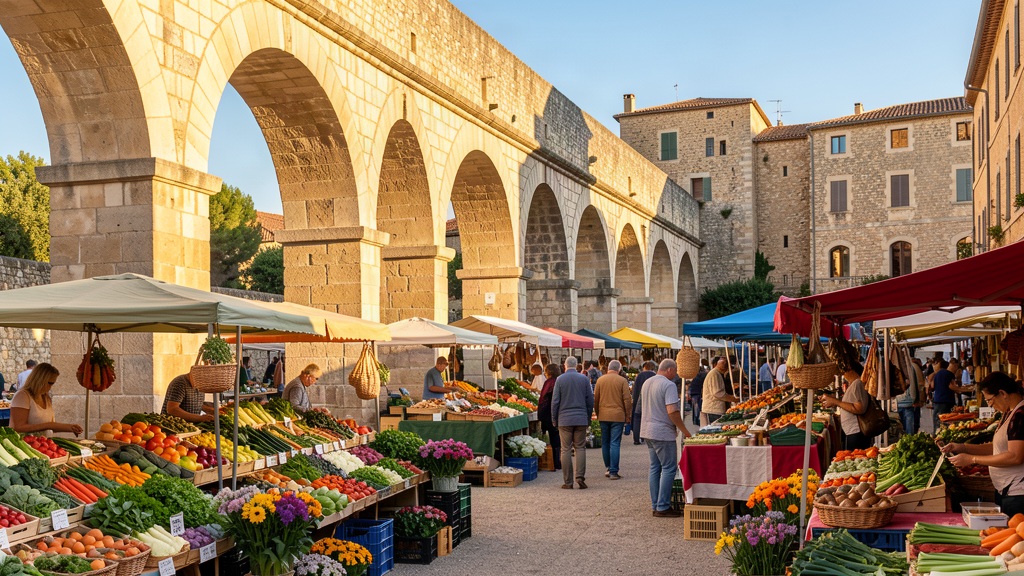
Henri Pitot’s double row of arches once carried drinking water into town. Now it carries the neighborhood’s morning. Vendors park under the vaults. Locals cut through with empty totes and leave with bags that pull at the shoulder. Tour groups tend to stick to Place de la Comédie. The part of Montpellier I keep returning to sits a little west, where the aqueduct meets ordinary life.
Market morning under the arches
Arrive hungry and early. Tuesday works; Saturday is the fuller show. Stalls lean organic and regional more than tourist-souvenir. Look for goat cheeses still cool from the van, olives oily enough to mark a paper bag, and strawberries that actually smell like strawberries when the season turns. Stand under an arch for a minute without shopping. The structure is heavy, practical stone — old engineering that the street simply grew around.
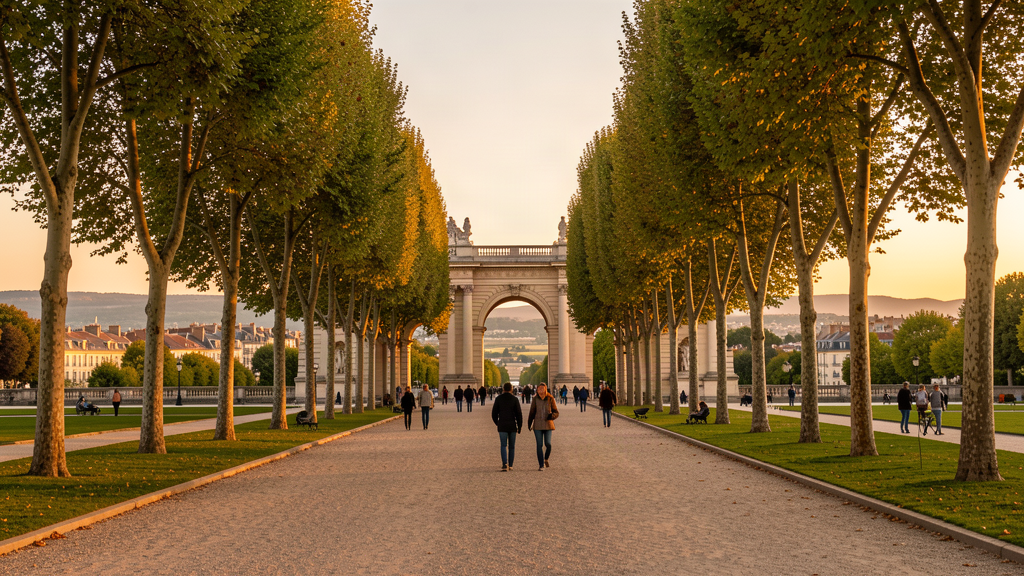
When the sun climbs, walk up toward Place Royale du Peyrou. The promenade feels like a formal living room nobody locked. From the triumphal arch, the view spills west; from the water tower end, you see why Montpellier built itself on a hill. Sit with a market bag at your feet and decide whether the rest of the day needs a plan. I usually let it not need one.
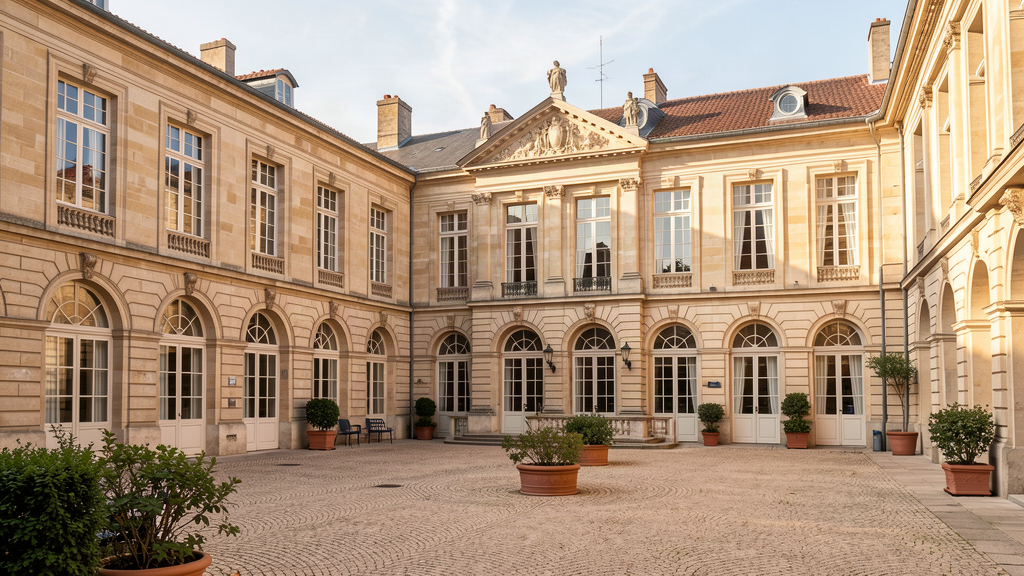
Sideways into the Écusson
From Peyrou, slip east into the historic center — the Écusson — through streets that refuse a straight line. Montpellier’s old town is limestone façades, student bikes, and courtyards you only notice when a door is propped for deliveries. Rue de l’Aiguillerie and the lanes around Place de la Canourgue feel lived-in rather than staged. Laundry still appears on upper floors. Someone is always late for something.
Place de la Comédie is the loud public square: tram bells, the Opéra, the open oval. Walk it once to get your bearings, then peel off. Two turns away you hit a five-table wine bar, a dusty bookshop, a bakery where the line is locals checking phones.
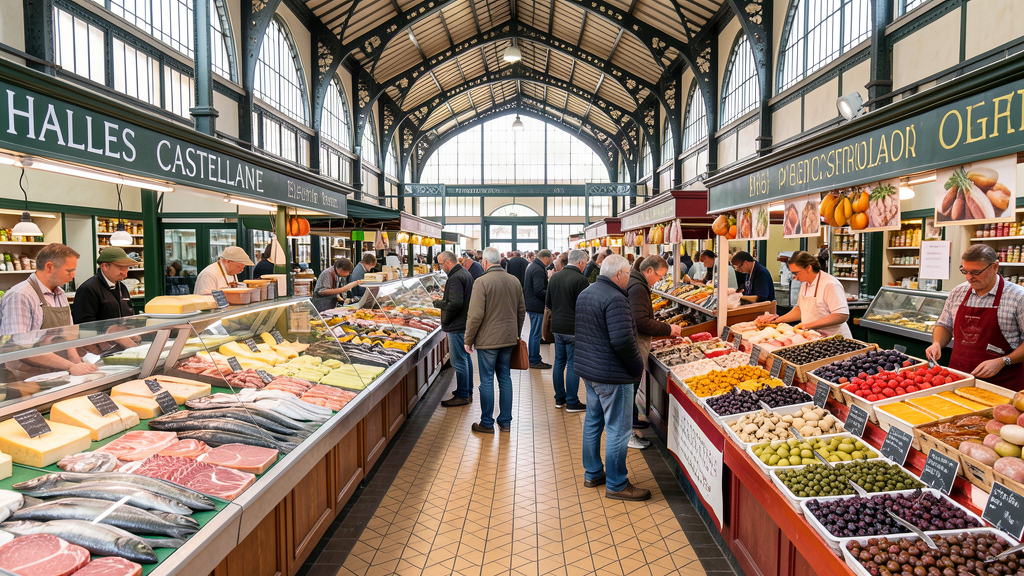
If you only have an afternoon in the center, split it between aimless looping and a covered market stop. Halles Castellane and Halles Laissac are the practical counters to Arceaux: oysters, roast chicken, a cold glass standing up. Lunch as logistics, which is often the best lunch.
Beaux-Arts keeps its own hours
North of the tightest tourist core, Beaux-Arts feels like a small town that happens to share a regional capital’s zip code. Place des Beaux-Arts hosts a daily morning food market, Monday through Saturday — grocery shopping with better light. Galleries tuck into side streets. Cafés fill with people who look like they live upstairs.
Late afternoon is best, when the heat softens and the square turns into a waiting room for dinner. Order something simple. Watch dogs negotiate the shade. Antigone’s neoclassical stage set by Ricardo Bofill sits east of here; walk it at golden hour if you want scale. Beaux-Arts is where I slow down. Wednesday’s market on Place du Nombre d’Or has a different rhythm — more open plaza, less stone ceiling.
A short walk that stitches the city
One route I repeat when friends visit: Arceaux market if the day allows, climb to Peyrou, lose twenty minutes in the Écusson on purpose, exit toward Esplanade Charles-de-Gaulle for trees, then choose a reserved side-street table or whatever kitchen still has a free burner.
That loose loop works well here. Trams keep you central without a car. Saint-Roch puts the old town in walking range; Odysseum can wait unless you want malls. Stay west and north of Comédie and let the arches set the tempo.
Places to stay
Three bases, three budgets — all walkable enough that you will not spend the trip decoding bus apps.
Baudon de Mauny (splurge) 1 Rue de la Carbonnerie, 34000 Montpellier An 18th-century townhouse on a pedestrian Écusson street, more maison than chain hotel. High ceilings, a handful of rooms, breakfast that feels like someone’s carefully kept home. Step out into limestone lanes; Peyrou and the Arceaux are a calm walk away.
Hôtel du Palais (mid-range) 3 Rue du Palais des Guilhem, 34000 Montpellier A small charm hotel in the historic center — close enough to hear the city without sleeping on Comédie’s night noise. Ask for the quieter side if you are a light sleeper. Location makes aimless wandering the default; good pivot between market mornings and dinner.
ibis Styles Montpellier Centre Comédie (value) 6 Rue Baudin, 34000 Montpellier Straightforward, bright, a short stroll from Place de la Comédie and the tram. Not fancy — a clean bed, included breakfast, and euros left for oysters and day trips. Solid first-stay base if you want orientation over atmosphere.
Book weekends early in high season and during university calendar spikes. Montpellier is a student city; that energy is half the pleasure and occasionally half the noise.
Where to eat
Reservations matter more than you think in a town this food-aware. Call or book online; walking in at 20:30 on a Saturday is mostly wishful thinking.
Pastis 3 Rue Terral, 34000 Montpellier Tucked on a narrow center street, Pastis is the dining room you find because someone insisted. Refined but not stiff, seasonal without a speech. Come when you want the kitchen — not the square — to be the point of the night. Menus change; trust the same market logic that shaped your morning under the aqueduct.
Le Petit Jardin (and its bistrot sibling) 20 Rue Jean-Jacques Rousseau, 34000 Montpellier A Montpellier institution with a garden that feels improbable in the dense center — green, enclosed, quieter than the street you left. Gastronomic dining and a more relaxed bistrot share the address family; pick the tone of night you want. Either way, you get air and leaves with the meal.
Halles Castellane — stand-up lunch Rue de la Loge area, 34000 Montpellier (central covered market) Not white-tablecloth: a counter, oysters or a warm plate, a glass of Languedoc white among people buying dinner ingredients. Pair with an Arceaux morning and you learn the food culture faster than any tasting menu. Come hungry; leave with a bag for later.
Getting here, getting around
Fly into Montpellier Méditerranée or train into Saint-Roch. Trams are the spine; walking is how you actually see the place. Bikes suit flatter stretches toward Antigone and the Lez; the Écusson will make you push more than you ride.
Shoulder seasons — spring and autumn — are the sweet spot: warm stone, thinner crowds, produce that still tastes like itself. Midsummer works if you respect siesta logic — long lunch, shade, late dinner — and treat the coast as optional. Palavas is easy for salt air; it is not required to justify the trip.
French helps. English appears in hotels and around Comédie. Under the Arceaux and in Beaux-Arts, a few phrases and patience beat a translation app held at arm’s length.
What you take home
Montpellier is easy to misread as a stop between Provence and Spain. Give it two nights and it settles into repeated small routes: aqueduct to Peyrou, Peyrou into the tangle, out to Beaux-Arts, back when the light changes. The Aqueduc des Arceaux is the spine of that loop — not because it is Occitanie’s loudest monument, but because on market mornings it still gathers people, makes shade, and turns water history into a place you can shop.
Leave with dusty shoes, a jar you cannot name precisely in English, and the sense that this part of town was busy being open on Saturday — not waiting to be discovered.
