
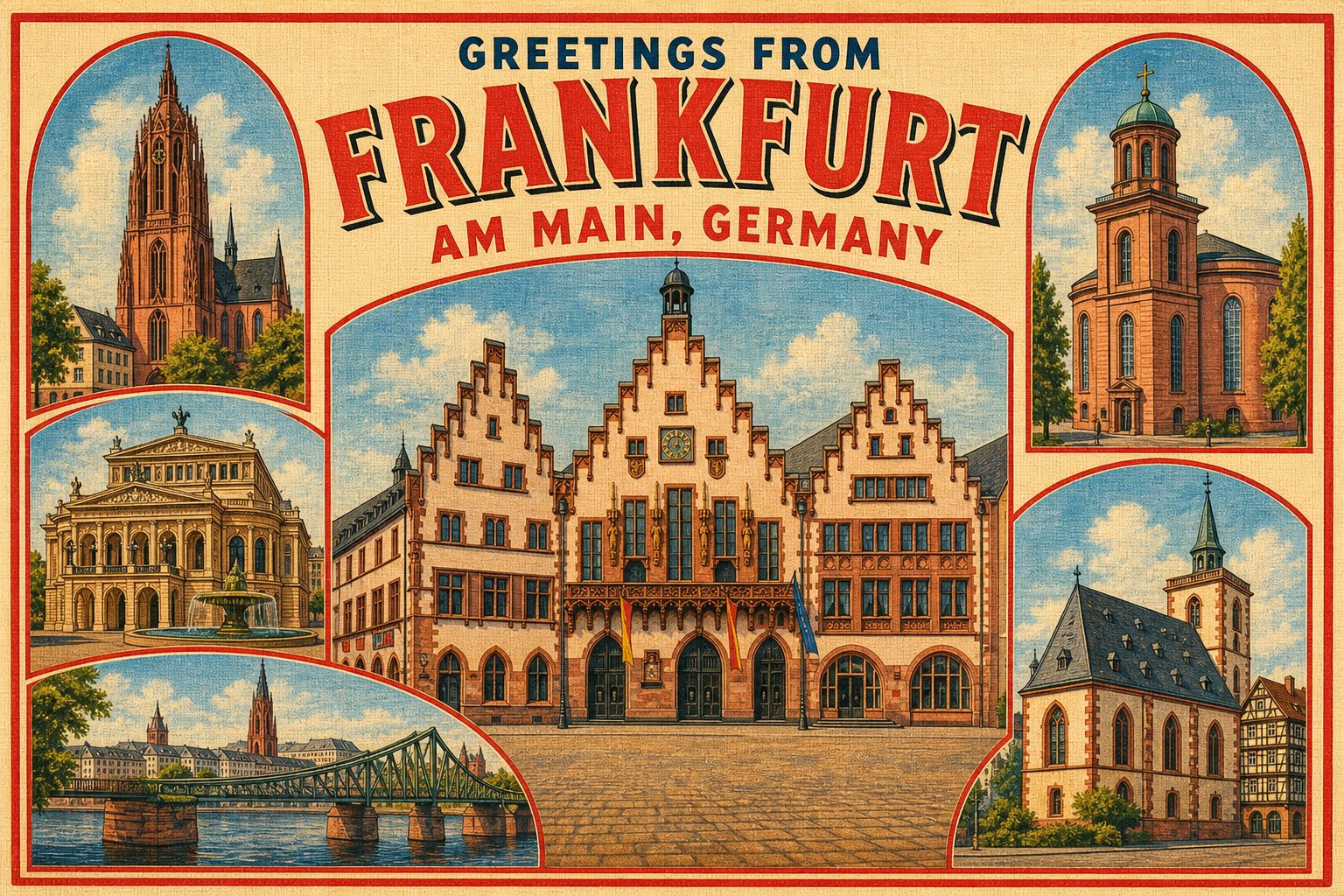
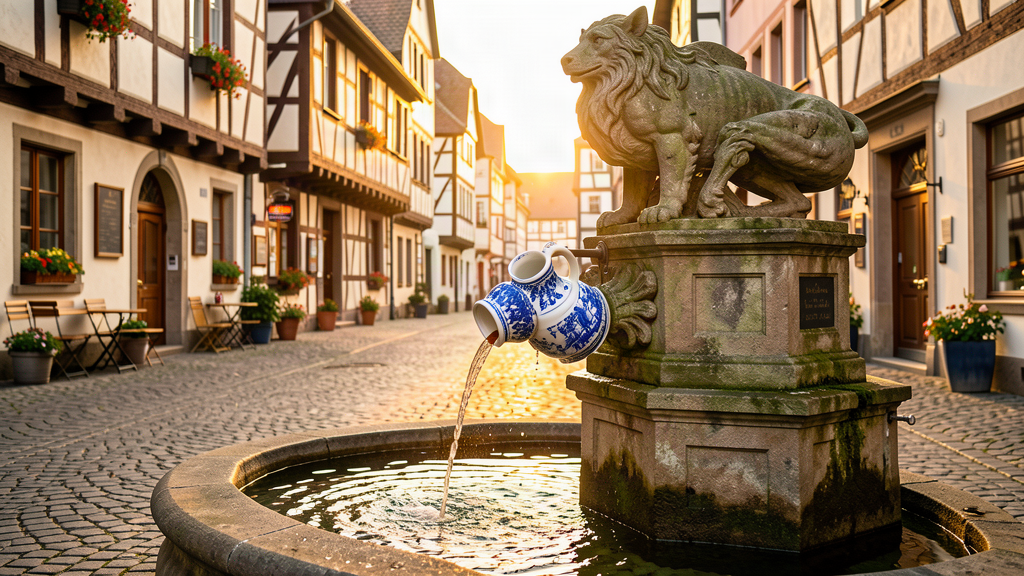
Most people who say they “did Frankfurt” mean a skyline shot from the Eiserner Steg, a quick Römerberg loop, and a train out before dinner. I cross the same iron bridge and keep walking south until the towers shrink behind half-timber and the street smells faintly of pressed apple. Klappergasse is short, uneven, and loud with its own rules. At its middle sits the Frau Rauscher fountain — a stone figure who spits water at irregular intervals and has soaked more distracted walkers than any guidebook admits. Around her, the Bembel pitchers come out: blue-grey ceramic jugs of Apfelwein, poured into diamond-ribbed Gerippte glasses. That is the Frankfurt am Main I come back for — not the bank towers, but the cider table on the south bank.
Frankfurt am Main is Hessen’s commercial heart and a river city with a stubborn local habit. North of the Main: glass, congress schedules, the Zeil. South: Sachsenhausen, where the old lanes still run apple wine like a civic utility. I treat the two banks as one day with a hinge at the river.
Klappergasse, Frau Rauscher, and the cider grid
Alt-Sachsenhausen is a small grid: Kleine and Große Rittergasse, Paradiesgasse, Klappergasse, Wallstraße. The half-timber looks older than the reconstruction history behind some of it — what matters is the scale. Low buildings. Cobble. Courtyards you only notice when a door opens. Frau Rauscher sits in the middle of the tourist photograph and the local joke at once. Wait for the spit if you want the gag; better, sit where the fountain is background noise and the table is the work.
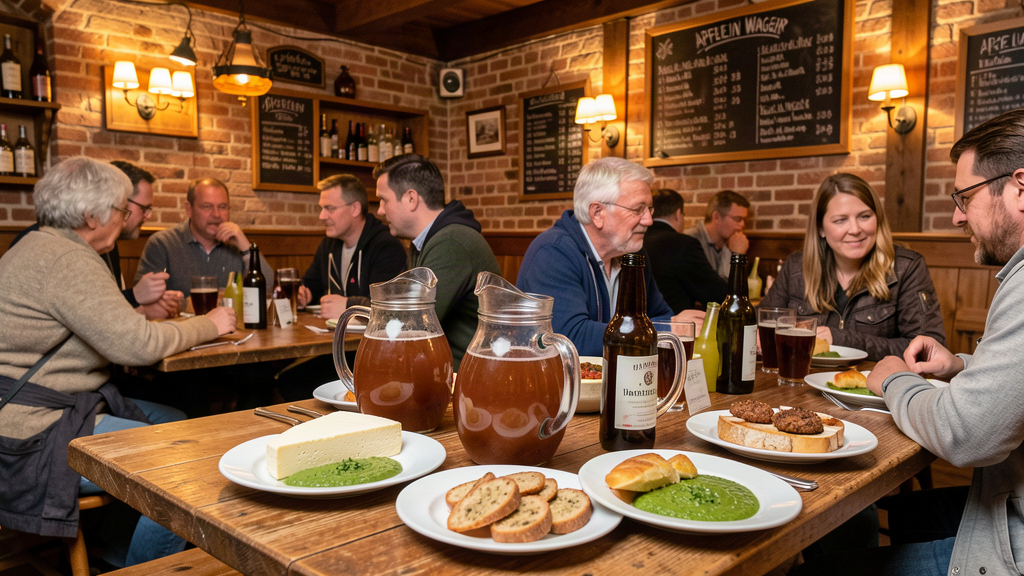
A Bembel is not décor. It is how Apfelwein travels from barrel to bench — house cider, tart, cloudy, sharper than most visitors expect. Order a Schoppen first if you are learning the taste. Locals often cut it with sparkling water (sauergespritzt) without apology. Handkäs mit Musik — sour milk cheese with oil, vinegar, onion, and caraway — arrives as a small plate that smells like the room. Grüne Soße, the seven-herb green sauce of the region, shows up with eggs or meat when the kitchen is serious. Weekday food for people two tram stops away, not costume Hessian.
The tourist crush packs Klappergasse on warm Fridays. Slide one street over toward Wallstraße or Schweizer Straße’s quieter side blocks. Same cider idea; lower volume.
Across the Main and along the Museumsufer
I start north only long enough to buy the skyline, then reverse. The Eiserner Steg is a working pedestrian bridge, not a ticketed viewpoint. Walk it at a normal pace. Look back once. Drop onto the Sachsenhäuser Ufer and turn west along the Museumsufer if you want air before the taverns.
The museum bank is a long strip: Städel and neighbors, park path, river light, benches facing hulls and cranes more than façades. Saturdays from late spring into autumn bring the flea market along the quay — porcelain, tools, jackets, junk with a story. Walk it without hunting for a masterpiece. What you get is river pace after airport concrete. Pick one museum if it matters; otherwise the path alone is enough. Cut south into the cider grid before the light goes flat.
Schweizer Straße, Textorstraße, and the lived-in south bank
Schweizer Straße is Sachsenhausen’s practical spine — bakeries, shops, U-Bahn at Schweizer Platz, and a few Apfelwein houses outside the postcard alley. Textorstraße and the streets toward Südbahnhof feel more residential: laundry in courtyards, bikes on rails, school routes. I use this band for coffee that is not a skyline café and to remember Sachsenhausen is a neighborhood first.
Apfelwein is not confined to the old lanes. Quieter rooms with chestnut shade and long tables still pour it without performance. If someone at the next bench offers a Prost, meet their eyes. If the Bembel is shared, pour for the table before yourself.
Bornheim, Berger Straße, and a different cider address
When Alt-Sachsenhausen is full or you want a second night off the same cobble loop, ride northeast to Bornheim. Berger Straße — locals still call stretches of it the Bernemer Zeil — runs nearly three kilometers through Nordend into Bornheim: owner shops, cafés, and serious Apfelwein culture at the upper end. Wednesday and Saturday mornings, the mid-section market around the little clock tower is the neighborhood’s grocery theater. Bethmannpark at the lower end offers a Chinese garden pause if the street noise piles up.
This is not secret Frankfurt. It is the city of people who stayed after Messe week. One evening on Klappergasse and one on upper Berger Straße teach more than another bank-tower deck.
Kleinmarkthalle before the towers claim the day
If you only have a morning north of the river, give it to the Kleinmarkthalle on Hasengasse rather than another skyline angle. Inside: cheese, bread, herbs, sausage, flowers, and lunch counters that turn over fast. Grüne Soße herbs in season are the local tell. Stand, eat, leave before the Zeil pulls you into chain frontage. This is how the city feeds itself before work, not a staged food hall.
Getting around without a car argument
Frankfurt Airport feeds the city on S8/S9 into Hauptbahnhof in roughly a quarter hour. From there, walk or take a short S- or U-Bahn hop rather than arguing with south-bank parking. Schweizer Platz, Lokalbahnhof, and Südbahnhof cover Sachsenhausen; Bornheim Mitte serves Berger Straße. Between Eiserner Steg and Wallstraße, walk.
A simple arc: morning Kleinmarkthalle, bridge and Museumsufer light, late lunch or early Bembel off the densest alley if needed, Schweizer Straße amble, optional evening in Bornheim. Cobble-and-quay shoes are enough. Leave the car out of the story.
Places to Stay
Maingau Hotel (value, family house near the cider grid)
Schifferstraße 38–40, 60594 Frankfurt am Main
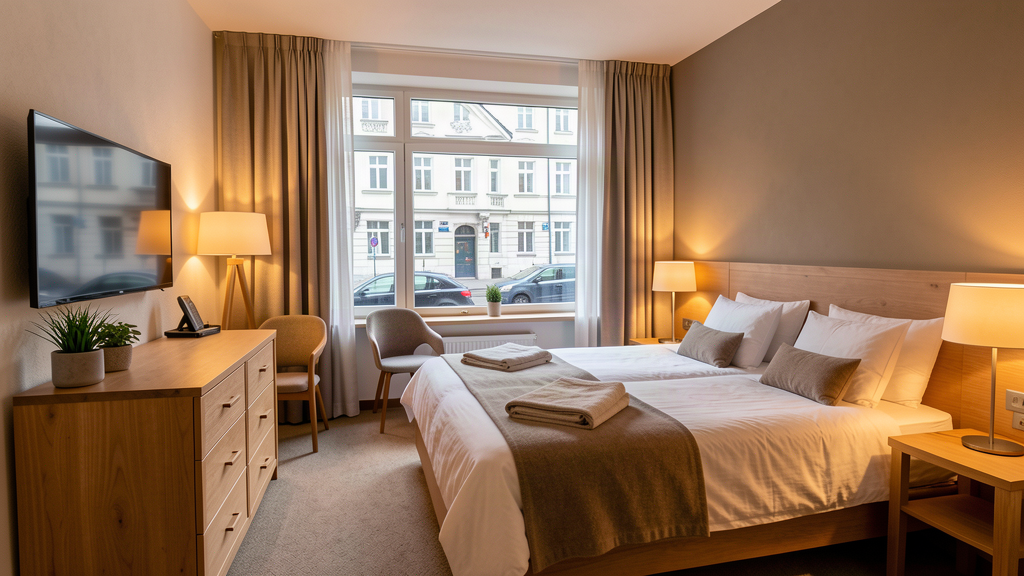
Quiet Sachsenhausen street a short walk from Alt-Sachsenhausen and the river bridges. Practical rooms, neighborhood desk energy, no design-hotel markup. Solid base for Klappergasse, Museumsufer, and an early night after the last Schoppen.
Hotel Villa Orange (mid, Gründerzeit house in Nordend)
Hebelstraße 1, 60318 Frankfurt am Main
Neoclassical villa in Nordend with a calm breakfast room; Berger Straße and the center are walkable or a short tram. Bio-leaning house, residential noise rather than Messe buzz. Default when you want south-bank taverns without sleeping above them.
Libertine Lindenberg (upper-mid, suites in Alt-Sachsenhausen)
Frankensteiner Straße 20, 60594 Frankfurt am Main
Gründerzeit property in the apple-wine quarter, suites with shared spaces and a direct walk to Klappergasse and the Main. Skyline against old-street life; weekend nights run louder — that is the trade. Book when the Bembel neighborhood is the front door.
Confirm Messe weeks and river events — rates and bridge crowds rise. Time the alleys for late afternoon instead of peak Friday.
Restaurants and food
Atschel
Wallstraße 7, 60594 Frankfurt am Main
Long-running Apfelweinwirtschaft in a nineteenth-century house off the loudest postcard strip. House cider, courtyard shade, Grie Soß and solid Hessian plates without cocktail-list drift. First stop for a Bembel and a shared bench over skyline dinner.
Apfelwein Wagner
Schweizer Straße 71, 60594 Frankfurt am Main
Benchmark Sachsenhausen tavern: communal tables, serious Schnitzel reputation, Apfelwein by the Schoppen from the Bembel. Busier and more international than Atschel; still the real pour when Wallstraße is full. Book weekends.
Apfelwein Solzer
Berger Straße 260, 60385 Frankfurt am Main
Fifth-generation Bornheim house on upper Berger Straße — garden benches, own-pressed Ebbelwei, Handkäs, haxen, strangers compressing onto the same table. Second-night contrast: same cider culture, different pulse.
For daytime grazing, Kleinmarkthalle at Hasengasse 5–7 covers standing lunches and herb counters; a quay bench with a bakery bag beats another lobby espresso facing glass.
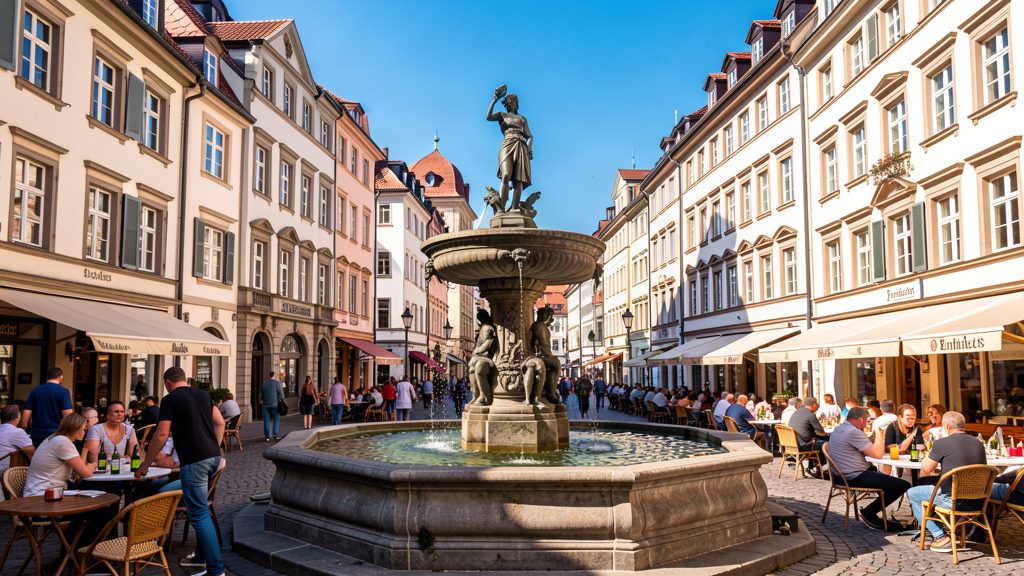
A day that ends under Frau Rauscher
Frankfurt am Main works when you stop treating the river as backdrop and start using it as a seam. Cross it. Sit under Frau Rauscher’s spray long enough to hear the Bembel hit the wood. Order the tart pour, share the onion cheese, and leave the towers on the other bank. They are useful from a distance. The ribbed glass is the local work.
