
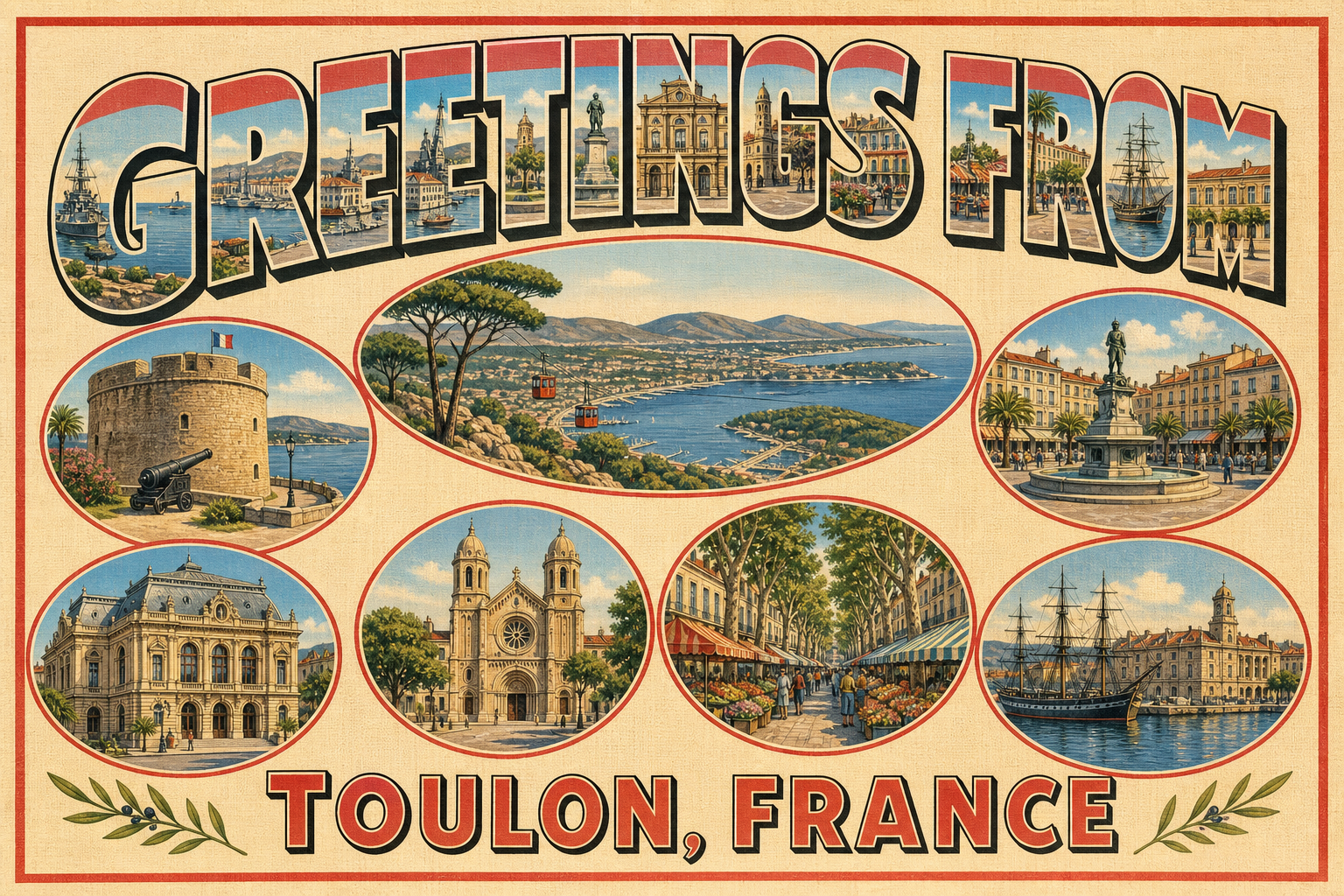
Toulon does not try very hard to charm you on arrival. The station spills you into ordinary streets, the harbor is full of gray hulls that actually work for a living, and the first café you pass may have more sailors and shop clerks than anyone holding a guidebook. That is part of why I like it. This is still a navy town first, a Riviera postcard second. Give it a slow morning at the little fishing port in Le Mourillon and the place starts to click.
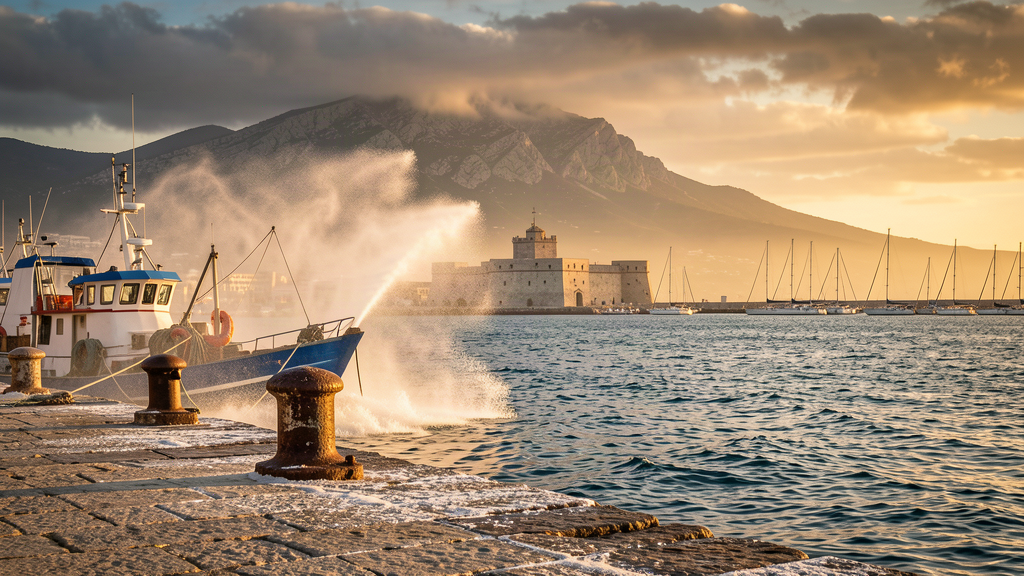
Port Saint-Louis sits on the eastern edge of town, where the old fishing village of Le Mourillon meets the open mouth of the rade. The jetty is low and practical. Early, before the beach clubs fully wake up, you get diesel, wet rope, and that sharp salt spray when a boat turns against the wind. Locals walk dogs along Quai Belle Rive. Someone hoses down a deck. The Mediterranean here feels less like a brochure and more like a workplace that happens to have good light.
I came for that working edge, then stayed for what sits around it: officer villas a few streets inland, kids with towels heading for the anse beaches, and Fort Saint-Louis sitting low and stone-faced right where the corniche bends. Toulon is better if you treat it as a place people live, not a day trip from Nice.
Port Saint-Louis before the beach crowd
Start at the small port itself, not the long beach promenade. The basin is modest: working boats, crates, coiled line, a radio left on too loud. Stand on the jetty and look west into the rade. The water opens wide between Toulon and the far shore of La Seyne, and on a clear day Mont Faron sits behind the city like a dry green wall.
Walk the quays and Mourillon keeps a village scale. Streets turn inland toward bakeries and shuttered houses. Laundry on upper floors. This was long a quarter for officers and people tied to the arsenal, and you feel that steadiness more than glamour.
I like sunrise or a weekday late morning. Weekends get busier when the plages fill, but the port still holds a smaller circle of attention. People stop to talk. A fisherman shrugs at the weather. You can lean on the stone and watch harbor traffic without anyone selling you a ticket.
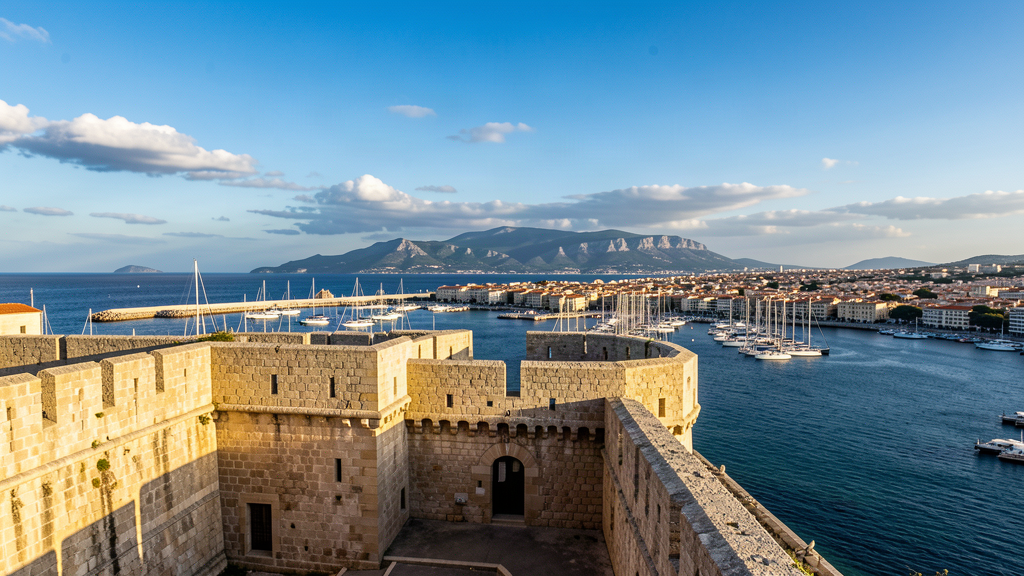
Fort Saint-Louis and the Mourillon anse
A short walk brings you to Fort Saint-Louis on Littoral Frédéric Mistral. It does not tower. It crouches. From the path you see stone walls meeting water, summer swimmers cutting past the rocks, and corniche traffic with beach bags and Vespas. The fort is more marker than full-day visit: a quick sense of how Toulon guarded the roadstead entrance.
Beyond it, the Mourillon beaches break into coves and anse rather than one endless strip. Families claim the same sand year after year. Beach restaurants put out tables in season. The water is usually calm enough for an easy swim, with city and mountain behind you instead of empty coast. Shade is scarce at midday; duck inland a block or two when the sand gets loud. Mourillon’s residential streets cool off fast and still feel like Toulon, not a purpose-built seaside development.
The center without the cruise-ship script
Most visitors who bother with Toulon at all rush the old-port waterfront, snap the opera house, and leave. Fair enough for a two-hour stop. With a night or two, walk the haute ville and the lanes around Cours Lafayette without making the market your main goal. The upper town has the opera, Place Victor Hugo café chairs, and a southern pedestrian grain without the boutique polish of Aix or Antibes.
Toulon’s character is blunter. Shop windows mix military surplus energy with bakery flour and phone repair. The navy is not a theme park here. You may see uniforms on the street and hear more about ship movements than art openings. I find that honest. Sit near Place de la Liberté and watch the shift change: office workers, students, people heading toward Quai Cronstadt and the boat buses that stitch the rade together.
Those harbor boats are worth using even when you are not going somewhere. A short hop reframes the city. From the water, arsenal, cranes, and mountain line up as one working panorama. Toulon looks like what it is: a deep natural harbor France has used hard for centuries.
Up Mont Faron when the air needs thinning
When the lower town feels heavy, take the téléphérique up Mont Faron. The lower station is on the north side near Boulevard de Vence; red cabins climb in a few minutes to roughly 580 meters. At the top: wind, pine, and a wide view over the rade, the city grid, and the Mediterranean beyond the harbor mouth.
Skip the full hiking production. A summit loop, a look at the memorials and old fortifications, and a slow descent is enough. Late afternoon is kinder. Salt and diesel below, dry mountain air above, same city holding both.
Places to stay
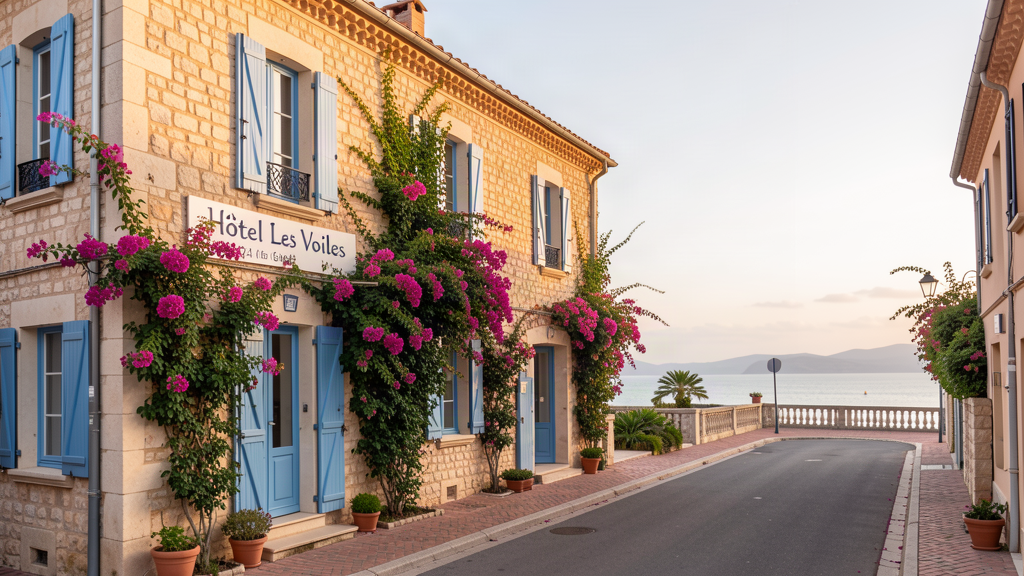
Hôtel Les Voiles (budget-friendly, Mourillon)
124 rue Gubler, Le Mourillon, 83000 Toulon
A straightforward base inside the neighborhood you came to walk. You are close to the beaches and a reasonable stroll from Port Saint-Louis without paying corniche rates. Rooms are simple; the win is location if you want morning coffee near the water instead of a long bus from the station district.
Best Western Plus La Corniche (mid-range, on the water)
17 Littoral Frédéric Mistral, Quartier du Mourillon, 83000 Toulon
This one sits right on the Mourillon littoral, near the fishing port and the beach strip. You wake to the rade, not a ring road. It is the practical pick when you want the sea outside the window without jumping to full design-hotel prices. Easy for sunset walks along the corniche and dinner on foot.
OKKO Hotels Toulon Centre (higher end, city core)
20 Rue Peiresc, 83000 Toulon
A polished four-star in a listed building on the edge of Place de la Liberté. Choose this if you care more about trains, the old town, and rooftop evenings than rolling out of bed onto sand. From here you can walk the center at night and bus or taxi out to Mourillon when you want the jetty and the fort.
Where to eat
Le Lido
437 Littoral Frédéric Mistral, Plage du Lido, Le Mourillon, 83000 Toulon
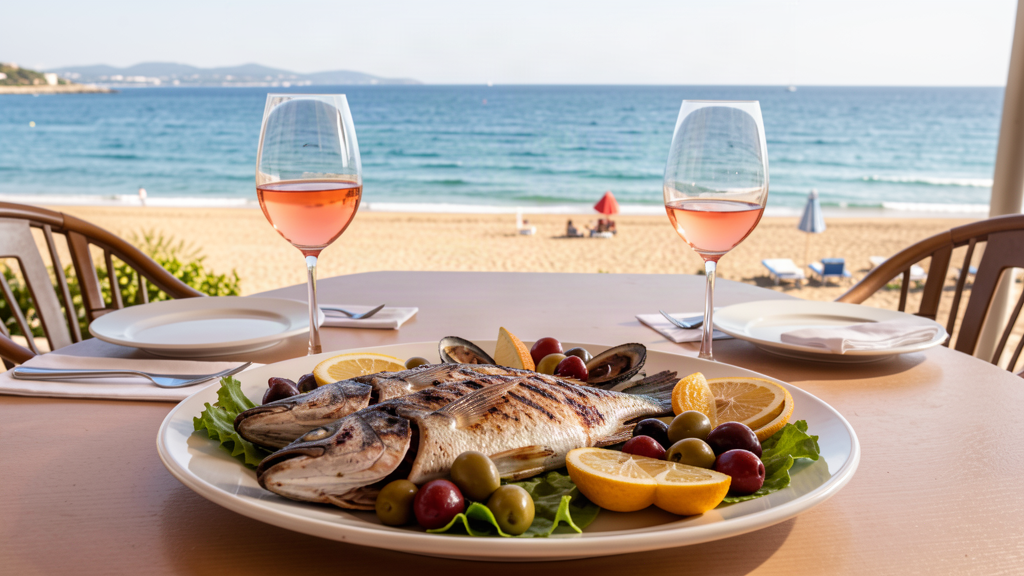
Beach-facing and unapologetically seasonal in mood. Come for grilled fish, a cold drink, and the sound of the anse behind your chair. It is not a secret, and it does not need to be. On a warm evening after a swim, this is the Mourillon rhythm: salt still on your skin, plates arriving without ceremony.
Au Sourd
10 Rue Molière, 83000 Toulon
An old-town seafood house with a serious local reputation and a flowered patio when the weather cooperates. Order simply. Let the kitchen handle what came in well. It is a good counterweight to beach restaurants: tighter service, more of a proper meal, still clearly Toulon rather than generic Riviera luxury.
Le Bistrot du Boucan
223 rue Jean Jaurès, 83000 Toulon
In the vieille ville, this is the slate-menu bistro energy you want when you are tired of seaside framing. Seasonal plates, a room that feels lived in, and prices that make a long lunch reasonable. I come here on days when I have already had enough sun and want conversation volume and a proper dessert.
Getting around
Toulon is walkable in pieces. Mourillon to the old port works on foot if you like a long seaside-and-city stroll; buses and harbor boats save patience in summer heat. The train station is fine for Var coast day trips. Skip the car unless you are heading inland toward Bandol or the higher villages.
Mornings at Port Saint-Louis reward early risers. Midday belongs to shade or the téléphérique. Evenings split well: corniche walk while the stone still holds heat, then dinner on the sand or back around Rue Molière and Jean Jaurès.
I leave Toulon with the jetty first: salt spray, a working boat clearing the harbor mouth, Mont Faron dry and green behind the rade. The city does not need to outshine Nice or Aix. Stand there long enough and the rest of it arranges itself around that line of water.
