
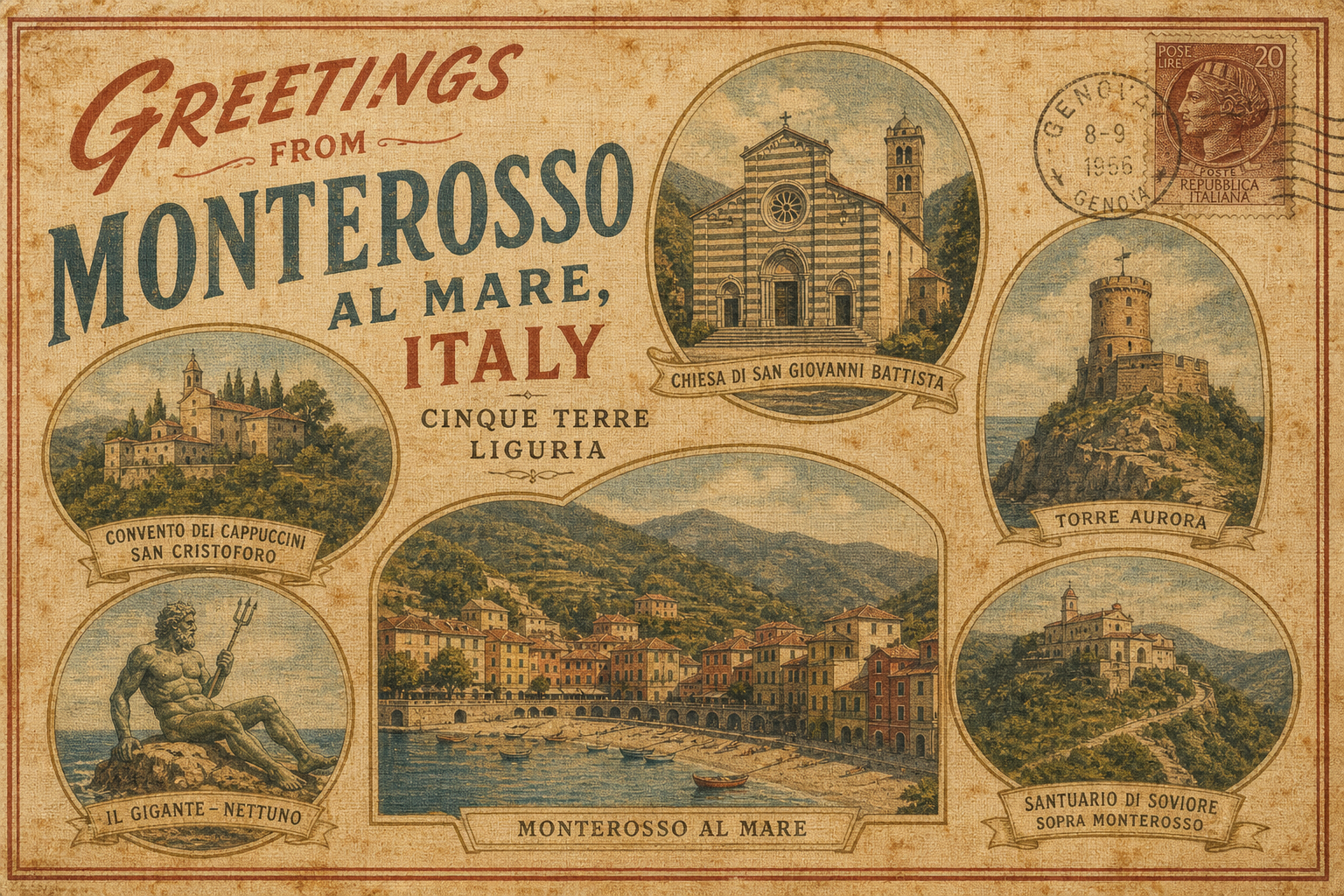
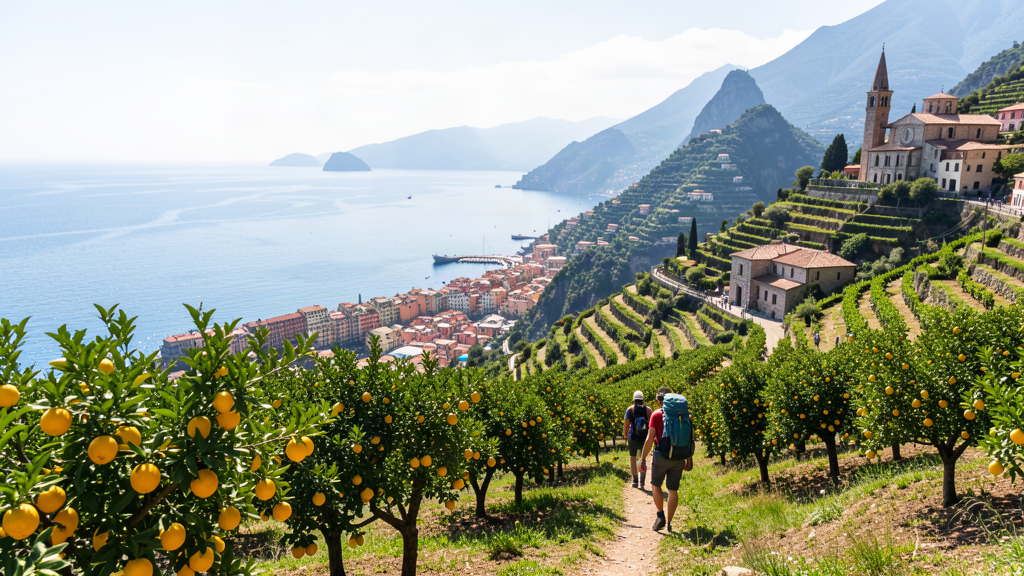
Monterosso al Mare is the Cinque Terre stop people remember for sand. Fair enough. It has the longest beach of the five, a station that dumps day-trippers onto Via Fegina, and more gelato than anyone needs. What I keep coming back for sits higher and smells sharper: lemon trees on stone terraces, the Capuchin hill that splits the town in two, and old lanes where anchovies still get packed in salt.
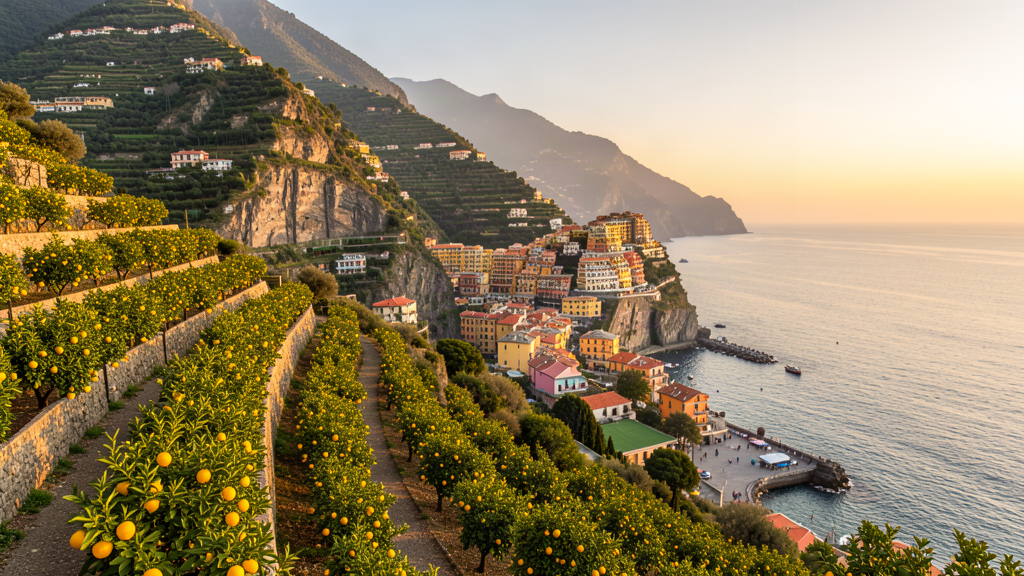
The village is really two places joined by a short tunnel and a climb. Fegina holds the wide beach, the station, and the easier hotels. The old town, on the other side of the Capuchin ridge, keeps the striped church, the tighter streets, and most of the better lunch tables. Between them, lemons and olives cling to slopes that look too steep to farm until you notice someone has been pruning them for a long time.
Two towns, one ridge
Arrive by train and you land in Fegina. The sea is right there. Umbrellas in season, the long curve of sand, and at the far end of the beach that odd stone giant half-sunk in the water: Il Gigante, a battered Neptune who has watched more sunsets than any guidebook. Walk the lungomare toward the headland and the Aurora Tower marks the hinge, a 16th-century watchtower at the foot of the Capuchin hill. There's a restaurant and a bar up there. The view sells itself.
Through the pedestrian tunnel under the ridge, or over the path that climbs past the convent, you drop into the centro storico. Via Roma and Via Vittorio Emanuele carry the daily commerce: bakeries, small groceries, pesto jars that look homemade because some of them are. The Church of San Giovanni Battista faces a small square with the black-and-white marble stripes Liguria loves. It is quieter here before ten and after the afternoon trains leave. That is when Monterosso feels like a working coastal town again, not a queue for the next boat.
Treat the ridge as the main reason to be here, not a connector between photo stops. Climb for the view. Climb again for the lemons. Climb a third time because the old-town restaurants are worth it even when your calves argue.
Capuchins, lemons, and the path uphill
The Convento dei Cappuccini sits on the hill with the Church of San Francesco and a lookout that opens the Cinque Terre coastline in one sweep. The complex is modest, 17th century, more working religious house than museum. What matters is the walk: stone steps, pine shade, citrus on the wind. You leave the beach towels behind without actually leaving town.
Monterosso's lemons are not a side note. They show up in marmalade, cream cakes, limoncino, and that local habit of marinating anchovies in lemon juice until the fish turns firm and bright. In spring the village runs a lemon festival. Even without the stalls, the terraces above the old town and toward the Buranco side keep the scent going most of the warm months. Walk slowly. You are not racing for a summit photo. People still pick fruit on these slopes, and the UNESCO label sometimes makes it easy to forget that.
If legs and heat allow, keep going inland toward the Sanctuary of Nostra Signora di Soviore, higher on an old pilgrimage line. The air cools. The sea becomes a strip. You pass olives and dry-stone walls that make the postcard villages below look almost temporary. Carry water. Start early. Come down for a late lunch when the old town tables have space again.
Beach hours without the brochure
Fegina's sand is real luck on this coast. Long enough to walk, soft enough for bare feet, busy enough in July that early swimming is a kindness to yourself. Locals still use it after work when the day boats have left. Shoulder months, May and late September especially, give you the same water with fewer elbows.
Use the beach as a morning reset or an evening cool-down between ridge walks and meals. The giant at the western end is a good turnaround marker: slightly absurd, slightly melancholy, very Monterosso. Beyond the towels, rock and headland remind you this is still Liguria's hard coast, not a resort poured onto flat land.
Anchovies, pesto, and plates that stay local
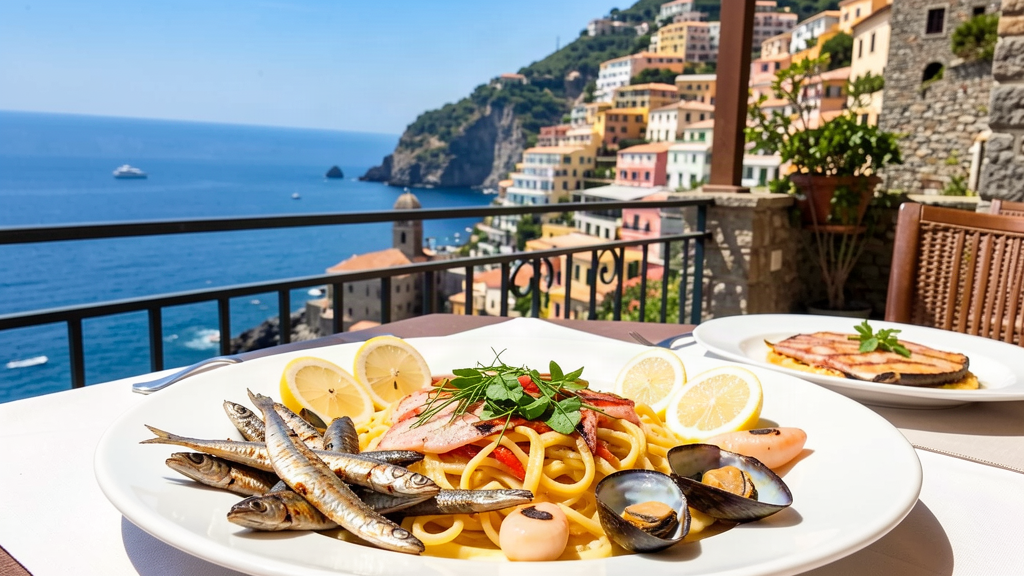
Food here is Ligurian first. Monterosso anchovies are a real point of pride, fried, marinated in lemon, or packed under salt in glass jars that travel badly in a suitcase and perfectly on bread. Pesto shows up on trofie and trenette with potatoes and green beans the way the coast prefers it. Sciacchetrà, the sweet passito-style wine of the Cinque Terre, is a small glass at the end, not a pitcher with lunch.
Skip menus that try to cover half of Italy. Order fish, vegetables, and whatever the kitchen says came in that morning. House white by the carafe is often cleaner than a fancy label after a hot climb. Lunch can be simple. Dinner fills fast from June through early September, so reserve when you care about a specific table.
Places to Stay
Three stays, three price bands, all walkable to sand or old-town lanes.
Hotel La Spiaggia (value)
Via Fegina, 100, 19016 Monterosso al Mare SP
Straightforward beachfront base on the Fegina strip near the station. Rooms are practical rather than precious. The win is walking out to sand and train without a luggage drama. Choose it when you want the money for dinners and trail days, and when you do not mind a livelier seafront at peak hours.
Hotel Margherita (mid-range)
Via Roma, 72, 19016 Monterosso al Mare SP
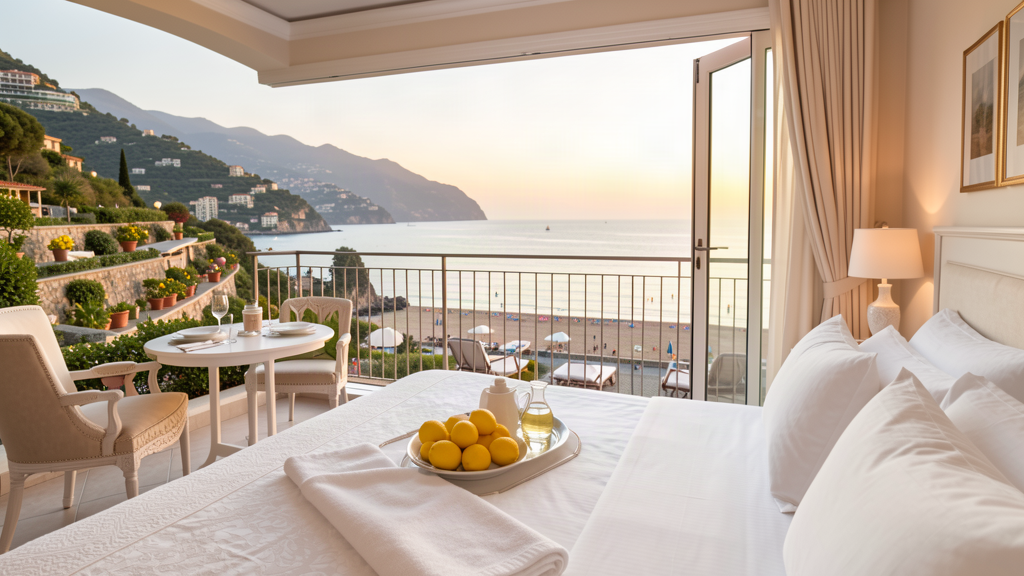
In the old town on the main pedestrian street, a short climb from the water and close to San Giovanni Battista and the better trattorie. Quieter nights than the Fegina bars, with the Capuchin path and lemon slopes basically at the back door. Good default if you plan to eat in the historic core and treat the beach as a daily outing rather than the view from your pillow.
Hotel Porto Roca (splurge)
Via Corone, 1, 19016 Monterosso al Mare SP
Cliff-edge stay above the water between the two halves of town, with terraces and a pool that help with midday heat. Quieter than the station strip. Useful when you want a real pause after crowded trains and still stay inside Monterosso. GPS sometimes wants Via Fegina 104; follow the hotel's approach notes.
Where to Eat
Stay with the coast: anchovies, pesto pasta, catch of the day.
Gastronomia San Martino
Via San Martino, 3, 19016 Monterosso al Mare SP
Small place near San Giovanni Battista, more counter-and-a-few-tables than white linen. Seafood salads, trofie with pesto, simple plates that taste like someone's lunch rather than a tasting menu. Good when you want solid food without the reservation dance. Go early or be ready to wait; locals know it.
Trattoria da Oscar
Via Vittorio Emanuele, 67, 19016 Monterosso al Mare SP
Old-town trattoria rhythm: seafood, pasta, a room that fills with Italian voices as evening settles. Expect anchovies done more than one way, mussels, and secondi that do not need a translation app. Reserve for dinner in high season. The bill feels fair if you ordered like a person, not a checklist.
Ristorante Miky
Via Fegina, 104, 19016 Monterosso al Mare SP
On the Fegina seafront, known for careful fish cooking and Monterosso anchovies treated with real attention. More polished than a quick gastronomia, still rooted in local product. Come when you want a longer meal. Book ahead in summer.
Drink water between courses. The ridge climb and the beach sun stack faster than you notice.
Getting around and small practical notes
The coastal railway is the skeleton of any Cinque Terre trip. Monterosso's station sits in Fegina; the old town is the tunnel or the hill path away. Ferries call in season when the sea allows. Cars are a summer headache: narrow approaches, limited parking, little reward once you are inside the pedestrian core. If you must drive, leave the vehicle at the edge and walk.
Park tickets and trail rules change, so check current Cinque Terre Card details and path closures, especially after rain. The Sentiero Azzurro toward Vernazza is beautiful and crowded. Start at opening light if you go. For a quieter uphill, take the Capuchins and Soviore over trying to collect all five villages in one sweaty afternoon.
Two nights work well. One evening for Fegina beach and a seafront dinner. One full day for old-town lanes, the convent ridge, lemon terraces, and a slow meal on Via Vittorio Emanuele. Early morning is when Monterosso feels least like a brand. Late afternoon, when day-trippers retreat toward La Spezia, the squares loosen and the salt-and-lemon smell comes back.
Walk the Capuchin hill. Taste the anchovies under salt. Let the lemons set the pace before the next ferry horn.
