
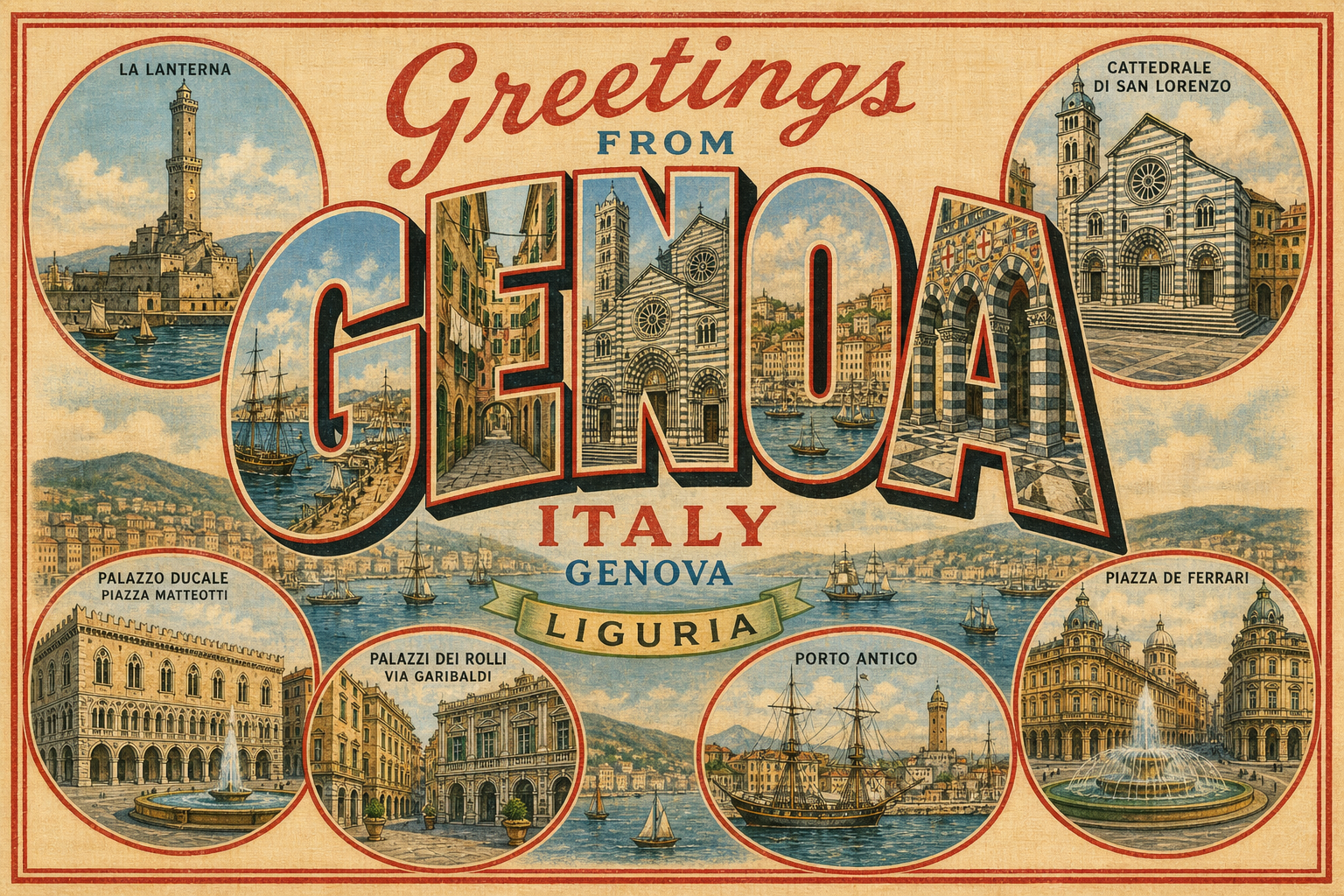
Most people treat Genoa as a transfer: cruise pier, aquarium selfie, train south to the pastel villages. That is a mistake. The real city starts when you leave the waterfront boardwalk and step into the centro storico, where the caruggi (those narrow stone alleys) run like canyons between tall houses, and the smell of chickpea batter hitting a copper pan pulls you sideways before any map app can catch up.
I came for pesto and stayed for the way Genoa refuses to tidy itself. La Superba still shows its maritime money in striped marble and Rolli palaces, but daily life sits lower down: market crates, bakery counters, laundry lines over black slate roofs, and trattorie that open when the cooks are ready, not when a tour bus parks.
Into the caruggi from Porta Soprana
Begin at Porta Soprana, the twelfth-century twin-tower gate on the eastern edge of the old core, near the small house tradition ties to Christopher Columbus. From there the modern city falls away fast. Via di Ravecca and the lanes around it drop you into a maze that Henry James once called an entangled topographical ravel. He was not wrong. The caruggi stay cool even in July, loud with scooters, and dense enough that you lose the horizon for whole blocks.
Look up. Many facades carry trompe-l’oeil windows and painted cornices, thrift and swagger on the same wall. Look down for worn stone steps, sudden piazzettas, and doors that open into hardware shops, Bangladeshi grocers, and tiny bars pouring coffee for people who actually work here. This is not a polished outdoor museum. It is still a working port neighborhood packed into medieval streets.
San Lorenzo’s striped cathedral sits just off the tangle if you want a pause under marble bands and a quiet nave. Palazzo Ducale opens onto more formal squares when you need air. Neither replaces the alleys. The alleys are the point.
Go slowly. Get mildly lost on purpose. When a side vico smells of frying oil and rosemary, follow it.
Farinata, focaccia, and the Ligurian table
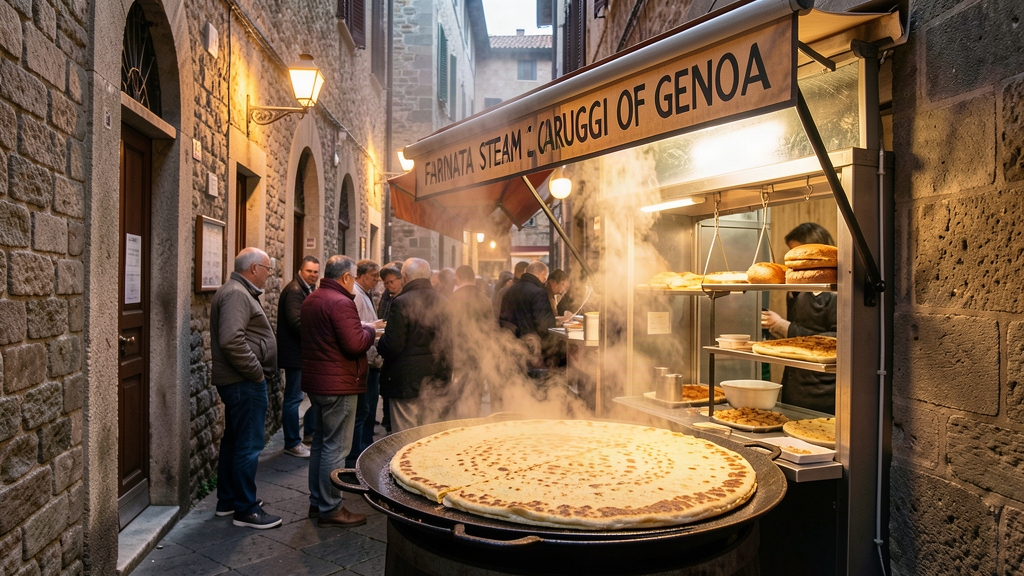
Genoa’s street food was never invented for visitors. It is cheap, portable, salty fuel for a steep town. Farinata, thin chickpea batter baked until the edges blister, is the thing I chase first. Sciamadda counters pull it from the oven in sheets; you buy a square wrapped in paper and eat it standing, still hot enough to sting your fingers.
Focaccia di Genova is the other daily bread: dimpled, oily, salt-flecked, sometimes plain, sometimes with onions or cheese. Bakeries sell it by weight from early morning. Pair it with a short espresso at the counter and you will learn more about Genoa than another hour in the aquarium queue.
Then comes pesto. Real Genoese pesto is a mortar job: basil, pine nuts, garlic, Parmigiano and pecorino, Ligurian oil. It belongs on trenette, trofie, or testaroli, not drowning a tourist plate. Order it where the pasta is still slightly firm and the sauce is emerald, not gray-green from a jar. Add pansoti with walnut sauce, salted anchovies, stockfish, and a glass of local white when the kitchen is in a good mood.
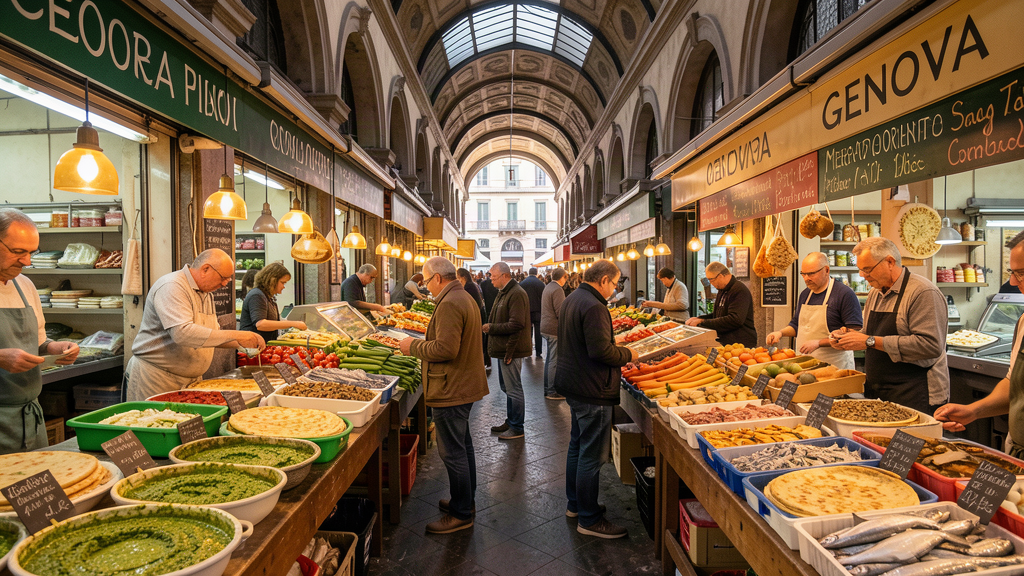
Mercato Orientale, just off Via XX Settembre near Via San Vincenzo, is the covered market that still feeds the east side of the center: produce, fish, spices, and ordinary grocery runs. Go in the morning. Watch who shops with a list and who argues over tomatoes. The newer MOG food-hall energy sits next to the older stall rhythm. Both make it clear Genoa eats seriously even when the cruise ships are loud at the pier.
Spianata Castelletto and the roof line
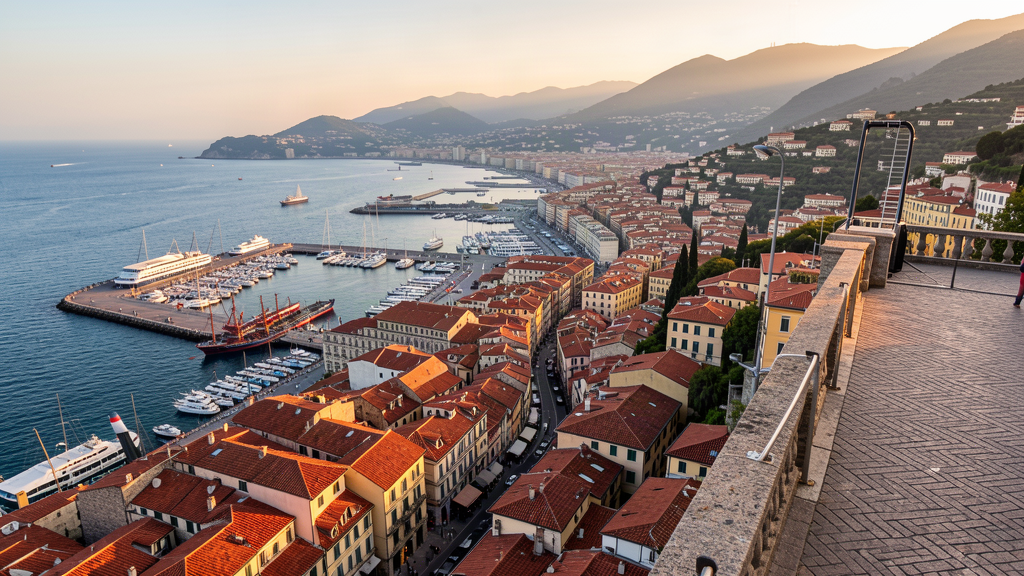
When the caruggi start to feel too tight, ride the public lift from Piazza Portello up to Spianata Castelletto. The elevator is ordinary municipal infrastructure, which is half the reason I like it. At the top, the city opens: slate roofs, church domes, harbor cranes, and the sea beyond the breakwaters. From here Genoa’s vertical habit makes sense. Wealth climbed the hill in layers while trade stayed tied to the water.
Stay long enough for the light to change. Late afternoon turns the roofs blue-gray and the port into a working map instead of a postcard. Then walk down if your knees allow, or ride back and re-enter the alleys with a better mental map.
Via Garibaldi (the old Strade Nuove) is the counterpoint: UNESCO-listed palaces of the Rolli system, where Republic-era elites once lodged state guests and tried to outdo each other. Step into a courtyard if one is open. The frescoes and staircases explain the nickname La Superba better than any brochure.
If you have spare hours and want salt air without leaving the city, hop a bus or tram toward Boccadasse, the small former fishing cove east of center, for gelato on the rocks. Go on a weekday morning if you can; golden hour packs the cove.
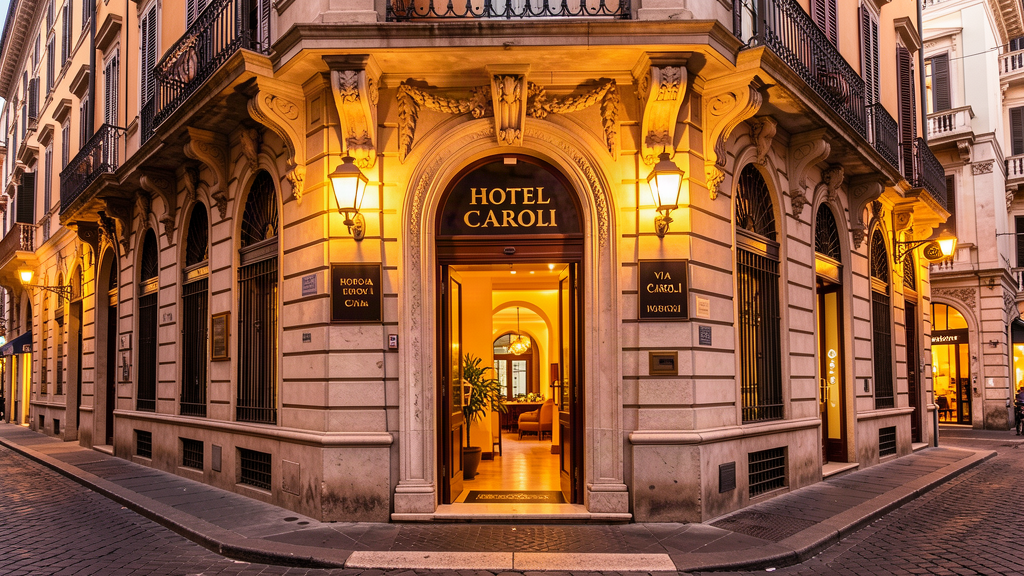
Places to stay
Hotel Cairoli (value / Rolli-street base) Via Cairoli 14/4, 16124 Genova GE A straightforward stay inside a historic palazzo on Via Cairoli, the continuation of Via Garibaldi. You sleep inside the UNESCO street pattern, walk to the caruggi in minutes, and keep costs saner than the grand hotels. Rooms vary with the old building; location does the heavy lifting.
Hotel Palazzo Grillo (mid-range / frescoed centro) Piazza delle Vigne 4, 16123 Genova GE A restored sixteenth-century palazzo in the heart of the old town, with painted interiors and a rooftop terrace over Piazza delle Vigne. Choose this when you want the stay itself to feel like part of Genoa’s layered core, not a sealed business box near the station.
Hotel Bristol Palace (higher / Liberty boulevard) Via XX Settembre 35, 16121 Genova GE A 1905 grande dame on the arcaded shopping street between Brignole and the Ducal side of town. Spiral staircase, fuller service, and an easy walk to Mercato Orientale and the edge of the centro storico. Good when you want polish after long alley days, or a soft landing off an evening train.
Book early for spring weekends and September. Genoa’s hotel stock is better than its reputation, but the best old-town addresses still fill when a conference or festival hits.
Where to eat
Sa’ Pesta Via dei Giustiniani 16R, 16123 Genova GE A historic sciamadda-style trattoria deep in the caruggi, famous since the late nineteenth century for farinata and honest Ligurian plates. Come hungry, expect a no-frills room, and let the chickpea tart and vegetable torte set the tone. This is daily Genoa, not tasting-menu theater.
Trattoria da Maria Vico Testadoro 14R, 16123 Genova GE A small, cash-friendly classic tucked up a quiet alley, still writing the menu by hand and feeding a mix of neighborhood regulars and travelers who found the door. Expect home-style pasta, pesto when the basil is right, and the kind of service that does not perform for cameras. Check hours; lunch can be the surest bet.
Antica Osteria di Vico Palla Vico Palla 15R, 16128 Genova GE Near the old port lanes, a long-running osteria for fritto, seafood, and Ligurian cooking with a little more evening weight. Useful when you want a proper sit-down after walking the waterfront and the lower caruggi. Reserve on weekends.
For daytime grazing, bounce between focaccia bakeries, a market snack, and a standing espresso. Aperitivo here can be as simple as a glass of vermentino and a few anchovies. You do not need a spritz spectacle unless you want one on the restored porto antico.
Getting there and around
Genoa Cristoforo Colombo Airport sits west of town with bus and taxi links in. The main stations split the job: Piazza Principe for many north-south trains and the old-town west side; Brignole for Via XX Settembre and Mercato Orientale. Regional trains run the Riviera both ways if you day-trip toward Camogli or the Cinque Terre, but give Genoa its own nights first.
Inside the center, walk. The caruggi punish cars and reward curiosity. Public lifts and the metro handle hills; buses cover Nervi or Boccadasse. Wear shoes with grip. Polished stone gets slick after rain.
Spring and autumn suit the alleys best. August thins some neighborhood tables; cruise days thicken the waterfront. Midweek market mornings and late light at Castelletto are when the city feels most itself.
I left Genoa with farinata salt on my cuffs and slate-colored light still in my head from the Spianata. The aquarium can wait for another trip. What stays is simpler: turn when it smells good, climb when the alleys close in, and trust a city that made its money on the sea but still feeds you best in the narrow dark between the houses.
