
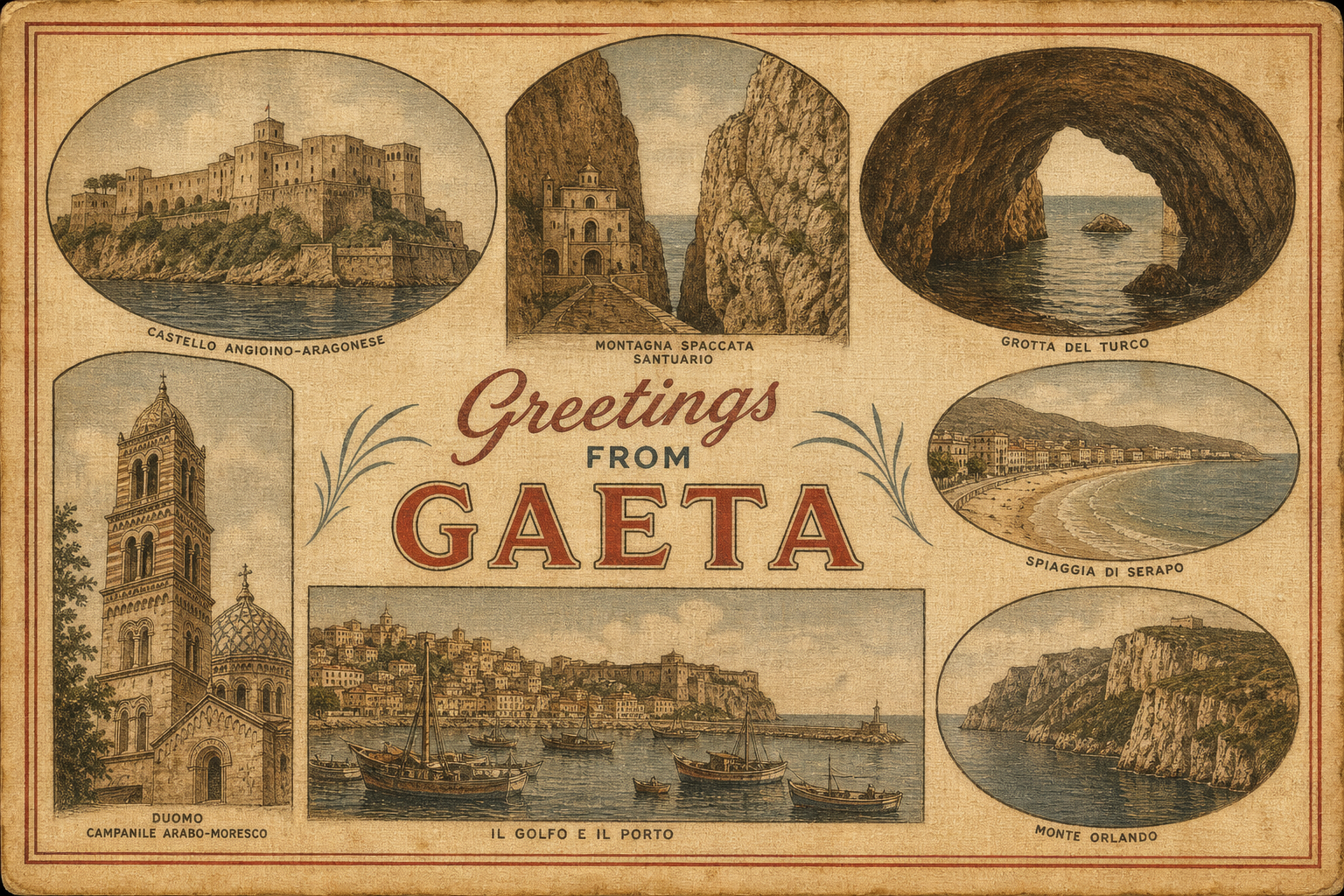
The path does not look like much at first. A sanctuary doorway, a short descent, stone polished by pilgrimage shoes and sneakers. Then the rock opens. You stand inside a vertical split in Monte Orlando, salt air rising from a Tyrrhenian drop you cannot quite see yet, and Gaeta falls away behind you.
Gaeta hooks out on a promontory between Rome and Naples, far enough from both that plenty of travelers peel off for Sperlonga’s cove or Formia’s trains. Fine by me. What holds here is not one postcard beach but a stack: medieval lanes above the harbor, Serapo’s sand on the west, castles with too much history, and this cracked mountain where legend, limestone, and a working shrine share the same stairs.
Into the split
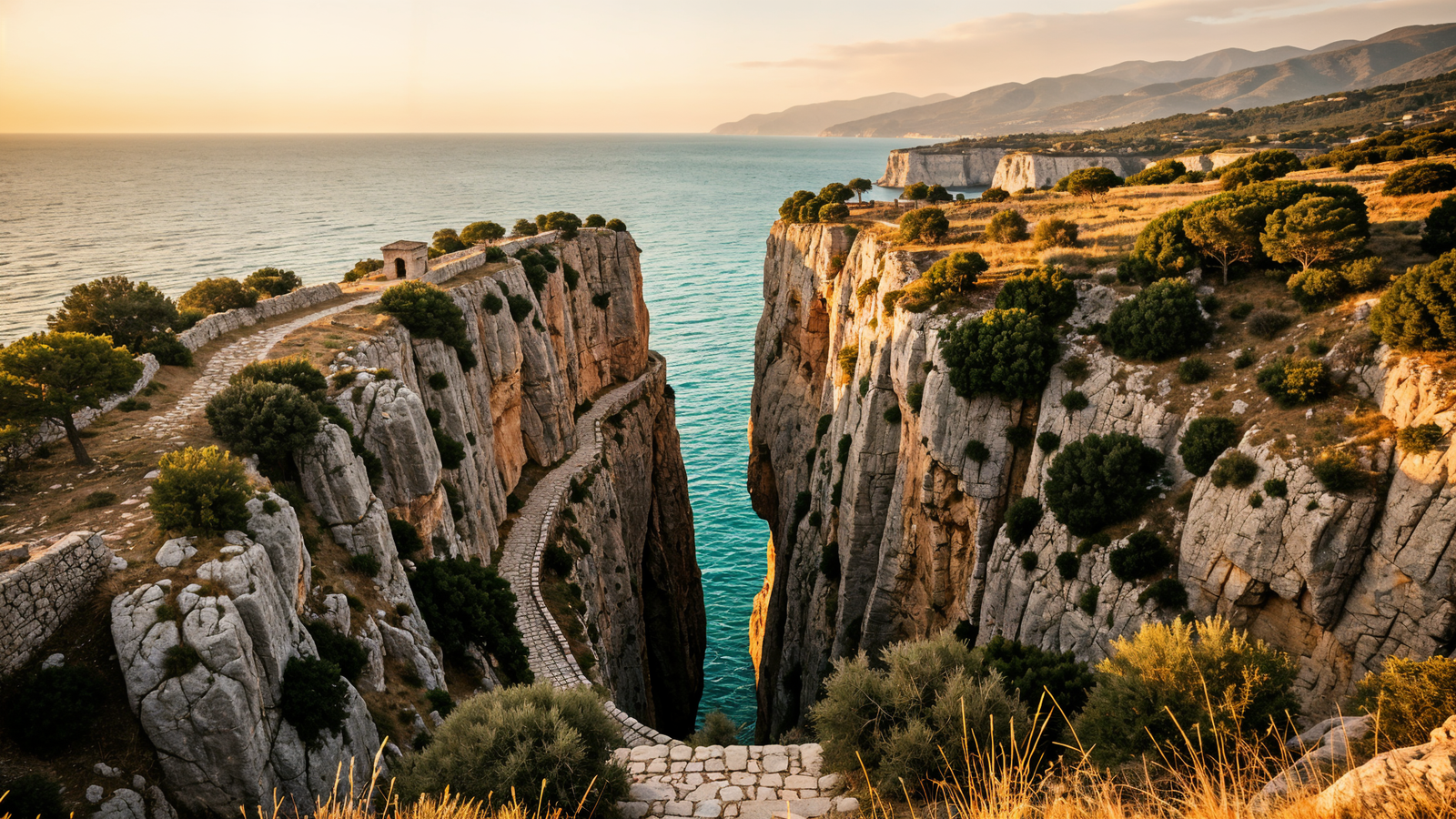
Montagna Spaccata — Split Mountain — is the fissure on the seaward face of Monte Orlando. Local story ties the crack to the earthquake at Christ’s death; geology offers limestone and time. You do not need to pick a side. The Santuario della Santissima Trinità sits above the cleft, founded by Benedictines on older ground. People still come to pray, not only to collect views. Dress like you are entering a church, because you are.
From there the path drops into the rock. Steps between high walls. Light in slices. On clear days the blue below looks almost fake — the color posters invent and the sea sometimes delivers. Routes continue toward the Grotta del Turco, the sea cave under the cliffs once tied to pirate lore. Access and step counts change for safety; trust current signs, not an old blog’s staircase math. Go for the descent into the open rock, not a race to the lowest ledge.
I like late morning on a weekday, before the coast-road vans stack up. Wear shoes with real soles. The stone can be damp. If you only do one sight in Gaeta, do this one slowly. Pause on the landings. Look up. The crack is the story; the view is bonus.
Monte Orlando above the water
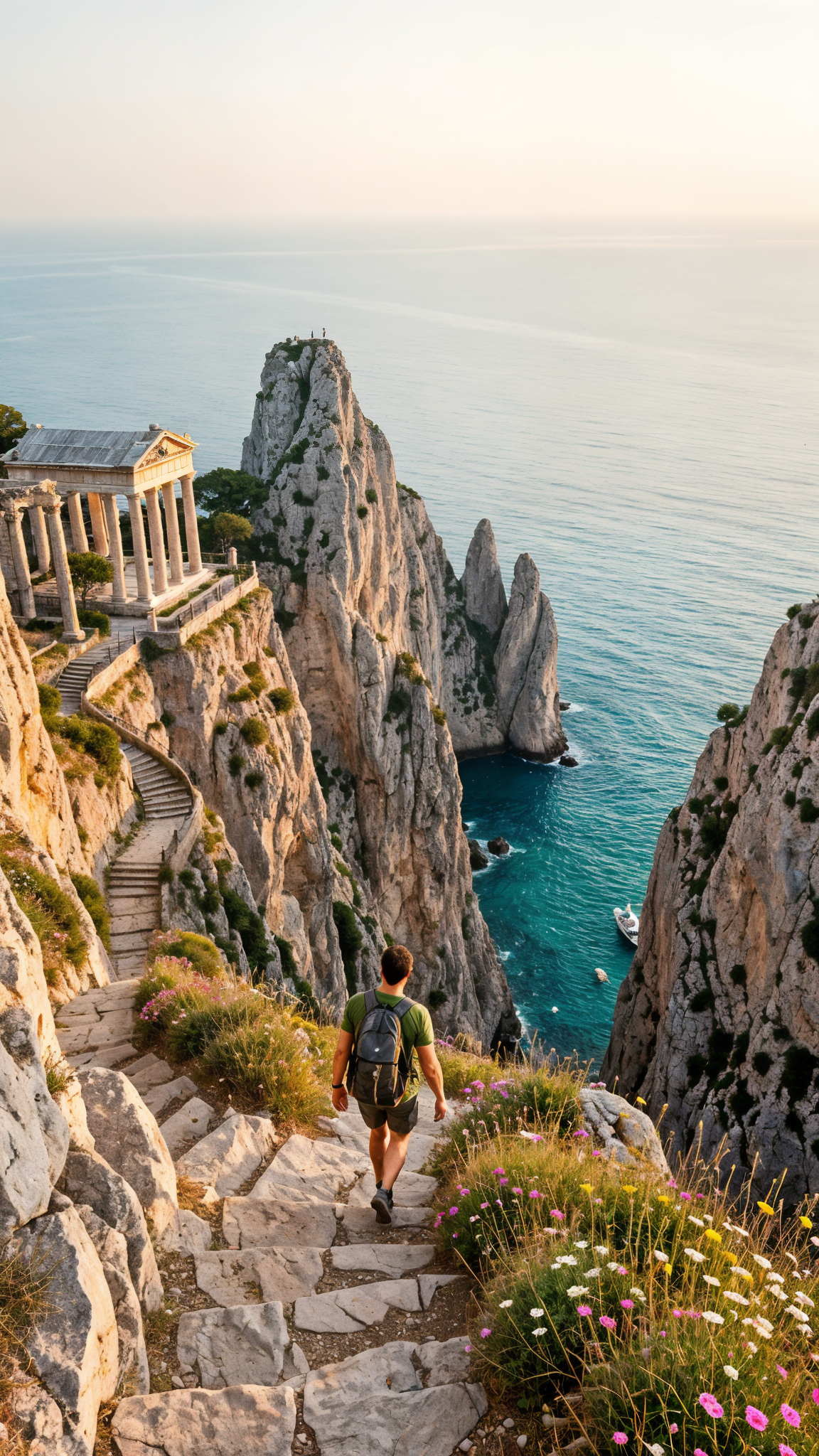
The Urban Regional Park of Monte Orlando wraps the headland in scrub, pines, and military leftovers. Trails climb to the Mausoleum of Lucius Munatius Plancus, a stout Roman cylinder on the summit since the first century BC. Plancus was a consul who survived civil wars; his tomb feels less like glory than like a man who wanted to be seen from the sea. The walk is not technical — switchbacks, lizards, sudden openings onto water.
Link the mausoleum and Montagna Spaccata in one loop if your legs allow, or split morning and late afternoon. From the high ground Gaeta’s shape finally makes sense: medieval spur to the east, Serapo cupping the west, the gulf holding Formia and distant islands in one blue dish. Windy days smell of resin and salt. Still summer evenings hold heat; start earlier than you think.
The castle complex on the ridge stacks Angevin and Aragonese work on older walls. Gaeta was papal refuge, Bourbon stronghold, a promontory armies wanted because it controls the coast road. You do not need the full lecture. Walk the exterior when interiors are closed. The stones still look immovable.
Serapo and the slower waterline
Serapo is the main beach, a long crescent with lidos in season and quieter sand if you walk past the densest umbrellas. Not a secret. Families, music, swimmable water deep into the shoulder months. Use it as recovery after the cliffs, not as the whole trip. Early swims before the beach clubs wake are the best hours I have had here — cool water, dog walkers, a few lap swimmers, the mountain still in shade.
The roads between Serapo and the older town show Gaeta’s ordinary face: gelato, hardware shops, mild parking arguments. That plain stretch is a useful reset after the sanctuary. Eat a tiella with sand on your ankles. Watch the light go pink on the castle. Leave a few hours open.
The medieval spur and the harbor
Gaeta Medievale climbs the eastern spur in lanes, stair streets, and sudden sea windows. The Duomo, the narrow commercial streets, the views back across the gulf are enough for a slow loop. Laundry hangs. Scooters take corners never meant for them. You will get mildly lost and find the water again in three minutes.
Toward the port, working boats and pleasure craft share the water. Fish arrives when it arrives. Tourist menus in four languages exist. So do tables where the next seat orders without studying the card. Sit where the staff still move like people on a shift.
Tiella, salt, and a table
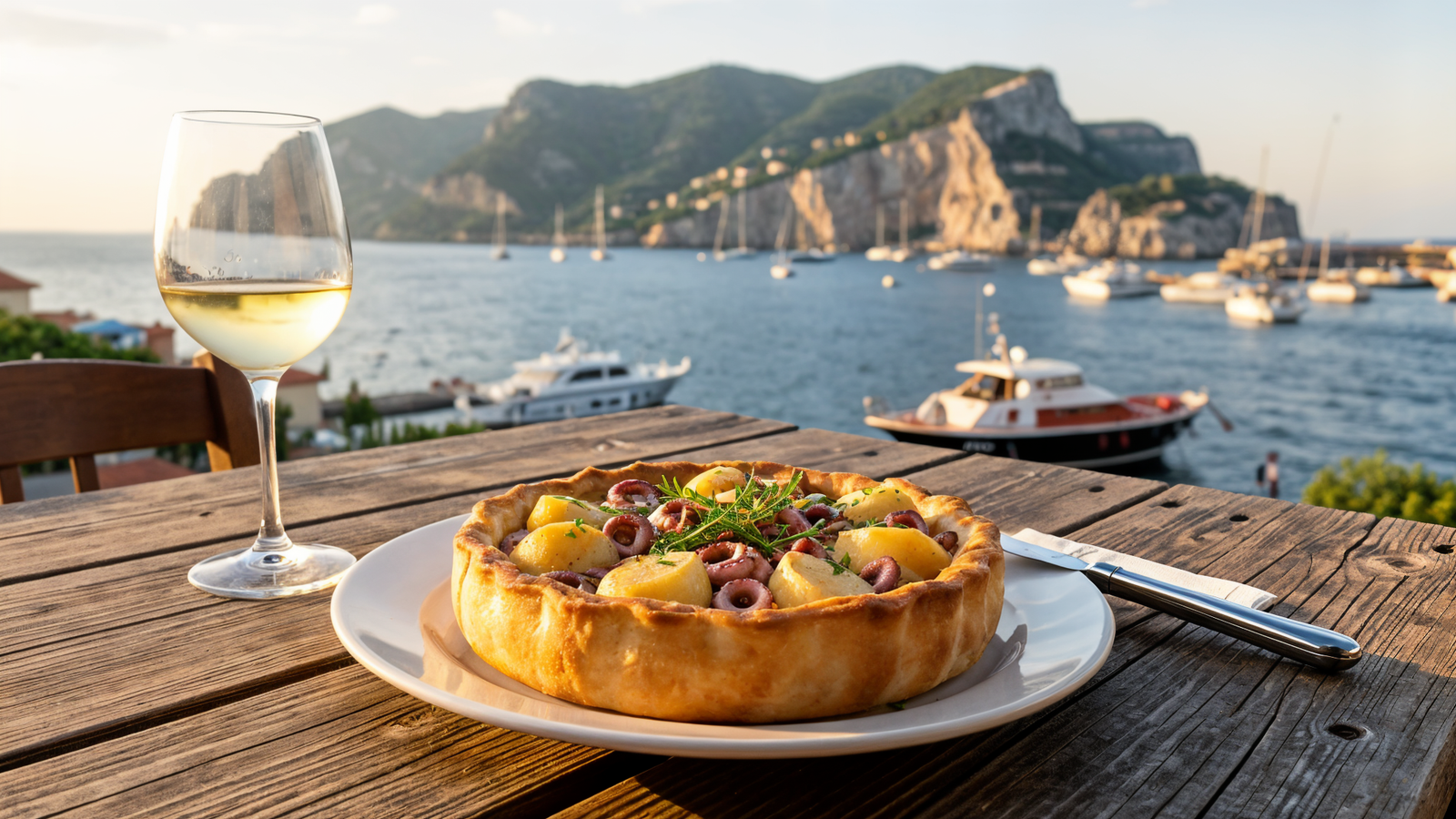
Gaeta’s edible signature is the tiella: two rounds of dough sealed around a filling, baked until the crust goes sturdy and the inside stays moist. Octopus is classic. Escarole and olives, anchovy, zucchini, mixed seafood — bakers keep their own lists. It is picnic food and ferry food, built to travel better than a soggy slice. Buy one warm, find a wall with a view, drop crumbs on your shirt.
La Bottega Della Tiella — Piazza Conca 25, 04024 Gaeta LT.
Small and focused. Come for the namesake, not a five-course show. Good when you want the local specialty without a full restaurant lunch. Hours wander outside peak season; if the shutter is down, try later.
Pizzeria del Porto — Via Bausan, Gaeta Medievale, 04024 Gaeta LT.
In the older quarter, tiella in the bloodstream, port logic nearby. Useful after the medieval lanes when you want something hot without leaving the spur. Octopus if they have it; otherwise take the seasonal filling and stop overthinking.
Pizzeria 2000 — Corso Cavour 36, 04024 Gaeta LT.
A long-running main-street address for traditional tielle — scarola and olives, cuttlefish, the lunch-counter standards. Less romantic than a cliff terrace, more reliable when you are hungry and slightly sun-struck. Cold drink, no agenda.
For dinner, follow the fish and the rooms that fill with residents after 8:30. Trust the catch specials over laminated photo menus. House wine is usually enough.
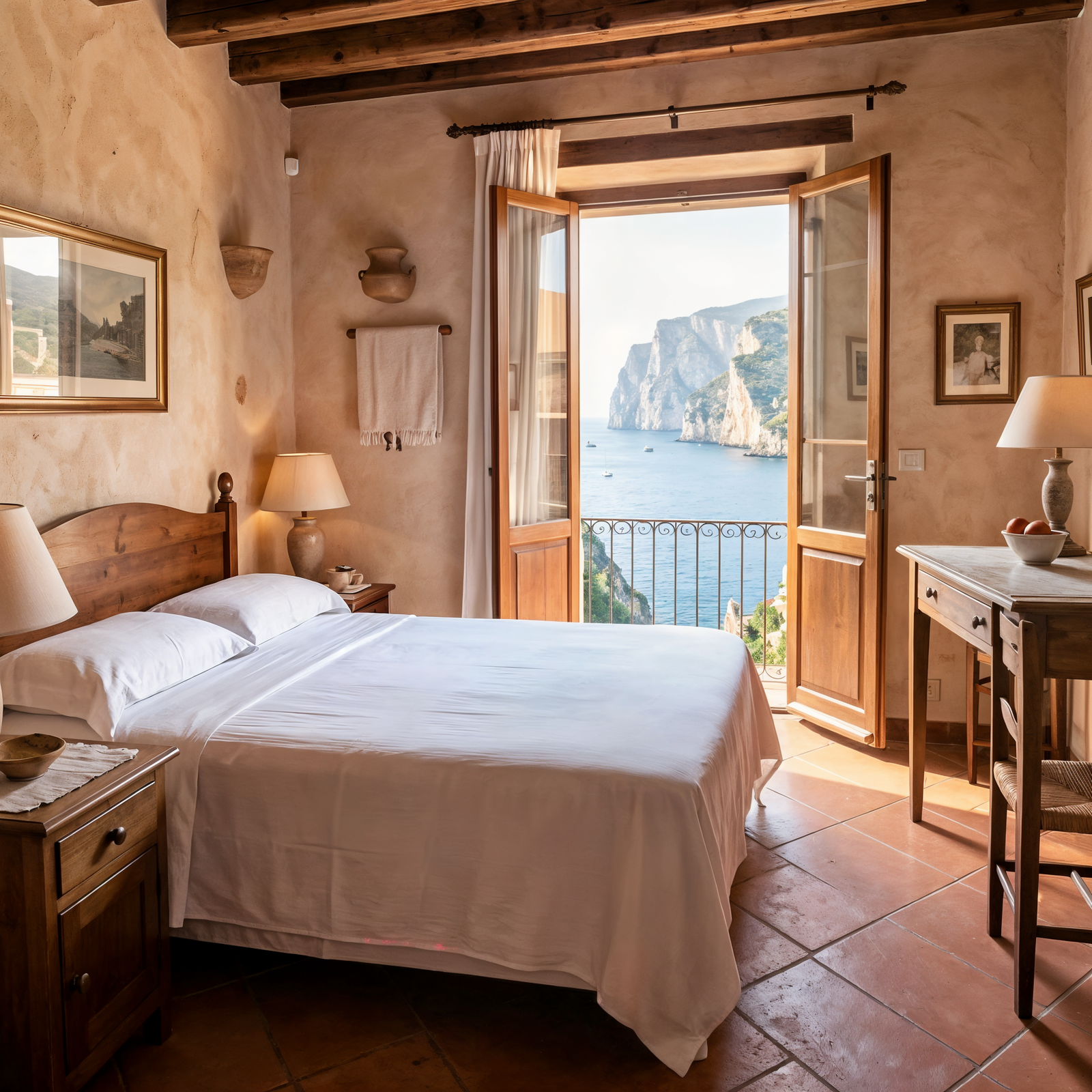
Places to Stay
Il Bottone d’Argento B&B — Piazza San Carlo, II Traversa Destra 13, 04024 Gaeta LT.
Smaller scale and a lower price point than a full hotel, with a more personal front door. Better for town walking than a private beach gate. Rooms are simple; you stay for location and a quiet start to the day. Book ahead in July and August.
Hotel Serapo — Via Firenze 11, 04024 Gaeta LT.
On Serapo beach, with hotel comforts and a short walk from breakfast to sand. Mid-range and practical if swimming matters as much as the sanctuary. Ask for a sea-facing room if the rate gap is tolerable; the water sound at night is part of the stay.
Grand Hotel Le Rocce — Via Flacca Km 23.300, 04024 Gaeta LT.
Cliffside and higher on the local ladder, west of the tight centro, with terraces that look back at the same coast as Montagna Spaccata from another angle. Best with a car when you want evenings on the property as much as mornings in town. Not a hidden boutique — guests have been coming for decades — but it is the coastal-stay version of Gaeta without a noisy corner room.
Getting there without the drama
Gaeta sits roughly 130–140 km south of Rome and under 100 km north of Naples. Drivers use Latina province connectors; summer Fridays crawl. Rail often means Formia-Gaeta station, not a stop at the sanctuary door — budget a bus, taxi, or pickup for the last stretch. On the promontory, walking and short hops cover Serapo, the medieval quarter, and park trailheads if heat and hills are in your budget.
Rome works for a long day trip. An overnight is better. Opening light at Montagna Spaccata, a Serapo swim, dinner in town, and a second morning on Monte Orlando beats racing the gulf with one eye on a return train.
A day that actually fits
Morning into the crack while the stone is cool and the sanctuary is more prayer than crowd. Part of Monte Orlando toward Plancus if legs and weather agree. Midday tiella on Piazza Conca or Via Bausan, then an unhurried hour in the medieval lanes. Afternoon on Serapo: swim, shade, salt rinse. Evening toward the harbor or a simple fish table. Overnight if you can; the promontory changes when the day-trip cars leave.
Gaeta is not trying to out-Amalfi anyone. It is a working Lazio seaside town with a mountain that split open and a stuffed flatbread that travels well in paper. You go down into the rock, you come back up hungry, you eat something warm with octopus or greens inside, and you watch the gulf take the last light. That is reason enough to bend south of Rome and stay past lunch.
