
Leipzig is thirty-five minutes by train. Most people treat Halle (Saale) as a station name on the way somewhere louder. I reverse that. Bags drop near the Altstadt ring, then I ride or walk north until the river tightens under Burg Giebichenstein and the porphyry cliffs force the Saale into a narrow gate. Castle rock, art-school courtyards, bridge traffic, green islands downstream: that bend is why I stay overnight in Sachsen-Anhalt’s Händelstadt instead of flipping through on a day ticket.
You smell river water and tram brakes first. Then coffee from Giebichenstein tables, warm bread on Seebener Straße, and salt history if you circle Hallmarkt. Halle is a working university city with five towers over the market and a Saale floodplain that still feels local on a weekday morning.
Burg Giebichenstein first, not as a postcard stop
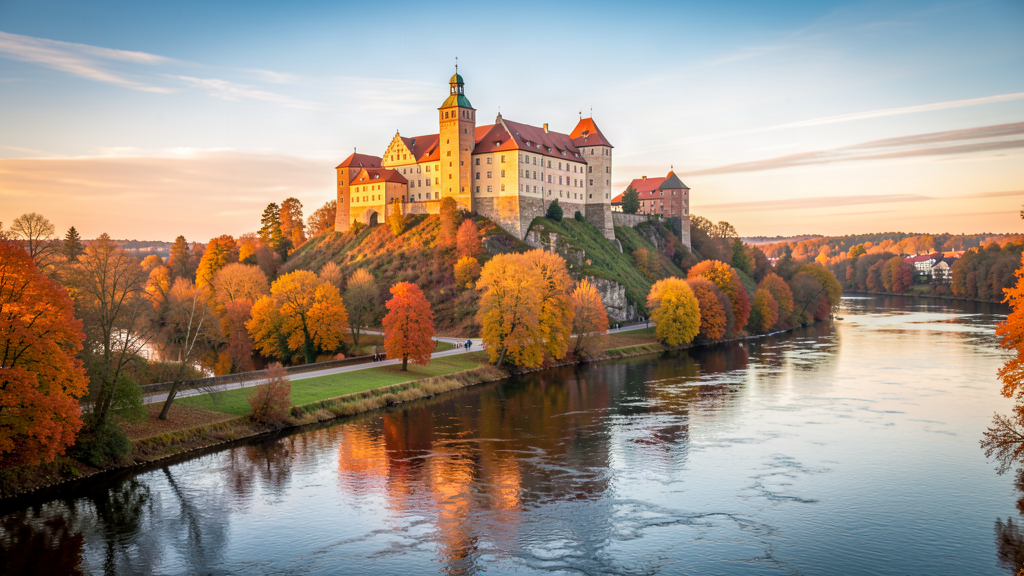
Start at Burg Giebichenstein, the oldest castle on the Saale, first mentioned in 961. The upper ruin sits on the cliff. The lower castle holds workshops of the Burg Giebichenstein Kunsthochschule, art and design students moving between studios while visitors climb for the view. Treat the Burg as a lived campus with a ruin attached, not a silhouette you photograph and leave.
I give the upper walls twenty quiet minutes before a single picture. Sit once facing the river bend. Watch how the water hits the rock gate between Giebichenstein and Kröllwitz. Then walk down toward the bridge and the bank paths. The Klausberge and the Amtsgarten sit nearby for shade after the climb. Locals use these slopes for short loops after work. Match that pace and the rest of the city lands better.
Across the water, Kröllwitz still reads as the old fisher village it was before incorporation: Petruskirche on the rock, university buildings on the hill, tram terminus with park-and-ride. I cross the Giebichenstein Bridge once in each direction. Morning light favors the castle face. Late afternoon softens the river and the villa streets toward the Bergzoo.
Saale loops, Peißnitzinsel, and the slow water line
The Saale is Halle’s reason for a map, not a backdrop. Arms of the river braid through the floodplain. Peißnitzinsel sits in the middle of the city like a green living room: paths, meadows, playgrounds, the Peißnitzhaus when you want a plate after walking, and a small park railroad in season. The Bridge of Friendship links from the Ziegelwiese, where summer brings a local Saale beach feel without a lake trip.
I walk the bank from Giebichenstein toward Peißnitz in the afternoon, when office traffic thins and the castle rock picks up warmer color. Rabeninsel rewards a slower loop on a second morning. Feet and a day ticket cover day one. The Saale cycle path can wait.
This is not wilderness. Trams rattle nearby. Students cut through on bikes. The point is density of green inside a city that also has a proper Altstadt: castle rock, river island, and market towers in one arc without a car.
Five towers, Hallmarkt salt, and the Altstadt ring
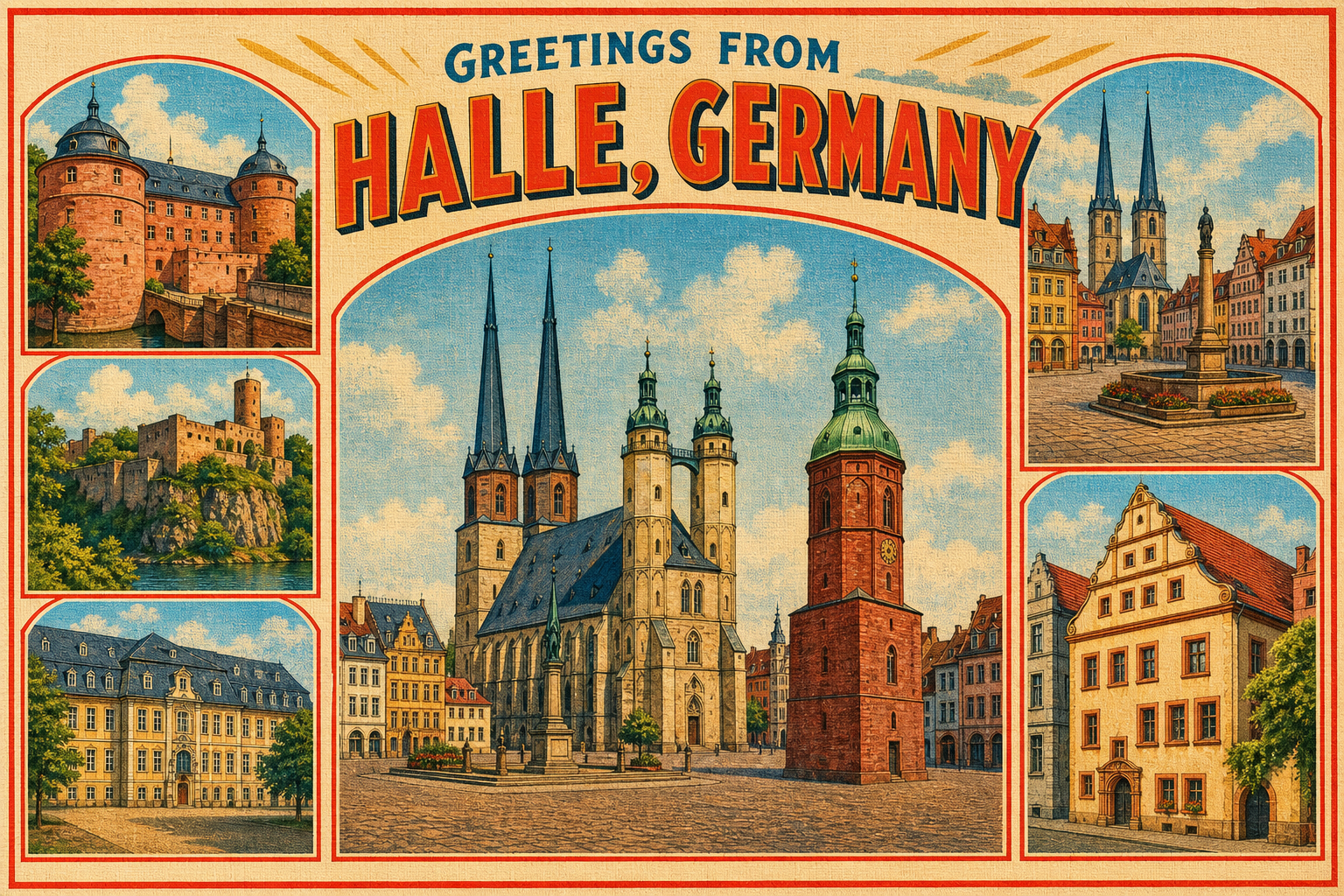
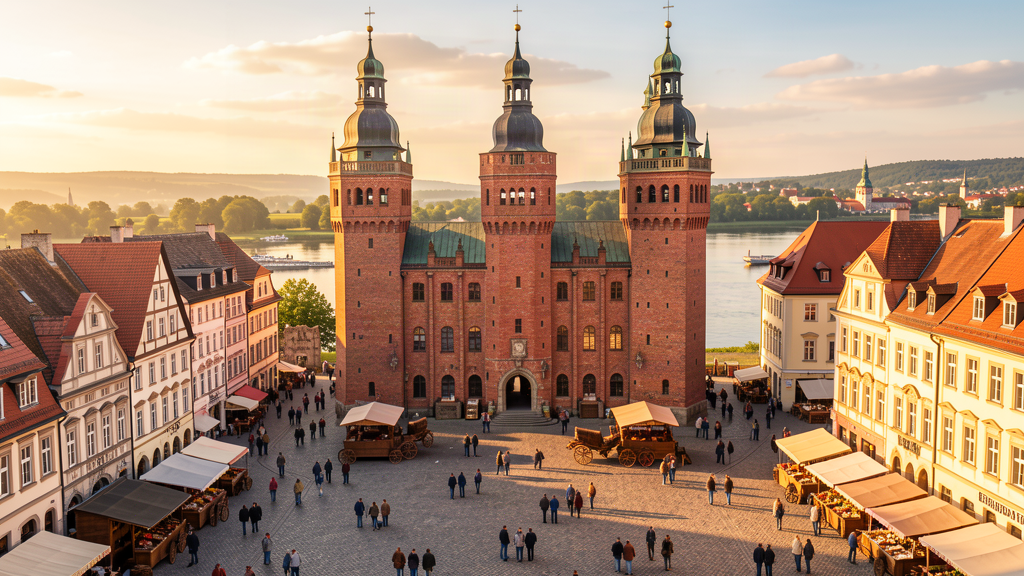
South of the river bend, the Altstadt turns around Marktplatz. Four towers of the Marktkirche Unser Lieben Frauen plus the freestanding Roter Turm make the “City of Five Towers” silhouette. Handel’s bronze faces London on the square. Georg Friedrich Händel was born here; the Händel-Haus on Große Nikolaistraße holds the birthplace museum if music is your thread. I do the square once with a coffee and leave the full museum list for checklist travelers.
Hallmarkt, a few minutes west, was the salt-production heart for centuries: boiling huts and brine wells under what is now an open square with the Göbel Fountain. Halle’s wealth and name sit in that salt story. Read one plaque and keep walking.
Kleine Ulrichstraße, “the little Uli,” runs as the pub and café lane. Moritzburg holds modern art in its late-Gothic fortress on the river edge of the core. Domplatz and the quieter cathedral sit tucked among alleys if Marktplatz feels loud. I walk the Altstadt ring, the promenade that replaced the old wall, once at blue hour. Feet win in the calmed core.
Paulusviertel and the lived-in north
North of the steeper tourist line, the Paulusviertel spreads around the Pauluskirche on the Hasenberg: broad Gründerzeit streets, trees, student flats, bakeries, and the LuWu (Ludwig-Wucherer-Straße) climbing from Reileck with bars and sunset views back toward the city. This is where Halle feels most like a place people stay after graduation, not only a station between Leipzig and Berlin.
I give Paulusviertel an early evening hour with no agenda beyond a drink and a slow block of façades. Reileck is the practical knot: trams, shops, the hinge between quarter and center. South of the old core, the Franckesche Stiftungen open courtyards from August Hermann Francke’s historic complex. Neither needs a full day unless social history is your main reason. Both beat a second identical lap of Marktplatz.
How the city moves, and a clean day arc
Halle (Saale) Hbf sits east of the Altstadt with tram links into Markt, Steintor, and out toward Giebichenstein and Kröllwitz. Leipzig/Halle Airport is a short regional hop. Inside Halle, trams beat circling for parking. A day ticket ties Burg, river, and market without taxi math.
For two nights around Giebichenstein, the Saale floodplain, and the five-tower core, you rarely need a car. Winter shortens terrace seats and island crowds, so confirm hours before locking lunch outdoors. Händel-Festspiele week fills rooms. Shoulder seasons keep the bank quieter.
A clean day once bags are down: Burg Giebichenstein and the bridge view early, Saale path toward Peißnitz before noon, a long table near the river, tram or walk into Marktplatz and Hallmarkt mid-afternoon, Kleine Ulrichstraße or Moritzburg before dinner, Paulusviertel only if you still have legs. Second morning for Händel-Haus or Francke courtyards, or a longer island loop. Save a Leipzig connection until you have sat the castle bend twice.
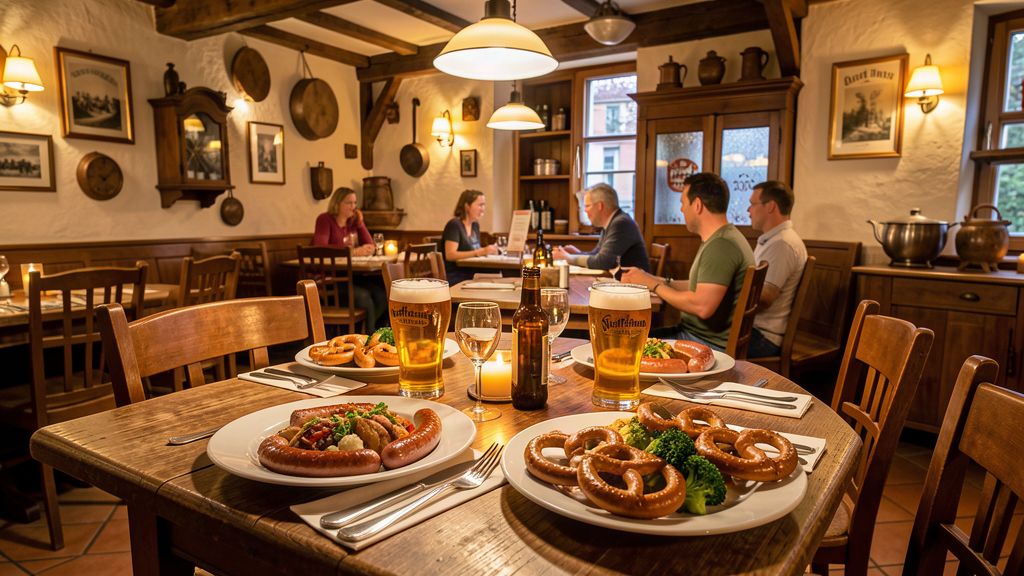
Food here is Sachsen-Anhalt ballast with river-city range: Schnitzel and seasonal plates, house cakes by the Saale, Bohemian rooms in the Altstadt. I book one dinner and leave lunch flexible around the bank.
Places to Stay
B&B HOTEL Halle (Saale) (value, Altstadt edge)
Hallorenring 9, 06108 Halle (Saale)
Straightforward rooms on the ring that wraps the historic core: free Wi-Fi, 24-hour desk, walk-out access toward Hallmarkt and the Moritzburg side without paying for river views you will stand on during the day. I use it when the budget should go to Burg time, museum tickets, and dinner. Honest base with tram options if legs are done.
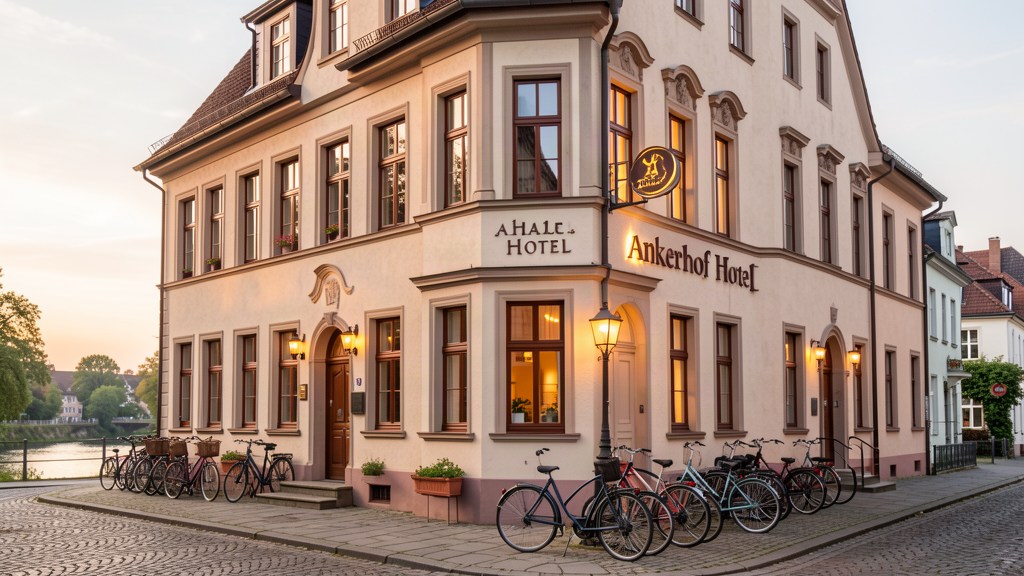
Ankerhof Hotel (mid, Saale side arm)
Ankerstraße 2a, 06108 Halle (Saale)
Four-star rooms in a converted riverside complex a few minutes from Marktplatz: natural stone, wood, terrace tables over a Saale arm, wellness after a long bank walk. You sleep near the water without being stranded in a suburb. My default when the river is why you came and the five towers are still a short foot stretch.
Dorint Charlottenhof Halle (Saale) (upper, station and Jugendstil)
Dorotheenstraße 12, 06108 Halle (Saale)
Art Nouveau house a short walk from Hbf: polished rooms, Restaurant Charlott, Vital Club with sauna and outdoor whirlpool when the forecast turns. You pay for quiet service and easy rail logistics rather than waking under the Burg rock. Tram or a measured walk back to Markt; keep Giebichenstein for a dedicated half-day.
Restaurants and food
Kaffeehaus Wittekind (mid, Saale terrace near the Burg)
Seebener Straße 20, 06114 Halle (Saale)
Café, restaurant, bakery, and pâtisserie under one roof on the Giebichenstein bank: seasonal plates, serious cake, terrace seats after the castle climb. My pick for a long lunch when the river view matters as much as the meal. Weekends fill. Go slightly off-peak.
Restaurant Deix (casual-mid, Giebichenstein Biergarten)
Seebener Straße 175, 06114 Halle (Saale)
Neighborhood rooms and a Mediterranean-leaning Biergarten a short walk from the Burg: Schnitzel with herb cream, pasta, regional spirits, Sunday breakfast when the schedule fits. Good after a Klausberge loop when you want locals’ tables rather than Altstadt tourist pacing. Reserve the garden in fair weather.
Restaurant Wenzel Halle (mid, Bohemian Altstadt)
Große Nikolaistraße 9, 06108 Halle (Saale)
Bohemian Wirtshaus plates steps from Dom, Marktkirche, and Händel-Haus: hearty Central European cooking for an early dinner after Marktplatz. I use it when the day stayed south of the river, and Giebichenstein can wait until morning. Call ahead on festival or market Saturdays.
Bakeries near Reileck and market stalls fill gaps when kitchens rest.
Walk the Burg rock long enough to feel how the Saale is forced through the gate. Cross the bridge once with no camera in your hand. Give Peißnitzinsel an unhurried loop, then stand at Marktplatz under the five towers before the light goes flat. Two nights of that is enough in Halle (Saale). It beats another same-day sprint that only photographs Händel’s statue from a Leipzig-bound platform.
