
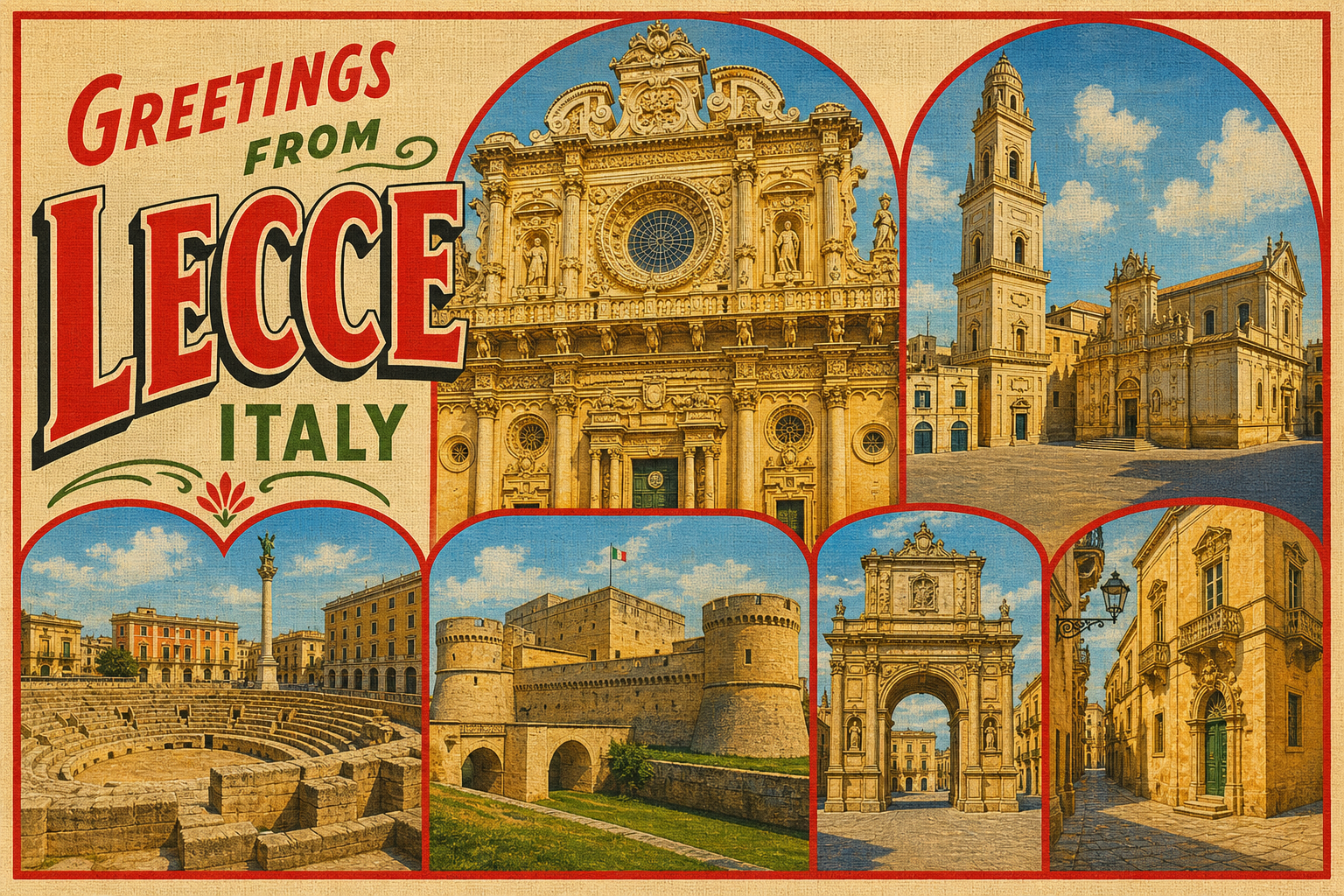
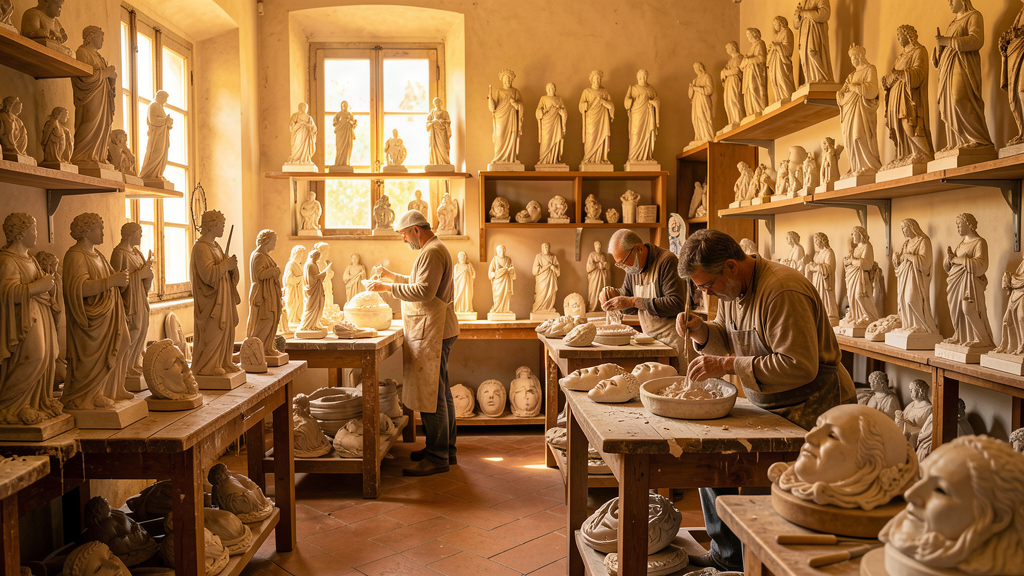
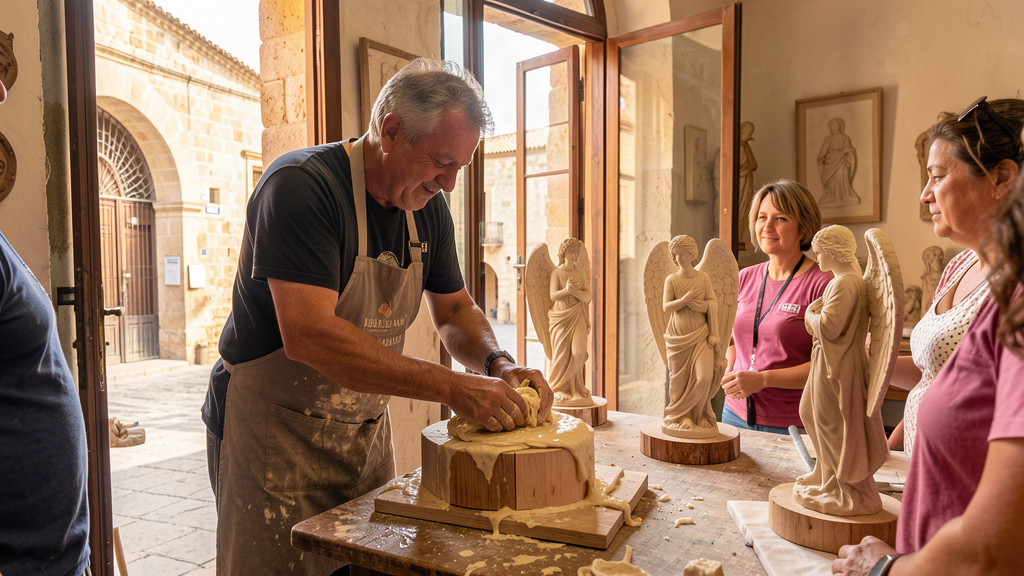
Lecce gets nicknamed Florence of the South, which is a lazy comparison and not why I come. I come for pale limestone that softens every shadow, espresso cut with almond milk ice, and rooms where people still build saints out of newspaper, glue, and patience. The craft street is short. The work is long. If you only chase baroque façades, you miss the glue smell and the hands that know when a figure is ready for paint.
I start late morning, when the stone has warmed but the tour groups have not fully claimed Piazza del Duomo. Then I cut toward Via Arte della Cartapesta and the side lanes around it. Workshops leave doors open. You hear scissors. Wire armatures stand like unfinished guests. Decorative outside, a little dusty and practical inside — that mix is what keeps me here.
Paper, wire, and open doorways
Cartapesta is not a cruise-day souvenir gimmick. For generations, Lecce’s cartapestai shaped processional figures and church statues from paper layered over frames, then painted until the surface looked heavier than it was. Active studios still open on and near Via Arte della Cartapesta. Pierpaolo Gaballo’s workshop at Via Arte della Cartapesta 15 is one place visitors are often welcome to look in, on human hours, not mall hours.
I do not barge in with a shot list. I stand at the threshold, say buongiorno, and wait. Some days someone paints a robe fold the color of dried blood. Some days only finished pieces watch from shelves. Buy small if you buy; large work is not airport luggage. Ask before you photograph faces in progress.
Walk the surrounding lanes after. The centro storico is soft stone and sudden piazzas. Via Palmieri and Via Vittorio Emanuele II work for aimless browsing when you need a break from sacred figures — ceramics, linen, or a cold drink. Lecce is better on slow feet than on a checklist.
Santa Croce without the speech
Basilica di Santa Croce is the building people point at when they say “look how far Lecce baroque goes.” The façade is crowded with animals, vegetables, putti, and stone that seems to breathe. Go, obviously. Then do not let it eat your whole day.
I like arriving when the light is flat enough that the carving reads as texture instead of glare. Step inside if it is open; sit longer than the exterior photo requires. You are not here to collect another ornate church so much as to feel why soft local stone invited this kind of excess — and why the city still feels like a workshop town under the decoration.
A few minutes away, Piazza del Duomo opens like a private court. The cathedral and the bishop’s palace hold the space. Midday it fills. Early and late it empties enough that you hear shoes on stone. I loop the square, leave, come back at dusk. Same short walk, different mood each time the light changes.
Caffè leccese and the pastry counter
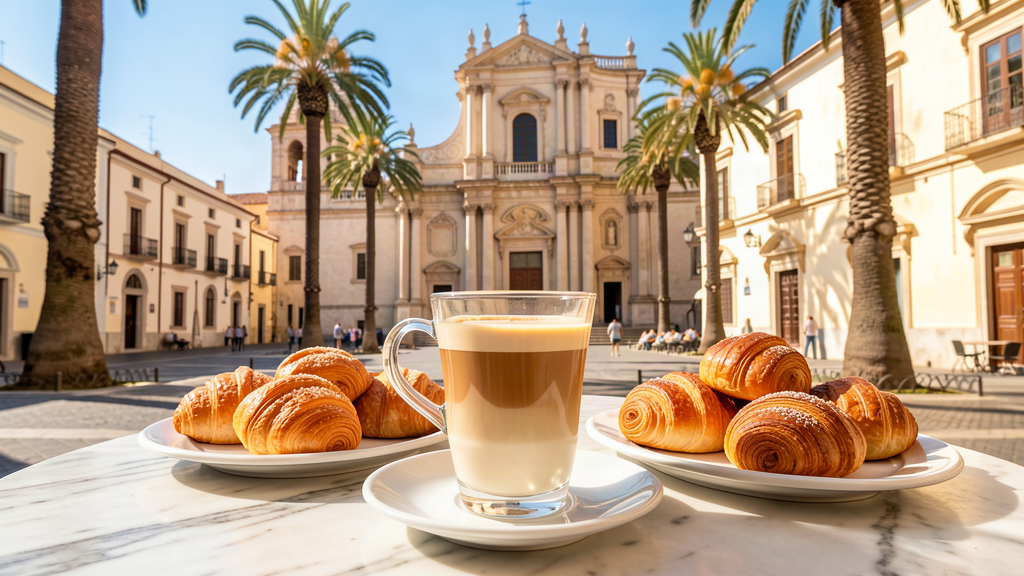
In Salento heat, ice in coffee is not a novelty. Caffè leccese — espresso poured over ice with almond milk syrup or latte di mandorla — is how people keep moving without melting. Pair it with a pasticciotto: shortcrust shell, thick custard, still slightly warm if you timed it right. Rustico leccese is the other morning essential, a puff-pastry pocket of béchamel, mozzarella, and tomato that greases your fingers and ruins nothing.
I take the first round standing up when I can. Counters tell you more than terrace menus. Piazza Sant’Oronzo is the civic living room, with the Roman amphitheater cut into the paving like a reminder that this city predates its baroque costume. Sit once, then walk again. You do not need a speech about the square; it works on its own.
If you want market texture, ask for the day’s open-air market schedule rather than hunting a permanent food hall that is not really here. Lecce’s center is more workshop and café than stall city, and that is enough. Errands and coffee still count as a morning well spent.
Where I eat
Lecce food is oil, grain, bitter greens, horse in some old-school kitchens, seafood when the coast is in the conversation, and sweets that refuse restraint. I skip rooms that only reprint “Pugliese tasting” in four languages and look for places still feeding people who live here after the first seating.
Caffè Alvino Piazza Sant’Oronzo, 30, 73100 Lecce LE, Italy
For rustico, pasticciotto, and a proper caffè leccese when you want the square’s theater without committing to a long lunch. Stand at the bar if the terrace is a luggage parade. Locals still use it; that is usually filter enough. Order the pastry like you mean it and leave the phone in your pocket for five minutes.
Osteria Da Angiulino Via Principi di Savoia, 24, 73100 Lecce LE, Italy
Old-fashioned osteria energy a short walk from the main parade routes. Cucina salentina without a branding deck: vegetables treated like main characters, pasta that knows durum, secondi that stay simple on purpose. I book when dinner matters and show up hungry enough to order antipasti plus a primo. Closed Sunday last I checked — confirm before you build a night around it.
Mamma Elvira Enoteca Via Umberto I, 19, 73100 Lecce LE, Italy
Wine bar with real Puglian bottles and small plates that keep you from hunting a second dinner. Good when you want conversation height more than white tablecloths. I use it after a long stone walk when my feet want a stool and my brain wants Negroamaro without a lecture. If you need a full sit-down kitchen nearby, the related Cucina di Mamma Elvira orbit is the longer meal; the enoteca is the flexible one.
Between meals: gelato only if the line includes people who look like they live upstairs, water always, and at least one dinner where you order ciceri e tria or whatever greens are bitter that week.
Places to stay
Sleep inside or hard against the centro storico if you can. Morning stone walks beat taxi debates.
B&B Azzurretta (value) Via Andrea Vignes, 2, 73100 Lecce LE, Italy
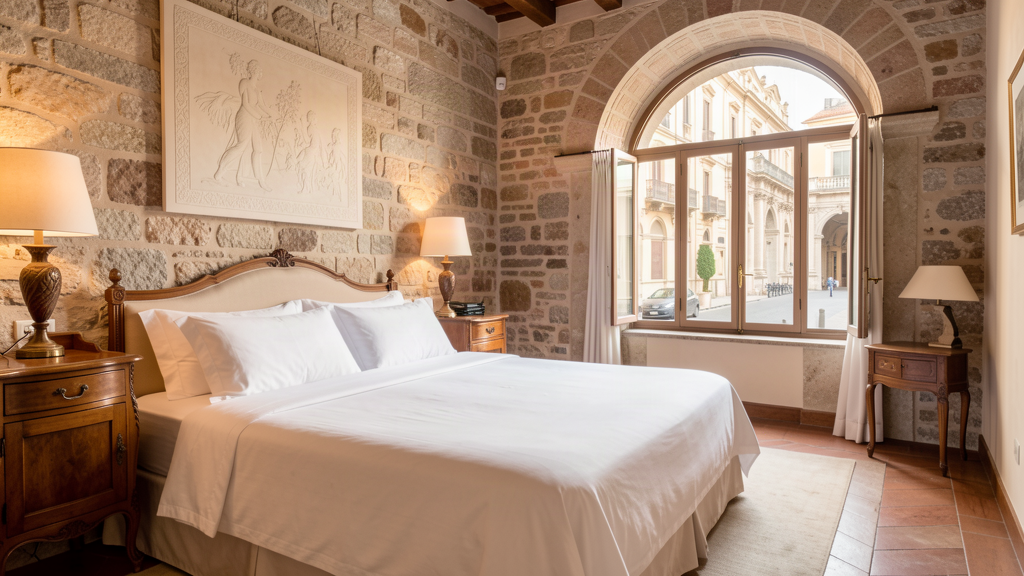
Rooms in a 16th-century palazzo fabric near the old center’s working streets. Fair rate, a host who actually answers questions, and a base close enough that Santa Croce and the cartapesta lanes are a walk, not a project. Character over spa polish. Confirm stairs and luggage; historic buildings keep their opinions.
Risorgimento Resort (mid-range) Via Augusto Imperatore, 19, 73100 Lecce LE, Italy
A proper hotel footprint on the edge of the historic core near Piazza Sant’Oronzo. Useful when you want a front desk, consistent rooms, and easy walks to both the baroque circuit and ordinary evening passeggiata. I pick it for two or three nights when trains, rental cars, and dinners all need a stable pin on the map without luxury pricing.
La Fiermontina (splurge) Piazzetta Scipione De Summa, 4, 73100 Lecce LE, Italy
Design-forward stay tucked into the old town, with art on the walls and a garden calm that feels unlikely after a day of carved façades. Come when the budget allows and you want quiet nights after loud stone. Outside the door it is still Lecce — scooters, bells, heat — which is why I would spend here instead of on a coastal resort far from the workshops.
Getting here and moving around
Brindisi Airport is the usual air gate for this side of Salento; Lecce sits roughly half an hour inland by car or transfer depending on traffic. Trains reach Lecce from Bari and other Puglian cities; the station is outside the tightest historic core, so plan a short taxi, bus, or determined walk with luggage that has wheels you trust.
Inside the center, walk. ZTL rules and narrow streets punish casual driving. Rent a car only when you are leaving for Gallipoli, Otranto, olive country, or the beaches. Bikes help on flatter edges; midday heat argues for shade breaks and another caffè leccese.
Evenings are for repeating short loops: Duomo light, a side street you missed, a pastry you swore you would not order twice. Skip the heroic itinerary. Give the place time for glue to dry, stone to cool, and your own pace to settle into a city that still makes things by hand.
A last slow circuit
Before I leave, I walk Via Arte della Cartapesta once more. If a door is open, I look without performing curiosity. If it is closed, the street still holds the idea of work. Then I cut back toward Sant’Oronzo, buy water, and watch the amphitheater’s curve interrupt the square.
You will hear plenty of baroque adjectives in Lecce. Keep a few if they fit. Spend more of the day on paper saints, soft stone under tired feet, and a city that decorated itself without forgetting how to make things.
