
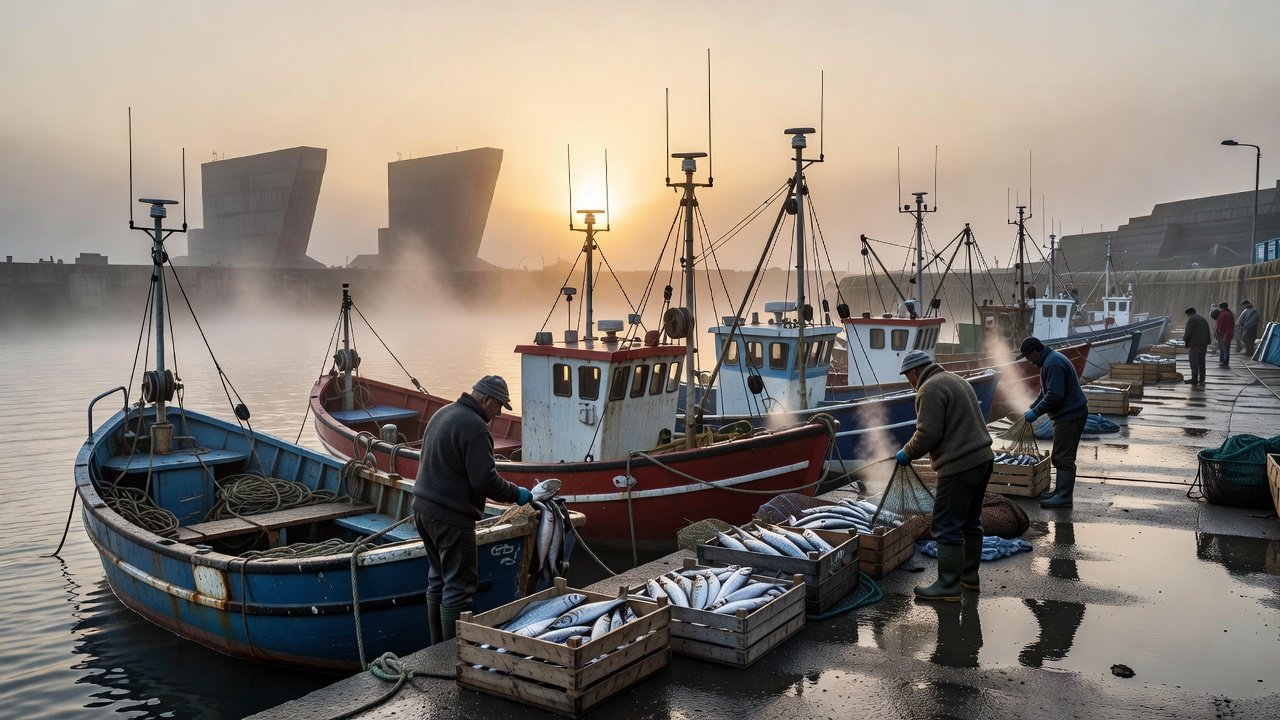
The light comes up slowly over the slipways at Keroman. You hear the low rumble of engines first, then the slap of water against hulls as the boats tie up. Lorient’s fishing port does not wait for visitors. It works while most of the town is still quiet, and that is exactly why walking its quays at first light feels like stepping into the real rhythm of this Breton city.
Lorient was built for the sea. The name itself comes from the French East India Company, but the modern port at Keroman grew into France’s second-largest fishing harbor. More than twenty-five thousand tonnes of fish land here every year. The catch changes with the season—hake, monkfish, langoustines, lobster—but the pace stays the same. Boats return, the auction begins, and the fishmongers set up under the covered market at Halles de Merville.
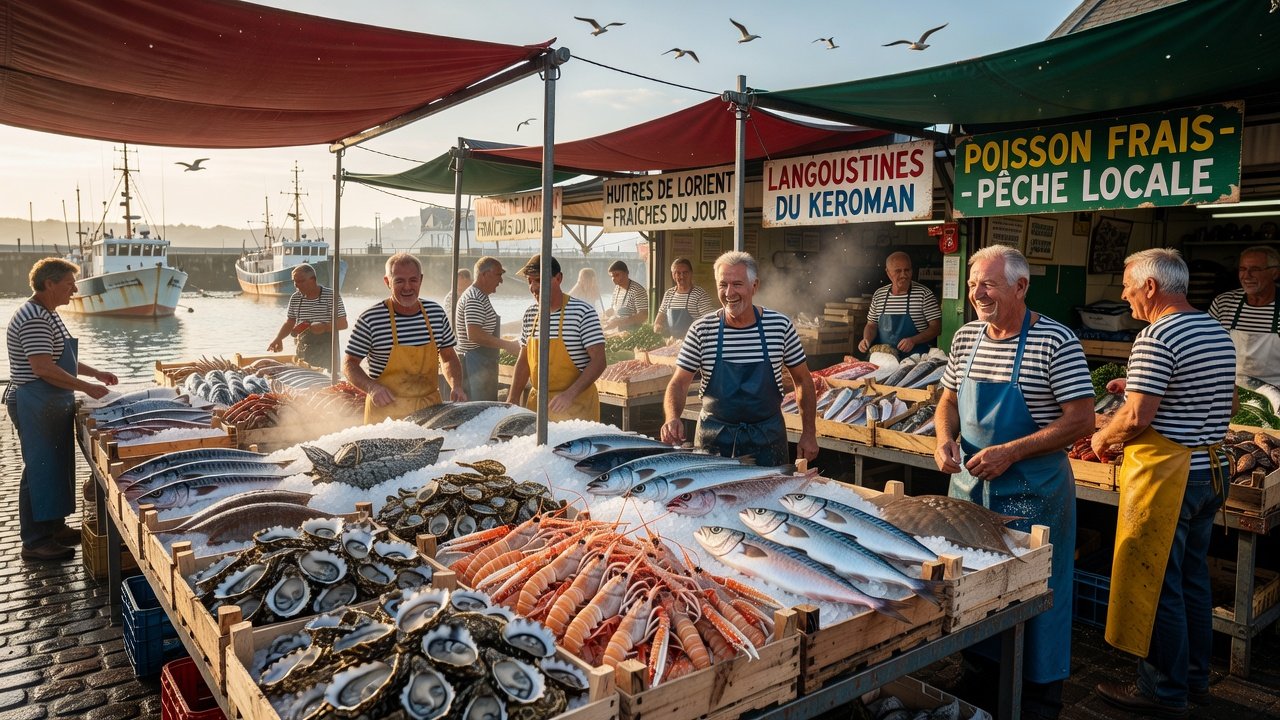
I arrived on a Wednesday morning in early summer. The outdoor market was already busy by seven. Fishmongers called out prices while gulls wheeled overhead. One stall had just unloaded a crate of langoustines still twitching. A woman in rubber boots weighed them by the kilo and wrapped them in newspaper without ceremony. No one was posing for photos. This was simply breakfast being prepared for the rest of Brittany.
The covered market itself sits right in the center of town. On market days the fish section dominates. You can buy the same catch that left the boats only hours earlier. Outside, the vegetable and cheese stalls fill the square. It is not a tourist market. Locals shop here for dinner and the fishmongers know their regular customers by name.
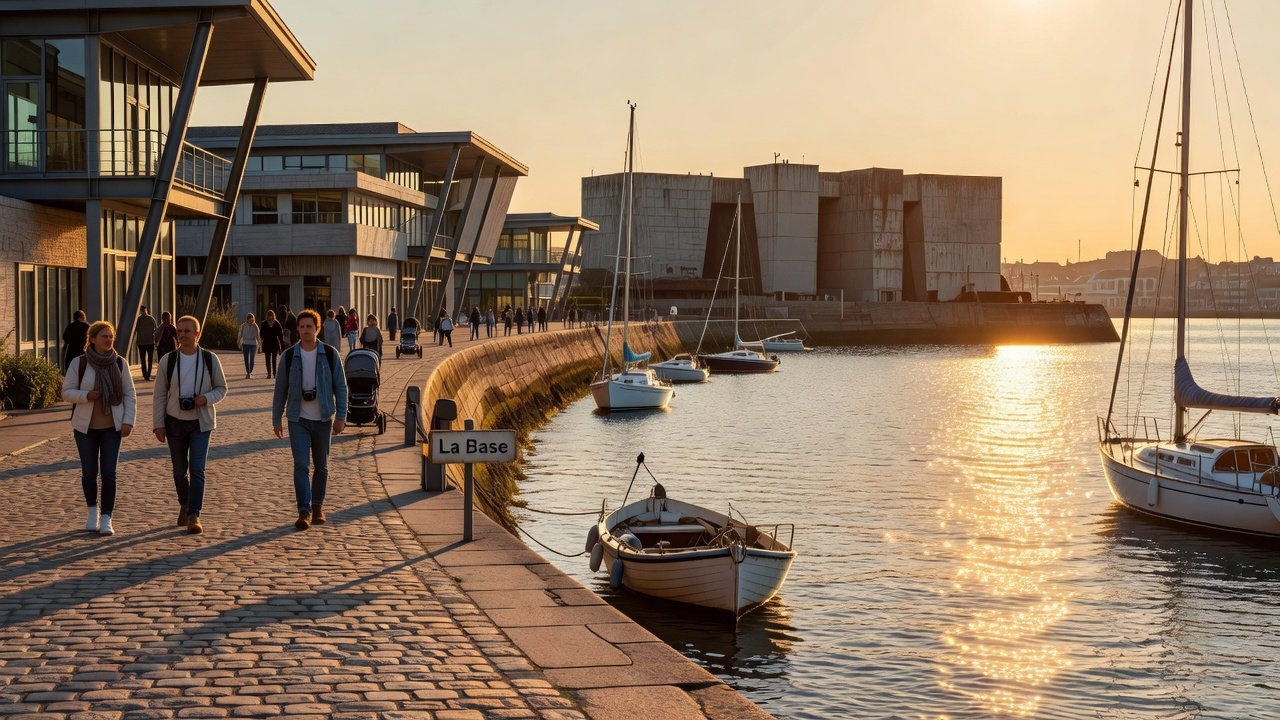
From the market a short walk takes you down to the water again. The old submarine base, now called Lorient La Base, sits a few hundred meters away. The massive concrete bunkers built during the Second World War still dominate the waterfront. Block K3 is open to visitors. Inside, the scale is hard to grasp. The ceilings are high enough for submarines to enter under their own power. Today the same spaces host the Eric Tabarly sailing museum and the preserved submarine Flore. You can climb aboard and feel how cramped life must have been for the crew.
The contrast between the working fishing port and the repurposed military site is striking. One side of the harbor still smells of diesel and fish. The other side has cafés and boat shows. Both belong to Lorient. The city has never tried to hide its industrial past. It has simply put it to new use.
A good way to see the whole harbor is to follow the coastal path toward Larmor-Plage. The promenade runs past the marina at Kernevel with its nineteenth-century villas. On a clear day you can see across to the island of Groix. The path is flat and mostly empty outside the festival weeks. In August the Interceltic Festival turns the city into a swirl of music and color, but the rest of the year the waterfront keeps its working character.
I stopped for coffee at a small bar near the fishing port one morning. The owner had been a fisherman himself before opening the place. He pointed out which boats were still active and which had been sold. Conversation moved easily from tides to the price of fuel. Nothing felt staged. That is the quiet pleasure of Lorient: people here still talk about the sea as a living thing rather than a backdrop.
Practical details matter when you want to stay close to this atmosphere. Three places stand out depending on your budget and how near you want to be to the water.
For something right by the fishing port, Hôtel Les Gens de Mer at 14 Boulevard Louis Nail sits within a few minutes’ walk of the Keroman quays. The rooms are simple and nautical-themed. It is the kind of hotel where you can hear the harbor activity if you leave the window open. Rates usually fall in the mid-range, around eighty to one hundred twenty euros depending on the season.
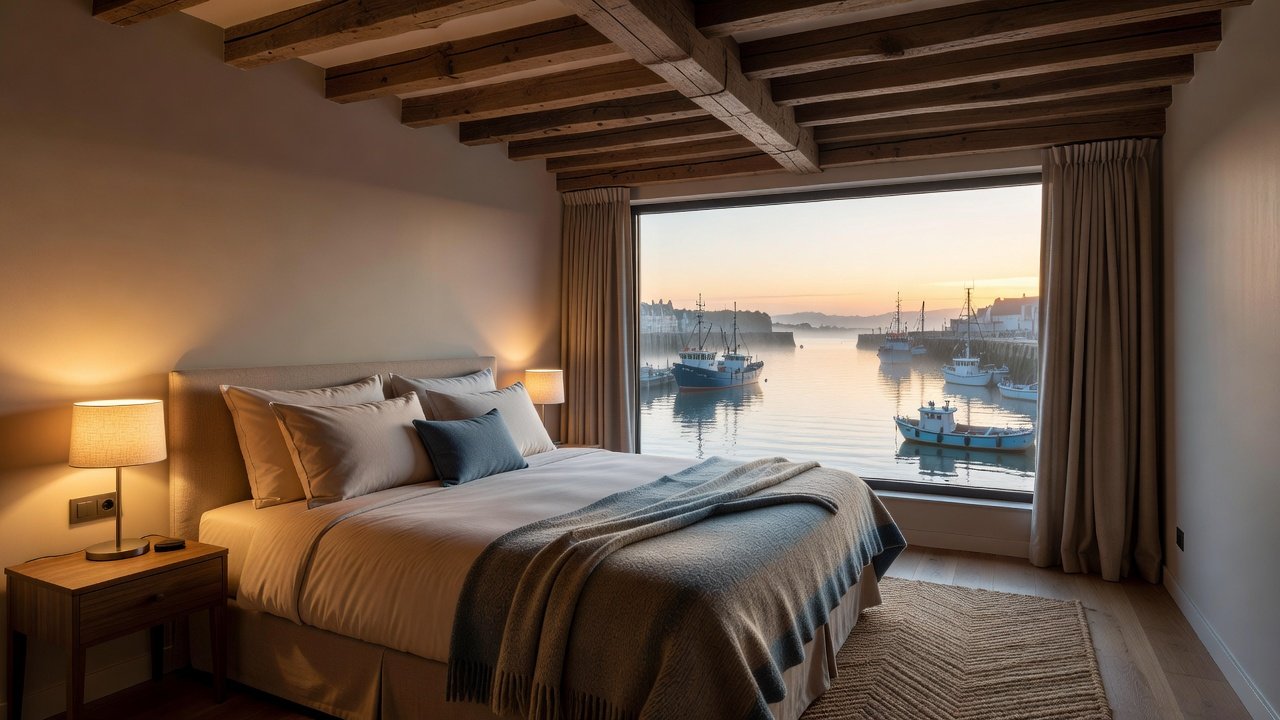
In the center of town, MOKA Hôtel centre-ville offers a slightly more polished option. It is a short walk from the Halles de Merville market and the train station. The building mixes modern design with the older stone architecture common in Lorient. Expect to pay between ninety and one hundred forty euros. It works well if you want easy access to both the port and the evening markets in nearby Port-Louis.
For a quieter stay with a bit more space, Hôtel Victor Hugo Lorient sits on a side street in the heart of the city. The rooms are comfortable without being flashy. It is popular with locals visiting family, which keeps the atmosphere relaxed. Prices tend to sit around one hundred to one hundred sixty euros. From here you can walk to the waterfront in fifteen minutes and still return to a calm street at night.
Food follows the same honest pattern as the port itself. Three spots keep coming up when locals talk about where to eat seafood without the tourist markup.
Le Neptune at 15 Avenue de la Perrière sits literally at the edge of the fishing port. The dining room looks out over the boats. The menu changes with the catch. One evening I had a simple cotriade, the Breton fish stew, made with whatever had come in that morning. The service is brisk but friendly. Reservations are wise in summer.
Chez Fafa at 4 Cours de la Bove is smaller and more intimate. It specializes in local seafood prepared with minimal fuss. The langoustines here are often served simply grilled with a touch of butter. The dining room fills quickly with regulars, so arriving early helps. Prices are reasonable for the quality.
A third reliable choice is the small restaurant attached to the Hôtel Les Gens de Mer. It draws both hotel guests and port workers. The plat du jour is almost always fresh fish or a shellfish plate. It is not fancy, but the ingredients come straight from the market across the street. You can eat well for under twenty-five euros and still be back on the quays in time for the last light.
Lorient does not offer the polished medieval streets or famous châteaux that draw crowds to other Breton towns. What it offers instead is the living port and the quiet satisfaction of watching a city that still earns its living from the water. The submarine bunkers remind you of the past. The fishing boats remind you of the present. Between them runs a harbor path where you can walk at your own pace, buy a paper cone of langoustines, and watch the day begin or end exactly as it has for decades.
If you come during the Interceltic Festival the energy changes. Stages appear along the waterfront and the city fills with pipers and dancers. Even then, the fishing port keeps its own schedule. The boats still leave before dawn. That steady pulse is what stays with you long after the music fades.
Places to Stay
– Hôtel Les Gens de Mer – 14 Boulevard Louis Nail, 56100 Lorient (mid-range, steps from Keroman fishing port)
– MOKA Hôtel centre-ville – central Lorient near the harbor and Halles de Merville (comfortable mid-range)
– Hôtel Victor Hugo Lorient – city center side street (quiet, good value upper mid-range)
Restaurants
– Le Neptune – 15 Avenue de la Perrière, 56100 Lorient (seafood right on the fishing port)
– Chez Fafa – 4 Cours de la Bove, 56100 Lorient (intimate local seafood)
– Restaurant at Hôtel Les Gens de Mer – same address as the hotel (fresh daily catch, port-worker friendly)
