
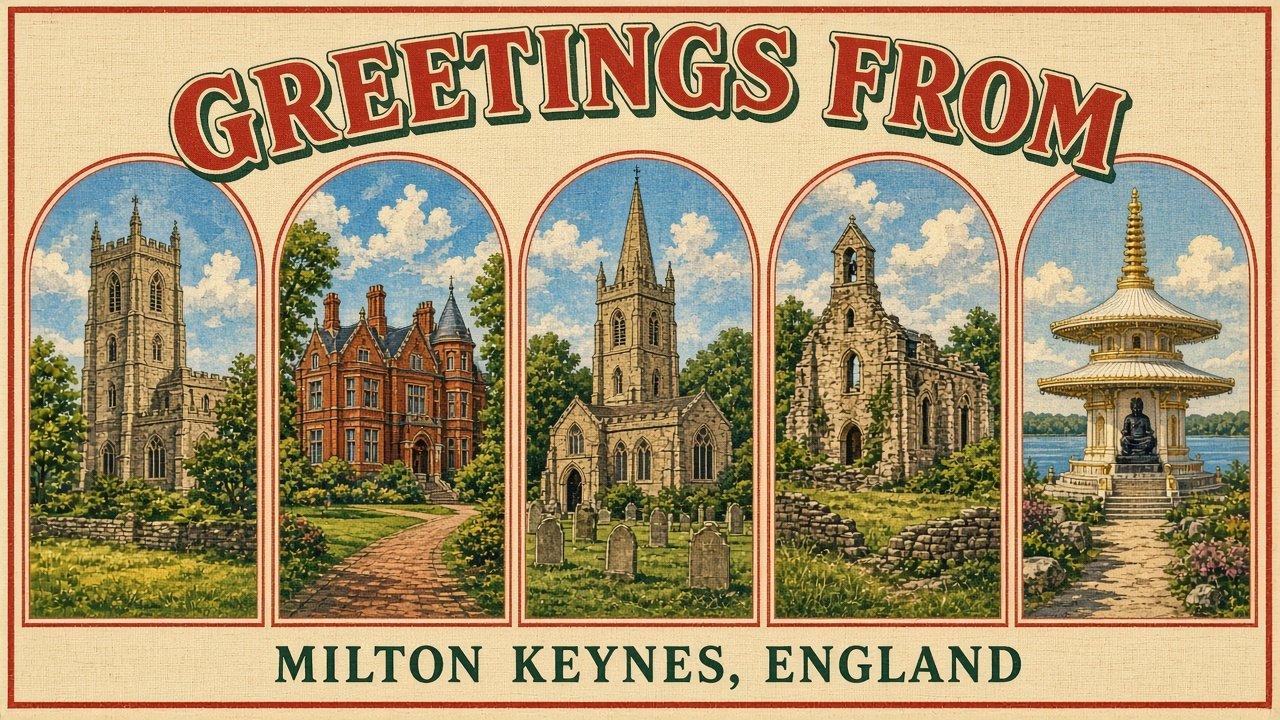
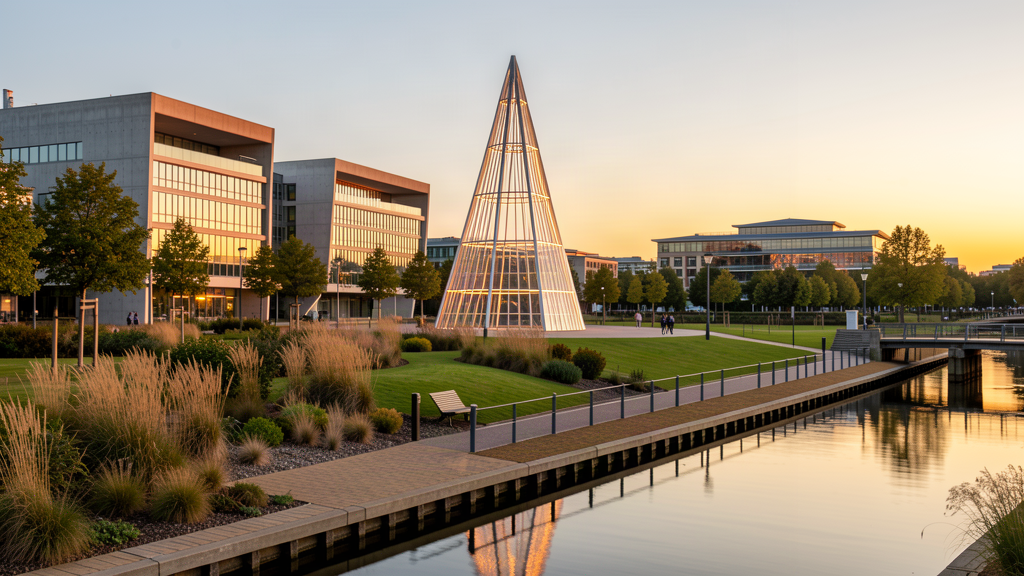
Milton Keynes gets sold as roundabouts, retail decks, and a grid someone drew on a board in the 1960s. Fair if you only need the station, the Centre:MK car parks, and a quick run to Bletchley. I keep coming back to the embankment that runs east out of the city core through Campbell Park, where Liliane Lijn’s Light Pyramid sits on rising ground and the lawns drop toward the Grand Union Canal. Planned city, yes. Also a Grade II listed landscape with a cricket pitch, a commemorative rose, and a towpath that still feels like a working cut rather than a theme-park edge. Start at the pyramid. Let the shopping spine wait an hour.
Campbell Park, the Light Pyramid, and the Rose
Campbell Park is the green hinge between Central Milton Keynes and the linear parks that stitch the new town together. From the higher ground near the Light Pyramid you look back across the grid and forward toward canal water and the open parkland that was part of the brief from the start, not something bolted on later. The pyramid is a sculptural beacon, not a tourist ride. Walk the embankment rather than treating it as a drive-by from a dual carriageway. The ground falls away on either side, so the path feels raised even when the weather is ordinary English grey.
Leading east from the Milton Keynes Rose — Gordon Young’s public space for commemoration and quiet sitting — the park opens into lawn, public art, and the long view the original designers wanted along the belvedere line. Give the Rose and the pyramid forty honest minutes. Sit. Watch dog walkers and office workers cut across on lunch routes. You do not need a sculpture checklist here. You need to notice how green this “concrete city” still is once you leave Midsummer Boulevard.
On a clear late afternoon the embankment is the best free viewpoint in the borough. On a wet Tuesday it is still worth the walk from the station. Campbell Park is listed landscape, not leftover verge.
Campbell Wharf and the Grand Union towpath
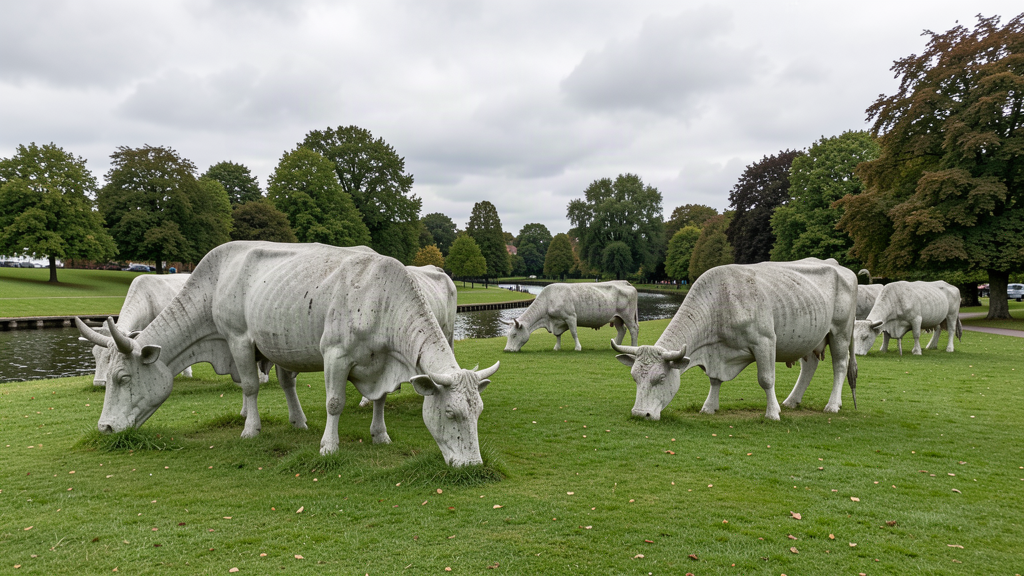
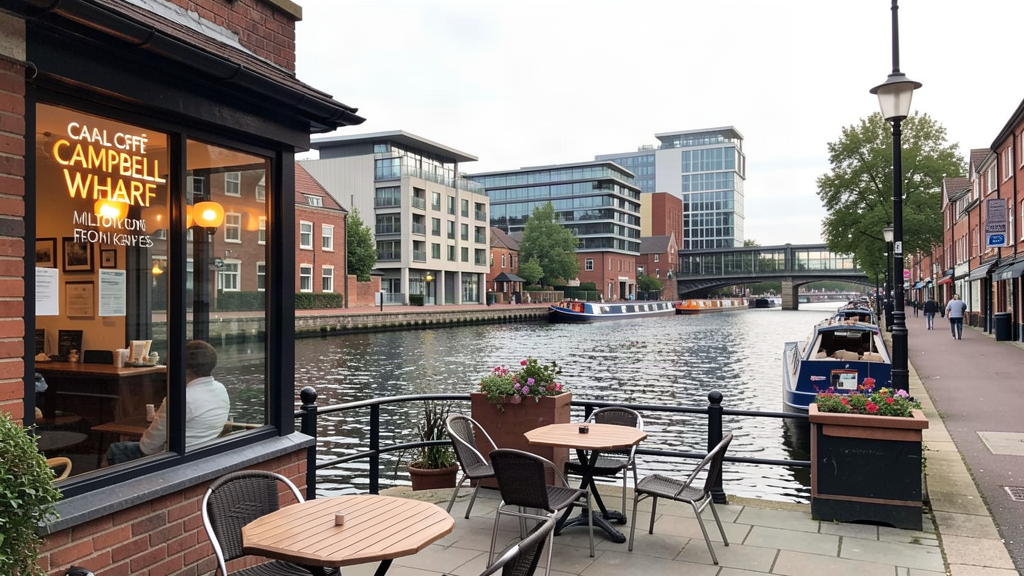
At the eastern, lower end of Campbell Park the ground meets the Grand Union Canal at Campbell Wharf Marina. New housing and pontoons sit against older canal engineering. The towpath is the real connector: walk it south or north and the city softens into water, willow, and the slow traffic of narrowboats. Frobisher Gate brings you into the marina edge without sending you back through the shopping decks.
This is where the planned city shows its older bones. The Grand Union was moving freight long before the Development Corporation laid out H5 and V8. Stand on the wharf and you get both at once: 1970s park geometry above, nineteenth-century cut below. A short towpath stretch is enough for the day if time is tight. A longer Canal Broadwalk day can thread Great Linford Manor Park, Newlands, and Willen if you have the legs.
Willen Lake sits farther out in the same green system: path circuits and open sky the grid boulevards only hint at. Use it when Campbell Park has had its morning and you want a full loop. Keep the marina as the join between park and canal.
Concrete cows at Bancroft, and the older towns
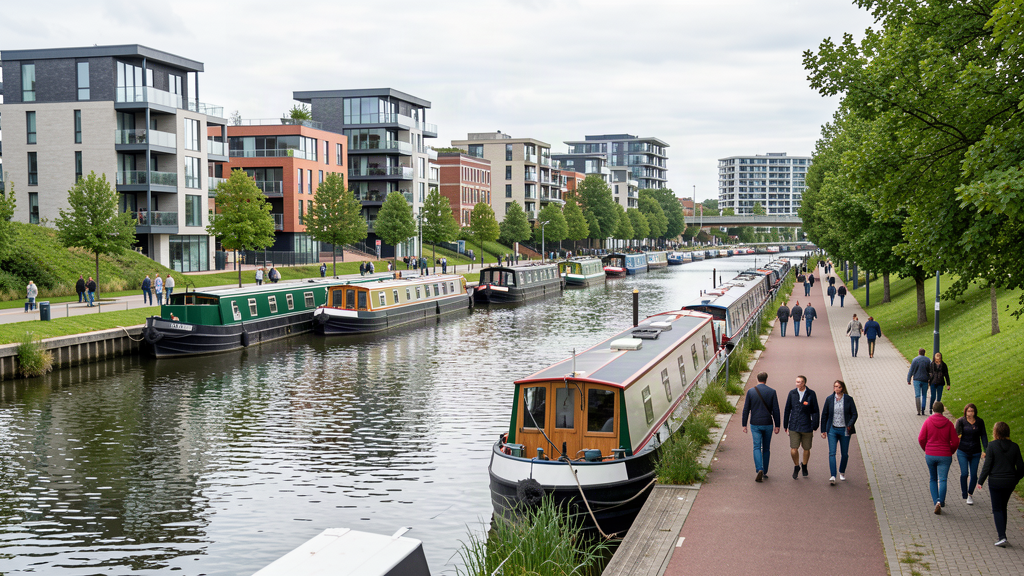
Liz Leyh’s Concrete Cows are the joke everyone already knows, which is why most people only see them from a car window on Monks Way. The outdoor herd at Bancroft Park, just off Monks Way, is the replica set made by Bill Billings; the originals live at Milton Keynes Museum after years of weather and relocation. Walk up from Bradwell Abbey parking if you can. Five concrete beasts in a strip of parkland sound thin on paper. In person they still do the job Leyh and local schoolchildren intended in 1978: public art that does not take itself too seriously, planted in the new city’s grass like a wry welcome.
The cows are a ten-minute stop, not a half-day. Pair them with the museum if you care about the rural farms that stood here before the designation order, or move on toward the absorbed market towns that give Milton Keynes its older grain.
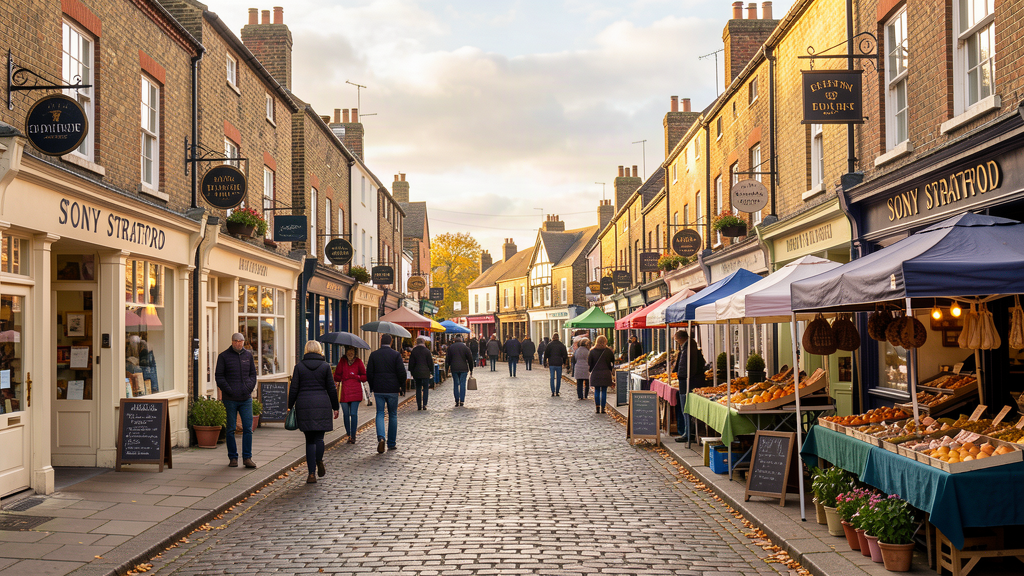
Stony Stratford, on the northwest edge, still runs a real High Street of independent shops, coaching-inn fabric, and the A5 history that pre-dates the new city by centuries. Wolverton holds the railway works story. Bletchley holds the codebreaking park that draws the coach parties. I would keep Bletchley for a dedicated half-day if wartime computing is your reason for coming. For a slower Milton Keynes day, Stony Stratford’s High Street after Campbell Park and the canal is the better contrast: timber and brick after embankment and marina.
Places to Stay
easyHotel Milton Keynes Central – 419 Silbury Boulevard, Milton Keynes, MK9 2AH
Lower-spend base on the central boulevard grid, practical when Campbell Park, the station, and the canal wharf are the daytime plan. Compact rooms, easy bag drop, walk once bags are down. Prefer it when the budget is tight.
Peartree Lodge Waterside – Waterside, Peartree Bridge, Milton Keynes, MK6 3BX
Mid-range canal-side stay at Peartree Bridge, useful when you want water outside the window and a short hop toward the Grand Union path network and the southern parks. Calmer than sleeping inside the shopping core. Handy if Willen or the Bowl sit on a second-day list.
Cock Hotel Stony Stratford – 72–74 High Street, Stony Stratford, Milton Keynes, MK11 1AH
Higher-character coaching-inn stay on Stony Stratford’s High Street, the right base when you want older town fabric at night and Campbell Park or the cows by day. Period rooms, pub downstairs, free parking when the centre multi-storeys feel like a chore.
Where to Eat
Canal St Coffee – 5 Campbell Wharf, Milton Keynes, MK9 4BG
Independent coffee stop on the marina edge at Campbell Wharf, a good pause after the Light Pyramid and the embankment walk. Indoor tables and canal views; cakes and strong coffee without the concept-café polish. Open daytime hours. Use it mid-morning or after the towpath loop before the pub fills.
Warbler on the Wharf – Campbell Wharf Marina, Frobisher Gate, Newlands, Milton Keynes, MK15 0DW
McMullen pub on the Grand Union towpath at the bottom of Campbell Park, opened with the marina development and now the social room for walkers, boaters, and local evenings. Proper plates, canal light, and enough space that a wet afternoon does not feel cramped. Weekday lunches are calmer than Friday peak; book if you want a waterside table in good weather.
French Affaire – 5 Odell’s Yard, 58–60 High Street, Stony Stratford, Milton Keynes, MK11 1FA
Independent French-leaning restaurant tucked in Odell’s Yard off Stony Stratford High Street, the right supper after a day of park embankment and concrete cows. Yard setting, proper cooking, High Street stroll before and after. Check sittings; the yard fills when the town is busy on weekends.
Getting around and leaving room
Milton Keynes sits in Buckinghamshire on the West Coast Main Line, with Central Milton Keynes station feeding the grid core and bus links out to the estates and older towns. From the station, Campbell Park is an eastward walk once you clear the shopping spine; Silbury and Midsummer Boulevards organise the centre if you need landmarks. Road arrivals should park once — station multi-storey, fringe, or hotel — then finish on foot or by the redway cycle paths that thread the parks.
Useful day shape: station or hotel drop, Campbell Park Rose and Light Pyramid, down to Campbell Wharf and a towpath stretch, coffee at the marina, optional Willen loop or a hop to Bancroft for the cows, late afternoon into Stony Stratford High Street, stay and supper by budget. Bletchley Park can take a separate morning if the wartime story is non-negotiable. Do not let it erase the park and canal day that is more specific to how this city actually lives.
Most visitors ticket the shopping centre, photograph a roundabout from a taxi, and leave before the Light Pyramid gets forty minutes on the embankment. Stay long enough for Campbell Park to feel like the centre of the plan, not a green gap between office blocks. Pyramid and Rose on the rise, Grand Union under the wharf, concrete herd still facing Monks Way, Stony Stratford High Street holding the older market line. That is the bit I would keep.
