
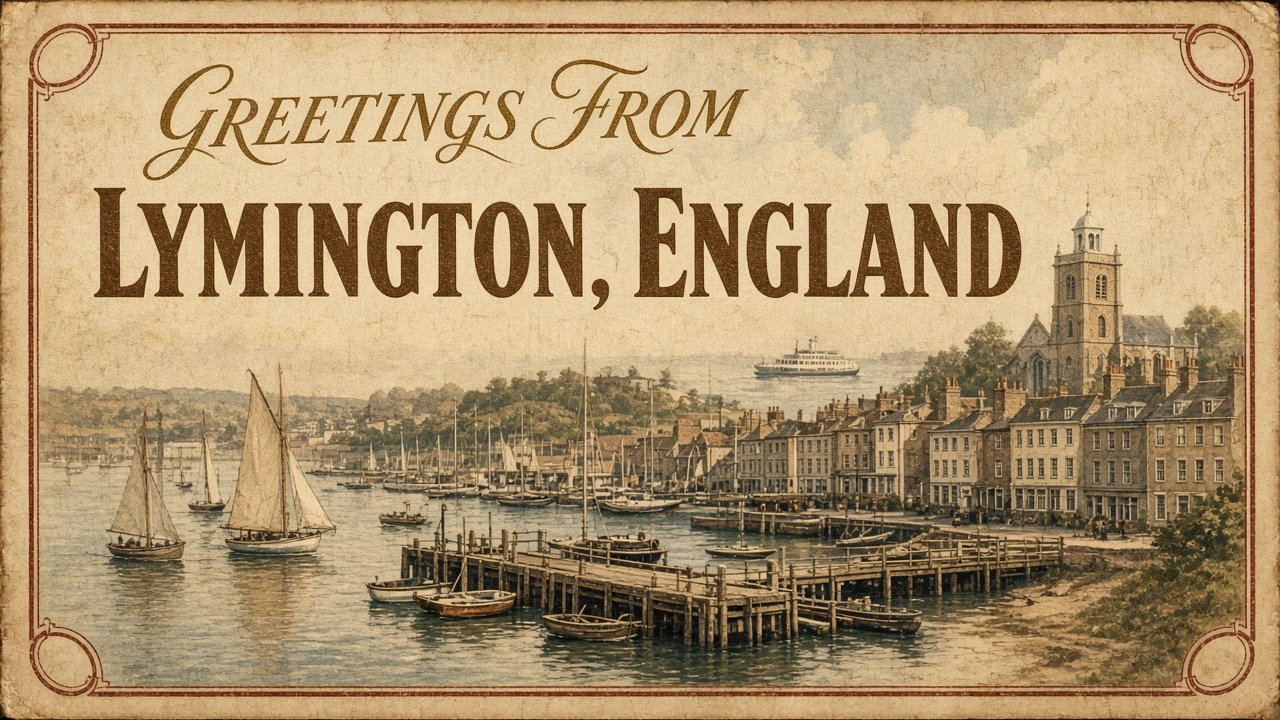
Lymington gets sold as the New Forest’s harbour town — Georgian High Street, yacht masts, ferry to the Isle of Wight. Fair enough. On a Saturday it can feel like half the county showed up with the same shopping list. I still start at Town Quay, then walk west along the seawall where the old saltern lagoons sit in the marshes toward Keyhaven. The pans are quiet now, brackish and bird-busy, but they are why this river mouth once mattered more for salt than for leisure sails.
I do the quay and cobbled Quay Street early, climb the High Street once for market rhythm, then give the rest of the morning to the seawall and the lagoons. Watch a Wightlink ferry thread the marked channel through the saltmarsh and the place stops reading like a boutique weekend set. It is a working edge of the Solent with mud under it.
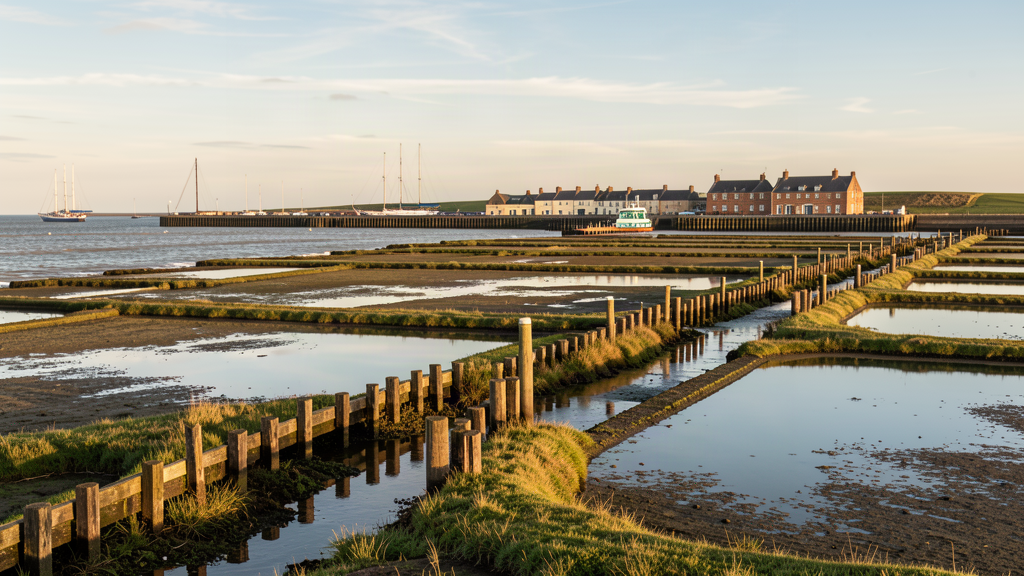
Town Quay, Quay Street, and the river mouth
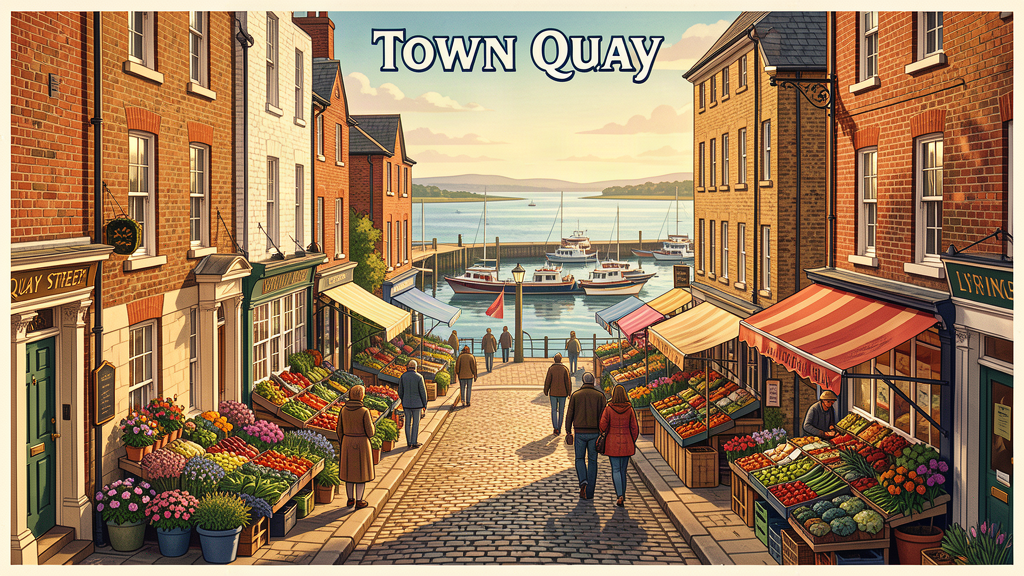
Town Quay sits at the bottom of town where the Lymington River widens into moorings, pontoons, and the last stretch before open water. Cobbled Quay Street drops to it in a short, uneven run of brick and timber — the kind of slope where you watch your feet and the tide boards at the same time. Berths fill with day boats and longer-stay yachts. The water is brown-green, tidal, and honest about mud when the level drops.
Most people photograph the harbour front, buy a coffee, and turn back uphill. I use the quay as orientation: how the river bends, where the ferry channel starts to show downstream, how the town holds the high ground while the water works the low. Stay long enough to see a boat leave a berth and work the markers. Depth here is not a postcard detail.
Quay Street’s cobbles and listed fronts keep a denser grain than the wider High Street above. Smuggling stories cling to the inns, as they do in every old Solent port. You do not need tunnels to feel how close the water once sat to the cellars.
High Street market width and St Thomas
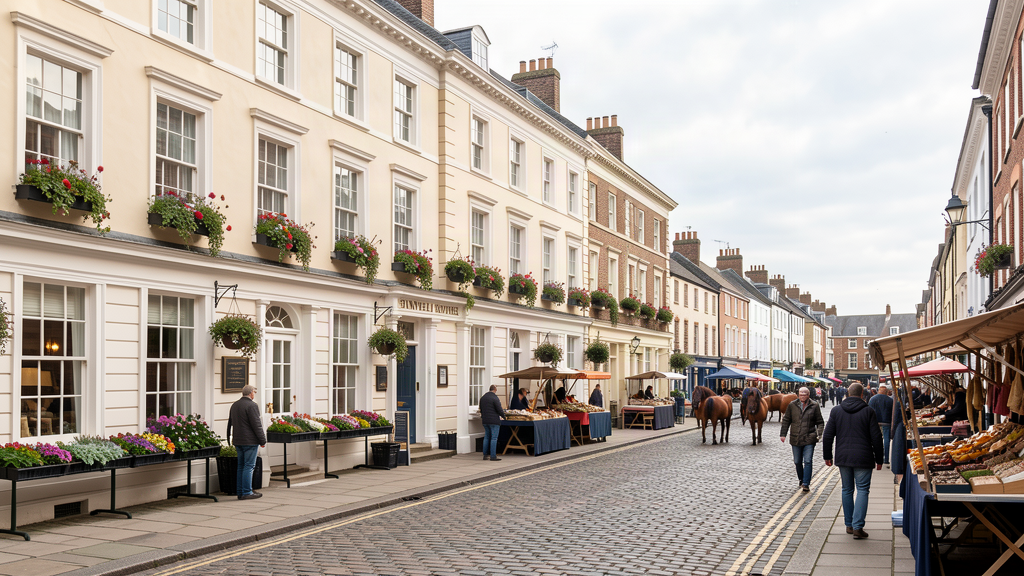
The High Street was laid wide enough for a medieval market, and that width still shows. Georgian fronts line both sides from the church end down toward the quay approach. On Saturdays the stalls reclaim the middle with produce, crafts, and the ordinary clutter of a working market town. Between market days the street does errands — chemist, bakery, independents, the soft trade of a place that also serves forest villages inland.
St Thomas’s Church holds the western high ground of the street, useful when you are finding your way back from the water. I climb once for the sense of the town’s spine, not for a full church inventory. Quay at the bottom, market width in the middle, church and residential streets above. Lymington is small enough that you feel that whole climb in one go.
Do not let the High Street eat the day. One coffee circuit is enough before the marshes.
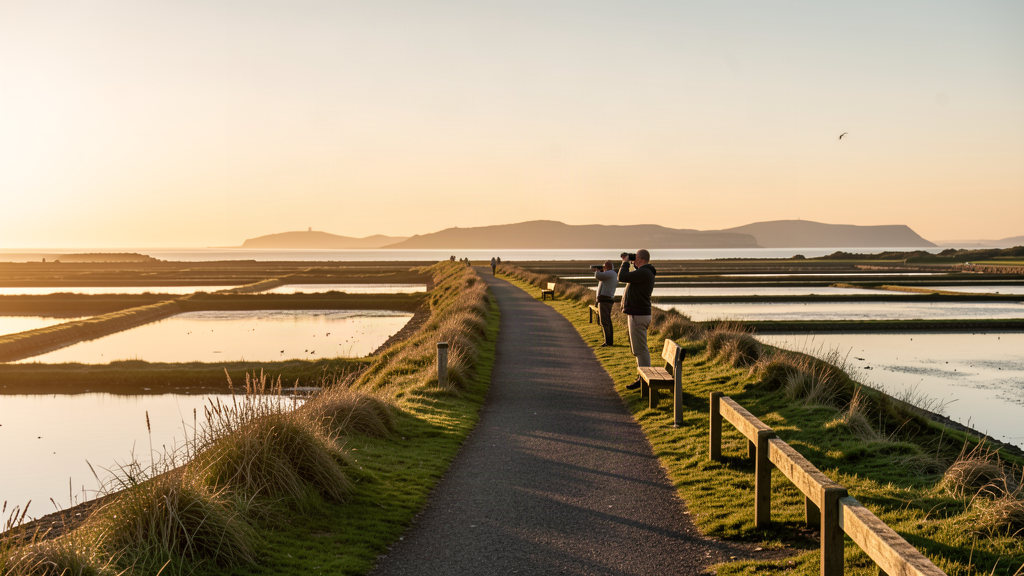
Old salterns, seawall, and the walk toward Keyhaven
West of town, the Lymington–Keyhaven Nature Reserve takes over. Inside the sea wall sit brackish lagoons and grazing marsh; outside, saltmarsh and mudflats face the Solent. Those shallow lagoons are the old salterns — pans dug and managed for salt-making when this coast boiled seawater for a living. The industry is gone. The water bodies remain, full of wetland birds, wind, and the low geometry of embankments.
The seawall path is the walk I keep coming back for. No cliffs, no drama. Just a long, level edge with lagoons on one side, marsh and channel markers on the other, and the Isle of Wight sitting across the water when the air is clear. Hurst Spit and the distant bulk of the Needles can show on a clean day. Locals walk dogs here when the High Street is a crush of people who never left the shops.
I time the lagoons for late morning or late afternoon when the light is cleaner. Keep going toward Keyhaven if you want the fuller coastal link; turn back when the wind turns sharp. The salterns are working history under a nature-reserve skin. They are not a staged ruin.
Ferry channel, marina edges, and forest fringe
The Wightlink car ferry runs Lymington–Yarmouth, threading the river and the marsh channel on a crossing that takes little time and still feels like scenery. From shore you watch the vessel work the marks through water that looks too shallow until you understand the dredged line. Even if you never board, the ferry’s passage is part of how the river mouth behaves through the day.
Marinas and yacht clubs hold the lower river edges — masts in thickets, chandlery logic, boats that live here rather than visit once. Lymington is not a pure seaside resort. It is a coastal harbour town with forest at its back. You can walk saltmarsh in the morning and be under New Forest canopy by afternoon without a long drive, if you accept that “forest” here means ponies on verges as often as deep woodland paths.
I use the marina edges for a coffee with masts in view, then leave the hard standing for the seawall. Forest villages inland are a separate half-day. This piece stays with the river mouth and the pans.
Places to Stay
Premier Inn Lymington (New Forest, Hordle) — Silver Street, Hordle, Lymington, Hampshire SO41 0FN Lower-spend chain base a short drive from the quay and the seawall, useful when town-centre rates jump on weekends. Practical parking and a quiet village setting between forest fringe and coast. You trade doorstep cobbles for a straightforward night’s sleep and an easy morning run into Lymington.
Britannia House — Station Street, Lymington, Hampshire SO41 3BA Mid-range B&B a couple of minutes’ walk from the waterfront, quay, and High Street — small, town-centre, and built for people who want to leave the car and walk. Quiet street without full seafront rates. Ask about arrival timing; rooms are limited and the location is the point.
Stanwell House Hotel — 14–15 High Street, Lymington, Hampshire SO41 9AA Higher-spend boutique stay on the High Street itself, close to the market width and a downhill stroll to Town Quay. Garden and town-centre energy rather than a pure harbour inn. Book ahead for summer weekends and regatta periods; you pay for being in the middle of the town’s daily rhythm.
Where to Eat
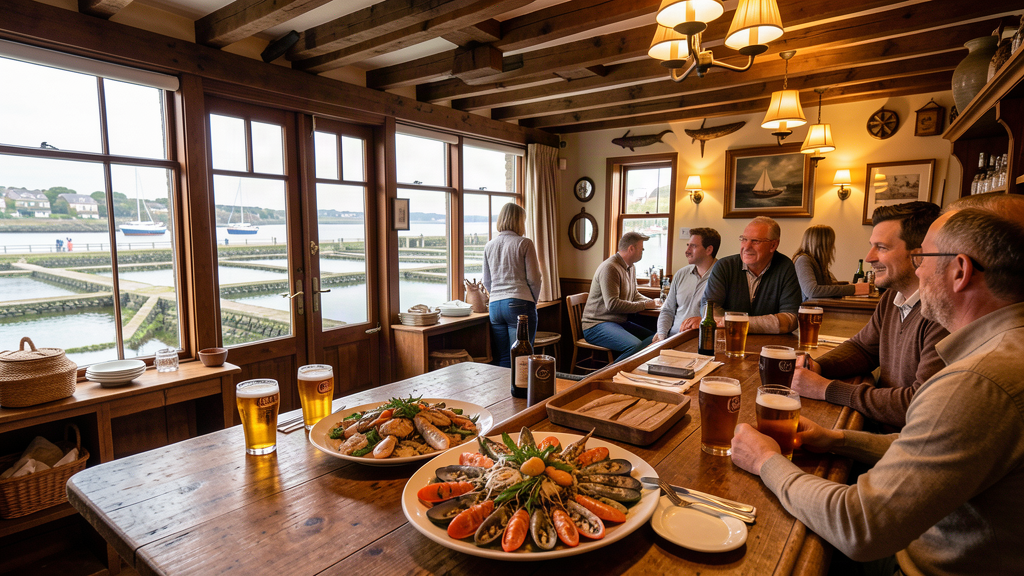
The Ship Inn — The Quay, Quay Road, Lymington, Hampshire SO41 3AY Waterside pub plates and ales right on the quay — the obvious stop after the river-mouth walk, outdoor seats when the weather holds. Keeps you on the working water without climbing back to the High Street first. Check kitchen hours if you are aiming late on a quiet midweek night.
The Angel & Blue Pig — 107–108 High Street, Lymington, Hampshire SO41 9AP High Street gastropub in a long coaching-inn shell — cask ales, a beer garden when the sun shows, and a local crowd that is not only weekend visitors. Good midpoint meal between market stroll and the seawall. Confirm garden service if that is why you came.
The Elderflower — 4–5 Quay Street, Lymington, Hampshire SO41 3AS Higher-end modern cooking in a listed building on the cobbles above the quay — the dinner you book when the saltern walk has earned a slower evening. Plan the reservation; walk-ins are thin at peak.
Getting around and leaving room
Lymington sits on the Hampshire coast at the southern edge of the New Forest National Park, with rail into Lymington Town and Lymington Pier on the branch from Brockenhurst. Wightlink runs the car ferry to Yarmouth on the Isle of Wight from the river terminal. Once you are in town, Town Quay, Quay Street, the High Street, and the start of the seawall walk are manageable on foot if you accept weather and the climb back from the water.
A loop that works for me: Town Quay and Quay Street first while the light is clean, one climb of the High Street for market width and coffee, west along the seawall through the old saltern lagoons before lunch, back via the quay for a Ship Inn table, then Elderflower if you booked or the Angel for High Street ease. Shoulder-season weekdays beat Saturday market crush and summer berth traffic.
Plenty of people leave with a harbour photo, a High Street bag, and a pint facing the masts. Walk west until the pontoons give way to lagoons and the seawall carries you past the old salt pans. Town Quay, the cobbles, and the Keyhaven-bound marsh — that stretch is the bit I would keep.
