
Lucy's Mill weir still turns the Avon below Old Town in Stratford-upon-Avon
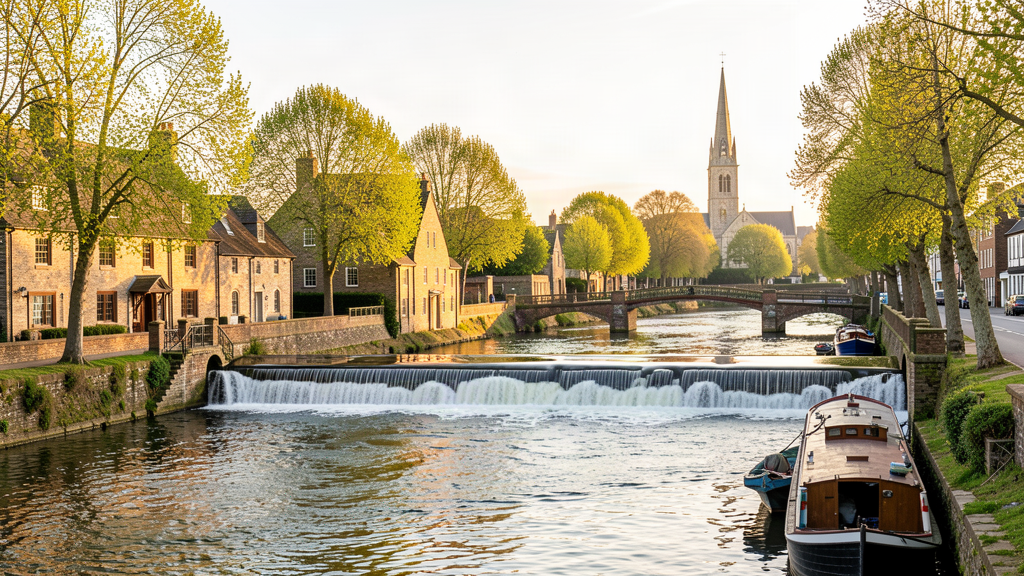
Most first visits to Stratford-upon-Avon start the same way: Henley Street for the Birthplace queue, a selfie under the Swan Fountain, a coach hour at the theatre frontage, then Anne Hathaway’s Cottage if the bus still runs. Fine for the scrapbook. What gets skipped is the short river bend south of the RSC, where the Bishop’s planned grid of 1196 thins into Old Town, a lime avenue drops to Holy Trinity, and Lucy’s Mill weir still works the Avon.
Give the mill race, the old settlement edge, and the canal basin a half-day before another gift-shop sonnet. Start when the churchyard is open and the hire boats are still tied. Leave the costume Elizabethan for later. The river will wait.
Old Town before the gift shops
Stratford is two towns stacked on one bend. The market grid — Bridge Street, High Street, Sheep Street, Wood Street — is the Bishop of Worcester’s “new town,” laid out around 1196 on a Roman line that still runs the spine. Timber fronts and coach density do the postcard work there. Walk them once if you must. Then keep going south past Chapel Lane until the streets quiet and the name on the map changes: Old Town.
This was the settlement before the grid. Holy Trinity sits on the riverbank where the Saxon church stood; the parish still holds the oldest continuous fabric in town. The houses on Old Town itself are mostly later — Georgian and early Victorian lines for people who wanted river air without living over a shop — but the grain is residential, not retail. Nos. 1–4 date from the 1760s. You are on a street people still live on, walking toward a church that was here when Stratford was a ford and a wool town, not a pilgrimage brand.
From Bancroft Gardens, leave the lawns, turn into the churchyard, and take the avenue of limes down to the porch. Go inside if the door is open — misericords, the Clopton chapel, the chancel where Shakespeare is buried under the famous curse — but do not let the grave become the whole stop. Stand outside again. Listen for the weir.
Lucy’s Mill, the recreation ground, and the far bank
Continue past the church along Mill Lane. Lucy’s Mill stood here into the mid-twentieth century; the apartment block that replaced it is honest about the site if unlovely. What remains is the water: mill race, weir, and the working noise of the Avon dropping a step. Lucy’s Mill Bridge — this version from 1934, a crossing on the spot since 1599 — lets you hop the stream and keep south along the recreation ground.
On a fair Saturday the ground holds parkrun, cricket nets, dogs, and people who never bought a Birthplace ticket. Keep walking until the path softens toward Stannals Bridge and the Greenway — the old Great Western line south toward Long Marston, now traffic-free. Bobby’s café sits in a 1950s carriage beside the racecourse edge if you want coffee without a half-timbered menu. Turn back when you have had enough railway ballast and sky.
Cross back toward town on the Tramway Bridge if you prefer the classic loop. Built around 1826 for a horse-drawn tramway hauling coal, lime, and timber from Stratford wharfs toward Shipston-on-Stour and Moreton-in-Marsh, it still gives the town’s best free view: Clopton Bridge (Hugh Clopton’s late-fifteenth-century stone span) to one side, theatre and church to the other. Ten minutes of not queuing.
The far bank path under the trees, back toward the Boat Club houses and Waterside, is the soft return. Rowers, swans, and the occasional narrowboat do more work than any statue of Falstaff. Treat Bancroft as a lawn you pass through, not a destination you photograph until the battery dies.
Canal basin, towpath, and what to leave alone
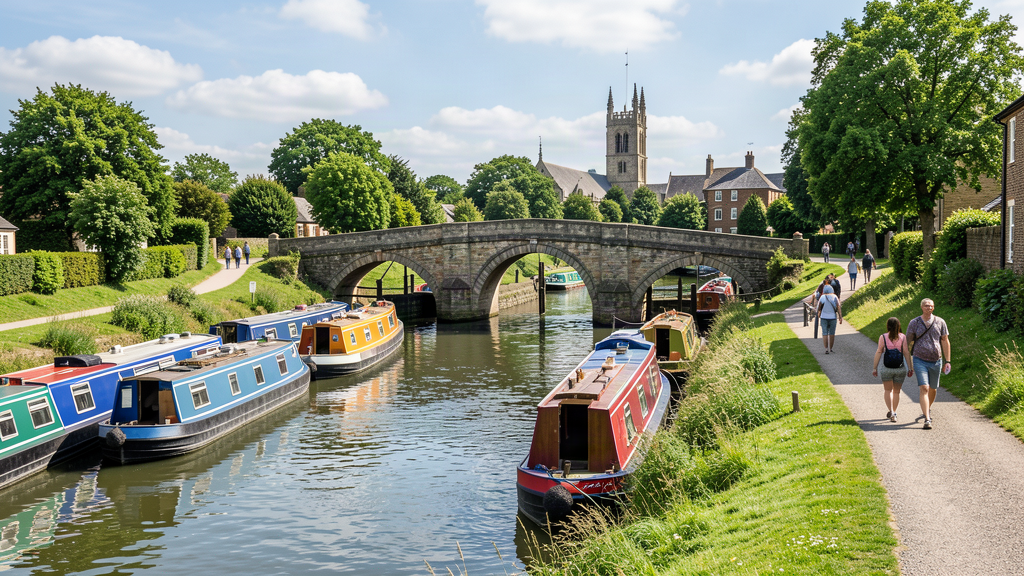
North of the gardens, the Stratford-upon-Avon Canal meets the river in Bancroft Basin. Narrowboats raft up; the towpath climbs away through quieter brick past the canal bridge steps off Great William Street. The canal arrived in 1816; the railway later took the freight. What remains is pleasure traffic and a green corridor locals use as a shortcut. Follow it until the path feels like a working cut again, then turn back.
Henley Street will pull every first visit. Give the Birthplace a timed slot if someone insists, then leave. Nash’s House and the New Place gardens on Chapel Street are calmer for one Shakespeare Trust stop without the full coach circuit. Harvard House on High Street is a quick timber-front glance; Shrieves Walk, off Sheep Street, still holds a few small independents.
Skip the costume-industrial complex unless you came for it on purpose. The Dirty Duck on Waterside is a real actors’ pub with a real post-show crush. Go if you like that energy, not because a list told you to. None of the wet-day museums replace the weir or an empty towpath at eight in the morning.
If you have extra hours, Shottery sits west as a village the town absorbed — lane grain first, cottage garden second. North, Welcombe Hills and Clopton Park open grassland, woods, and the tall obelisk with views back over town. Go when you want sky after too much timber framing.
What holds up is the ordinary grain: mill water under Lucy’s Bridge, limes toward the porch, narrowboats in the basin before day-trip density, a short Greenway stretch with the racecourse off to one side. That stretch is Stratford without the doublet.
Places to Stay
Travelodge Stratford Upon Avon — 251 Birmingham Road, Stratford-upon-Avon CV37 0BF Lower-bracket base on the northern approach — simple rooms, parking, no theatre dressing. Choose it when budget matters and you will walk or bus into Old Town before the midday coach wave on Henley Street.
The White Swan Hotel — Rother Street, Stratford-upon-Avon CV37 6NH Mid-bracket timber-framed Fuller’s house on the old market side, opposite the American Fountain. Central without sitting on Waterside tourist rent. Sleep inside the grid and walk five quiet minutes to Church Street and the lime avenue.
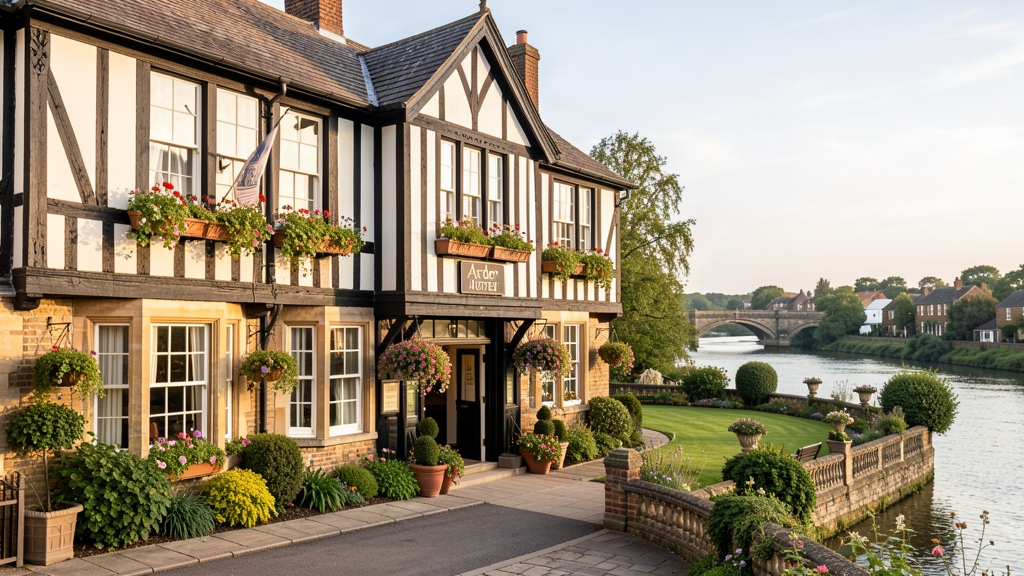
The Arden Hotel — Waterside, Stratford-upon-Avon CV37 6BA Higher-bracket contemporary stay opposite the RSC — polished rooms, river and theatre on the doorstep. Best when the room is part of the trip and you can slip out early toward Bancroft Basin and Lucy’s Mill before the lawns fill. Book ahead on performance weeks.
Where to Eat
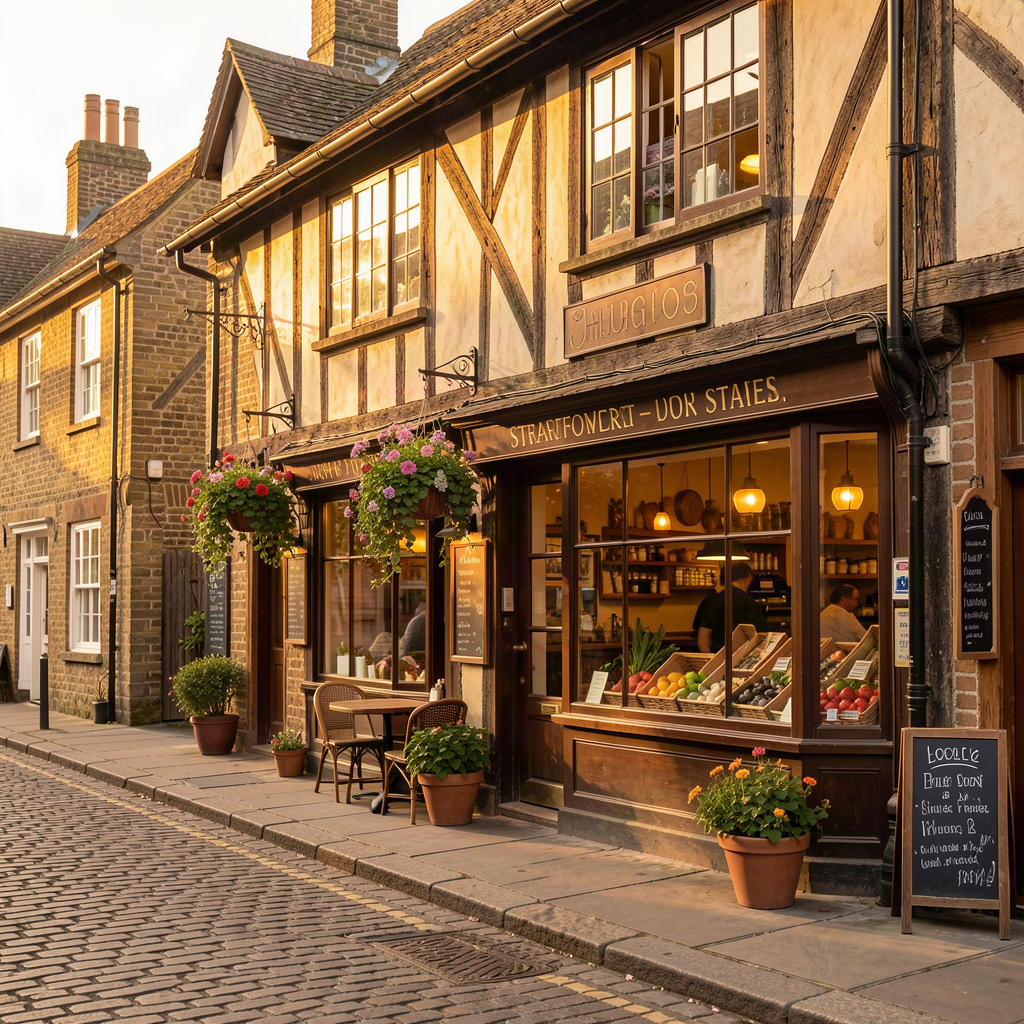
The Opposition — 13 Sheep Street, Stratford-upon-Avon CV37 6EF Long-running bistro locals shorten to “the Oppo” — seasonal plates, pre- and post-theatre timing, timber room without costume cosplay. Use it after the weir and basin when you want a proper sit-down on the old market street.
No. 9 Church Street — 9 Church Street, Stratford-upon-Avon CV37 6HB Neighbourhood restaurant in a Grade II building on the seam between the commercial centre and Old Town. Book it for calm cooking a short stroll from the lime avenue rather than another Sheep Street crush.
Salt — 8 Church Street, Stratford-upon-Avon CV37 6HB Paul Foster’s small, serious room — tasting and à la carte, the town’s Michelin mark. Reserve well ahead. Save it for the night you treat Stratford as a food town on a river, not only a playwright’s souvenir.
For cheaper fuel, grab a sandwich on High Street or Sheep Street and eat by the basin or under the limes. Save the real meal for Church Street or the Oppo; save the last light for the weir below Old Town.
Getting around and leaving room
Stratford-upon-Avon station sits northwest of the centre — Chiltern and West Midlands services, a walkable cut through town to the river, shorter by local bus. Old Town, Bancroft, and Lucy’s Mill are compact on foot. Skip the car inside the grid. Park once at the edge if you must. The Greenway suits longer legs toward Long Marston or the racecourse.
The Birthplace, the cottage, the main RSC auditorium, and the swan selfies will pull every first visit. Give them a slot if you must. Do not let them replace the mill race and the lime avenue. Early on the towpath beats midday queues on Henley Street. Winter wet makes the Avon honest; summer performance weeks and the October mop fair make the centre loud in a local way as much as a tourist one. Carry a layer. Check Holy Trinity opening if the chancel is the hook.
Broadway and Hereford are the other Cotswold and Marches towns I keep with this stop.
Stratford-upon-Avon is more than a birthplace ticket, a thatched cottage, and a plastic ruff. Walk south until the grid softens into Old Town. Stand under the limes while the weir works the river below Lucy’s Mill. Cross the Tramway Bridge once for Clopton and the church in one frame. Follow the canal out of Bancroft Basin until the boats thin. Eat on Church Street or Sheep Street. The Avon still turns for people who live on this bend — leave half a day for it.
