
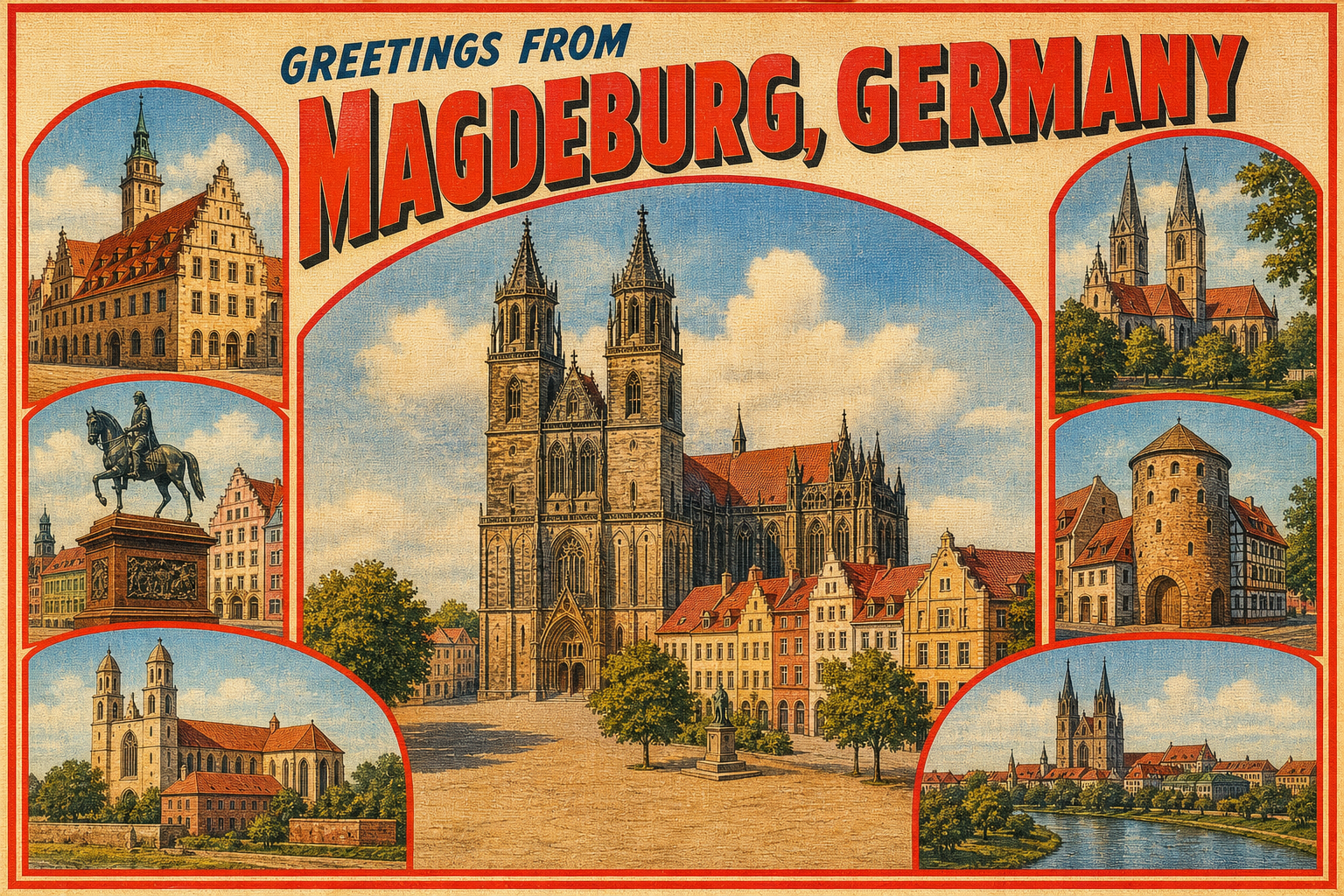
Berlin–Hannover trains treat Magdeburg as a pause between bigger names. I do the opposite. Bags drop near Breiter Weg, then I walk into the pink, crooked courtyards of the Green Citadel before I climb the Dom terrace or follow the Elbe bank. Sachsen-Anhalt’s capital sits on a broad river bend with the Gothic cathedral Otto the Great chose for burial and, a few minutes north, one of Friedensreich Hundertwasser’s last buildings. The rebuilt avenues between them are wide and plain. Once you stop fighting that plainness, the day opens up.
You smell river water and tram brakes first. Then coffee from the Citadel courtyards, stone dust if the Dom is under work, and grilled sausage when Alter Markt is open. Magdeburg is a working capital: student nights at Hasselbachplatz, park islands that still feel local on a weekday morning.
Green Citadel first, not as a checklist stop
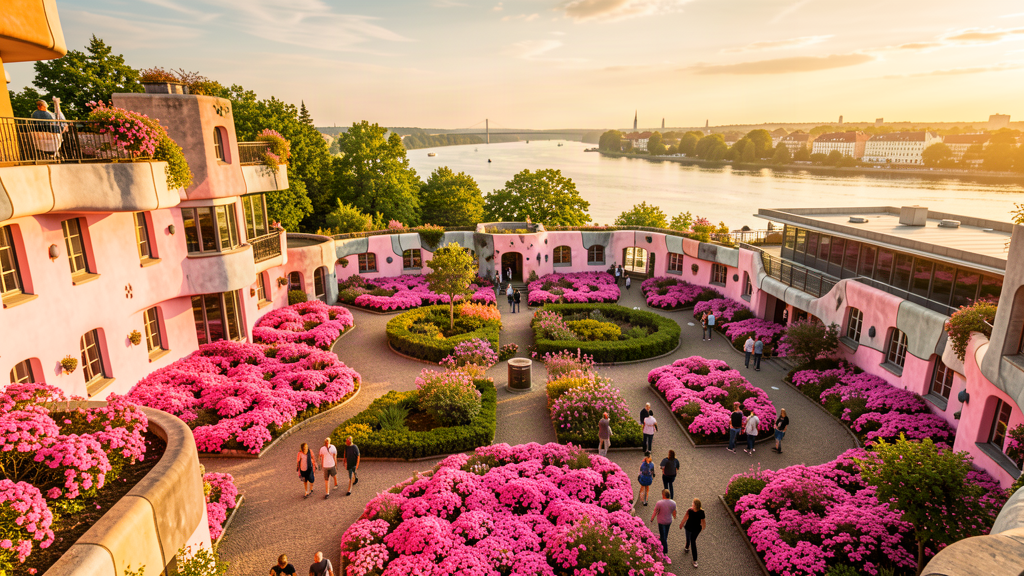
Start at the Grüne Zitadelle on Breiter Weg. Hundertwasser finished the plans before he died in 2000; the building opened in 2005. The façade is more pink than green. Windows won’t sit in a straight line. Golden onion domes sit on planted roofs, and the public courtyards stay open so you can walk through without buying anything. Apartments, shops, a small hotel, and café tables share the same odd floors. Floors tilt. Columns look handmade. Locals cut through on errands while visitors photograph the same pink wall again.
I give the courtyards twenty quiet minutes before I take a picture. Sit once. Watch the light on the wavy plaster. Then circle until the Dom towers line up above the modern grid. The Citadel isn’t a museum you leave with a ticket stub. It’s housing and retail that happens to be one of the strangest buildings in eastern Germany. Treat it that way and the rest of the day makes more sense.
Domplatz, Otto, and the first Gothic stone
A short walk south brings Domplatz and Magdeburger Dom — St. Maurice and St. Catherine — the first Gothic cathedral on German soil, begun in 1209 on earlier Ottonian ground. Twin towers mark the skyline for miles. Inside you get height, cool stone, and the tomb of Emperor Otto I. Outside is a wide square for markets, open-air music, and ordinary lunch breaks under towers that coach groups photograph in about three minutes.
If the north tower climb is open, the steps are work — hundreds of them — and you get river, park islands, and the rebuilt center laid out like a diagram. I do the climb once per visit. The terrace above the Elbe already gives the view that matters: cathedral bulk, water, and a city that faced the river long before the postwar grid arrived.
Kloster Unser Lieben Frauen sits nearby as a quieter stop — Romanesque monastery fabric now an art museum. Go when Domplatz feels loud. The cloister scale feels human again.
Alter Markt, the Horseman, and a real Wochenmarkt
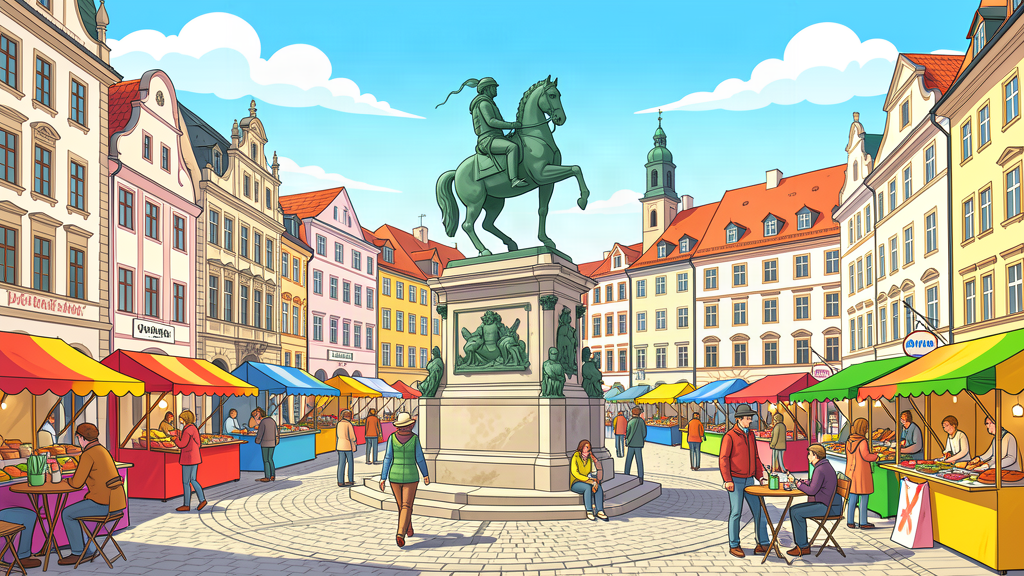
Alter Markt is the civic rectangle opposite the rebuilt Rathaus. The Magdeburg Horseman copy stands here; the medieval original lives in the cultural history museum. On market days the square fills with produce, fish, mushrooms, bread — a Wochenmarkt that still feeds the week, not a staged food show. Hours run roughly Tuesday–Friday into mid-afternoon and Saturday morning; confirm before you build lunch around one stall.
I walk the market once without buying, once with a bag. The second pass is when you notice who shops here: office workers, pensioners, students with mesh totes. Stadtfeld Ost, west of the core, is worth a later stroll for Gründerzeit streets and small cafés. Buckau, south on the Elbe side, has brewery rooms and a looser creative edge. Both beat another lap of the same three postcard facades.
Elbe bank, Rotehorn, and the slow water line
The Elbe is why Magdeburg is on the map, not scenery behind the Dom. Paths run the bank past Petriförder, bridges, and open lawn. Rotehornpark sits on a river island with avenues, the Albinmüller Tower, event halls, and enough grass to lose the tram noise for an hour. Elbauenpark and the Millennium Tower sit farther out if you want a full park day; on a first stay I keep to the near bank and Rotehorn so the cathedral still anchors the walk.
The Hubbrücke — the historic lift bridge — looks good in low light. White Fleet boats and bank beer gardens show up in season. I walk the bank late afternoon, when office traffic thins and Dom stone picks up warmer color. Feet and a tram day ticket cover the core on day one; the Elberadweg can wait until morning two.
Hasselbachplatz — the “Hassel” — is the star-shaped Gründerzeit knot for bars and student noise. Some legendary rooms have closed; empty shopfronts are part of the honest picture. What remains works for a drink and a plate if you choose carefully. I eat earlier here than in Berlin and leave club hours to people who live here.
How the city moves, and a clean day arc
Magdeburg Hbf sits a short walk or one tram hop from Breiter Weg, the Citadel, and Leiterstraße. Berlin and Hannover are easy rail links; Leipzig is straightforward too. Inside the center, trams beat circling for parking. The tourist desk near the cathedral zone covers tower hours, park events, and river trips when boats run.
For two nights around the Citadel, Dom, Alter Markt, and the Elbe bank, you rarely need a car. Winter shortens tower access, market stalls, and beer-garden seats at the same time — confirm before locking lunch outdoors.
A clean day once bags are down: Green Citadel courtyards early while groups still cluster at the Dom door, Dom interior and terrace before noon, Alter Markt for a market snack or coffee facing the Horseman, Kloster rooms if you want art, Elbe bank and Rotehorn in the afternoon, early dinner near Fürstenwall or Buckau, Hassel only if you still have legs. Second morning for museum time or a longer park loop. Head back to Berlin only after you’ve sat a Citadel courtyard twice.
Food here is solid Sachsen-Anhalt cooking with river-city range: seasonal plates, house beer, garden tables under the Dom wall, Buckau pints. I lock one dinner reservation and leave lunch flexible around the market.
Places to Stay
Jugendherberge Magdeburg (value, center lanes)
Leiterstr. 10, 39104 Magdeburg
DJH hostel a few minutes from Hbf and the Green Citadel: private-bath rooms mixed with classic hostel beds, family floor options, quiet street for the location. I use it when the budget should go to Dom tower tickets, park time, and dinner. Honest base with walk-out access to Breiter Weg.
artHOTEL Magdeburg (mid, inside the Green Citadel)
Breiter Weg 9, 39104 Magdeburg
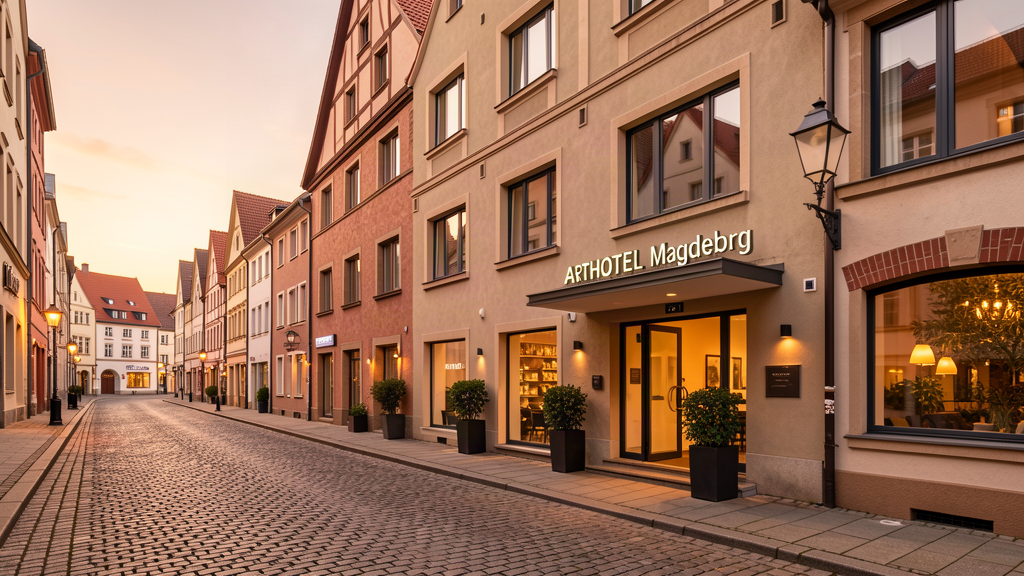
Three-star-superior rooms and studios inside Hundertwasser’s building — irregular walls, individual décor, sauna, underground parking when reserved. You wake in the landmark instead of commuting to it. My default when the courtyards are why you came and Domplatz is under ten minutes on foot.
Dorint Herrenkrug Parkhotel Magdeburg (upper, park and Elbe edge)
Herrenkrug 3, 39114 Magdeburg
Jugendstil park hotel in Herrenkrugpark between river, racecourse, and green space: polished rooms, historic festival hall, Parkrestaurant DIE SAISON after a long bank walk. You pay for quiet and park air rather than sleeping above Breiter Weg. Tram or short ride back to Dom and Citadel.
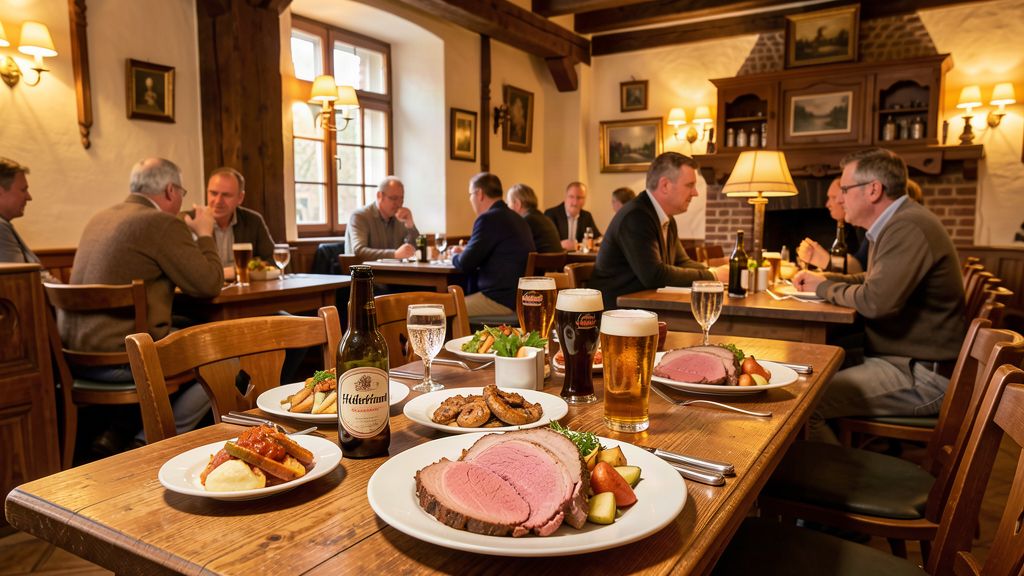
Restaurants and food
Restaurant Hoflieferant (mid-upper, garden under the Dom wall)
Fürstenwall 3b, 39104 Magdeburg
Seasonal regional kitchen in a garden at the foot of the cathedral wall between Elbe and Altstadt — old vegetable varieties, serious meat cuts, vegetarian plates without apology. My pick after a Dom and bank afternoon when you want a real table, not bar food. Reserve; garden seats go first in fair weather.
Brauhaus Brewckau (casual-mid, Buckau house beer)
Schönebecker Str. 16, 39104 Magdeburg
Small brewery rooms in Buckau with house beers that nod to the district — Tach Hell and wheat among the regulars, kitchen plates that match pint pace. Good after a south-bank walk when Citadel crowds are behind you. Confirm kitchen hours; brewery rest days are real.
Elbelandhaus (mid, Dom and bridge view)
Benediktinerstraße 6, 39104 Magdeburg
German plates and terrace tables with a direct sightline to the Dom and Sternbrücke. I use it for a longer lunch or early dinner when the view matters as much as the schnitzel. Call ahead on weekends. Bakeries and Alter Markt stalls fill gaps when these kitchens rest.
Walk the Green Citadel courtyards long enough that the floors feel wrong under your feet in a good way. Stand the Dom terrace once with the Elbe in view. Give Alter Markt a market morning if the stalls are up, then follow the bank until the cathedral stone turns warm. That is enough Magdeburg for two nights — better than a same-day sprint that only catches pink walls from a tram window on the way to Berlin.
