
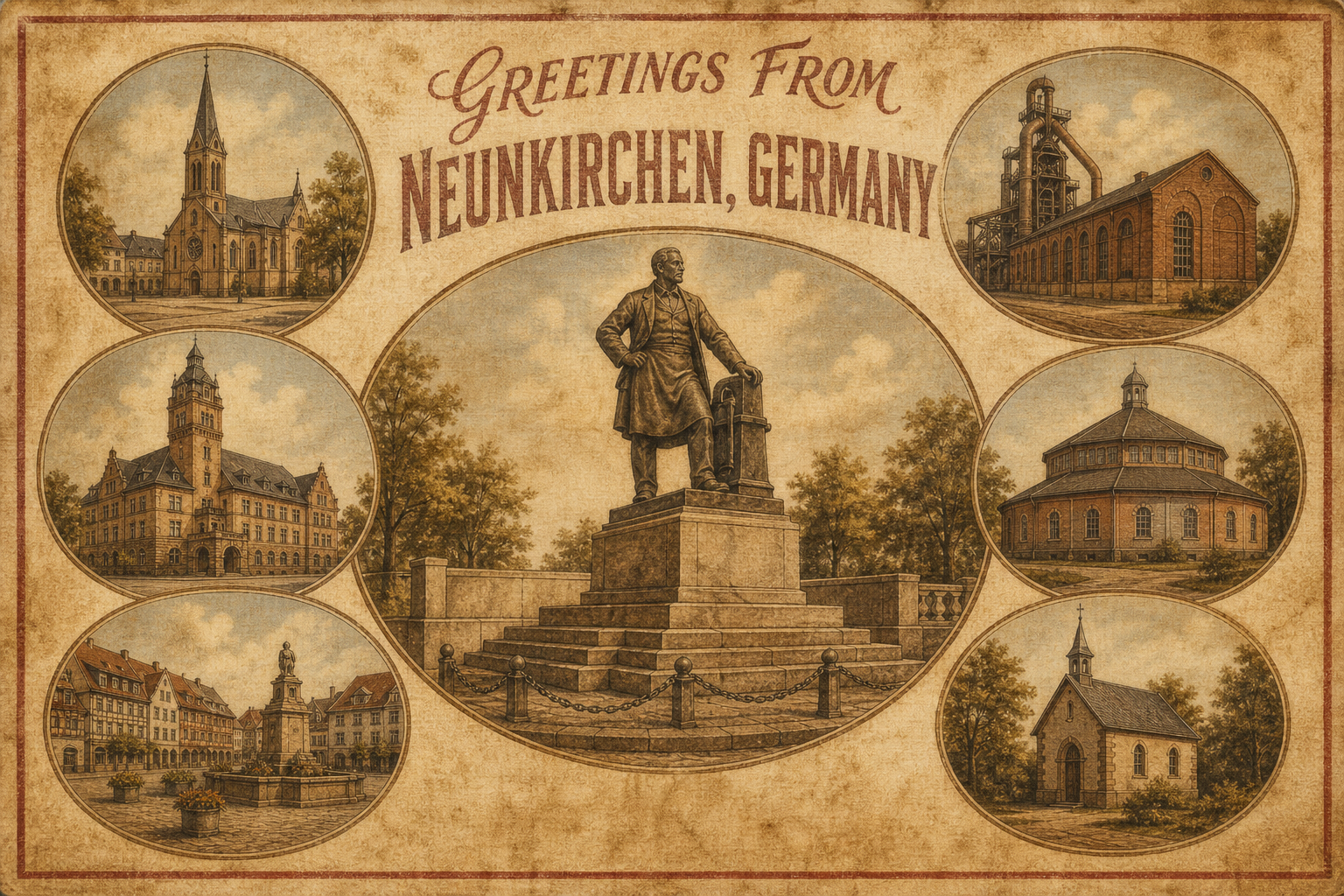
Most travelers treat Neunkirchen as a mall stop off the A8, or a zoo day for kids between Saarbrücken and Kaiserslautern. Fine if the town is only Saarpark glass and a parking deck. I came for the rest of it: blast-furnace iron still throwing shade on ordinary errands, Oberer Markt crates open before the pedestrian spine fills, Bliesterrassen steps holding river air after the shopping center takes the afternoon.
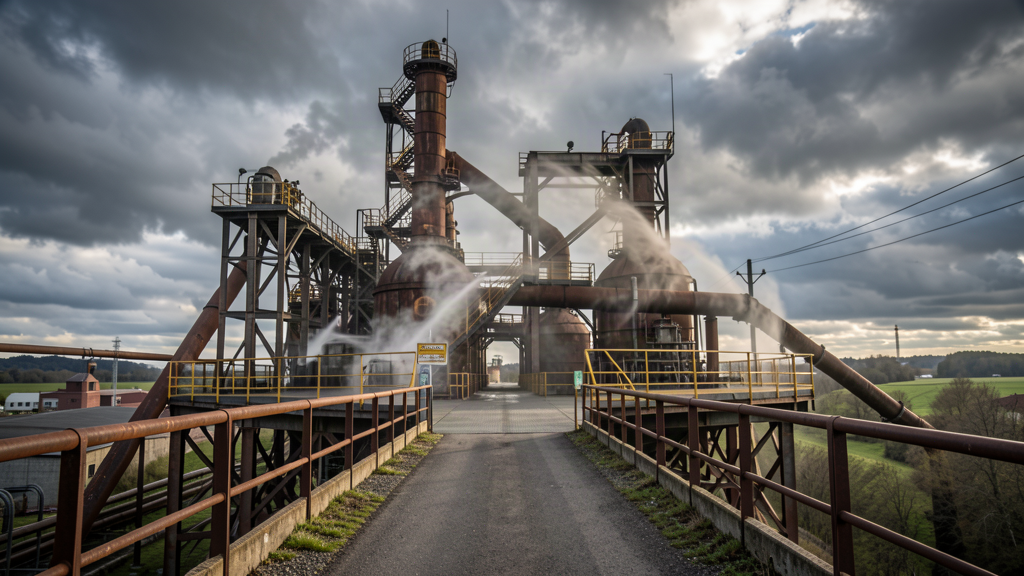
I take the Altes Hüttenareal early, while the Hüttenweg still belongs to dog walkers and rail noise. Climb Hochofen VI when the platform wind is clean. Sit once under the Wasserturm with a plain plate. Leave the coach-day checklist for someone else. Furnace climb, then river terraces, then market stone. The industrial logo can wait one quieter morning.
Hüttenweg iron, Spitzbunker concrete, and the furnace the town still walks
Neunkirchen sits in Saarland on the Blies, about twenty kilometers northeast of Saarbrücken. Second city after the capital, and for a long stretch the iron works of the eastern coal field. Stumm family plants shaped the skyline for more than a century. Furnaces went cold in 1982. The mall rose on the same ground. Brochures push Saarpark-Center, the zoo on the ridge, and the short hop from Ramstein. I care more about the short walk from Stummplatz into the Altes Hüttenareal, when the blast-furnace shells still feel like working monuments instead of a backdrop for retail signs.
The Hüttenweg stitches the surviving pieces: Hochofen VI and its cowpers, the Spitzbunker air-raid cone built for plant crews in 1939–40, the Neue Gebläsehalle with its gas blowing engine, the Stummsche Reithalle for small stage nights, the converted Wasserturm. Grounds stay open. Guided climbs put you on a roughly twenty-three-meter furnace platform with the city underfoot. Firm shoes, booked slots. Meetings often start at the Reithalle forecourt on Saarbrücker Straße 21, or at the tower for the shorter barrier-free loop. I go when mall heat already owns Stummplatz and the iron path still throws cool shadow.
Stand once under the Spitzbunker cone with the photo boards that remember how much of the center burned when the works were a target. Stand once on the furnace deck when the wind clears the valley. Then leave without treating the Hüttenpark machines as only a logo between bigger Saar names. The Susan-Weinert-Weg and Margarete-Bacher-Straße stretches open views toward Christus- and Marienkirche if legs remain after the climb.
Stummplatz is the hinge square. Cafés, bus edges, the mall mouth, the place locals meet more than tourists photograph. Bahnhofstraße and Hüttenberg keep specialty shops along the pedestrian run. Bliespromenade pulls the river into the same day without a ticket. I use the square as a hinge, not a checklist stop after a furnace photo. It is where the town gets specific without needing a festival weekend.
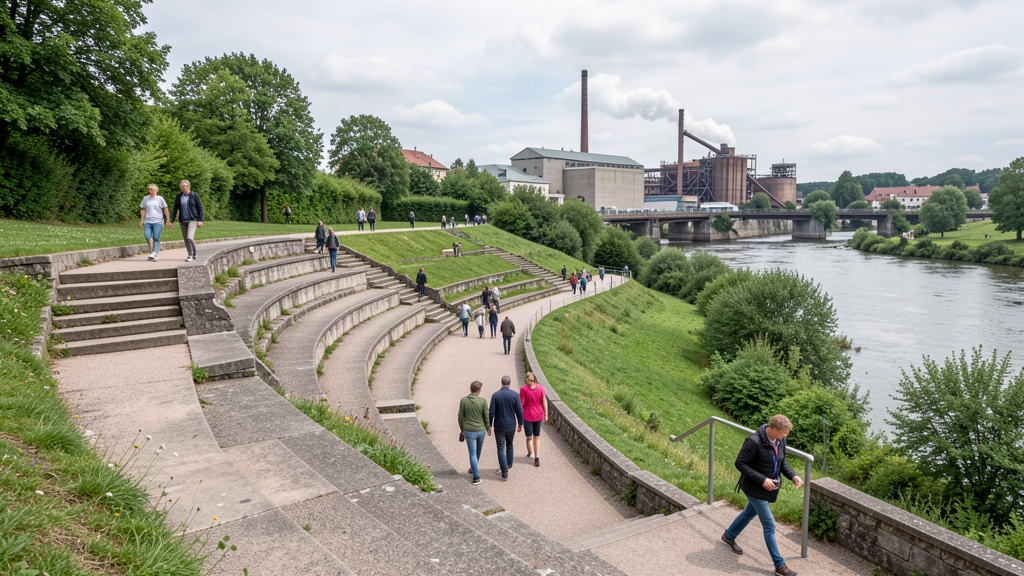
Bliesterrassen steps, Oberer Markt crates, and a clean day arc
North of the mall glass, the Bliesterrassen reopen the river the industrial age had straightened into a drain. Lindenallee edge, floodable stone and planting, banks broken back so fish and crayfish returned. Before the redesign, the water hid under platforms. Now steps and benches hold lunch bags, Blies Days stages, and ordinary evening walkers. The canal years finally feel finished. I sit when Stummplatz already belongs to shopping feet and the terraces still throw cooler air off the current.
The Wochenmarkt at Oberer Markt runs Wednesday and Saturday mornings. Produce, flowers, Rostwurst steam. Local errand rhythm the mall food court never quite copies. Max-Braun-Straße edges and the old market stone keep the morning honest. Pair a market bag with a slow Bliespromenade loop, then cut back toward the Hüttenareal when you want iron again instead of retail light.
If I had two nights: early Oberer Markt while crates still belong to vendors, Bliesterrassen steps before noon heat, Hüttenweg and Hochofen VI in the quieter afternoon, Wasserturm plate when the furnaces take evening light, and a slower Kasbruchtal or zoo-ridge morning if legs remain. Festival weeks and mall Saturdays rewrite rates and tables, so book early.
The zoo sits up in the trees with free guest entry at some ridge hotels. Useful with kids. Less necessary if iron and river already filled the day. Wagwiesental green strip and Furpach pond parks cover softer air when the center feels too paved. Bliesgau biosphere hills sit a short drive out when you want meadow paths after furnace steel. Save them for the second morning. The town core holds enough without chasing every ridge.
How Neunkirchen moves
Neunkirchen Hauptbahnhof puts you near the pedestrian core. Regional trains link Saarbrücken, Homburg (Saarland, not Bad Homburg), and the eastern valley without drama. Once you are on Stummplatz, Bliesterrassen, Oberer Markt, and the Hüttenweg, it’s better on foot. Buses cover Zoo Ridge, Furpach, and outer districts when you do not want a car among one-ways. A8 and A6 ramps sit close for drivers. Dillingen here is Saarland context on the wider map, not the Danube town. France and Lorraine sit close enough for a half-day if you already did furnace platform and river steps first.
Confirm Hüttenweg tour times, market days, restaurant rest days, and path mud after wet Blies weather. Two nights beat a single mall-and-zoo silhouette between rail connections. Keep luggage light if you stay near Stummplatz. Short blocks, lots of foot traffic, some street noise.
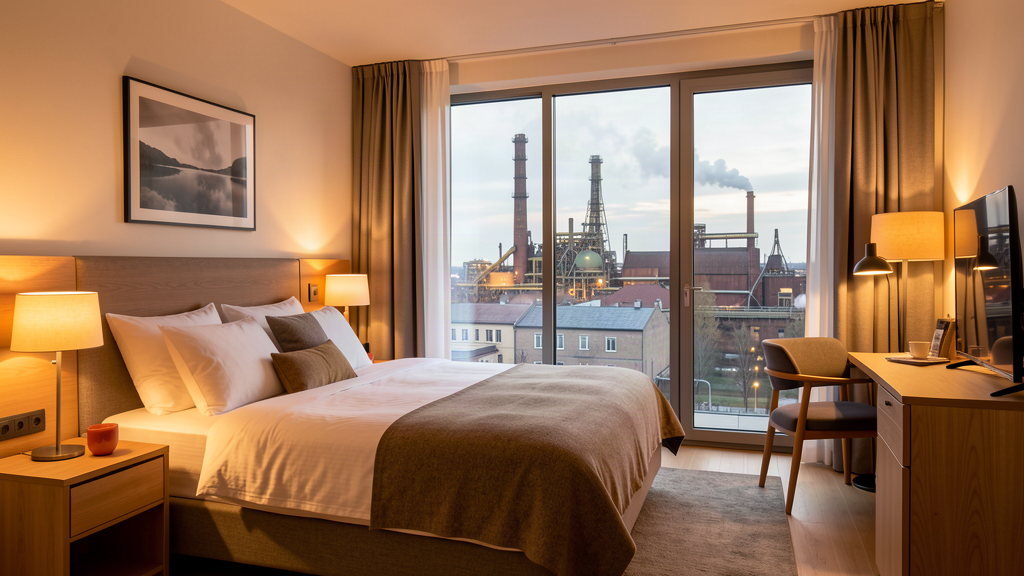
Places to Stay
Pension am Stummplatz (value, square-edge walking base) Lindenallee 2, 66538 Neunkirchen. Simple central rooms fifty meters from Saarpark-Center and a short walk to Bliesterrassen and the Hüttenareal. Plain comfort when furnace mornings and market crates matter more than spa polish. Good for one- or two-night stays that want sleep inside the core rather than the zoo ridge. Street noise and mall evenings are the trade-off. Ask for a quieter room if that bothers you.
Hotel Zum Ellenfeld (mid, stadium-side traditional house) Zweibrücker Straße 14, 66538 Neunkirchen Long-running house by the Ellenfeldstadion with restaurant hours that still feel local. Solid mid rooms, easy drive to the center, a stay when you want a desk and dinner without chain design. Better for travelers who mix match days or outer errands with Hüttenweg afternoons. Book ahead when the stadium calendar fills the block. Holiday Inn Express at Zum Eisenwerk 3 offers a chain alternative beside the Gebläsehalle if you prefer iron-side parking and Express breakfast.
Hotel am Zoo (upper-casual, ridge forest edge) Zoostraße 27–29, 66538 Neunkirchen Forest-edge rooms with the zoo below many windows and daily guest entry included. Calmer sleep than Stummplatz glass, A8 access without living inside the mall ring. Suits travelers who want morning animals or Kasbruchtal paths before a furnace afternoon in town. The trade off is the ride or bus back to Bliesterrassen and Oberer Markt. Plan the core on foot once you drop bags. Hostellerie Bacher-Wögerbauer at Limbacher Straße 2, 66539 Neunkirchen, covers another out-of-center plate-and-stay option when the ridge is full.
Restaurants and food
Am Oberen Markt (value, market-edge room) Max-Braun-Straße 5, 66538 Neunkirchen. Working square plates beside the weekly market stone. Plain tables, local lunch rhythm, the kind of stop that follows crate mornings without reservation theater if you arrive early. Good after Oberer Markt or before a Bliesterrassen sit. Confirm rest days. Market mornings set the pace more than evening gloss.
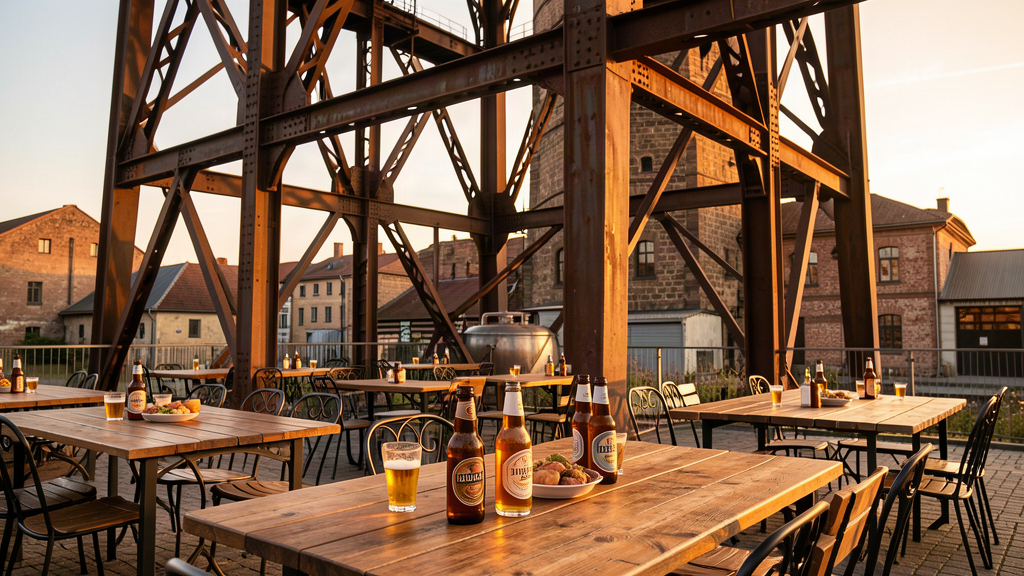
Stumm’s Brauhaus (mid, Wasserturm industrial core) Saarbrücker Straße 16, 66538 Neunkirchen Saarland plates and brew-house tables inside the old works water tower, blast-furnace shells outside the windows. The honest post-Hüttenweg meal when iron still owns the light. Pair with a furnace climb or a Gebläsehalle evening. Parking at the Hochöfen lot or along Saarbrücker Straße. Weekends fill when tours end. Iguana shares the wider Wasserturm cluster if you want a different room under the same industrial shell.
Landgasthaus Eschweilerhof (upper-casual, countryside edge). Im Eschweilerhof 19, 66539 Neunkirchen. Bürgerlich kitchen and Paulaner garden between Kirkel and the town on the L113. Longer sittings, green air, the night when center mall noise already did its work. Reserve on warm weekends. Rest days matter. Hostellerie Bacher at Limbacher Straße 2 covers another refined out-of-center table if Eschweilerhof is full, and Scheiber Hof at Friedrichstraße 69 holds a closer in-town alternative when you stay near the pension strip.
Food here stays plain in the best way. Coffee on Stummplatz while the square still throws morning shade. Rostwurst steam when Oberer Markt crates still hold cool air. Stumm’s Brauhaus when the Wasserturm owns lunch after the furnace deck. Eschweilerhof when the L113 already did its work. Lyoner, Dibbelabbes, and Schwenker can wait until you have sat once on Bliesterrassen steps after ordinary Hüttenweg iron, watching the river share walkers with locals who still belong to the town more than to the mall map. Neunkirchen works better as furnace platform, market stone, river terrace, and brew-house plate than as another half-day shopping stop between Saarbrücken and the bigger border names.
