
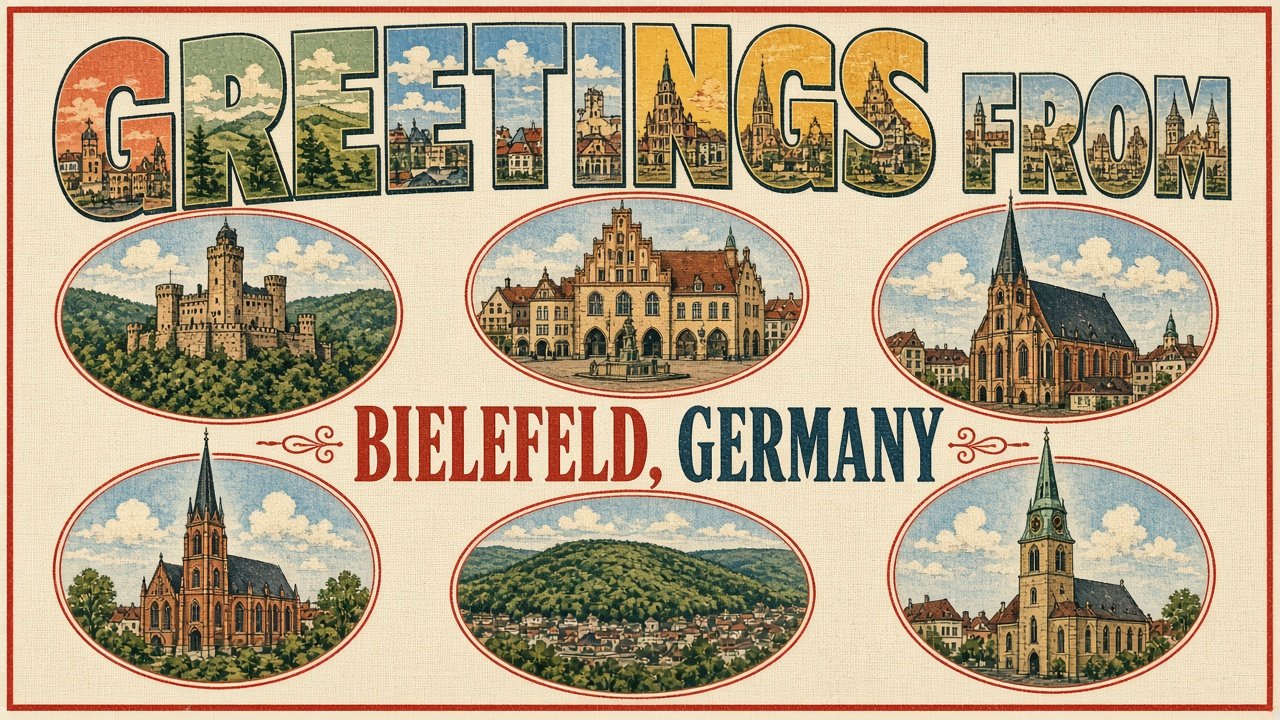
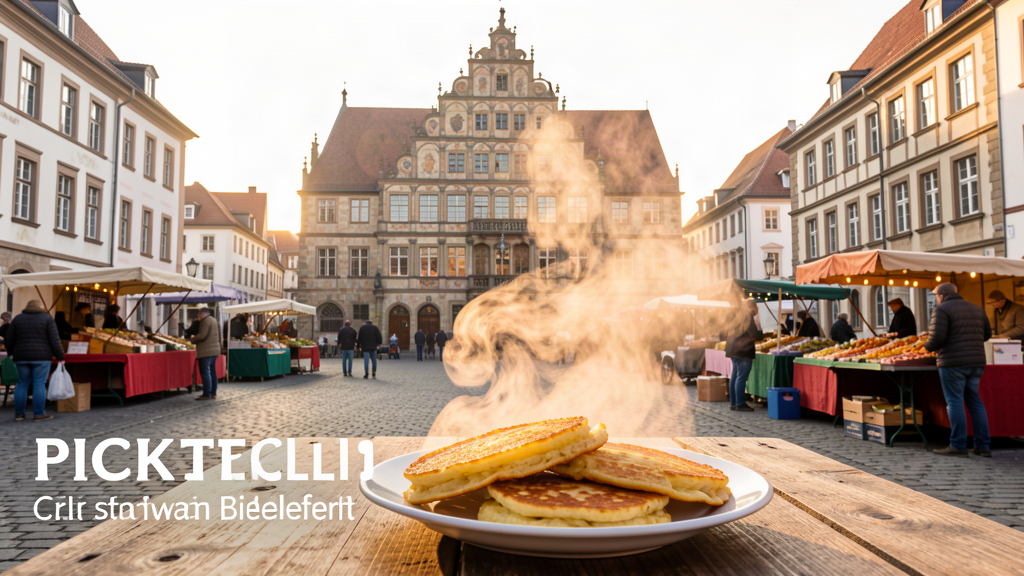
Most people treat Bielefeld as a punchline or a pass-through: the conspiracy joke that the city “doesn’t exist,” a Sparrenburg selfie from the train window, then ICE onward to Köln or Hannover. That works if a checklist is the whole point. It falls short if you like the city when Alter Markt still smells of potato pancake under the Crüwell House gable, and the Teutoburg ridge still holds morning damp before casemate tours queue up.
I walk the old market while bakery shutters are still lifting. I climb Sparrenburg when the tower steps are empty enough to hear my own breath, drift the Ravensberger Spinnerei brick when linen history feels better as courtyard air than brochure text, and keep dinner somewhere residents still claim after work. Market first. Ridge second. Mill brick third. That’s the order I stick with when the meme can wait.
Alter Markt gables, Nicolaikirche stone, and a square that still feeds people
Bielefeld sits on the northern edge of the Teutoburg Forest in eastern Nordrhein-Westfalen — university city, old linen capital, green ridge close enough that you smell resin after rain. The postcard is Sparrenburg on the hill and a rebuilt center after wartime loss. What I trust more is Alter Markt on an ordinary morning: patrician façades, the late-Gothic stepped gable of the Crüwell House from 1530, and shops that still open for people who live here rather than for coach schedules.
Come early enough that the square feels like neighborhood shopping, not a staged old-town set. I buy a pickert — the Westphalian potato pancake locals still treat as ordinary fuel — with a strip of ham or a spoon of quark if the counter cooperates, then stand under the Crüwell gable long enough to watch regulars finish their lists. Altstädter Nicolaikirche sits close: 14th-century bones, an Antwerp altar worth one quiet look, stone that cools the legs after market walking. I go once, sit, and leave while Alter Markt light still wants another lap.
South and west of the square, pedestrian lanes stitch toward Obernstraße and the commercial belt. I treat them as errand walking — coffee windows, bakeries, a bench — not a forced shopping spine. The Rathaus, with its Gothic-Renaissance mix, is worth a glance if architecture is your habit. Then keep moving before the civic postcard eats the morning. Bielefeld’s center is not Münster’s gable arcade or Köln’s Dom forecourt. It is smaller, more workaday, and better when you stop inventing a perfect medieval script onto postwar walls.
Sparrenburg casemates, Teutoburg edge, and linen brick that still holds cool
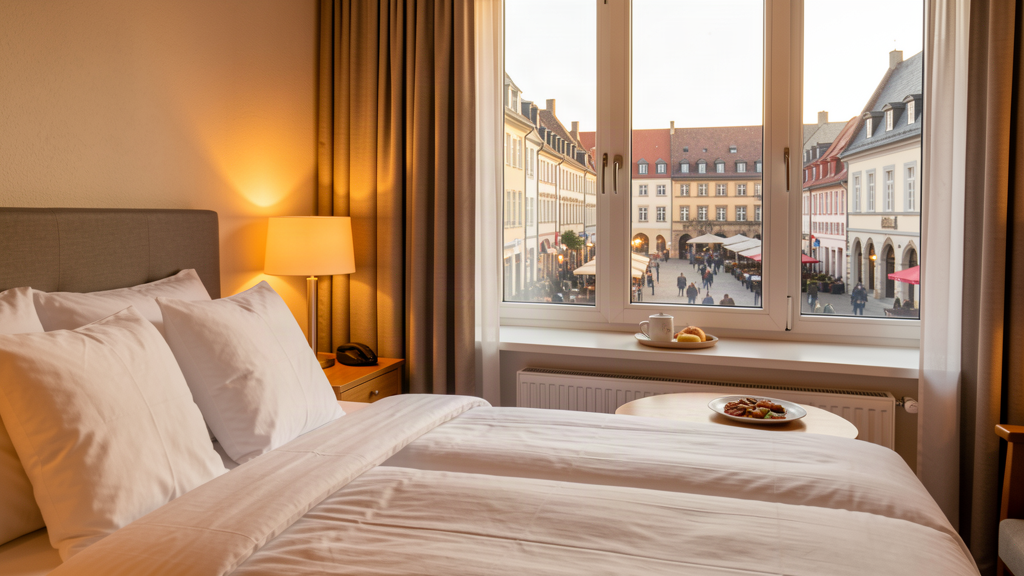
When Alter Markt has done its work, the ridge pulls you up. Sparrenburg sits about sixty meters above the core on Sparrenberg — 13th-century origins, later bastions, casemates that run hundreds of meters under the stone. The tower climb is the real cost of the view: roughly 120 steps, then city roofs sliding into Teutoburg green and, on clear days, a farther ridge line that makes the conspiracy joke feel especially silly. I go early or late. Midday tour clusters turn the courtyard into a waiting room.
Above-ground walls are free to wander most hours. The underground corridors want a guided slot from spring through autumn — book if tunnels are the point, skip if damp stone already told you enough from the courtyard. July’s Sparrenburgfest turns the hill into minstrels and market stalls; useful once, crowded always. The Hermannsweg long-distance path brushes the castle. Even a short out-and-back along the crest resets the day for less than another museum ticket. Botanischer Garten sits nearby on the forest edge: free entry, rhododendron seasons, alpine beds if you still have legs. Tierpark Olderdissen, also free, holds native wildlife a little farther into the green. Better as a slow afternoon with locals than as a forced family checklist.
Down from the ridge, linen history is still brick. Ravensberger Spinnerei — once among Europe’s great flax mills — now holds cultural uses and the Historical Museum’s account of how Bielefeld grew from weaving town to industrial city. I walk the red brick for courtyard air and mill scale more than for every panel. The story lands harder when your shoes still carry forest dust. Kunsthalle Bielefeld, Philip Johnson’s only museum building in Europe, offers a red sandstone cube and 20th-century rooms a short Stadtbahn hop from the old core. Go if sculpture and Expressionism pull you. Skip if the ridge and the market already filled the day.

How Bielefeld moves, and a clean day arc
Hauptbahnhof drops you north of the commercial belt — useful for rails, and also the easiest way to never leave station gravity. moBiel’s Stadtbahn (four light-rail lines, underground in the center) plus buses stitch Altstadt, Sparrenburg approaches, university belt, and outer districts. Day tickets beat stacked singles if you bounce. Inside the old core, feet beat everything. Validate tickets. The city is walkable once you accept that Sparrenburg is a real climb, not a flat postcard.
Confirm tower and casemate hours, museum days, and kitchen closings before you build a perfect Saturday onto locked doors. Two nights beat a single castle sprint between ICE connections. If I had two nights: early Alter Markt while pickert still steams and the Crüwell gable still owns the light, Nicolaikirche cool stone, Sparrenburg tower before the queue thickens, a short Hermannsweg or Botanischer Garten edge, Ravensberger brick or Kunsthalle if the afternoon wants indoors, dinner where residents still sit, sleep close enough for another market morning. University calendar and congress weeks rewrite hotel rates — book early. Arminia match days at the Alm change the mood near the stadium. Useful if football is your habit, noisy if it isn’t.
Day-trip gravity pulls toward Osnabrück, Paderborn, or the next Hermannsweg stage. Hold at least one full day between Alter Markt steam and the ridge. Pickert, casemate chill, and linen brick beat another half-day stamp from the Hauptbahnhof.
Places to Stay
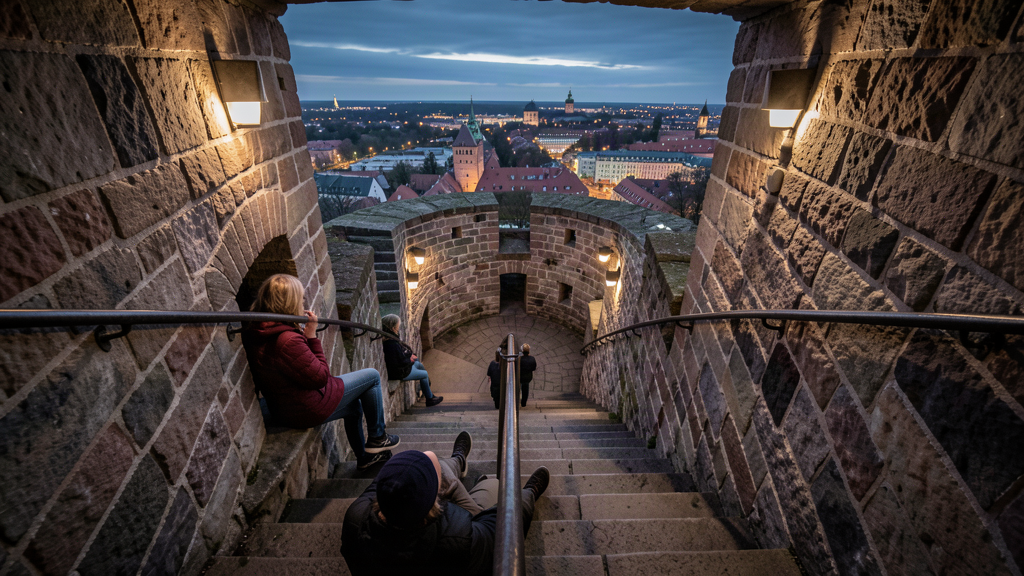
Ravensberger Hof (value, renovated Altstadt base) Güsenstraße 4, 33602 Bielefeld Fifty rooms renovated in 2022 in the old-town pocket — practical sleep a short walk from Alter Markt and the Nicolaikirche without station-lobby theater. Budget and comfort categories, breakfast on-site, parking limited and elevator-access only if you drive. Book when market mornings and Sparrenburg climbs come first. Ask for a quieter room if street noise bothers you.
Altstadt-Hotel Bielefeld (mid, central walker’s stay) Ritterstraße 15, 33602 Bielefeld Twenty-seven renovated rooms near Nicolaikirche — soft beds, private baths, breakfast buffet, easy feet to Alter Markt and the Stadtbahn. Choose it when you want old-town density without boutique markup and still walk the ridge the same morning. Rates climb with university and event weeks; lock early.
Steigenberger Hotel Bielefelder Hof (upper-casual, station comfort) Am Bahnhof 3, 33602 Bielefeld Four-star stay opposite Hauptbahnhof — renovated rooms, restaurant and bar, fitness corner, deep garage if you arrive by car. Pick it when rail connections and a polished night’s sleep matter more than a pure Altstadt address. Stadtbahn and a 15-minute walk still reach the market and Sparrenburg approaches. Event weeks and congress calendars push rates — book ahead.
Restaurants and food
charlie Gastrobar (value-mid, Goldstraße plates after the square) Goldstraße 9, 33602 Bielefeld Tight room in the old-town belt — small plates, later light, a pace that matches post-market walking better than a tourist brauhaus script. Good when you want wine or a careful beer without dressing for a tasting menu. Reserve on weekends. Kitchen hours shift, so confirm before you count on a perfect Friday table.
Höptners Abendmahl (mid-upper, oldest-room Westphalian cooking) Johannisstraße 11A, 33611 Bielefeld Long-running house where Sebastian Höptner still treats local plates as discovery rather than costume — rustic rooms, creative Westphalian ideas, a sitting that rewards an unhurried evening after the ridge. Good when Alter Markt already carried lunch and you want dinner with weight. Book; it fills with residents who already know the address.
Historisches Gasthaus Buschkamp (upper-casual, forest-edge Westphalian table) Buschkampstraße 75, 33659 Bielefeld Out toward the southern edge — genuine hospitality, Senner lamb, local venison, festive soup that still tastes like a family Sunday. Come when the day already included Hermannsweg dust or Olderdissen green and you want the meal to match the forest rather than another city-center script. Stadtbahn or a short ride. Reserve for dinner, especially weekends.
Regional food stays plain in the best way: pickert with ham or quark on market mornings, Westphalian ham that travels better than soft tourist bread, pumpernickel, a Höptner plate when the evening turns serious, Buschkamp when the ridge still sits in your legs. Coach-menu “medieval feasts” on the castle can wait until you’ve stood Alter Markt once in real morning light under the Crüwell gable. Let pickert steam and casemate chill set the slower middle. Bielefeld holds up better as market, ridge, and linen brick than as another half-day joke from the train window.
