
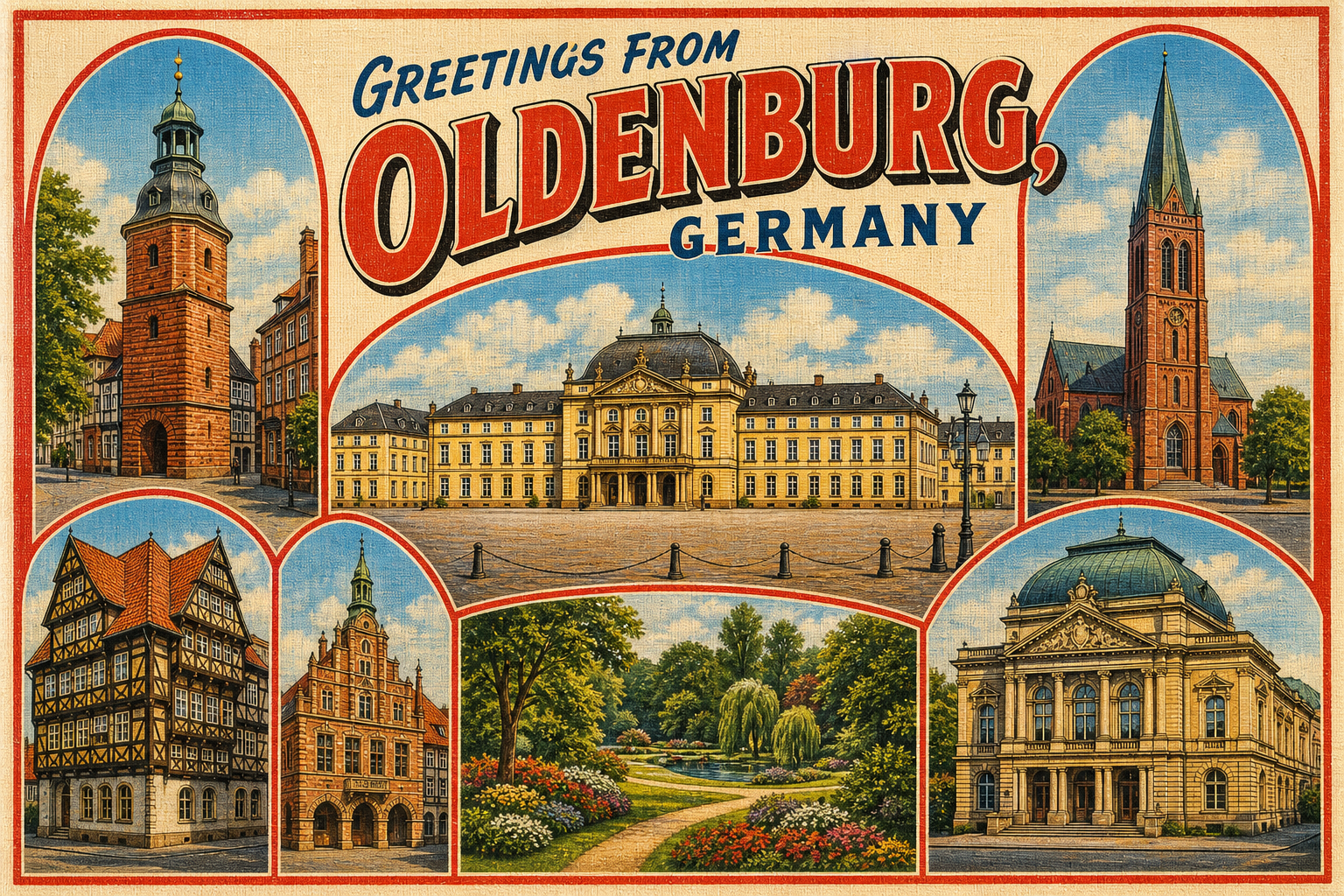
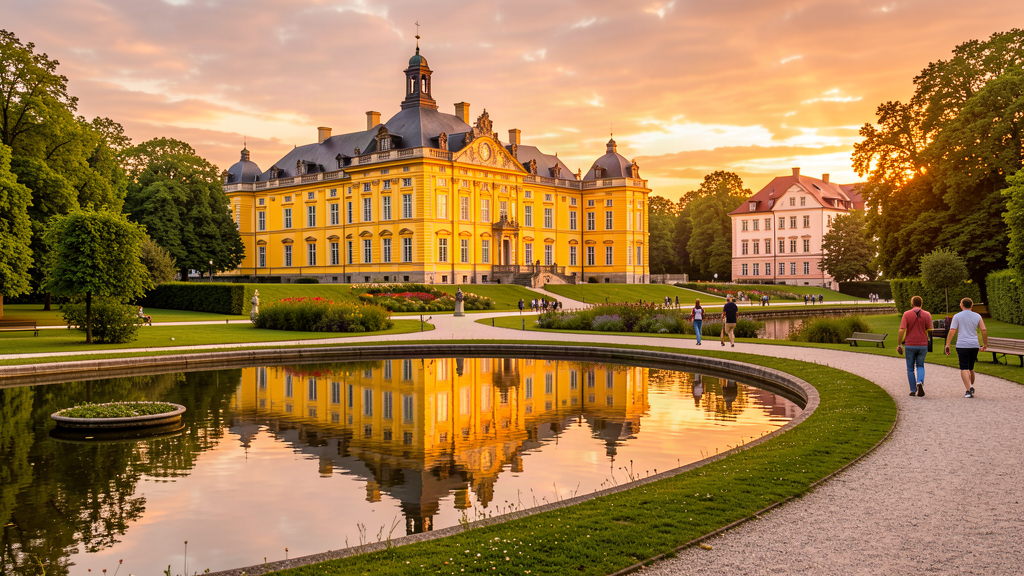
Most people treat Oldenburg as the station name between Bremen and the North Sea coast, a place you change trains for bad weather and dairy country. Fair if your day is only luggage. Thin if you like a former residence city that still walks itself: yellow palace walls, English-style garden ponds, a car-free core that got there early, and the slow Hunte water that once made the ford worth defending.
I start on the Hunte and harbor edge, cut through the pedestrian lanes under Lambertikirche, then let the Schlossgarten hold the afternoon. River first, market stone next, garden green last. That order sticks with me.
Hunte banks, Stadthafen, and the ford that became a capital
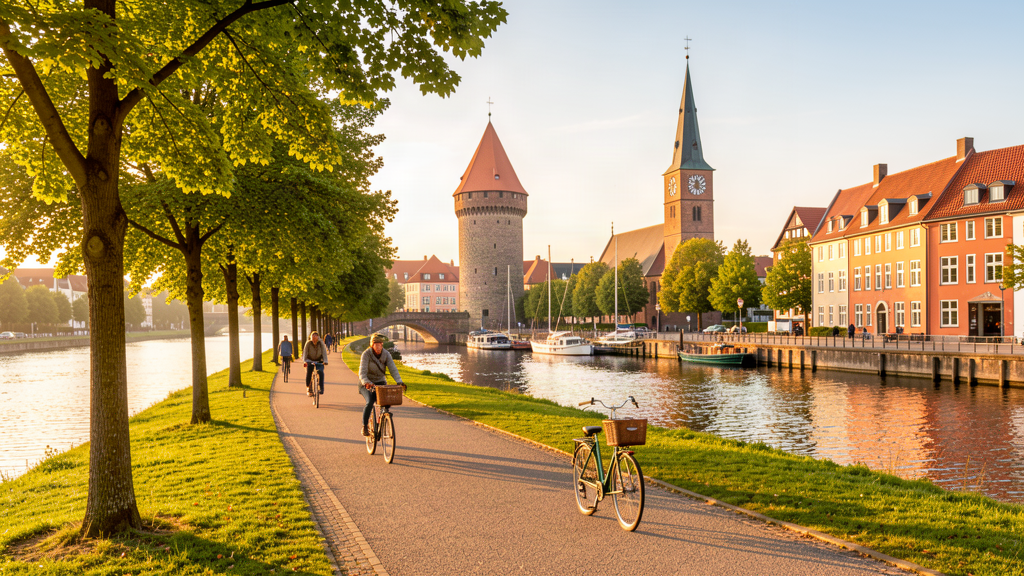
Oldenburg sits in northwestern Niedersachsen where the Hunte meets the smaller Haaren, roughly between Bremen and the Dutch border. The name means old castle; a 1108 mention already ties the place to a count and a river crossing. Counts became dukes, then grand dukes, and the yellow Schloss grew out of that residence habit. French occupation briefly called it Le Vieux-Bourg. Locals still write Oldenburg (Oldb), so nobody confuses it with the Holstein namesake.
The Hunte is not a postcard Rhine. It is a working northern river running toward the Weser and the coast, flat and practical, with towpath stretches and a Stadthafen that still feels used rather than staged. Walk the harbor edge in the morning when delivery vans finish, and bike bells take over. Stau and the quays give you water light without a cruise-ship soundtrack. If you only have one outdoor hour before rain, spend it here. The center makes more sense once you know the city faces water, not only brick.
Bikes matter more than most cities this size will admit. Flat ground, long green corridors, and two wheels as default transport, not recreation gear. Rent something simple and stop treating parking like a puzzle. For a visitor, the Hunte edge and a harbor beer later beat canal trivia.
Yellow Schloss, Schlossgarten ponds, and the car-free core
Schloss Oldenburg is hard to miss: sunflower-yellow walls, a former ducal seat that now houses the State Museum of Art and Cultural History. Go inside for archaeology through 19th-century painting without fighting a capital-city crowd. Skip the full loop if the weather is good; the building still orients you from outside. It marks a residence town, not just a market stop.
Behind the palace, the Schlossgarten does the softer work. Laid out in the 18th century in an English landscape mood, it offers winding paths, ponds, seasonal beds, and enough room that locals still use it as an actual park. Morning fog on the water beats noon selfies. Sit. Watch dogs. Let the palace facade appear and disappear between trees. The garden is why a slow weekend here beats a rushed half-day bolted onto Bremen.
From the palace side you drift into one of Germany’s earliest large pedestrian zones, opened in 1967 when car-free streets were still experiments. The core stays walkable because the policy stuck. Lappan, the old bell tower now tied to tourist information, marks a useful pivot. Lambertikirche lifts neo-Gothic stone over the skyline and anchors market days with civic weight rather than brochure piety. On a Saturday, the noise is stalls, bikes, and conversation. Stand under the church long enough to feel how the square works, then keep moving.
Haus Degode and other half timbered faces hold the older grain of the streets. State Theatre evenings pull a dressed crowd without demanding you join them. Horst Janssen Museum covers the graphic artist born here; Edith Russ House leans contemporary media. The State Museum of Nature and Man is the quiet northern deep cut: peat, coast, early settlement. Useful when rain locks the garden.
Haaren edges, Ammerland green, and how Oldenburg actually moves
West of the core, neighborhoods like Haarenesch soften into residential fabric and hospital edges where students and long-stay guests actually live. The Haaren is a green seam more than a second harbor. Botanical Garden paths nearby give another plant room when Schlossgarten feels too central. One evening walk away from the palace lights the city as lived-in.
Around Oldenburg the land goes agricultural fast: grassland, dairy, kale country, rhododendron routes toward Ammerland and Bad Zwischenahn. A bike day into the Park der Gärten or a lake afternoon at Zwischenahn works if you have a third night. Do not let the hinterland steal your only full day. The Schlossgarten and Hunte sequence is the point.
Hauptbahnhof sits a short walk or bus hop from the core. Trains link Bremen, the coast, and inland Niedersachsen; Bremen Airport is the usual air door. Buses cover the spokes; bikes beat everything inside the pedestrian heart. Confirm museum Mondays and kitchen rest days before you design a perfect outdoor day around closed doors. Oldenburg pays you back for two or three nights more than a single palace selfie between Bremen connections.
If I had two nights, I would do it like this: morning coffee near the core, Hunte and Stadthafen walk in low light, palace exterior and a full Schlossgarten loop with pond pauses, lunch that is not a mall court, afternoon pedestrian lanes and Lambertikirche market noise or a museum hour if rain wins, early evening bike drift, dinner that still tastes local. Sleep close enough that the garden is optional at dawn. Summer puts bodies on the grass. Autumn clears the paths. Winter lights hold the market without erasing the palace yellow.
Places to Stay
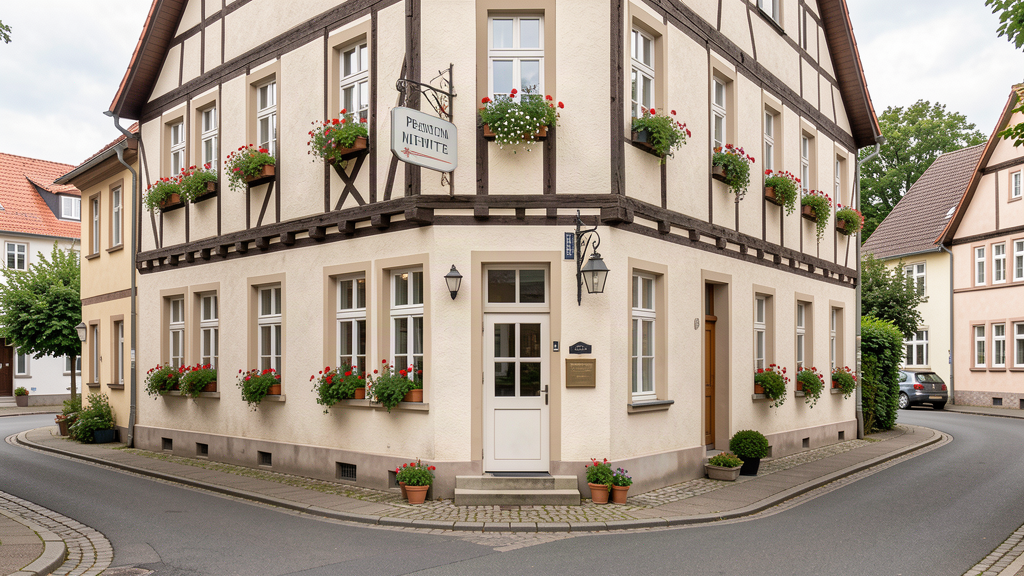
Pension Mitte (value, apartment calm near Haarenesch) Haareneschstraße 29, 26121 Oldenburg Furnished apartments rather than a lobby-and-keycard hotel: kitchen space, quiet rooms, and a walkable pocket toward the botanical garden and center without design rates. Book when you want a real base for two or three nights and would rather make coffee than queue for breakfast. Station is a bus hop; the trade is residential calm.
Hotel Wieting (mid, family house on Damm since 1893) Damm 29, 26135 Oldenburg Three-star-superior private hotel still in family hands, with restaurant Alter Damm, a bar, and rooms updated without erasing the house story. Central enough to walk the core and Schlossgarten, quiet enough that Damm does not roar all night. Choose it for a proper hotel breakfast and a front desk that still knows the city. Own parking helps if you arrive by car; book ahead around theater dates.
Best Western Hotel Heide (upper-practical, Melkbrink base) Melkbrink 49-51, 26121 Oldenburg Three-star-superior chain comfort a few kilometers off absolute center: solid rooms, breakfast buffet, summer terrace, free outdoor parking, and Bett+Bike habits that fit a cycling city. About twenty-five minutes on foot to the core, or a short bus; useful for reliable sleep and a bike day into Ammerland. Underground parking and e-charging cost extra. Pick it for comfort over postcard doorstep.
Restaurants and food
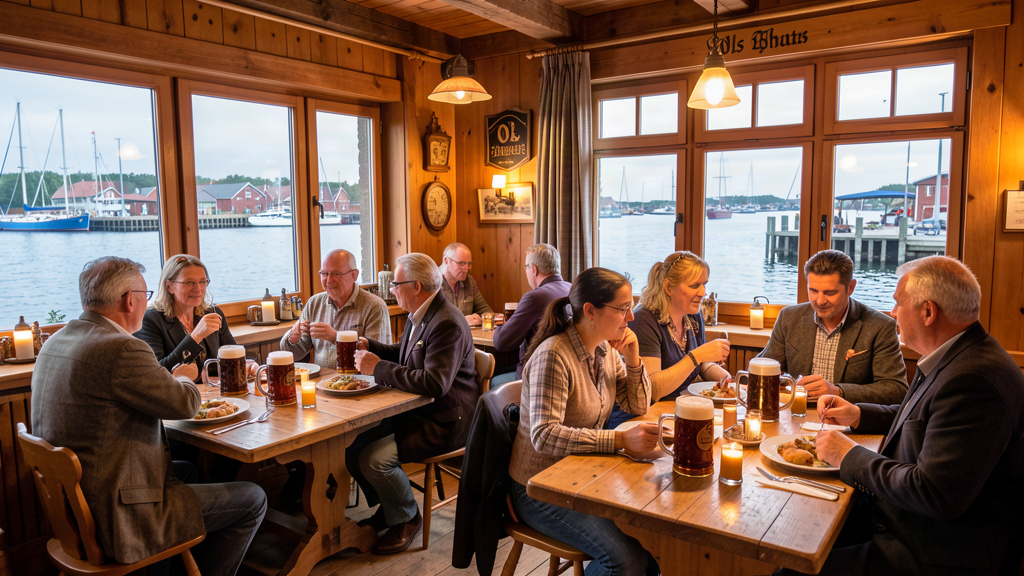
Ols Brauhaus am Hafen (harbor plates and local beer) Stau 34, 26122 Oldenburg House brewery energy right on the Stadthafen: modern brauhaus cooking, rotating taps, lunch specials, and weekend breakfast when you want water in the window. Come after a Hunte walk or before harbor dusk. Not white-tablecloth; the right speed for a city that still works its quays. Reserve on busy weekends for a water-facing table.
Ratskeller Oldenburg (mid, civic cellar and terrace on Markt) Markt 1, 26122 Oldenburg Classic German plates under and beside the town hall: solid schnitzel, seasonal cooking, cake and coffee on the terrace when sun holds, and a room locals still use on ordinary evenings. Monday rest is common; evenings and weekends want a reservation. Useful when you want Hausmannskost without a tourist menu pasted on. Treat it as a living room with a kitchen, not a performance.
Kleine Burg (upper-casual creative kitchen on Burgstraße) Burgstraße 2, 26122 Oldenburg. Sibling run room with seasonal tasting energy, careful plating, and a lunch window if you do not want only dinner theater. Book ahead; walk-ins bounce when the room fills. A good counterweight to brauhaus nights when you still want to eat inside the walkable core. Check rest days (often Sunday–Monday) before you lock the garden-to-dinner arc.
Regional food stays honest: bakery cases for breakfast on the move, kale and asparagus when the calendar says so, dairy country logic on nearby menus, and international kitchens that thrive because students and hospital staff need them. Walk the Hunte once in low light if you can. Give the Schlossgarten ponds an idle hour. Watch the yellow Schloss appear between trees, then keep walking. Oldenburg is better as river-to-garden than as another Lower Saxony checklist stop.
