

Most people treat Stralsund as the last mainland stop before Rügen sand, or a cruise-port hour with an Ozeaneum ticket and a brick-gable selfie. That works if the day is short. It wastes the place if you have a free morning and shoes you can actually walk in. Stralsund sits on the Strelasund, the narrow water that holds Rügen at arm’s length, with warehouses still facing working piers and brick churches that keep the skyline honest. The better hour often starts when you leave the museum queue and let harbor wind hit brick.
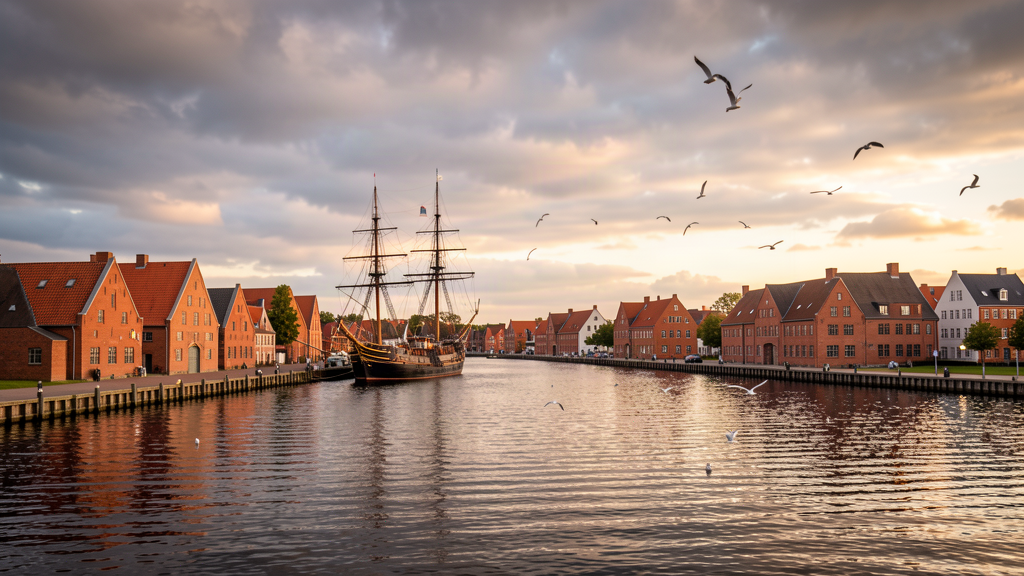
I start at the water, not the gift-shop lane. Hafeninsel sits between canal and sound: Speicher fronts, café chairs aimed at boats more than souvenirs, the long horizontal line of a town that grew on Baltic trade. Gorch Fock’s masts cut the sky. Warehouse brick, tall ship, Strelasund light. That pairing is the Stralsund detail I keep coming back to.
Hafeninsel, Strelasund air, and the walk that is not only the Ozeaneum
Hafeninsel is not a stage-set quay. It is a working edge that also works as a promenade: cyclists, dog walkers, grocery bags past museum ships and restaurant decks. Morning light skims the sound before day-trippers pack the middle hours. Walk without a checklist. Watch how the water bends the skyline toward Rügenbrücke. Salt. Diesel. Coffee.
I loop the island slowly. Deck of Gorch Fock when it is open and my legs agree; exterior only when tickets or knees argue. Then I cut toward Fährstraße and the old-town gates. Soft shoes beat a packed itinerary here. Benches face the water; take one. The point is Stralsund as a port that still lives next to its sound, not every whale-hall photo from a museum day you already booked.
Rain does not kill the harbor. Covered corners, a warm plate near Am Fischmarkt, brick that looks better wet than most tourist facades. Locals cut through between errands. Tour groups thin once Ozeaneum claims the cameras. Stay in that thinning.
Alter Markt, Nikolaikirche, and the civic brick without the crush
Alter Markt is the square that earns the first pause: Rathaus bulk, stepped gables, Wulflamhaus timber-and-brick memory, Nikolaikirche rising like a trade-city spine. Do the exterior loop before you commit to any interior. Cobbles hold morning quieter than noon. Commandantenhaus and the Swedish-era faces remind you this was a Baltic power switch for centuries, not only a German Hanse story.
Nikolaikirche anchors the market with North German brick Gothic. The nave works even without a tower climb: soft light on vaults, nothing showy. Pair it with side streets off the square: Fährstraße, Heilgeiststraße, lanes that still feel residential between gables. Slow down. Fewer bag stores. Reconstruction and Hanseatic memory sit side by side without a brochure voice.
You will walk past Ozeaneum anyway. Briefly if the aquarium is not your day; fully if kids or marine halls call. It is a strong museum on the water. It is also how the afternoon collapses into queue fatigue you could have had in three other coastal cities. Better texture is Alter Markt brick and Hafeninsel wind when the sound is kind.
Marienkirche height, Neuer Markt, and gates that still mean something
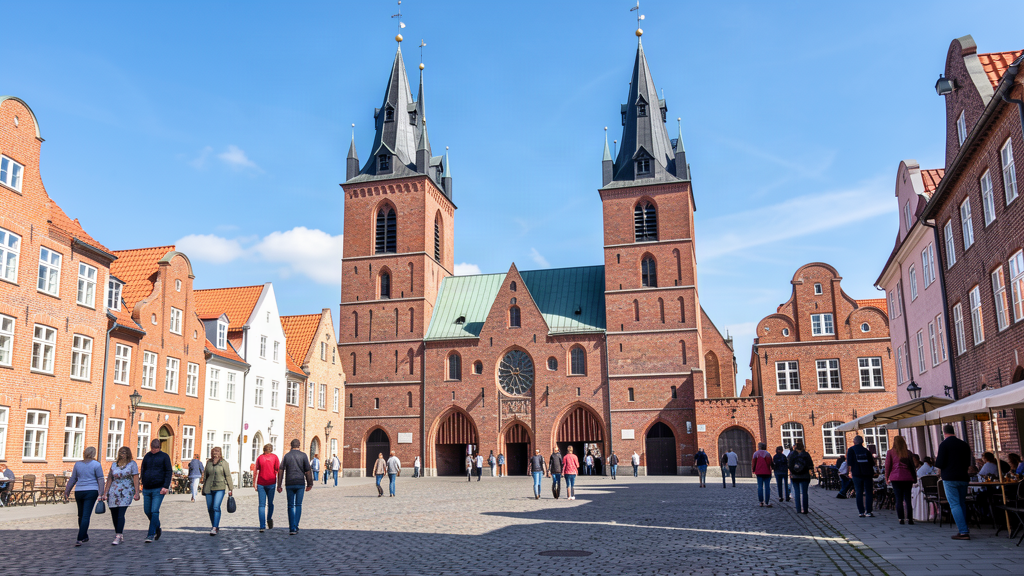
St. Marien holds the taller brick statement: octagonal bulk, a tower that earns the climb on a clear day for roofs, sound, and the long island line toward Rügen. Do it once if heights agree. Skip the queue if weather or knees argue. The exterior alone orients you: Neuer Markt civic space, market days when they run, open air when they do not. Use both as orientation, not a full-day siege.
Kniepertor and Kütertor still read as real thresholds, not prop walls. Walk through them toward quieter residential edges and back. Heilgeistkirche and Johanniskloster fill gaps when you want monastery calm without another ticket desk. Soft shoes again. Better when you are not racing a bus timetable to Bergen auf Rügen before lunch.
I come back to the harbor after tower light. Coffee first if the day is long; a beer later if the night opens. You do not need a famous club name. You need ordinary life after the day coaches leave. Harbor tables and Altstadt kneipen deliver that. No secret-spot theater required.
Swedish memory, Rügen as half-day, and seasons that change the noise
Swedish rule left more than a plaque. Baroque faces on the market, street logic that still feels Baltic-merchant, civic pride that is not only UNESCO branding. You do not need a full history lecture. One square pause and one warehouse walk put the layered past under your feet.
Rügen sits across the bridge: chalk, beech, beach postcards most people came for. Take a bus or train for sand and wide light. Half-day or sunset add-on, not a replacement for Stralsund itself. Too many itineraries reverse the logic: island first, city as afterthought. Come back to Hafeninsel so the day ends on Strelasund brick, not only on sand.
High summer and festival weeks change the noise more than any pure season. Shoulder months keep harbor walks calmer. Confirm tower and ship hours before you promise a full brick morning on a rest day.
Getting here, moving slow, eating Baltic-practical
Stralsund Hauptbahnhof sits west of the core with a walkable link toward the old town and harbor. Berlin and Hamburg are the easy rail anchors; regional links stitch the Mecklenburg-Vorpommern coast if a second day opens. Walking covers Hafeninsel, Alter Markt, Marien, and the gates. Buses handle Rügen hops. A car is optional inside the core and a mild headache near pier parking in peak weeks.
Food is Baltic-honest: fish when the kitchen respects the coast, hearty plates, house beer. Cash still helps at smaller spots. A clean arc works: morning Hafeninsel and Gorch Fock light, Alter Markt and Nikolaikirche while the square is kind, Marien before lunch, harbor table before dark, sleep close enough that the sound is not a negotiation at 9 a.m. Two nights let Rügen breathe without stealing the city’s only full day.
Places to Stay
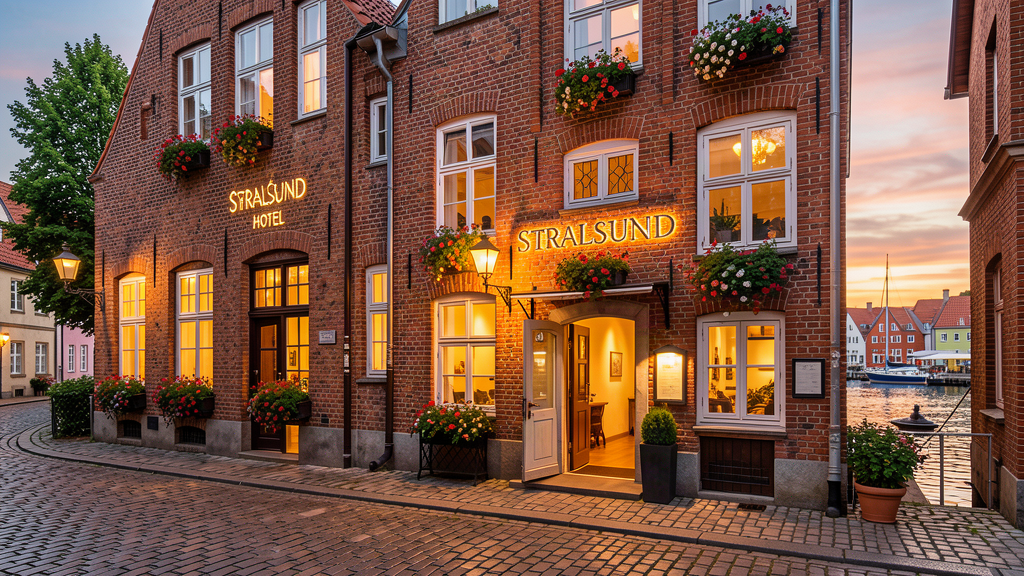
Pension und Hafenkneipe Klabautermann (value, Hafeninsel edge) Am Querkanal 2, 18439 Stralsund Small harbor pension with kneipe energy on the canal side of Hafeninsel: modest rooms, sailor-room mood downstairs, walking minutes to Gorch Fock and the old-town gates. Honest prices, no spa branding. Book for sleep and water noise, not design magazines. Bags down, then Strelasund air before museum lines thicken.
Hotel Haus Wullfcrona (mid, Altstadt lanes) Heilgeiststraße 30, 18439 Stralsund Historic guest house in the old-town fabric a short walk from harbor and markets. Garden calm when you need it, easy base for Alter Markt loops without the loudest pier corner. Practical comfort with brick streets as the default outing. Good when you want Altstadt mornings without Scheelehof rates every night.
Romantik Hotel Scheelehof (upper, Fährstraße historic core) Fährstraße 23–25, 18439 Stralsund Four-star stay spread through five historic buildings a few hundred meters from the harbor and Alter Markt. Individually finished rooms, sauna when legs are done, old-town gables outside the door. Choose it when one refined night and a next-morning Strelasund walk share the same key.
Confirm peak summer and holiday weekends early; Stralsund fills when island traffic and harbor events stack. Shoulder seasons keep Hafeninsel kinder.
Restaurants and food
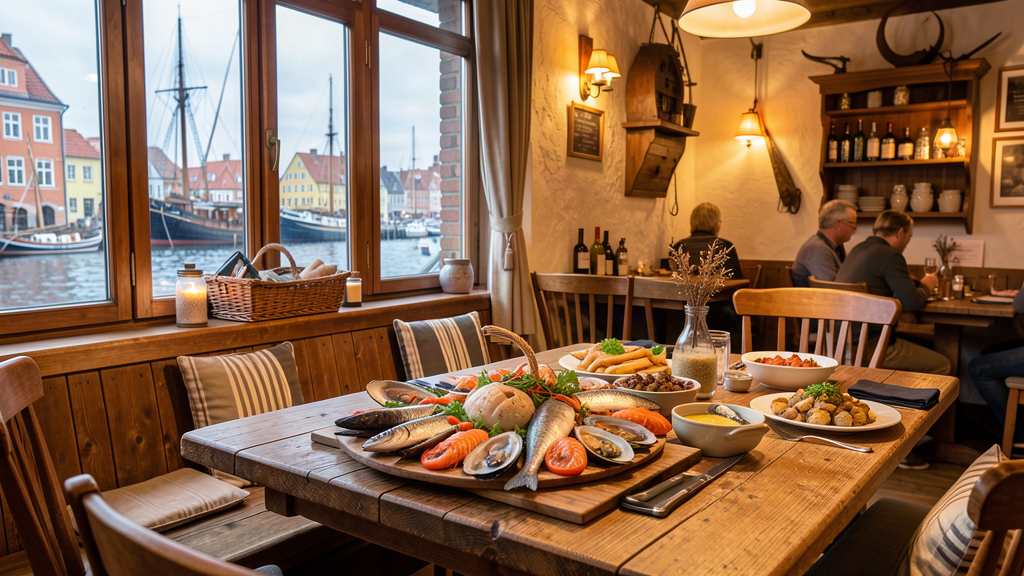
Fischhalle am Hafen Neue Badenstraße 2, 18439 Stralsund Simple fish hall and counter near the water. Order at the counter, eat standing or at a short table: Baltic fillets and Fischbrötchen without cloth-napkin theater. Morning or late lunch when you want harbor taste without a reservation. Pair with a Hafeninsel loop so the meal stays tied to the sound.
Dolden Mädel Braugasthaus Am Fischmarkt 13A, 18439 Stralsund Brew-house energy on the Fischmarkt with a wide terrace toward the water when weather holds. Regional plates, house beer, bürgerlich mix that fills after brick walking. Evenings book up in high season; come earlier for outdoor seats facing boats. Middle ground between sailor snack and hotel dining.
Restaurant Wulflamstuben Alter Markt 5, 18439 Stralsund Kitchen inside the Gothic Wulflamhaus on the old market: fish and seasonal north-German plates under timber and brick that actually belong to the square. Book when a slower meal should match Alter Markt light outside. Walk the gables after so dinner stays tied to Nikolaikirche and Rathaus, not only the menu card.
One Hafeninsel morning, one Alter Markt pause under Nikolaikirche brick, one Marien height or exterior, and a harbor table already make a full Stralsund. You do not need the longer Rügen-transfer receipt.
