
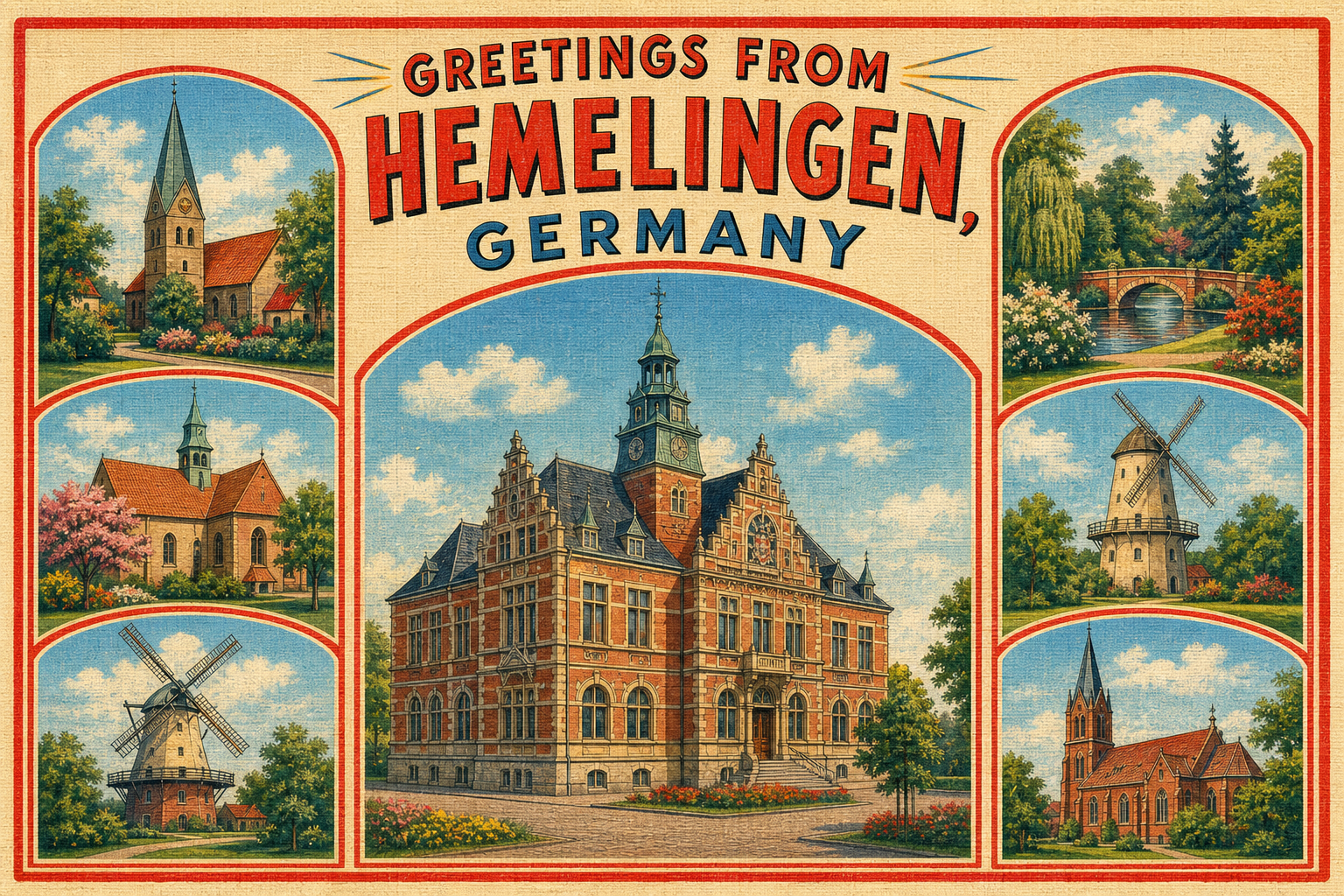
Most visitors treat Bremen as a compact Altstadt loop: Marktplatz, Schnoor, coffee on the Schlachte, then home. I keep walking southeast instead, until the river stops behaving like a tidal highway and starts acting like a held-back canal. That change happens at the Weserwehr in Hastedt. From there the Middle Weser is quieter, and Hemelingen’s industrial shoreline makes more sense than any brochure map.
Hemelingen is Bremen’s second-largest Stadtteil — five Ortsteile on the right bank: Hastedt, Hemelingen proper, Sebaldsbrück, Arbergen, Mahndorf. A century of factories, cigars, silverware, jute, ship hulls, and car parts turned farm villages into a working eastern edge. You still smell coffee when wind comes off the Coffein Compagnie on Segelsbrück. You still hear trams and freight. And you can still reach water in twenty minutes without a tourist boat.
Weserwehr, Kraftwerkdeich, and the held river
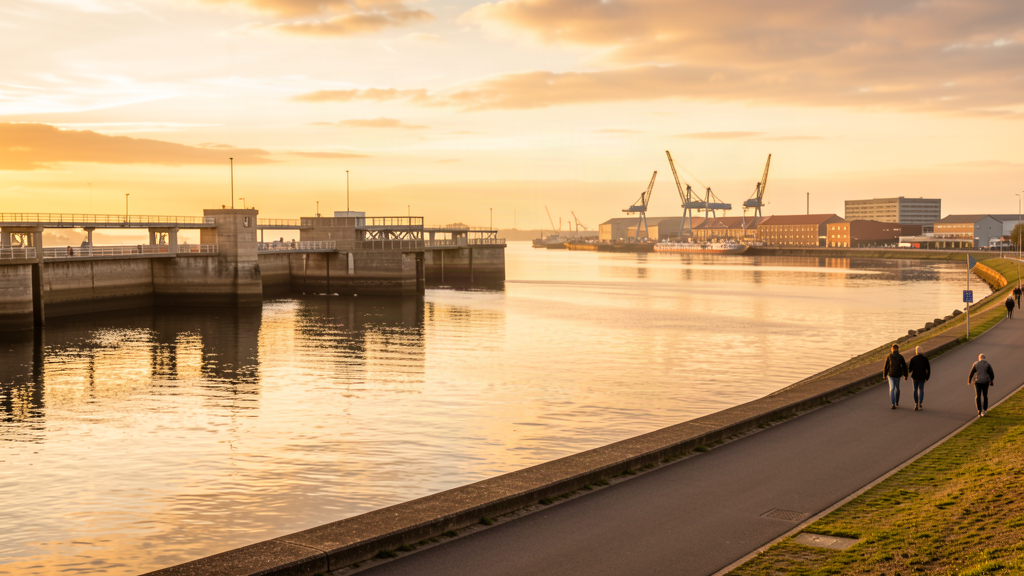
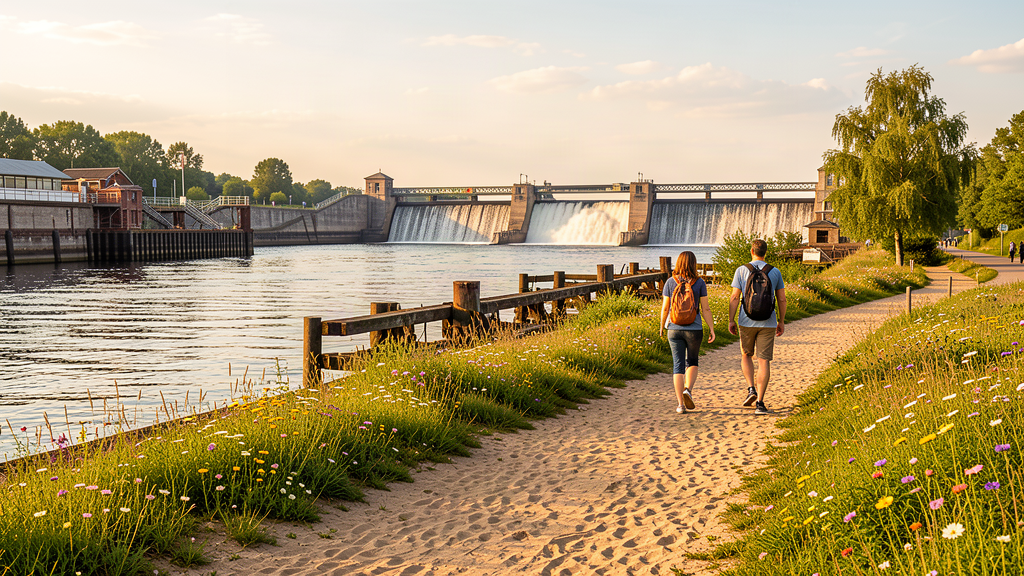
The current Weserwehr went into service in 1993, replacing earlier weir work that first calmed this stretch after 1911. Stand on the Hastedt side, and the structure does not pretend to be pretty. Concrete, gates, hydro plant, power-station bulk along Kraftwerkdeich. It manages the water level. The walking corridor is a side effect.
From Hastedter Osterdeich the path slips toward Kraftwerkdeich, then onto narrow cobbles to Strotthoffkai and the Allerhafen — first basin of Hemelinger Hafen. This is Bremen’s only harbor on the dammed Middle Weser. Lower Weser ports farther west live with the tide; here the fairway stays steadier. What you see is concrete plants, construction materials, working quays. Rolandwerft built coastal ships and ferries here from 1913 until the early 1970s. Basins lengthened over decades. Grit still moves. That fits this part of town better than polished loft signage ever would.
Keep going, and the mood softens at the Sporthafen. Small boats. A public strip of sand locals half-jokingly call Hemelinger Karibik. Die Komplette Palette sits on Arberger Hafendamm as beach bar, summer stage, and pallet-built hangout next to industrial water. Bring a towel if the day is warm. Skip any hope of turquoise. The Weser is brown-green and working. Freighters’ cousins on one side, people on sand on the other — that mix is the point.
Hemelinger See opens nearby, linked to the river and popular with anglers. After the quays, the shore path slows you down before the residential blocks take over inland.
Hastedt’s factory street and Goliath ghosts
Hastedter Osterdeich still carries industrial memory in brick. Goliath once built cars here; Borgward’s early-1960s bankruptcy still gets told in Bremen living rooms. The Goliath-Haus remains a marker. Across the way, Lloyd Dynamowerk has made motors and generators since 1915, including gear for ships. Skip the museum ticket. Give yourself time to walk without rushing back to the Roland statue.
Hastedt was a farming village absorbed long before the 1939 annexation that pulled Hemelingen, Arbergen, and Mahndorf into Bremen from Prussia. The mix shows: Bremer Häuser, functional rows, tram noise, corner bakeries. Hansa Carré at the Osterdeich end handles practical shopping. A winter flea market under a roof beats another souvenir stall downtown.
Sebaldsbrück, coffee air, and Schlosspark
Sebaldsbrück grew around the 1847 railway station on the Hanover line. The name stuck later; the trains came first. Today almost a third of the Ortsteil is industry — Daimler included — while the other side holds quiet housing and Schlosspark Sebaldsbrück.
Schloss Sebaldsbrück, a neo-Gothic Tudor manor from around 1850, still surprises people who figure Bremen-Ost is only sheds and arterial roads. The park is small and used: playground edges, shade, Schlossparkbad for lessons, and summer lawns. I come here when the harbor walk has filled the legs, and I want green without another long transfer.
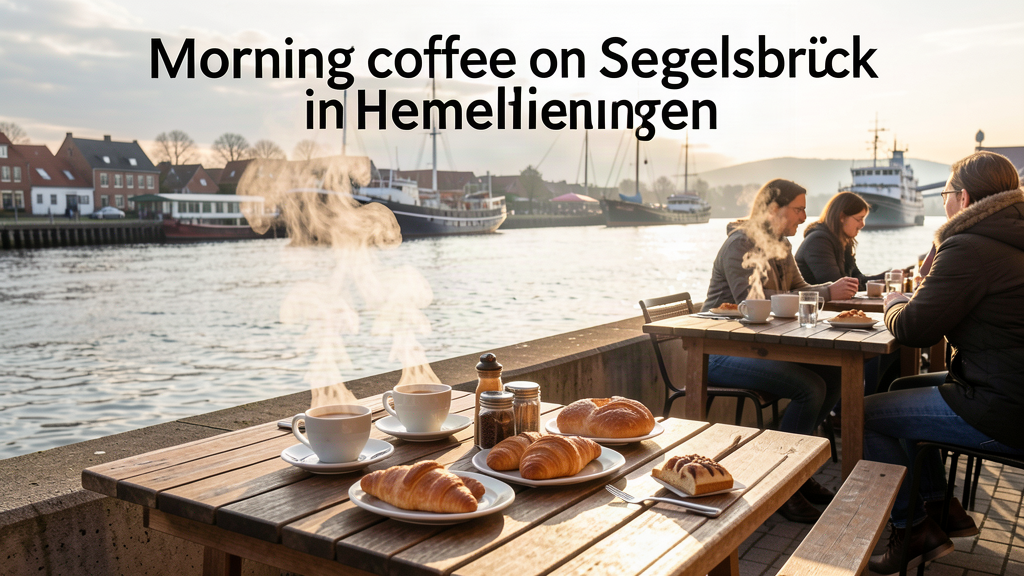
On certain days the air around Segelsbrück and Sebaldsbrücker Heerstraße carries roasted coffee from the Coffein Compagnie. Working smell, not a staged café strip. Follow it only as far as curiosity allows. Hemelingen still makes things. Sometimes breakfast is one of them.
Arbergen mill square and Mahndorf’s lake
Southeast, Arbergen keeps village bones. Arberger Dorfplatz still hosts a traditional market. The Arberger Mühle near the sports grounds on Arberger Heerstraße gives the Ortsteil a vertical landmark in flat country. I like Arbergen on a morning when the square is active, and the rest of Bremen is still performing for day-trip coaches. Buy something simple. Sit. Watch errands happen.
Mahndorf holds Mahndorfer See: roughly twenty hectares of swimming water, long sand, seasonal grills, and a more natural rim for off-season walks. The modern station makes it an easy hop. On a hot afternoon this lake is the practical answer. On a grey March day it is a windy circuit with fewer people and more sky.
A slow Hemelingen day
Tram and bus cover Hastedt and the Hemelingen core; regional trains serve Hemelingen, Sebaldsbrück, and Mahndorf. From the center, lines toward Osterdeich beat any plan that starts with a rental car.
Morning: Weserwehr and the walk via Kraftwerkdeich into Hemelinger Hafen, then Sporthafen sand if weather allows. Midday: a plate near the water, or inland toward Hemelinger Bahnhofstraße and the square around the Ortsamt / KuBiKo. Afternoon: Schlosspark Sebaldsbrück and a swim, or Arbergen’s Dorfplatz and Mahndorfer See.
Two hours cover the weir, quays, and one café. A full day can add Sebaldsbrück green and one rural Ortsteil without dragging the Altstadt into the same loop. Hemelingen rewards staying east. The cathedral will still be there tomorrow.
The nineteenth-century boom came partly from a customs quirk: when Hanover joined the Zollverein, and Bremen stayed out, factories — cigars first, then packaging, Wilkens silver, machinery, jute, bells, brewery — crossed into Hemelingen to sell into the larger German market. Rail (1847 Sebaldsbrück, 1873 Hemelingen) and the 1902/03 harbor sealed the “workshop of Bremen” label. You feel that history under ordinary errands more than at any single monument.
Places to Stay
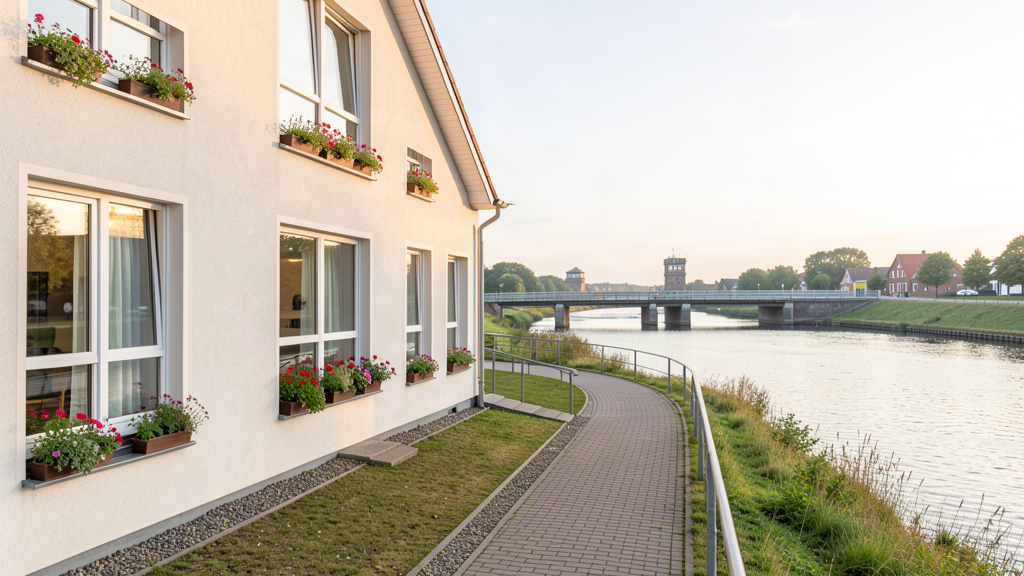
MB Hotel Bremen (budget-friendly, practical base)
Bertha-von-Suttner-Straße 4, 28207 Bremen
Simple hotel garni on the Hastedt/Hemelingen side with easy access from A1 exit Bremen-Hemelingen. Clean rooms, parking logic, a base for early weir walks and late tram returns from the center. Sleep and street access without Altstadt rates.
Hotel Hansahof (mid-range, neighborhood quiet)
Brüggeweg 20–22, 28309 Bremen
Family-run house on a calmer Hemelingen street: modernized rooms, desk space if you work between walks, short hop toward the Weser cycle path. About twenty minutes by bus or tram to the historic core. Good for river mornings and city evenings without flipping the whole day around.
ART Hotel Bremen (higher comfort, Hastedt spine)
Hastedter Heerstraße 110, 28207 Bremen
Larger rooms and suites, long breakfast window, parking options, 24-hour desk. Business travelers already know the A1 link; weekend visitors get the same convenience for Osterdeich walks and quick rides into town. Book a quieter room if street noise bothers you. You’re on a real local artery, not a tourist pocket.
Weekdays keep harbor paths thinner. Sunny summer weekends pull families to Mahndorfer See and the Sporthafen sand; the weir itself stays more walker than spectacle.
Restaurants and food
Bootshaus Hemelingen
Zum Sporthafen Hemelingen 8, 28309 Bremen
Waterside restaurant at the sport harbor with Weser views and a kitchen mixing nordic-leaning and broader plates. I come after the quay walk, when the industrial edge is still in the corner of my eye and sitting down feels earned. Daylight tables beat pure evening bookings if you want the water as company.
Seekamp’s Gasthaus
Hemelinger Heerstraße 27, 28309 Bremen
Traditional Gaststätte on the Hemelingen spine: celebrations, weekday dinners, neighborhood habit. German standards, no concept plating. A full plate without leaving the Ortsteil for the Viertel’s restaurant row.
Die Komplette Palette (seasonal, harbor sand)
Arberger Hafendamm, 28309 Bremen
Summer habit more than white tablecloth: drinks, simple food, events, and pallet architecture beside the beach strip. Go for atmosphere and long light. Pair with a swim or barefoot walk; leave when evening cools the sand.
For everyday bread and coffee, Hastedt bakeries near Hansa Carré cover breakfast without ceremony. If Compagnie smell follows you inland, use it as orientation.
Getting around and when to come
Regio trains and BSAG trams/buses are enough. Cycle the Weser path if you have a bike; weir-to-harbor is clearer on two wheels than hunting harbor parking. Spring and early autumn give long walks without peak lake crowds. Midsummer is for sand and Mahndorf water. Winter strips the district to weir wind, empty quays, and coffee steam if the roasters are working. Being east of the usual Bremen loop feels right then.
Hemelingen will not replace the UNESCO market square on a first Bremen checklist. Save it for the day after, or for a stay beside the center, when you want the river as infrastructure and neighborhood. Start at the Weserwehr. Match the pace to the dammed water. End wherever the path and a plate make sense. The city center can wait one more tram.
