
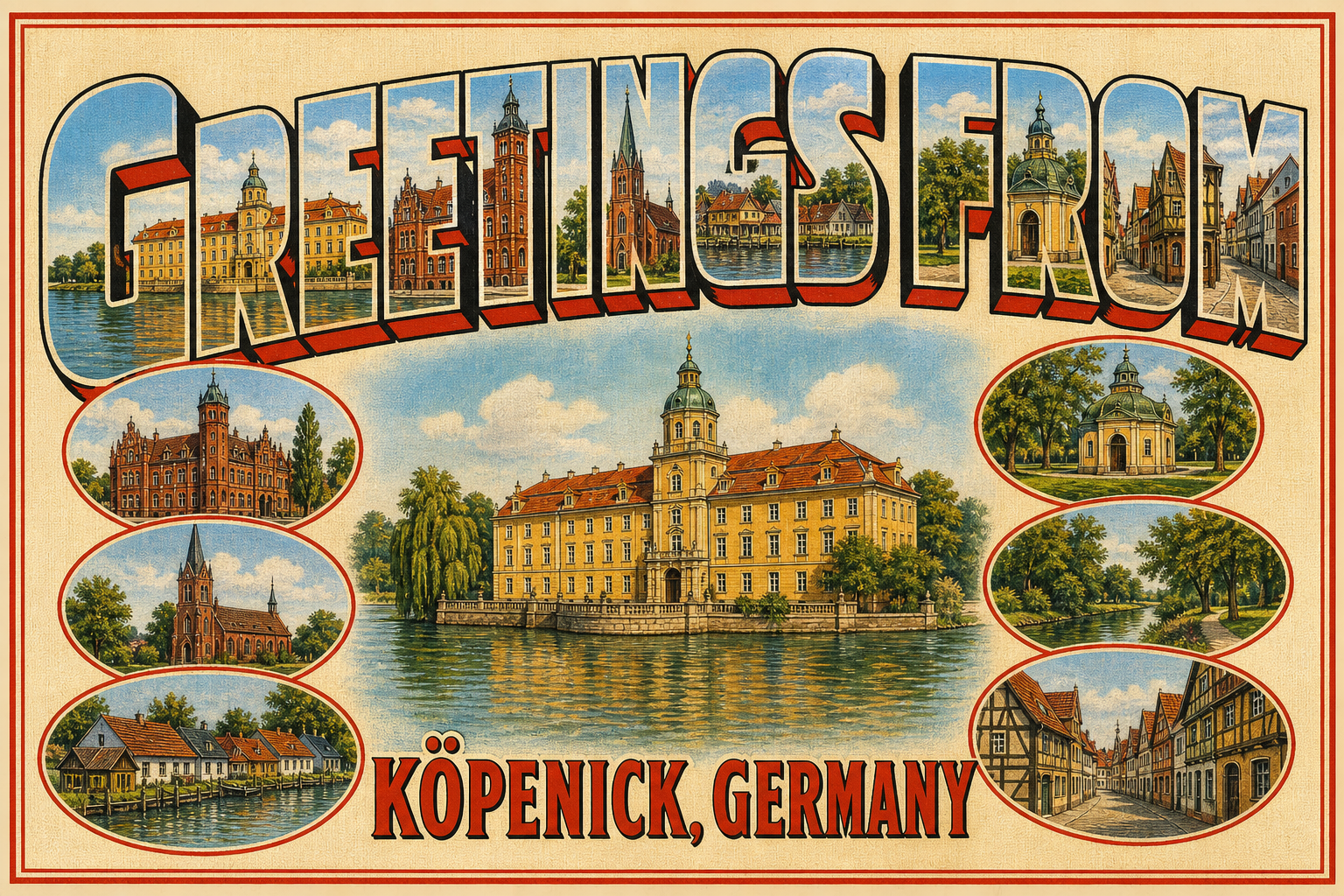
Along Kietz to the Frauentog in Koepenick
Most people who bother with southeast Berlin stop at the Müggelsee for a swim or check Schloss Köpenick off a list and ride the S3 back toward the center. I get off earlier, cross toward the old town island, and walk Kietz until the street opens onto the Frauentog — that quiet bend of the Dahme where fishermen once hauled boats, and the palace still sits on its own scrap of land. Low roofs and grassy cuts to the water make the capital feel briefly like a river town that never needed a skyline.
Köpenick is older than the Berlin that annexed it in 1920, and you feel that independence when locals talk about “going into the city.” The Altstadt sits where the Spree and Dahme meet, split into island pieces by channels and bridges. Schlossinsel holds the Baroque palace. The old town holds cobbles, the Rathaus, and shops that still close when they feel like it. East of the main lanes, the former fishing settlement keeps single-story houses that look almost rural until a barge slides past. You can day-trip the palace museum and leave. I think it’s better to stay until the excursion steamers thin out and someone is locking a courtyard gate on Gartenstraße at a normal hour.
Kietz before the palace ticket
I start on Kietz — just Kietz, no “Straße” — when the light is still flat, and day-trippers haven’t claimed every bench facing the water. Until the late nineteenth century, this was its own fishing village with a few dozen house plots. A handful of the old one-story places remain, restored and a little proud of it, with side passages that used to give river access to houses on the landward side. Walk those cuts. You end up looking across the Frauentog at Schlossinsel, boats at private jetties, willows hanging over water that guidebooks treat like scenery and locals treat like a backyard.
This isn’t a secret. It’s still a working edge of a Berlin borough. Delivery vans park badly. A neighbor waters plants in a front strip the width of a mattress. From Kietz you can peel south toward Wendenschloßstraße, where the street loosens into villa ground and trees, or drift west into the denser old-town grid. I rarely buy the palace ticket first. Start with addresses and laundry lines, then walk until the Baroque façade shows up across the channel.
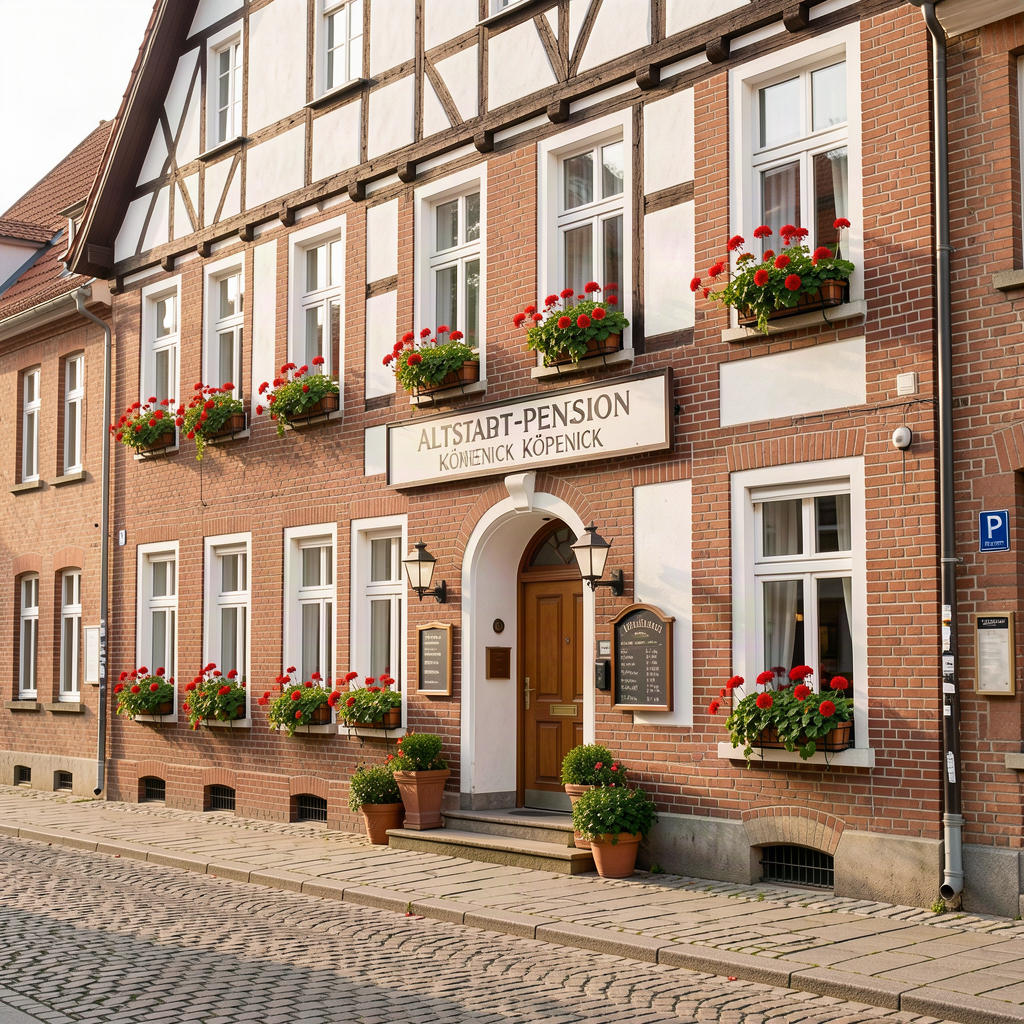
Schlossplatz mornings and the Captain’s town hall
On market mornings, Schlossplatz stops posing for photos and starts stocking fridges. Tuesdays and Thursdays, stalls spread cheese, bread, produce, and fish in front of the old town’s better façades. I time a weekday when I can — buy fruit, eat something that drips, watch people who live upstairs argue gently about tomatoes. The bronze relief of the district, put up for Köpenick’s 800th anniversary, sits nearby if you want the whole island plan under your fingertips before you walk it.
The Rathaus is the postcard everyone half-knows because of the Captain of Köpenick: Wilhelm Voigt, the unemployed cobbler who in 1906 borrowed a secondhand captain’s uniform, commandeered soldiers, arrested the mayor, and walked off with the municipal cash box. The story is funny until you remember how much Prussian obedience it required. A statue keeps the joke public at Alt-Köpenick and Rosenstraße. Duck into the building if it is open; the point is less the legend than ordinary life around the square — cafés, tram tracks on Grünstraße, shops that feel like a small town sharing a transit map with Kreuzberg.
Grünstraße is the short shopping spine worth a slow pass. Mokkafee at Grünstraße 21 does a proper cocoa-and-coffee hour when you need to sit. Chocolaterie Catherine a few doors down sells pistachio-orange marzipan that ruins airport chocolate for a while. Domaines at number 13 pours French and German bottles without the Mitte markup attitude. None of this is underground. It’s just local commerce that doesn’t need to shout.
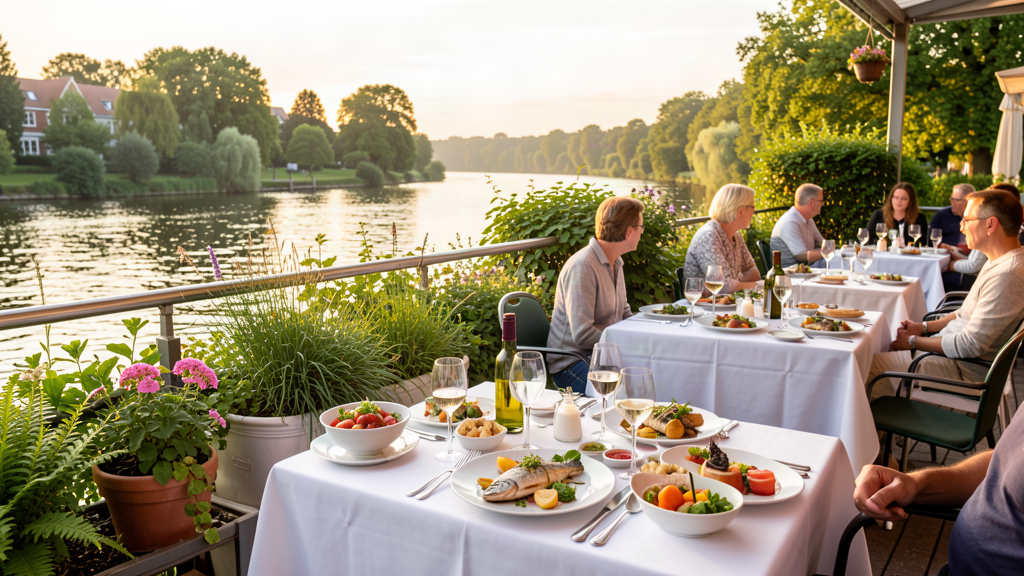
Palace island, Dahme light, and the long water
Schloss Köpenick — locals still call it the Wasserschloss — sits on the island the way a boat sits in a berth: close to the current, hard to photograph without water in the frame. Built at the end of the seventeenth century for the Hohenzollern heir who later became Friedrich I, it is one of the rare Baroque ensembles in Berlin that kept its outer face largely intact. Inside, a branch of the Kunstgewerbemuseum shows furniture, silver, paneling, and rooms staged for how people lived when status was measured in woodwork. The heraldic hall is the showpiece. I go when I want craft more than court history, then leave through the park to sit on the lawn that slopes to the Dahme.
From the palace you can hop on an excursion boat or simply walk the promenades. North and east, the Spree becomes Müggelspree and feeds Berlin’s largest lake. Müggelsee draws summer crowds to Strandbad beaches; the Müggelturm still sells the long view if you want to squint at the TV tower. The Spreetunnel links to Friedrichshagen and Bölschestraße. I treat Müggelsee as optional second-day water. Köpenick’s old town already has enough river.
If you only have one slow afternoon, stay on the Dahme banks. Watch rowers. Count bridges. Notice how the old town island forces you to choose directions instead of drifting in a grid. That small friction is why the place still feels like a town to me.
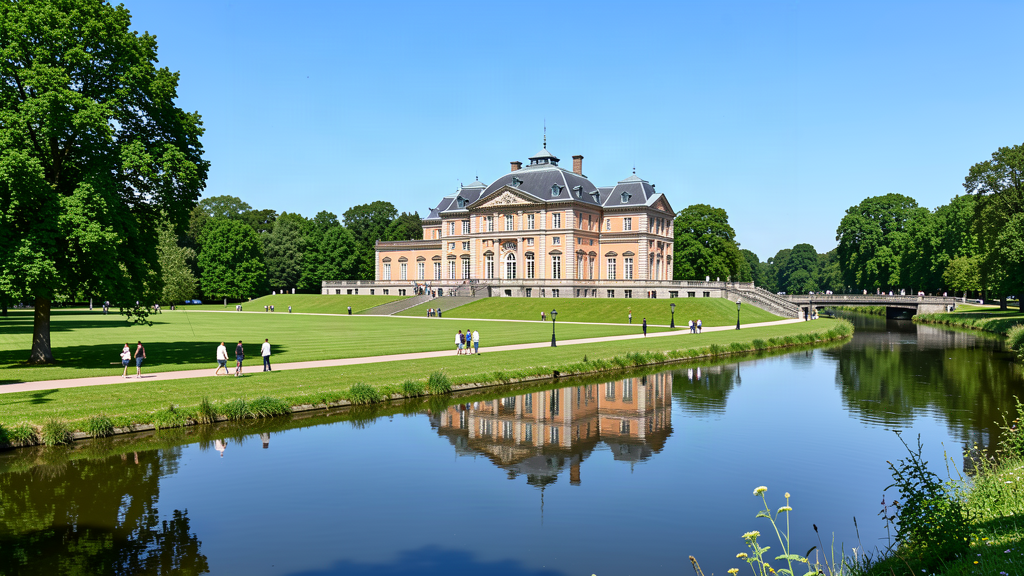
Places to Stay
Altstadt-Pension Köpenick — Spitzerstraße 1, 12557 Berlin. Small pension near the old-town core for a budget overnight. Simple rooms, short walks to Schlossplatz and the river lanes, no corporate lobby. Fine when sleep is a base camp and the real money should go to market food and long tables by the water.
Hotel Bett und Buch — Rudower Straße 1, 12557 Berlin. Family-run house in a Gründerzeit building just across Lange Brücke from the Altstadt, with nineteen rooms named for writers and a baguette habit that makes mornings easy. Mid-range and personal if you want a courtyard option and the old town a few minutes away without sleeping on the loudest square.
pentahotel Berlin Köpenick — Grünauer Straße 1, 12557 Berlin. Larger rooms and full hotel services near the island core. Higher tier when you want reliable space, a proper breakfast, and easy S-Bahn access. Book it if the trip mixes Köpenick walks with wider southeast Berlin.
Where to Eat
Restaurant Krokodil — Gartenstraße 46-48, 12557 Berlin. Seasonal Berlin and European plates in brick rooms that open to a terrace on the Dahme, run with a community bent by Der Cöpenicker e.V. Come for a long lunch or early dinner when the light hits the water; weekend jazz sometimes fills the gaps. Reserve when the weather is good — the terrace is the point.
Köpenicker Seeterrassen — Müggelheimer Straße 1A / Kietz 29, 12557 Berlin. Regional cooking and house cakes with boat moorings on the Frauentog and a direct view to Schlossinsel. Use it when you want the river in the foreground and time to watch traffic on the water. Cake in the afternoon works as well as a full evening plate.
Ratskeller Köpenick — Alt-Köpenick 21, 12555 Berlin. Cellar rooms under the town hall for solid German plates, plus jazz and theater on some nights. Good when rain kills the terrace plan or you want dinner inside the Captain’s building. Check weekly hours — Mondays often rest.
Bakeries and market stands cover midday. Grünstraße coffee fills the gaps. A market morning, a river terrace when the wind behaves, and one cellar evening is enough. You don’t need to choose every table by the view alone.
Getting there, and how long to stay
From central Berlin, the S3 to Berlin-Köpenick is the cleanest approach — roughly twenty-five minutes from Alexanderplatz or Ostbahnhof — then tram or a purposeful walk toward the old town bridges. S47 to Spindlersfeld puts you closer to Lange Brücke from the west. Local trams stitch the borough once you’re here. An AB ticket covers the day. Leave the car if you can.
One full day covers Kietz and the Frauentog early, Schlossplatz if it is a market morning, the palace and lawn, a long Dahme lunch, and an evening amble when the tour boats quit. Two nights are better: one early fishermen’s-lane hour, one slow palace-garden dusk, plus time for Friedrichshagen or a Müggelsee swim. Three days let you add forest edges, a tower climb, or a rest day when all you want is a bench and someone else’s rowing practice.
I leave Köpenick the way I try to enter it. Not from the palace shop with a magnet of the Captain in the bag. From Kietz, when a side passage still smells like wet wood and the Frauentog is just water doing its job. The Schlossinsel can wait. The fishing lane has the better clock.
