
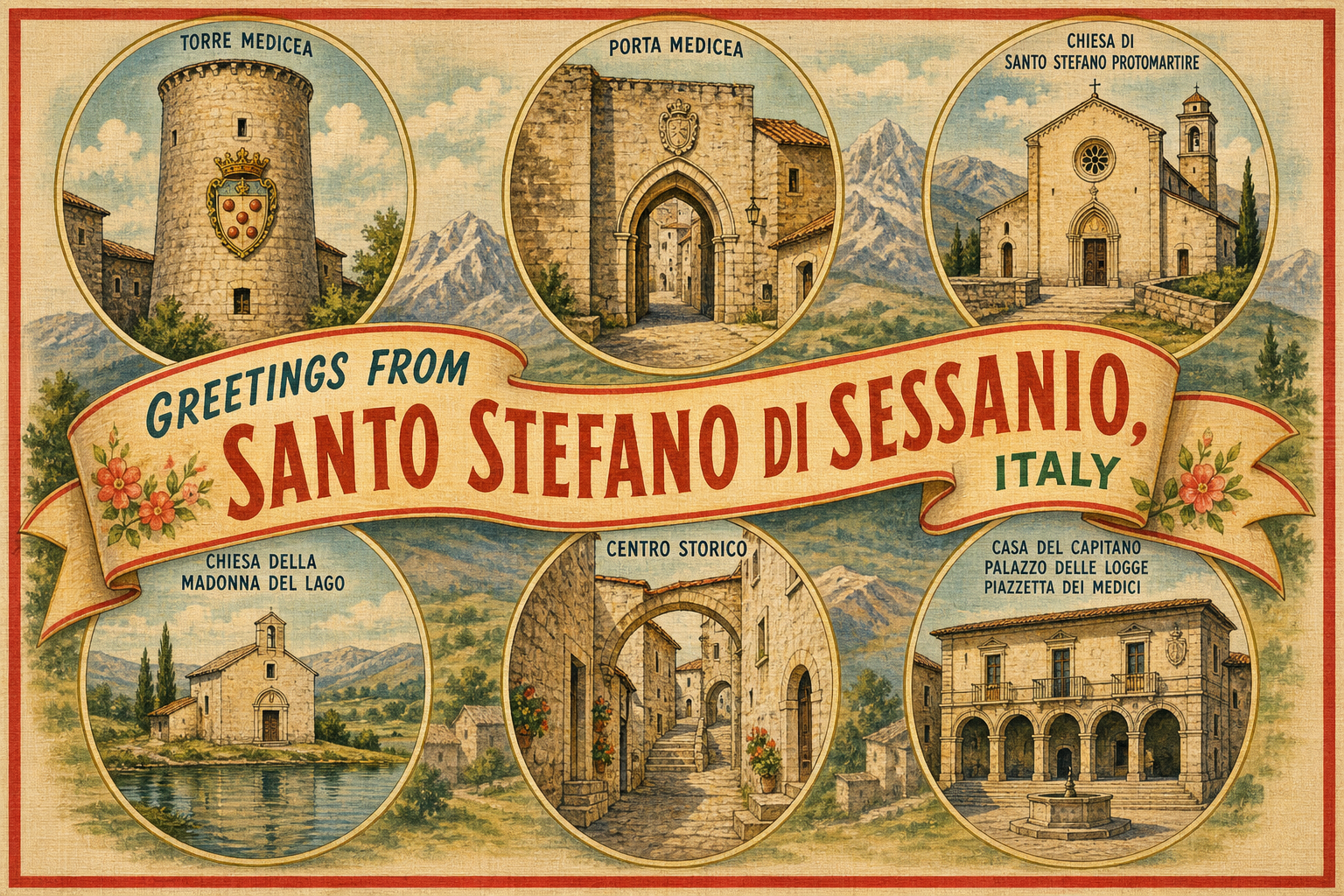
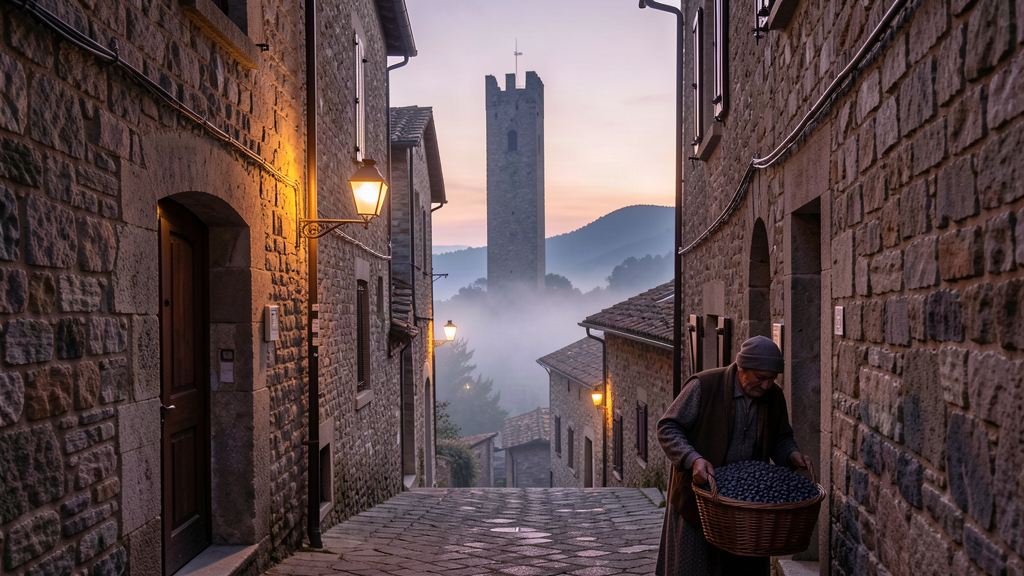
Santo Stefano di Sessanio sits high on a limestone shoulder inside the Gran Sasso and Monti della Laga National Park, a short bumpy drive from Rocca Calascio. The village is a tight knot of grey stone houses, covered passages, and small piazzas that once served a Medici wool route. What people still grow on the thin fields around it is a dark, almost black lentil — small enough to cook without soaking, earthy enough that a simple broth tastes like the slope it came from. If you already know the tower photos, the crop is a better reason to bother with the drive.
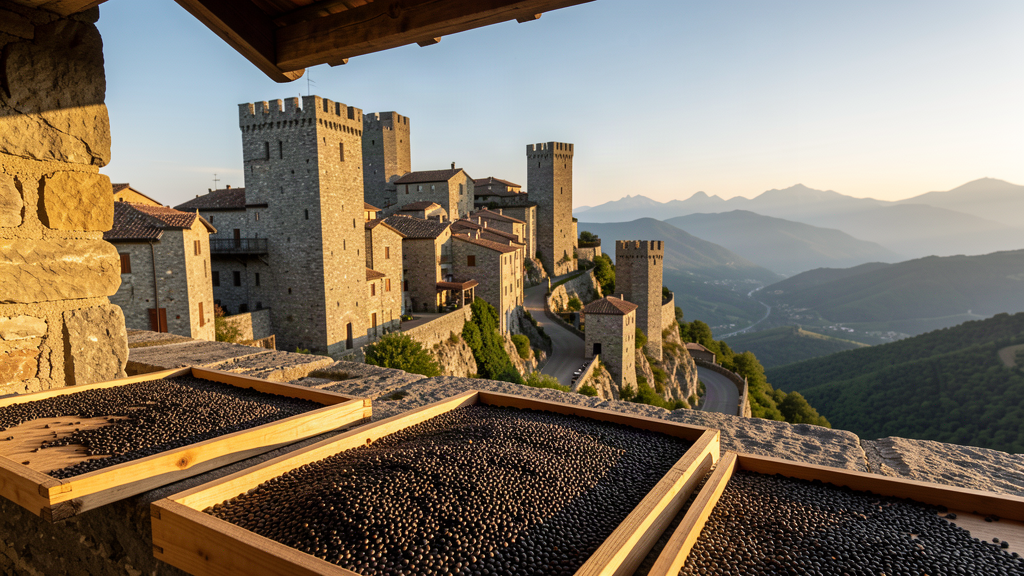
I show up for the lanes first, then for a bowl. The air is cooler than the plain below. Stone keeps the cold after sunset. You hear footsteps before engines. The Medici tower came down in the 2009 earthquake; reconstruction has been slow and public. What is left is a working mountain village with an albergo diffuso threaded through restored houses, not a staged set of “authentic Abruzzo.” Walk a while before you pull out a camera. Eat the lentils before you buy a jar for the suitcase.
Stone lanes and Medici memory
The plan of Santo Stefano is vertical more than grand. You climb, duck under arches, lose the horizon, then find it again through a gap between chimneys. Casa del Capitano, a fifteenth-century captain’s house, is a solid civic anchor. The parish church of Santo Stefano Protomartire keeps the village’s name honest. Madonna del Lago took hard damage in 2009; like the tower, it is part of what the quake rearranged, not a footnote.
Look at the masonry the way you would look at a tool. Lintels, corbels, windows cut for wind more than for view. Under Medici control the place sat on a wool network that tied mountain flocks to lowland markets. You do not need the full baronial tree — Pagliara, Colonna, Piccolomini, Medici — to feel that the streets were built for pack animals and tax, not coach parking. The piazza is still a pause between climbs. Sit. Watch a delivery van negotiate a corner never drawn for vans.
If the tower site is open or fenced for works, treat it as a repair job, not a ruined postcard. Old photos show a skyline that is not finished again yet. The village under it keeps going anyway.
High fields and the dark lentil
Above and around the borgo, fields thin into pasture and wind. The lentil of Santo Stefano di Sessanio is small, dark, and protected as a named local product for a reason: short season, poor soil, flavor that does not need cream. Late summer into early autumn, the Sagra della Lenticchia fills plates, music, and every parking pull-off. Come then if you want the crop celebrated out loud. Come in shoulder season for a quieter bowl and room to walk.
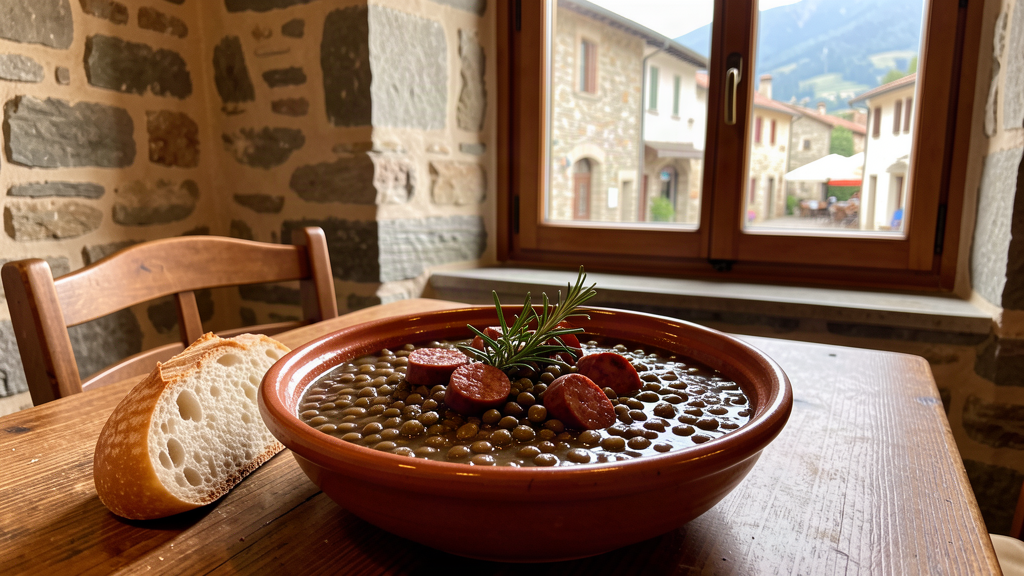
Dried lentils turn up in small shops when stock is in. Buy a bag you will actually cook. Ask how the last harvest behaved. Frost and drought still decide more than a logo. A plain soup with local bread, oil, and maybe sausage is enough. Fancy plating is optional.
From the higher edges of town, Gran Sasso reads as a wall. Clear days give hard light; cloud days merge stone and sky into the same grey. Either way, bring a layer.
Rocca Calascio without rushing the borgo
Most visitors pair Santo Stefano with Rocca Calascio, the fortress ruin a few minutes by car and a short uphill walk. Do it — the ridge and Santa Maria della Pietà earn the stop — but do not treat the village as only a parking lot on the way. Walk Santo Stefano morning or evening when day-trippers thin. Give Calascio its own hour of light. One place still has kitchens and keys. The other is a ruin with wind.
If you hike, stick to marked park paths and check weather. Afternoon storms build fast on the massif. Decent shoes matter more than a new jacket. Carry water even when the air feels cool.
Plates after the climb
Kitchen hours in a high village are not Roman. Book dinner when you can. Lunch can vanish if you arrive at 3 p.m., assuming the city still runs.
Locanda Sotto gli Archi (Sextantio)
Via Nazario Sauro, 67020 Santo Stefano di Sessanio AQ, Italy
Stone arches, a serious fireplace, Abruzzese mountain cooking. This is where I go for lentil soup that does not need dressing up, real crust on the bread, and a room that feels like the village. Book ahead in summer and on sagra weekends. Non-guests should still call; tables are finite.
Il Mediceo
Piazza Medicea 4, 67020 Santo Stefano di Sessanio AQ, Italy
On the central piazza, smaller and looser than the locanda under the arches. Homemade pasta, local plates, dinner without a full production. Good after Calascio when you are too tired for ceremony.
La Locanda sul Lago
Via del Lago, 67020 Santo Stefano di Sessanio AQ, Italy
A short step from the tightest core, restaurant and simple rooms under one roof without the Sextantio rate. Mountain portions, local products, less design theater. Confirm open days outside high season — winter can shrink the calendar.
Between meals, espresso is a hunt more than a chain. Carry a snack on the fields. A picnic on a low wall still works when kitchens are closed, and the light is good.
Places to stay
Sleep inside the stone if Santo Stefano is the point of the trip. A car is almost required unless you arrange transfers; buses are thin, and weather is not theoretical.
La Locanda sul Lago (value stay)
Via del Lago, 67020 Santo Stefano di Sessanio AQ, Italy
Simple rustic rooms with the restaurant downstairs. Best when the budget goes to dinners, gasoline, and park days. Confirm heating and arrival if you come in the cold months.
La Torretta Medicea (mid-range B&B)
Via della Chiesa 6, 67020 Santo Stefano di Sessanio AQ, Italy
Small B&B in the village fabric, walkable to lanes and piazza. Close enough to walk back after dinner without a dark mountain road. Book early for autumn weekends and the lentil festival.
Sextantio Albergo Diffuso (character, higher end)
Via Nazario Sauro, 67020 Santo Stefano di Sessanio AQ, Italy
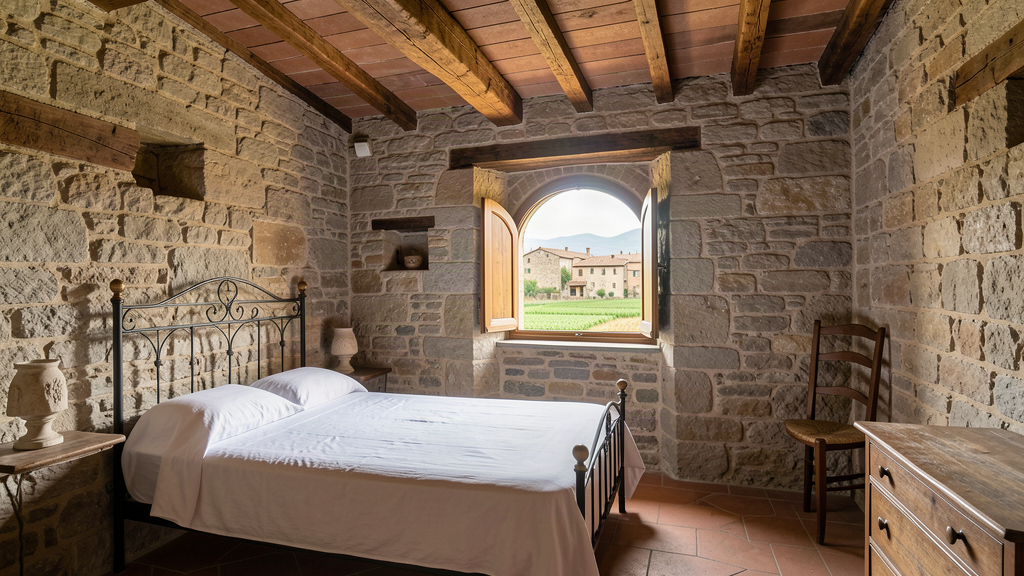
Rooms scattered through restored houses — the classic albergo diffuso — thick walls, minimal modern show, Locanda Sotto gli Archi as the dining heart. Stay here when you want the borgo itself to be the hotel. Expect stairs, uneven floors, and no resort gloss. Reserve well ahead for peak weekends.
If Sextantio is full, Dimora Sessanio at Via Benedetta 5, 67020 Santo Stefano di Sessanio AQ, Italy, is another restored village stay worth checking.
A day of lentils, lanes, and ridge wind
Coffee wherever opens first, then a slow borgo loop while the stone is cold: arches, Casa del Capitano, the church, whatever view opens toward Gran Sasso. Buy lentils if a shop is open. Mid-morning to Rocca Calascio; take the ridge without racing the next photo. Late lunch — lentil soup at Sotto gli Archi if you reserved, Il Mediceo on the piazza if you did not.
Afternoon for lanes you rushed, a short park path if legs hold, or a nap behind thick walls. Golden hour from a high edge when the massif takes the last light. Dinner in the village. With a second day, add Campo Imperatore when the road is clear, or other Baronia villages without turning the trip into a list of towers.
Before you leave, cook the lentils you bought or ask for one more bowl. The tower shot will end up on someone’s phone either way. The crop is still what this place actually produces.
Practical notes
Santo Stefano di Sessanio is in the Province of L’Aquila, inside Gran Sasso and Monti della Laga National Park, roughly an hour from L’Aquila by car depending on road and weather. From Rome, use the A24/A25 toward L’Aquila, then mountain roads signed for the park and village. Winter can close or complicate access; some venues pause in deep cold. Call ahead.
Park where signed and walk in. Wear real soles — polished stone and frost are a bad pair. Bring some cash for small shops. Spring and early autumn are kind. High summer is busy on Calascio days. Late August into early September can mean the lentil sagra and fuller rooms.
Scanno is another of the Abruzzo towns I keep with this stop.
If you only take one taste home, make it the dark lentil in a plain soup. If you only have time for one walk, do the village lanes after the day-trip cars leave. Rocca Calascio will still be on the ridge. Santo Stefano is where you eat afterward.
