
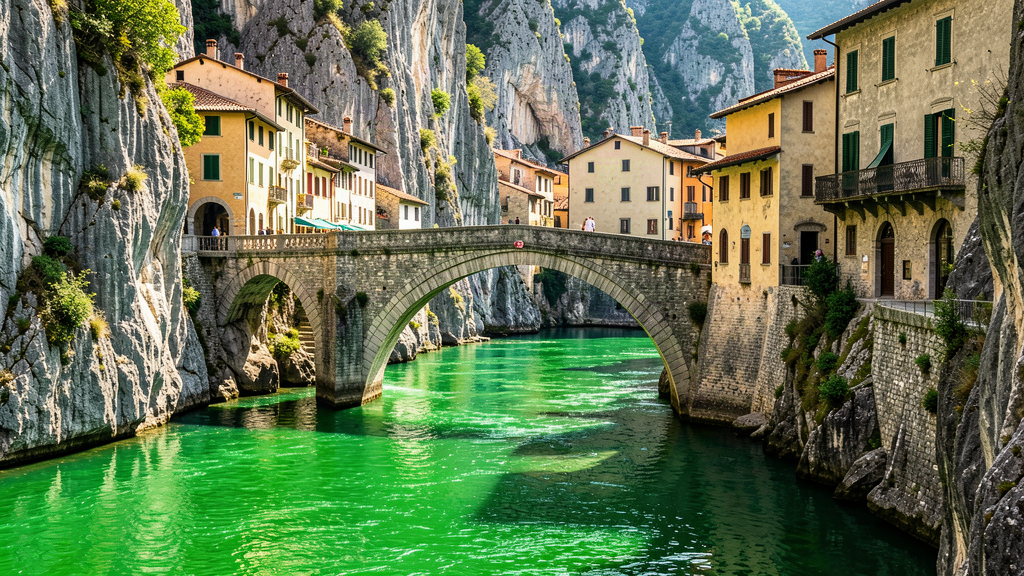
Cividale del Friuli sits where the Natisone cuts a green trench through limestone. Most people stop on the stone arch first and look down. The water is colder and clearer than it has any right to be this close to the plain. Legend says the Devil built the bridge in a night and left a boulder in the river when someone cheated him of the first soul to cross. Locals still call it Ponte del Diavolo and do not make a big deal of it. I like that. The river does more work than the myth.
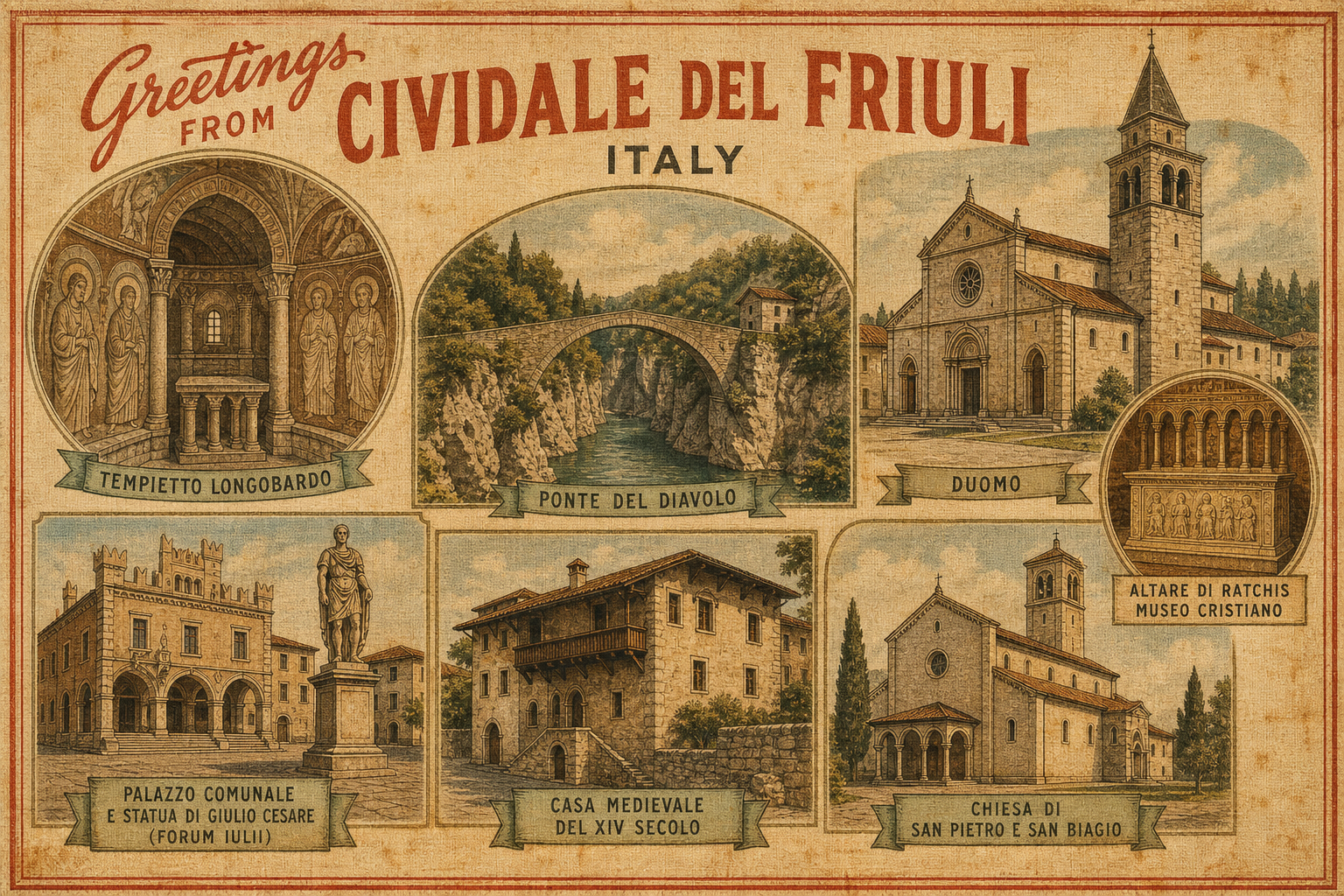
This was Forum Iulii once — Caesar’s market town toward the Alps — then the first Lombard duchy seat in Italy. You catch that history in small rooms more than in grand squares. Venice is a couple of hours away; Udine is closer. Coaches still come, but they thin by late afternoon, and the lanes between the Duomo and the river start to sound like a town again.
I come for the bridge, the Tempietto, and a plate that does not need explaining. Stay long enough that the river light changes twice.
Along the Natisone
Cross the Devil’s Bridge on foot if you can. Drivers use it too, so keep to the side and pause where the parapet opens upstream and down. The gorge is short and steep. Houses hang over the rock. In summer kids swim where the current eases. In shoulder season you mostly get walkers and water on stone.
On the far bank, Borgo di Ponte is the older, tighter side — stairs, narrow streets, laundry lines, a slope that slows you down whether you meant to or not. Loop back along the river path when it is open. Late light turns the green water almost black in the deep pools and pale where it sheets over rock. Photographers line up for the classic bridge shot. I take it once, then watch people cross as if the arch were ordinary infrastructure. Which it also is.
The Celtic Hypogeum sits in the rock near the river: chambers that may have been tombs, prisons, or both. You do not stroll in. Pick up the key at Informacittà or the Tempietto Longobardo desk, walk down, open the door yourself, lock up after. That errand changes the visit. Rooms are cool and rough. Carved faces stare from the stone. Ten minutes if you dislike underground spaces; twenty if unanswered questions suit you. Return the key. There is no guided performance waiting inside.
Lombard stone and stucco
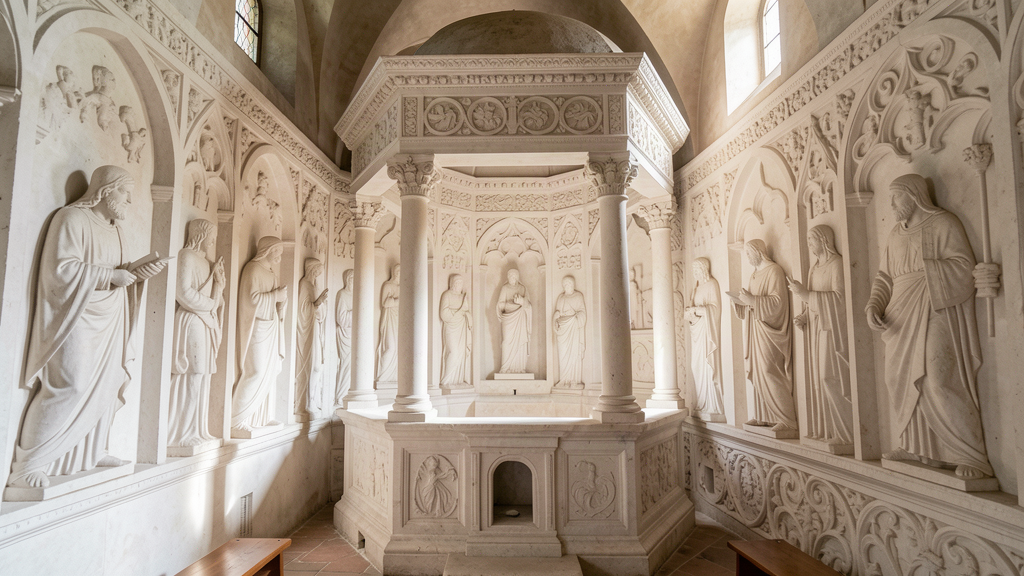
From Piazza del Duomo, a short walk through quieter lanes brings you to the Tempietto Longobardo — Santa Maria in Valle — on the UNESCO serial list of Lombard places of power. It is a small oratory, not a cathedral, and that is why it works. Inside, early medieval stucco figures hold the walls with a pale, chalky calm: saints and ornaments that feel handmade rather than monumental. Fresco fragments and the tight room do the rest.
I buy the ticket and stay longer than the floor plan suggests. Rushing the Tempietto is a waste. The National Archaeological Museum in the former Palazzo dei Provveditori Veneti holds Lombard gold, weapons, and grave goods that pull the oratory into a fuller picture — craftsmen and a duchy, not only a pretty chapel. The Museo Cristiano by the Duomo keeps the Ratchis Altar and other early pieces if you still have eyes left.
The Duomo itself is more rebuilt than pure. I step in for shade, then go back outside. Piazza Paolo Diacono and the side streets are for coffee, errands, and delivery vans negotiating corners never meant for them. Cividale’s center is compact. You can walk the main loop in an hour if you try. Better not to try.
Food after the river
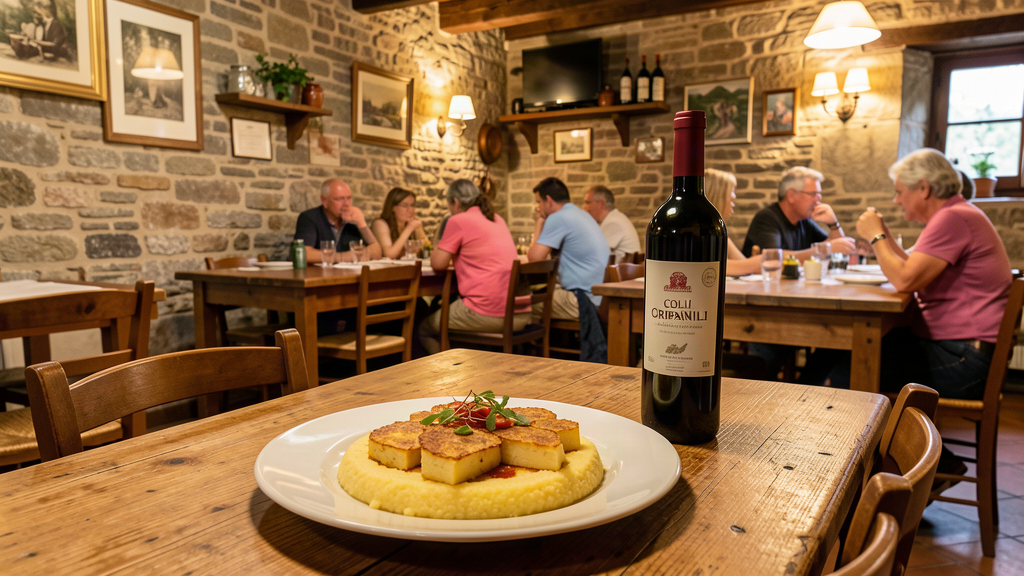
Friulian cooking here leans landward: polenta, frico, cured meats, seasonal greens, gubana for pastry folded around nuts and grappa-scented fruit. Colli Orientali wines sit close enough that Schioppettino or Refosco needs no tasting ritual. Book dinner on weekends. Lunch is easier before the bridge crowd peaks.
Al Campanile
Via Giovanni Battista Candotti 4, 33043 Cividale del Friuli UD
A few steps from the Duomo, the practical osteria move — Friulian plates, fair portions, locals mixed with people fresh from the Tempietto. I order whatever looks most like the season and keep the wine local. Good when you want dinner without turning it into a project and still care what is on the plate.
Antico Leon d’Oro
Via Borgo di Ponte 24, 33043 Cividale del Friuli UD
On the bridge side of town, a meal still tied to the slope and the river. Traditional cooking, a room that has been at this a long time, service that does not hover. Useful after a late Natisone walk when you would rather not climb back half-starved. Share starters if you are two. Save room if gubana is on.
Al Monastero
Via Adelaide Ristori 9, 33043 Cividale del Friuli UD
Closer to the monastic side of the old center and a solid sit-down for regional dishes done cleanly. I use it when Campanile is full or when I want a quieter table. Nothing theatrical. Ask for a town map on the way out if you still have light.
Bars around the Duomo handle morning espresso and the late tajut. Gubana travels badly in a hot car and perfectly with coffee on a bench. I buy a small piece unless I am feeding a table.
Places to stay
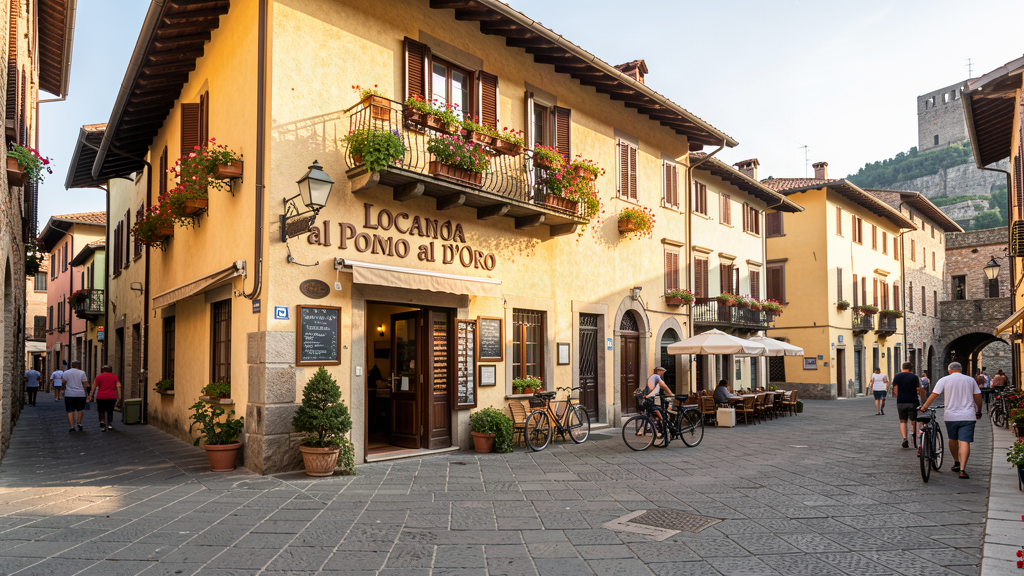
Overnight is how Cividale stops being a bridge photo and becomes a river town. Morning on the Natisone before day-trippers, quieter Tempietto light if you time it, dinner without watching the clock for Udine. Stay in the center to walk everything. Take the castle road if you want air and a view.
Locanda al Pomo d’Oro (value)
Piazza San Giovanni 20, 33043 Cividale del Friuli UD
Small locanda on a central square, walkable to the Duomo, bridge, and dinner. Rooms are simple and personal rather than designed. Best for a lower bill, a real old-town address, and stone streets without hunting parking first. Book early in high season; the footprint is modest.
Hotel Roma (mid-range)
Piazza Alberto Picco 17, 33043 Cividale del Friuli UD
The practical in-town hotel: front desk, predictable rooms, bar, near the station edge so train arrivals need no taxi puzzle. I use it for ease more than charm — luggage, a shower after hypogeum stairs, breakfast without a scavenger hunt. Still walkable to the bridge and Tempietto.
Locanda al Castello (splurge on setting)
Via del Castello 12, 33043 Cividale del Friuli UD
Up on the castle road above town: garden quiet, a longer view, a restaurant that can hold an evening. Walk or drive a few minutes into the medieval core. Worth it with a car, or if you want space after museum hours and sleep away from piazza noise. The setting is why people book it.
A simple day that fits
Coffee near the Duomo while shutters go up. Walk the Devil’s Bridge early, when the gorge is mostly yours, then loop Borgo di Ponte before cameras fill the arches. Collect the hypogeum key, go underground, return it. Late morning for the Tempietto — slow through the stucco. If curiosity remains, the archaeological museum before lunch.
Eat at Al Campanile or Al Monastero. Afternoon can be a second river pass, gelato, or a short Colli Orientali drive if someone can drive and you want vines after stone. Rest. Toward evening, cross the bridge again when the water goes dark green. Dinner at Leon d’Oro or back near the square. Sleep in town.
If you only have three hours: bridge, Tempietto, one proper meal. Leave the hypogeum and museum for a return.
Practical notes
Cividale del Friuli is in the province of Udine, Friuli-Venezia Giulia, east of Udine toward the Slovenian-facing valleys. Trains from Udine take roughly twenty minutes; the station is a short walk from the center. Drivers use the A23 and local roads; park outside the tightest lanes and walk in. Good shoes help on bridge stones and hypogeum steps.
Summer heat and midday crowds hit the bridge hard. Early and late are kinder. Winter is damp, quiet, and honest about how small the town is. Check Tempietto and museum hours; the hypogeum depends on key pickup times. English appears on major panels. Italian still helps at lunch counters. Nearby loops include Udine, the Colli Orientali, and deeper Natisone valley villages if you have a car.
I keep coming back for the gap between the legend on the bridge and the ordinary life that uses it. Green water under the arches, a key in your pocket for a hole in the rock, pale Lombard stucco in a room that never tries to be St. Peter’s. Stay the night if you can. Cividale makes more sense when the last coach has gone and the Natisone is still moving.
