
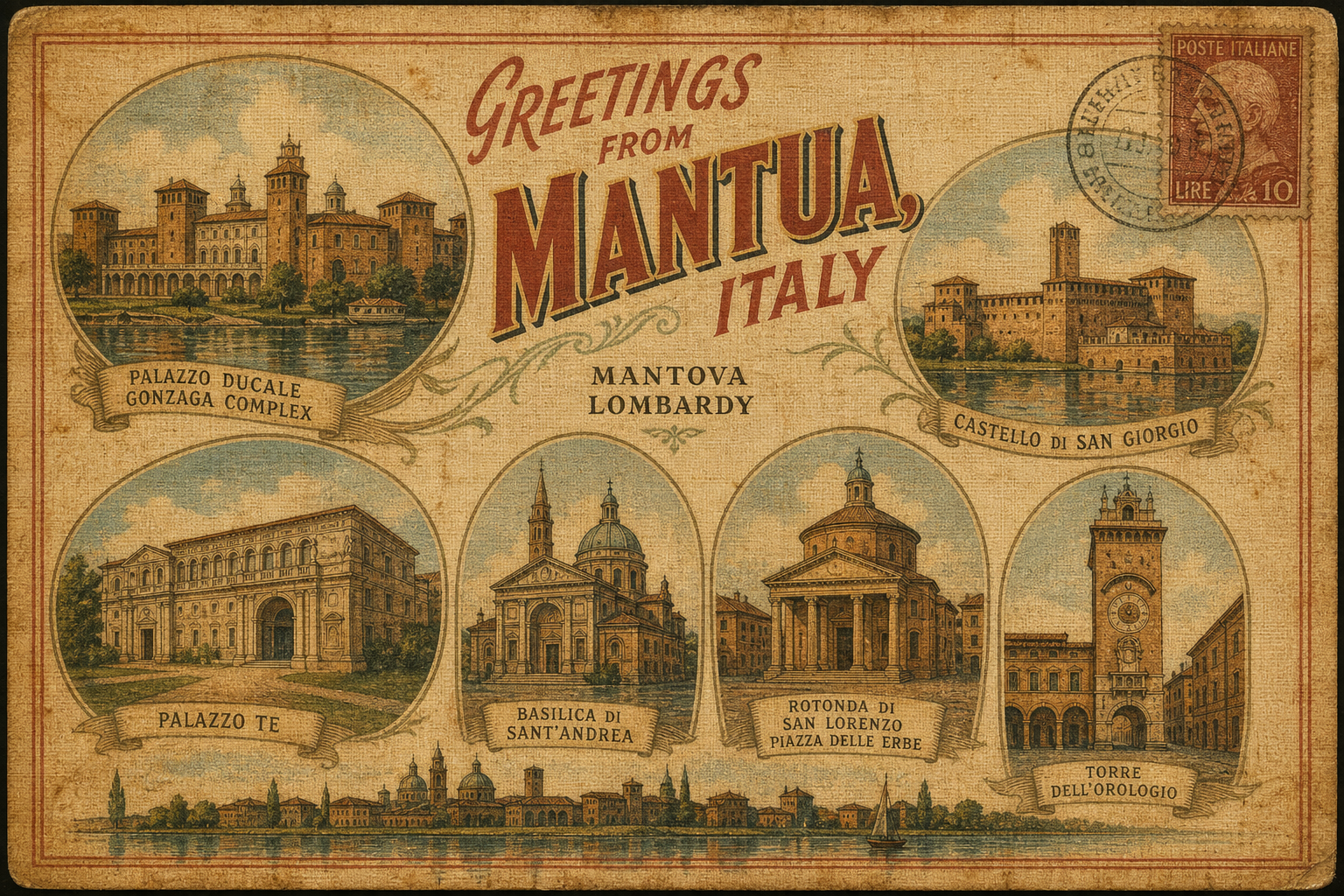
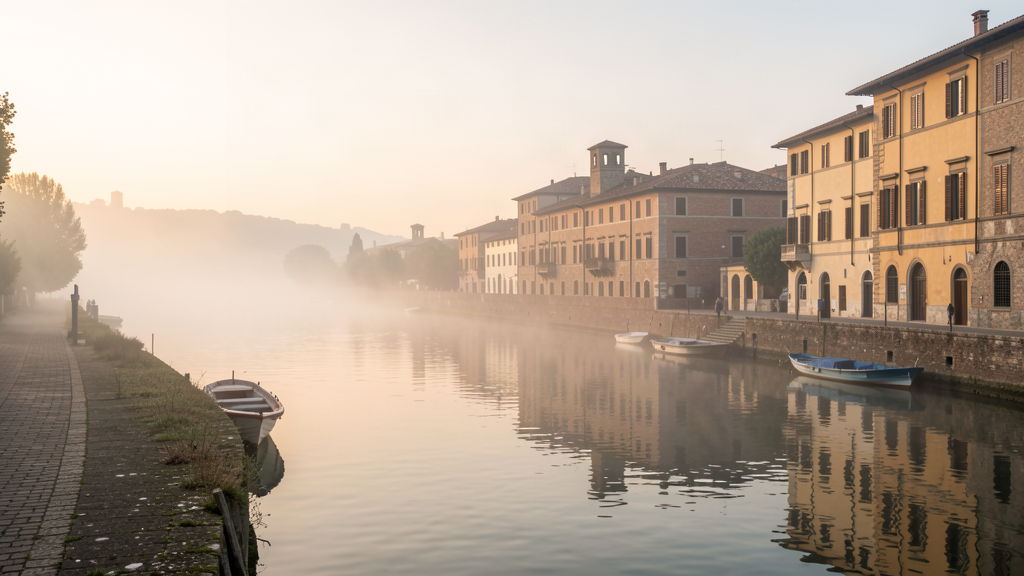
People come to Mantua for the Gonzaga palaces and a quick loop through Piazza Sordello, then leave before the lakes have time to settle in. Fair enough. I keep coming back for Lago di Mezzo on a cool morning, when fog sits low on the water and the brick of Castello di San Giorgio looks half-erased. The city is almost an island — three lakes, one river doing the work — and that wet edge is the Mantova I trust more than any ticketed fresco room.
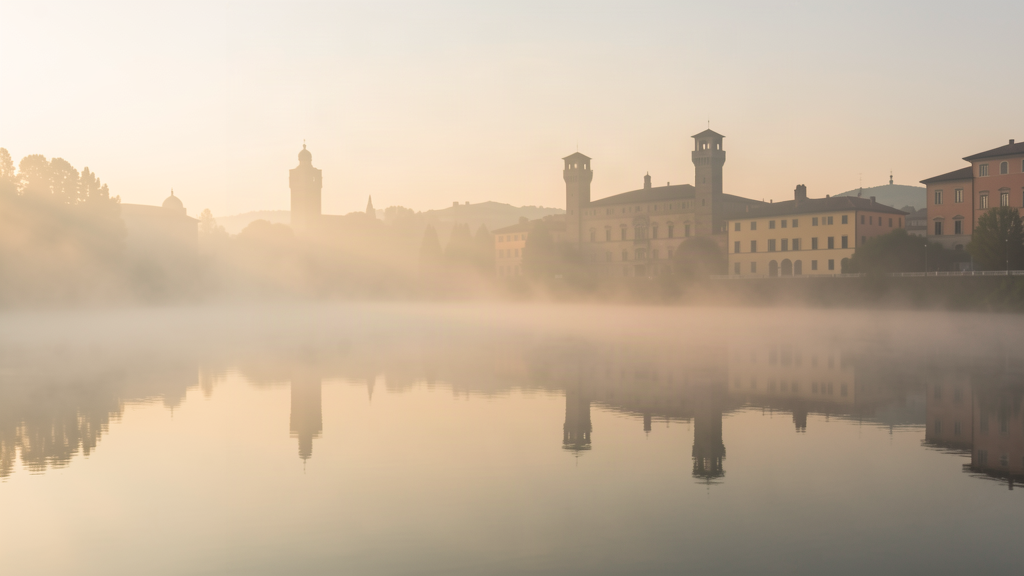
Stand on the lungolago and you hear scooters on the inner streets, a cyclist on the path, and almost nothing from the water. Swans cut the surface. Reeds hold still. Nobody is staging a view for you. Sometimes the fog lifts. Sometimes it stays put all morning.
Finding the water before the squares
Mantova sits in the Po plain where the Mincio widens into Lago Superiore, Lago di Mezzo, and Lago Inferiore, wrapping the historic core on three sides. From the train station the walk into the old city takes about twenty minutes through ordinary streets that do not try hard. Taxis are easy if bags are heavy. Once you hit the ring of older brick, skip the palace ticket desk for a while. Aim for water first.
Lago di Mezzo is the middle bowl, the one that faces the castle and the long palace bulk. From Ponte di San Giorgio you get the postcard line of towers and roofs, but I prefer dropping to the path without a photo plan. Start near the castle walls and drift toward Porto Catena on the Inferiore side, or the other way toward the mills and the upper lake. Weekday mid-morning works best: joggers, a few fishermen, school groups not yet loud.
Fog shows up when it wants to. Autumn and winter give the soft white lid. Spring can be clear. Summer heat sits on the water and pushes people into courtyards. Dress for damp air even when the forecast looks fine.
Palaces, then back to the shore
When you do face the center, give the squares time instead of a sprint. Piazza Sordello holds the cathedral facade, the bishop's palace, and the long front of Palazzo Ducale. Inside, the Camera degli Sposi is the famous room — Mantegna's painted court, still startling if you have only seen it in books. Book timed entry when the city is busy. I often do one focused hour inside, then get back outside before my attention turns to sludge.
A few minutes south, Piazza delle Erbe and the Rotonda di San Lorenzo sit in a tighter grain — market energy on the right days, brick arcades, a clock tower that still feels like a working town signal. Basilica di Sant'Andrea is the big dome you keep seeing from the water; step in when the door is open, then leave. You do not need a full sacred-art checklist.
Palazzo Te, on the south edge of the historic peninsula, is the other Gonzaga set piece: Mannerist rooms, a garden, a scale that feels almost suburban after the dense core. Walk or bike there. Do not make it the whole day.
What to eat when Mantova is on the plate
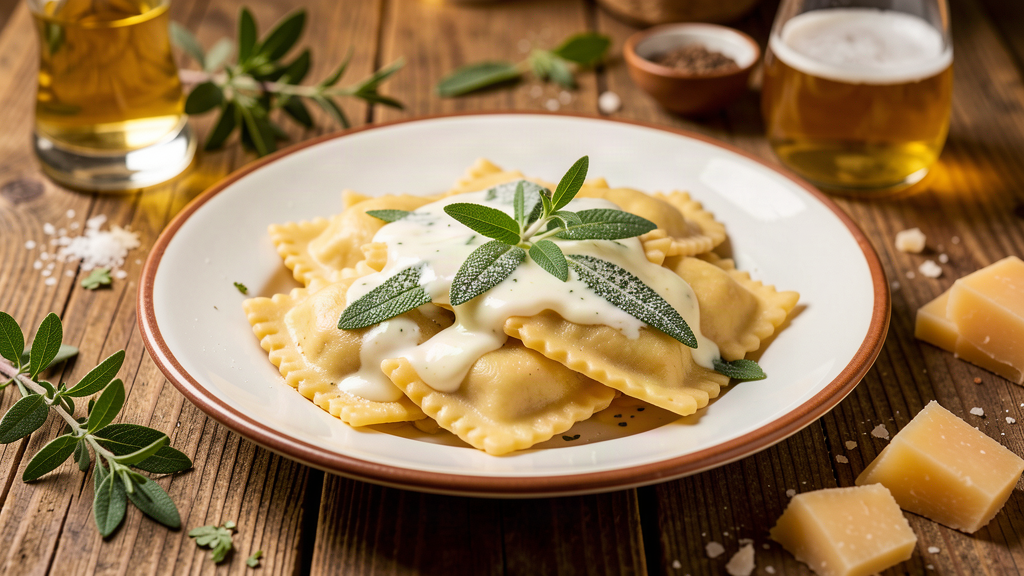
Mantuan food is plain-country cooking with a little Gonzaga memory still hanging around: stuffed pasta, butter, sage, pork, sweet-sharp mostarda, and the crumbly almond cake called sbrisolona. The signature is tortelli di zucca — pasta pillows filled with pumpkin, crushed amaretti, and a touch of mostarda, finished with butter and sage. It should taste sweet-savory, not dessert. Riso alla pilota is the local rice dish, dry and sausage-rich, closer to a field lunch than a creamy risotto show. Luccio in salsa, when pike is on the menu, is lake country talking back.
Three places that earn a seat:
Trattoria Due Cavallini
Via Salnitro, 5, 46100 Mantova
Family-run, a short walk off the densest tourist line, and still the room I point people toward for tortelli di zucca, stracotto, and second courses that arrive without apology. Traditional, not costumed. Book if you can; locals fill it on weekends.
Osteria della Fragoletta
Piazza Arche, 5/a, 46100 Mantova
Close to Piazza Sordello, with a long local story and a kitchen that keeps one foot in Mantuan plates while the other wanders a little. Useful after palace hours if you still want pumpkin pasta done properly. The square outside is quieter than Sordello, which helps the evening slow down.
Ristorante Aquila Nigra
Vicolo Bonacolsi, 4, 46100 Mantova
A late-Gothic house near the ducal walls, more polished, better when you want linen and a careful reading of the classics rather than a pure trattoria night. Good for a splurge plate of tortelli and something from the lake or the slow-cooked meat list. Book ahead on busy Saturdays.
For portable Mantova, hunt a counter for mostarda, local salumi, and a wedge of sbrisolona that will shatter into your bag if you are not careful. Pumpkin season sharpens the pasta story; summer leans lighter. Leave room for the cake. It travels badly. Eat it with a coffee you do not rush.
Places to stay
Stay inside or hard against the historic peninsula. Mantova is compact, and evenings are better when you can walk home past closed shutters and open bars without a bus from the ring road.
Hotel ABC Mantova (budget-friendly) Piazza Don Eugenio Leoni, 25, 46100 Mantova Simple central rooms, fair rates, and a front door that puts you on foot for the squares and the lakes. Not a design project. Fine sleep and a usable breakfast matter more here than a statement lobby.
Hotel Casa Poli (mid-range) Corso Garibaldi, 32, 46100 Mantova A converted nineteenth-century building with quieter design instincts, a courtyard when weather allows, and an easy walk into the core. Good base if you want elevators, polished rooms, and zero navigation stress after wet paths and palace floors.
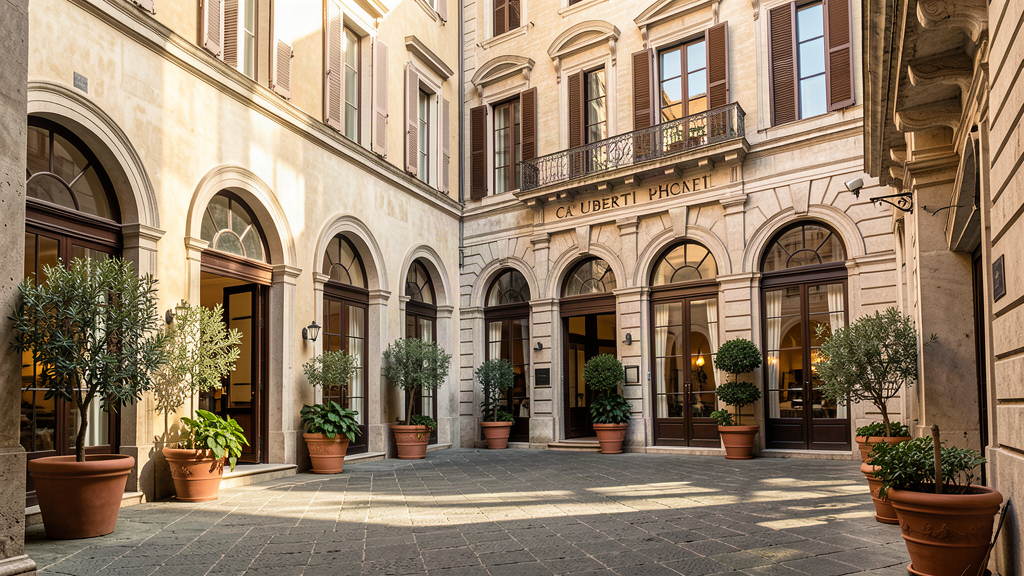
Ca' Uberti Palace Hotel (splurge) Piazza Sordello, 13, 46100 Mantova On the main historic square, steps from the cathedral and the ducal entrance. Book when you want the morning to start with brick and bells instead of a map app. At night you walk out the door into Mantova's oldest open room.
A day that does not rush the water
Morning: coffee near the center, then straight to Lago di Mezzo while the light is low. Walk the lungolago without headphones. If fog is in, stay with it. If the sky is clear, watch how the palace bulk sits against the water instead of a brochure sky.
Late morning: Piazza Sordello and a timed slot in Palazzo Ducale, or skip the full ticket and sit with the exterior from the lakeside path. Duck into the Rotonda or Sant'Andrea when the door is open.
Lunch: Due Cavallini if you reserved, or a simpler plate and local wine where office workers already know the specials. Tortelli once is not excessive. Tortelli twice in a weekend is valid research.
Afternoon: Palazzo Te if you have the legs, or a second lake circuit toward Porto Catena and the Inferiore shore. Rent a bike if you want more Mincio without more pavement. Late day, return to the Mezzo edge and let the city thin out.
Evening: aperitivo somewhere small off Sordello, dinner at Fragoletta or Aquila Nigra. Mantova rewards two nights more than a raid between Verona and Cremona. One night makes it a palace postcard. Two nights let the lakes turn into ordinary neighborhood weather.
Trains link Mantova to Verona, Milan, Cremona, and Modena without much fuss. The station is walkable; bags on cobbles are the only real tax. Drive only if you need the countryside, Sabbioneta, or a longer Mincio loop.
Practical notes
The historic core is mostly flat, with cobbles that punish thin soles and lake paths that turn slick after rain. Weekdays beat holiday weekends for palace rooms and tables. August thins some shops and fills day-trippers; late spring and autumn are kinder for walking the water. Winter is when the place feels most itself: fog on Mezzo, heavy food, emptier side streets, fresco rooms you almost have to yourself.
English appears in hotels and ticket desks more than in every food shop. A few Italian phrases help for the day's pasta special. Photography along the lungolago is fine; inside churches and some palace rooms, follow the posted rules and keep flash off.
Pack sbrisolona where it will not powder your shirts. Mostarda sealed well. What I end up remembering is simpler anyway: damp air off Lago di Mezzo, and the fact that Mantova still sits on a working river system, not only on painted ceilings.
Mantova will not out-spectacle Venice or out-lake Garda. Start on the water while the fog is still deciding. The Gonzaga walls will still be there when you look up.
