
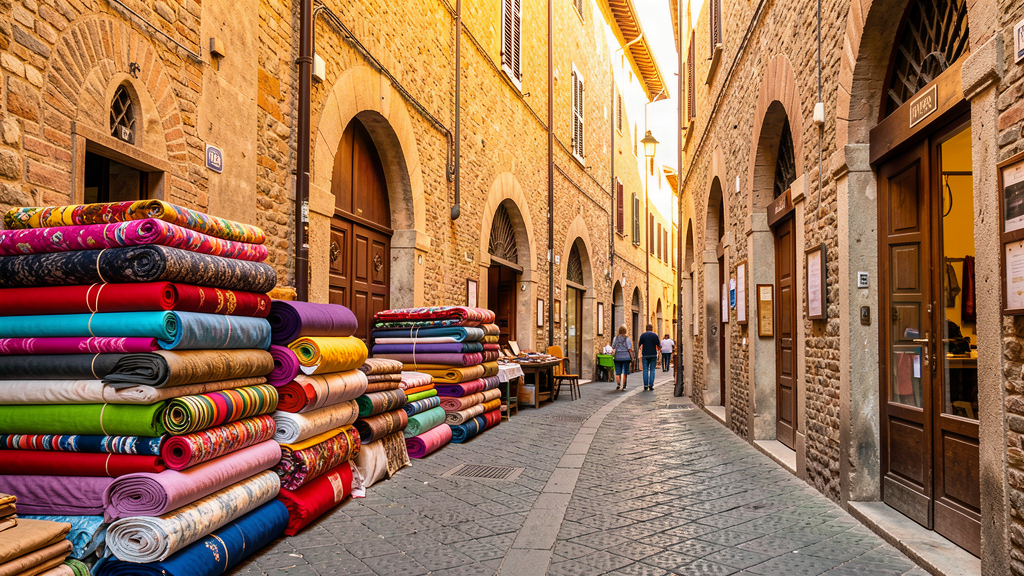
Most people treat Brescia as a train change between Milan and Verona, or a base for Lake Garda day trips. That works if you came for the lake. I keep ending up here for the Carmine quarter, where fabric shops still stack bolts of cloth in ground-floor windows and the streets feel lived-in rather than staged.
Contrada del Carmine is not a postcard strip. Low buildings lean toward each other. Laundry hangs on upper floors. You pass herbalists, small bars with plastic chairs outside, and workshops that open when the owner feels like it. Corso Garibaldi runs nearby with a looser mix of boutiques and ordinary food shops. This is where Brescia stops performing for visitors and just goes about its day.
Getting into the neighborhood
From the main station, Brescia Centro, you can walk into the historic core in about twenty minutes, or take a short bus or metro ride toward the northern side of the center. The metro is clean and simple. The walk along Corso Martiri della Libertà is fine if your bags are light and you want to arrive on foot.
Once you are near Via San Faustino and Corso Mameli, turn into the smaller contrade. Contrada del Carmine itself is easy to miss if you stay on the wider avenues, which is part of why I like it. I usually start mid-morning, after the first espresso rush, when shop shutters are up and delivery vans are still double-parked.
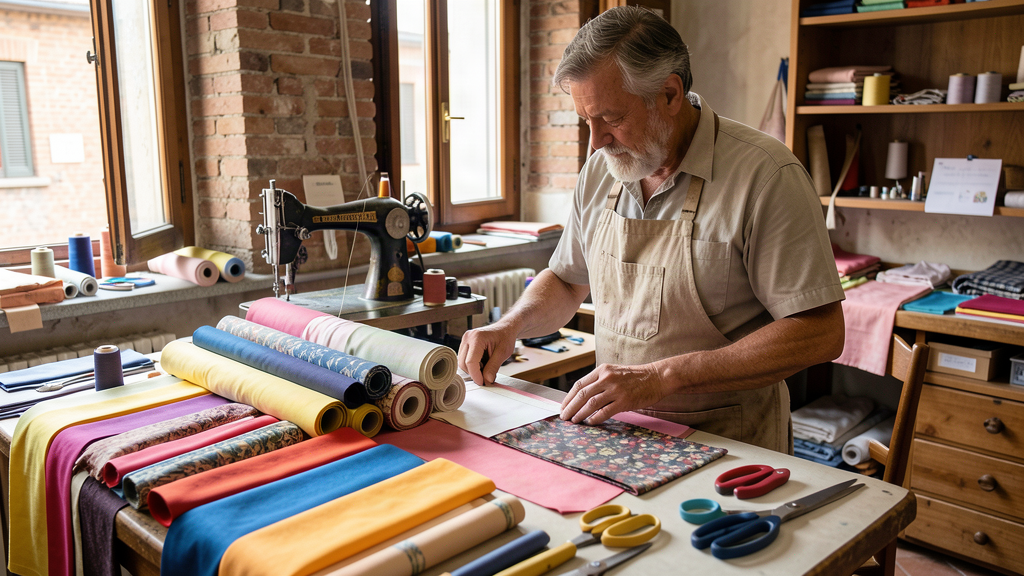
Look for the fabric places first. Tessuti Vescovado and similar shops on and around Contrada del Carmine still sell cloth the old way: rolls upright, samples on counters, conversation in Brescian-accented Italian. You do not need to buy a meter of wool. Standing in the doorway for a minute is enough. This is neighborhood commerce that never got polished away, not fashion-district shopping.
Roman stone, then ordinary streets
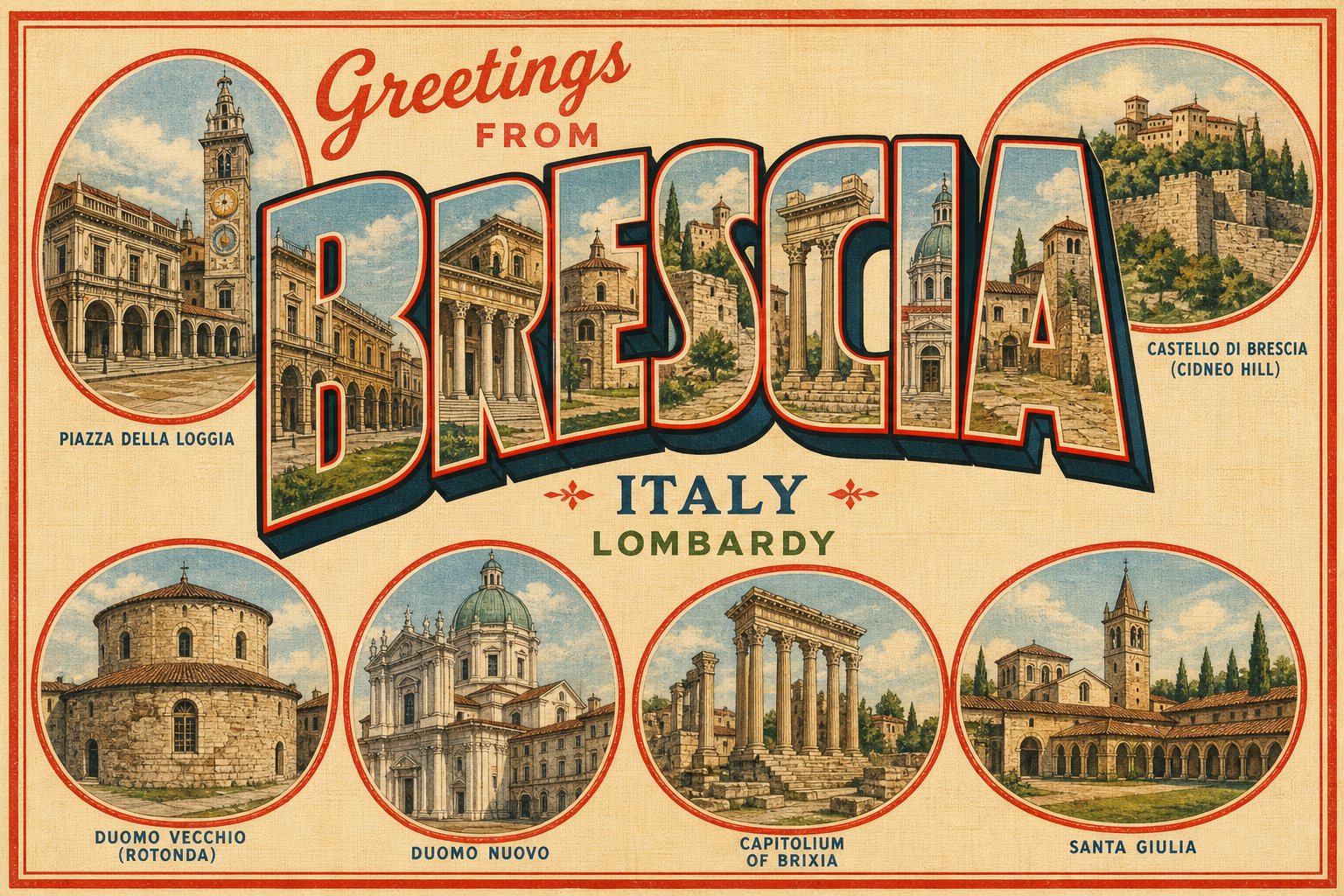
Brescia’s big historical claim sits a short walk southeast of Carmine: the Roman forum and Capitolium on Via dei Musei, plus the Santa Giulia museum complex. The Capitolium went up under Vespasian in the 70s AD. Columns, podium, excavated forum floor. Santa Giulia layers a Lombard monastery over older remains and holds enough rooms that you should budget a few unhurried hours if you go inside.
I like the Roman area best late afternoon, when tour groups thin out and the light hits the stone sideways. Then I walk back toward Carmine rather than looping the main squares again. Piazza della Loggia and the two cathedrals on Piazza Paolo VI are worth a look, but they are the parts of Brescia everyone already photographs. The quieter return through Via delle Battaglie or Corso Garibaldi is where the day settles for me.
Castello di Brescia sits on the Cidneo hill above town. The climb is real enough to wake you up, and the views open over rooftops toward the plain. Go if you want elevation and a break from street level. Skip it if you are happier wandering alleys with a coffee in hand.
What to eat when you want Brescia, not “northern Italian”
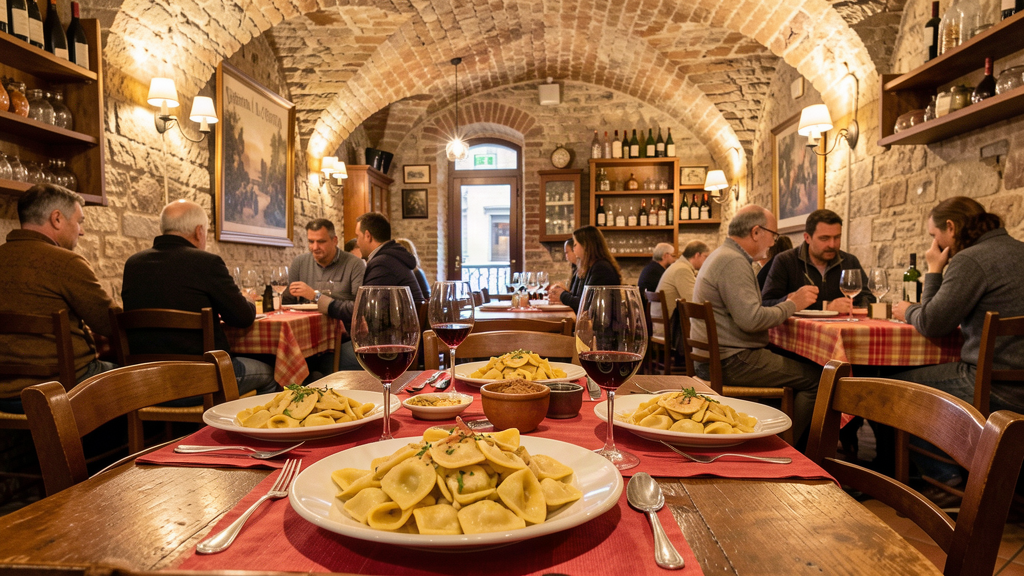
Brescian cooking leans heavy in a good way: stuffed pasta, butter, sage, slow meat, polenta, lake fish when the kitchen bothers. The dish people mention first is casoncelli alla bresciana, little stuffed pasta usually finished with butter and sage, sometimes with pancetta or local cheese. Spiedo bresciano (spit-roasted mixed meats) shows up more in the province than in every city trattoria, but you still find honest versions if you ask.
Three places I return to:
Osteria La Grotta Vicolo del Prezzemolo, 10, 25121 Brescia Tucked on a narrow lane near the center, with vaulted rooms, stone, and a cellar that feels like the point of the building. Order casoncelli if they have them, then something slow-cooked. The mood is informal; the cooking is careful without being precious. Book if you can. The lane is easy to walk past.
Osteria Al Bianchi Via Gasparo da Salò, 32, 25122 Brescia Open since the late nineteenth century and still full of locals at the right hours. Aperitivo, salumi, casoncelli, snails when they are on, simple secondi. You can eat lightly or settle in. Closed a couple of midweek days, so check before you count on it.
La Vineria Via Dieci Giornate, 4, 25121 Brescia Near Piazza della Loggia when you want traditional plates with a slightly more polished wine list. The upstairs can feel quiet; the basement fills up. Good middle ground if one person wants classic Brescia and another wants a longer wine conversation.
For a cheaper lunch near Carmine, follow office workers into a bar for a panino and a glass of something local. Franciacorta is the famous regional sparkler; still whites and reds from the nearby hills show up by the glass without ceremony.
Places to stay
Stay inside or beside the historic center if you can. Brescia is walkable once you are in, and evenings are better when you are not depending on a late bus from the edge of town.
Albergo Leonardo (budget-friendly) Via Pietro Dal Monte, 40, 25123 Brescia Simple three-star rooms a bit outside the tightest historic core, near the hospital zone. Fine if you want a fair price and do not mind a short bus or longer walk into Carmine and the forum. Quiet enough for sleep. Not a design hotel.
Albergo Orologio (mid-range) Via Cesare Beccaria, 17, 25121 Brescia Right in the center, a short walk from Piazza della Loggia and Piazza Paolo VI. Compact, well kept, easy for early morning walks before the squares fill. This is my default when I want location without boutique prices.
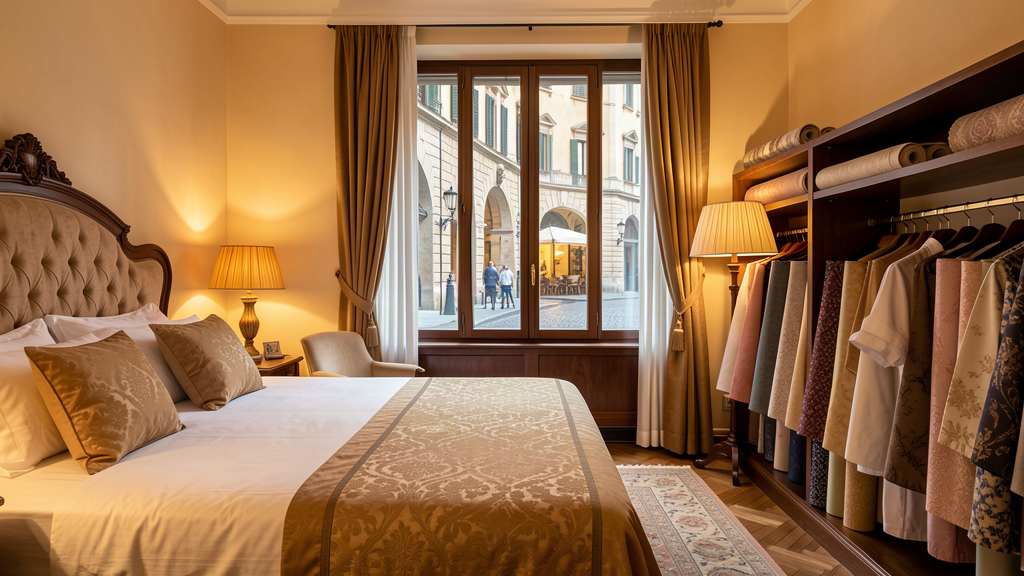
Locanda delle Mercanzie (splurge / character) Corso Goffredo Mameli, 34, 25122 Brescia Rooms in a medieval palazzo on the Carmine side of the center. Thick walls, quiet interiors, and a front door that puts you on neighborhood streets within a few minutes. Book early on weekends. If it is full, Areadocks Boutique Hotel at Via Armando Diaz, 4, 25121 Brescia is a smaller modern option closer to the station.
A slow day that actually works
Morning: coffee near Corso Mameli, then Contrada del Carmine while shops open. No agenda beyond looking in windows and noting which bars already have regulars.
Late morning: walk to Via dei Musei for the Capitolium exterior even if you skip the full museum ticket. If the line for Santa Giulia is short and you like dense museum days, go in. If not, keep walking.
Lunch: Al Bianchi or a casual spot near the squares. Leave the afternoon open. Brescia is better with empty time than with a checklist. Duck into churches when doors are open. Sit in Piazza della Loggia and watch the clock tower without photographing it every two minutes.
Late afternoon: climb toward the castle if your legs agree, or drift back through Corso Garibaldi for another pass at the shops. Early evening aperitivo, then dinner at La Grotta if you reserved.
Trains make day trips easy: Verona, Bergamo, Cremona, and the west shore of Garda are all within reach. I would still give Brescia two nights. One night turns it into a logistics stop. Two nights let the Carmine streets become familiar enough that you stop checking the map.
Practical notes
Brescia’s center is mostly flat once you are off the castle hill. Cobbles are uneven; decent shoes help. August can be hot and half-closed. Spring and autumn are kinder. Winter works if you like empty museums and heavy food.
Italian helps in Carmine more than it does in lake towns. A few phrases and patience go further than fluency. Many younger people switch to English; older shopkeepers often do not.
Markets and small food shops are better for picnic supplies than any single souvenir stop. If you want something to take home from the fabric streets, a length of simple cloth or a kitchen towel beats another fridge magnet.
Brescia will not compete with Venice for drama. It does not try. What you get instead is a working neighborhood, Roman stone you can walk up to without a ticket maze, and casoncelli that still taste like someone’s nonna has veto power in the kitchen. Start on Contrada del Carmine and let the rest of the city fall into place from there.
