
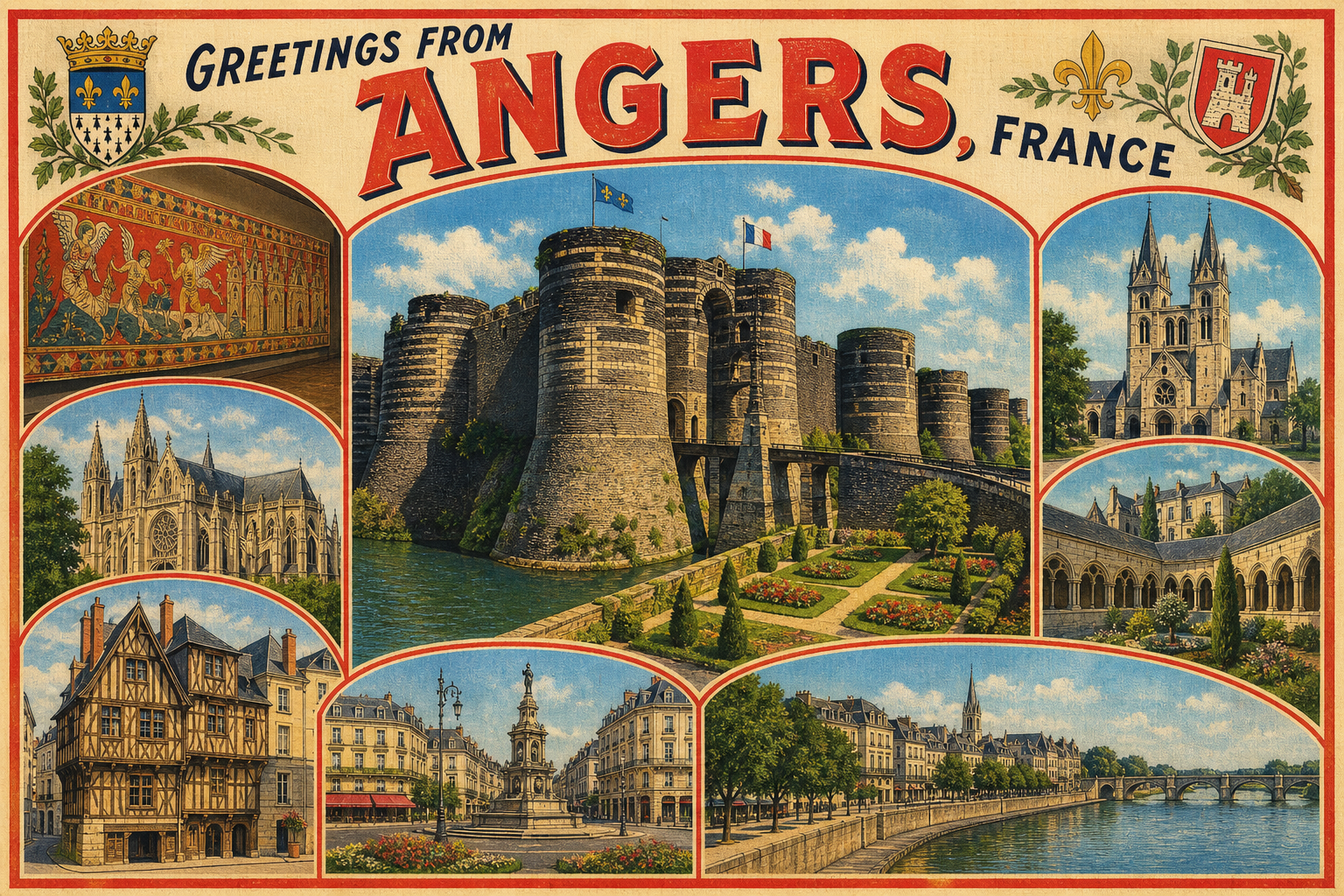
I keep ending up on the wrong side of the river on purpose.
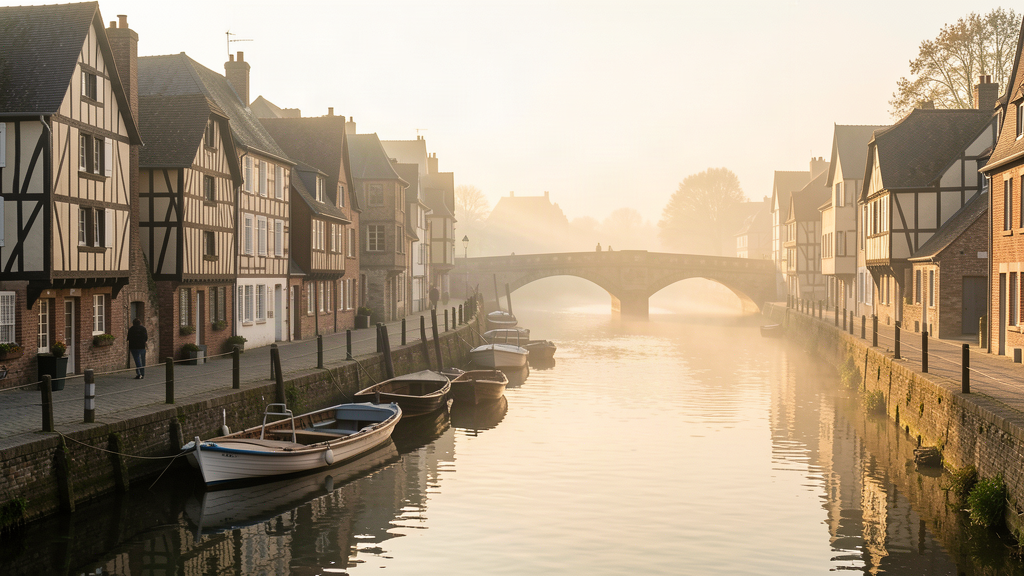
Most people who stop in Angers head straight for the château — those black-and-white striped walls you can already see from the train. I get there eventually too. The day works better if I cross the Maine first and let La Doutre set the pace. The neighborhood sits opposite the old center: timbered, a little stubborn, with quays that feel used rather than arranged. Students cut through on bikes. Someone is always hauling a market crate. The castle watches from the other bank like a relative who has opinions.
Angers was the capital of Anjou, in Pays de la Loire. It sits far enough off the main Loire château circuit that weekends still feel partly local. The Maine runs through town before it meets the Loire downstream. One bank is formal and fortified. The other is residential and slightly crooked.
Crossing into La Doutre
I usually walk from the center over the Pont de Verdun or the Pont de la Haute-Chaîne, depending on where I found coffee. On the La Doutre side the streets tighten. Half-timbered houses lean toward each other. Laundry hangs in upper windows. In the evening Place de la Laiterie fills with people who seem to live within six blocks.
La Doutre used to be a separate parish across the water, and it still carries that independent air. You come for restaurants and small shops more than monuments. Sit on a terrace facing the Maine and watch the light slide off the château walls. Order something simple. Do not rush the second glass of Anjou blanc.
If you only have one morning, give it to the market.
Saturday on Place Grégoire Bordillon
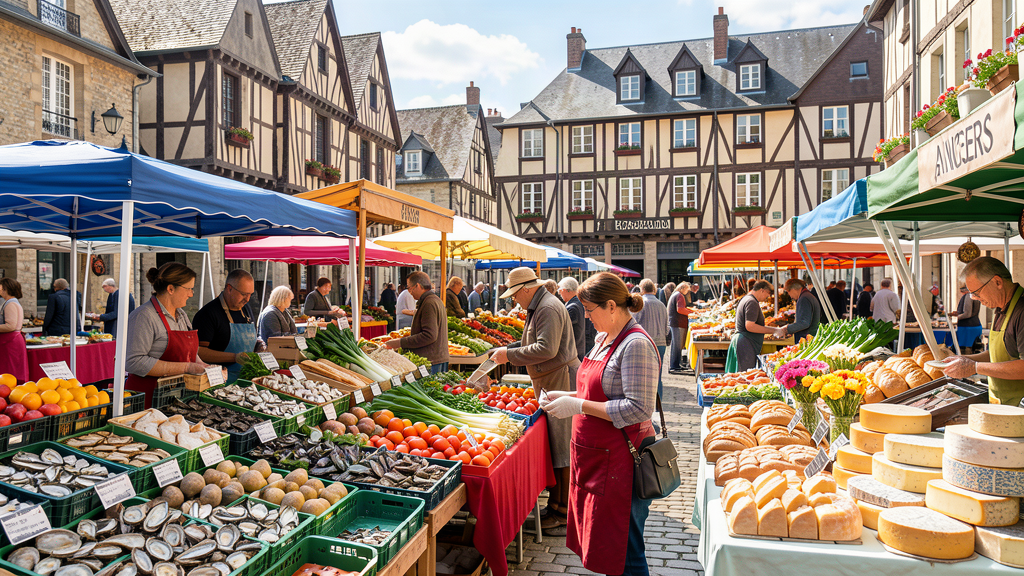
Marché La Doutre sets up on Place Grégoire Bordillon, 49000 Angers. I aim for mid-morning, after the serious shoppers have claimed their cheese but before the square thins toward lunch. Vendors call out prices. Someone is cutting into a melon for a taste. The air smells like bread, wet cardboard, and whatever herb is in season.
I buy what I can eat walking: a wedge of something goat-y from the Mauges hills, a few strawberries if they look like they mean it, maybe a slice of pâté. No need to stage a picnic. Half the pleasure is standing near a stall and listening to people argue gently about tomatoes.
From the market square, drift toward the quays. Quai des Carmes and the streets just behind it mix old stone with ordinary life — a pharmacy, a bike left unlocked a little too long, a doorway you would miss if you were on your phone. This is the Angers I come back for.
The Château, then the tapestry that stays with you
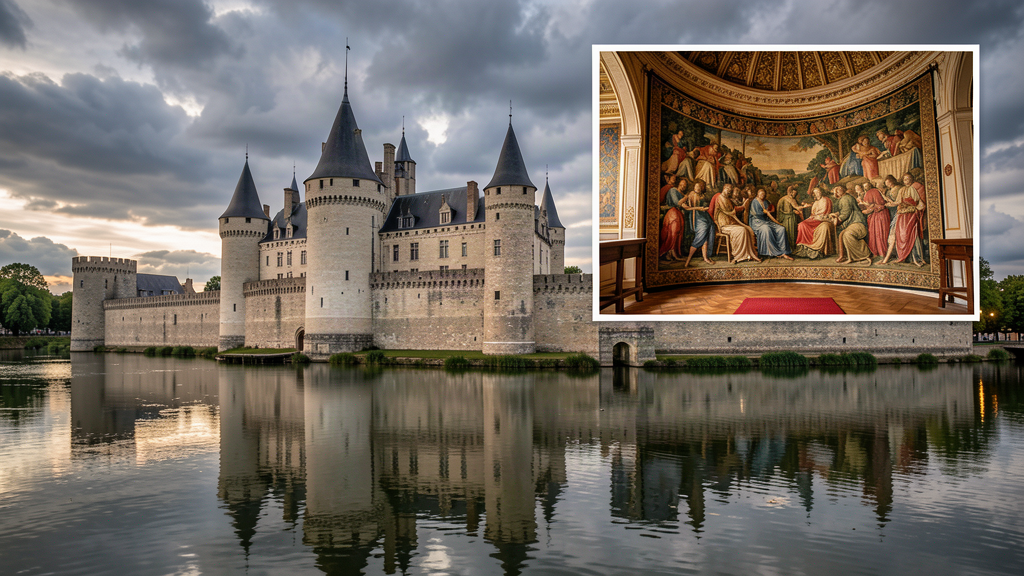
You will go to the Château d’Angers. Everyone does. The building is worth it: 17 towers, walls banded in dark schist and pale tuffeau, gardens inside the ramparts, views back over the Maine toward La Doutre. Go early or late if tour groups bother you.
What sticks longer than the rampart walk is the Apocalypse Tapestry inside. It is enormous, medieval, and oddly intimate once you stop trying to take it all in at once. Scenes from Revelation unroll in wool and silk — beasts, angels, weather that looks personal. The display is modern and dim enough that your eyes adjust slowly. I usually pick one panel and stay with it longer than feels efficient.
If tapestries interest you, Jean Lurçat’s Musée de la Tapisserie Contemporaine in the old Hôpital Saint-Jean works well later the same day. Lurçat’s Chant du Monde answers the medieval Apocalypse with a 20th-century one: nuclear dread, joy, animals, fire. Quieter room, fewer people. I like the two works together more than either alone.
Blue chocolate and orange peels
Angers has two edible signatures that sound like tourist bait. They hold up better than expected.
Quernons d’ardoise are blue-coated chocolates filled with almond-hazelnut nougatine, shaped a little like the slate roof tiles that cover so much of the city. La Maison du Quernon d’Ardoise au 22 rue des Lices, 49100 Angers, est l’arrêt habituel. Buy a small bag. Eat one while walking. The blue looks silly, and then you stop caring.
Cointreau is the other local name on every shelf. The distillery sits just outside the center in Saint-Barthélemy-d’Anjou. I have mixed feelings about brand temples, but the orange-peel story is genuinely Angevin. If you skip the tour, order a drink with Cointreau in town and call it research.
Anjou wines deserve more of your attention than the liqueur. Dry Chenin from Savennières if you want structure; softer Anjou blanc or a light red over lunch.
A slow loop that works
My preferred day is not clever.
Morning: coffee near the station or in the center, then cross into La Doutre for the market (or a weekday wander if you missed Saturday). Walk the quays. Lunch on this side of the river.
Afternoon: château and tapestry, then a meander through the cathedral quarter. Saint-Maurice’s twin spires, the Montée Saint-Maurice steps, antique shops, ordinary bakeries. If legs allow, follow the Maine path a while. Sandy stretches show up sooner than you expect.
Late day: back to Place de la Laiterie or a quay terrace. Dinner where the room still has local voices. Terra Botanica, the plant park on the edge of town, is fun with kids and easy to skip if you prefer streets. The city itself is the part people under-sell. Day trips into Savennières can wait.
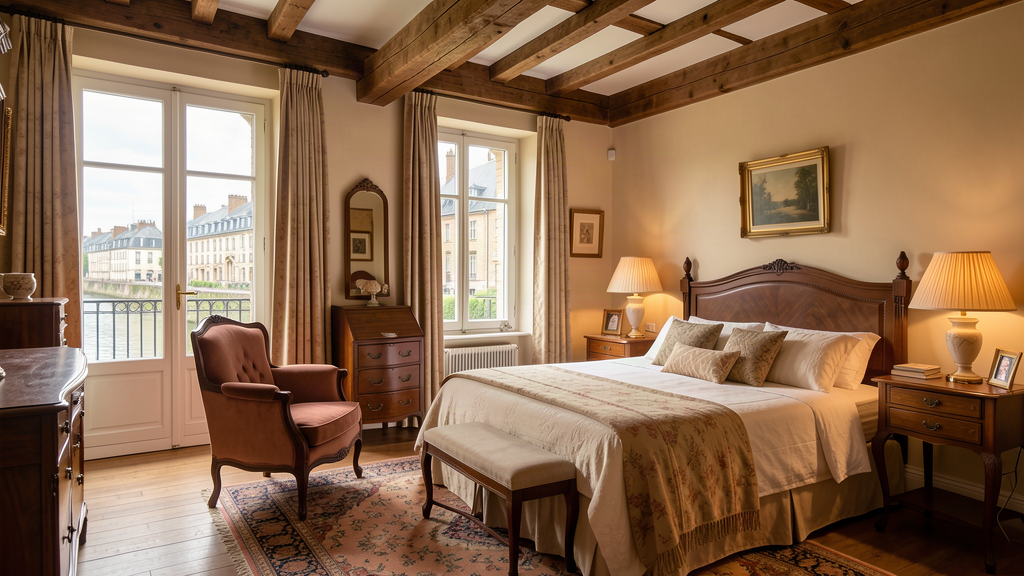
Places to stay
Three options at different prices, all walkable enough that you will not live in a tram app.
Hôtel Iena (value)
27 Rue Marceau, 49100 Angers
Small, central, a short walk from Angers-Saint-Laud station and the château. Rooms are straightforward rather than stylish — fine when you plan to be outside most of the day.
Hôtel de France (mid)
8 Place de la Gare, 49100 Angers
Haussmann façade facing the station square. More polish, quieter nights than you might guess from the location, easy for early TGV departures.
Best Western Plus Hôtel d’Anjou (splurge)
1 Boulevard du Maréchal Foch, 49100 Angers
A classic four-star feel on a central boulevard: proper lobby, steadier service, rooms that forgive a longer stay. Still walkable to Place du Ralliement and the old streets.
Book weekends early in spring and early fall. Student calendars and regional events fill rooms faster than the château crowds suggest.
Where to eat
Mamie Fada
18 Quai des Carmes, 49100 Angers
On the La Doutre quays, lively without turning into a show. Good for a first night when you want vegetables that taste like someone cared and a room full of conversation. Reserve on market Saturdays.
Chez Rémi
168 Rue de Frémur, 49000 Angers
A short hop from the station rather than a riverfront postcard. Open kitchen, seasonal plates, the kind of place where the menu shrinks when the market is thin — and that is a compliment. I go when I want dinner decided by the week’s produce.
Une Île
9 Rue Max Richard, 49000 Angers
Near the station, careful cooking without theatrical noise. Chef Gérard Bossé’s plates are precise; the room is calm. Save this for the night you want to sit still. Book ahead.
For cheaper days: bakery lunch on a quay bench, a simple formule near Place du Ralliement, and that blue chocolate when blood sugar files a complaint. Apéro can be the whole plan — local wine, small plate, done.
Getting around and when to come
Angers-Saint-Laud sits on the TGV line; Paris is roughly 1.5 hours when the schedule behaves. From the station you can walk into the center in about 15 minutes.
In town, walking covers the château, La Doutre, and most meals worth eating. Trams and buses fill gaps toward outer sights and the Cointreau side of things. Bikes work well along the river. Driving into the historic core is a hobby I do not recommend. Park once and forget the car.
Shoulder seasons suit the city: April through June, and September through October. Summers fill terraces and the château line. Winters are damp and quieter; museum days improve. Say bonjour like you mean it. English shows up in hotels and bigger restaurants; it thins at market stalls, which is fine if you stay patient.
I leave Angers slower than I arrived. Cross into La Doutre in the morning, give the tapestry the afternoon, and the striped castle looks better when you walk back.
