
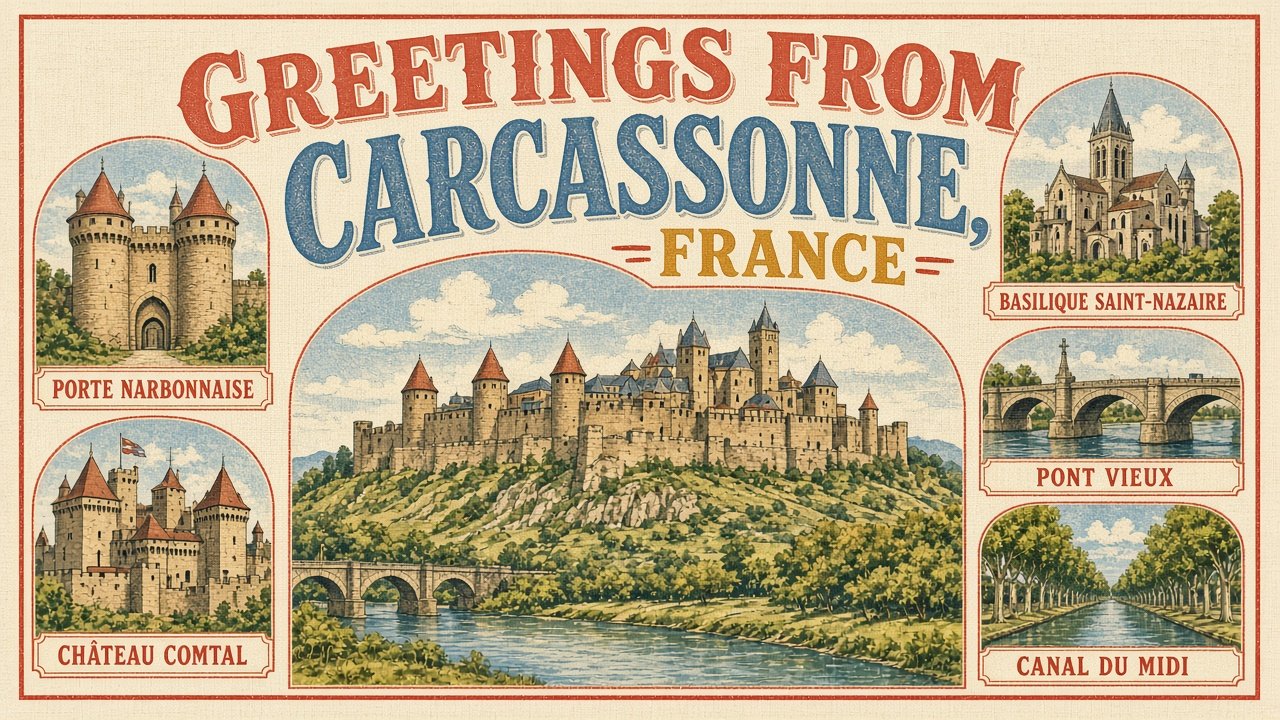
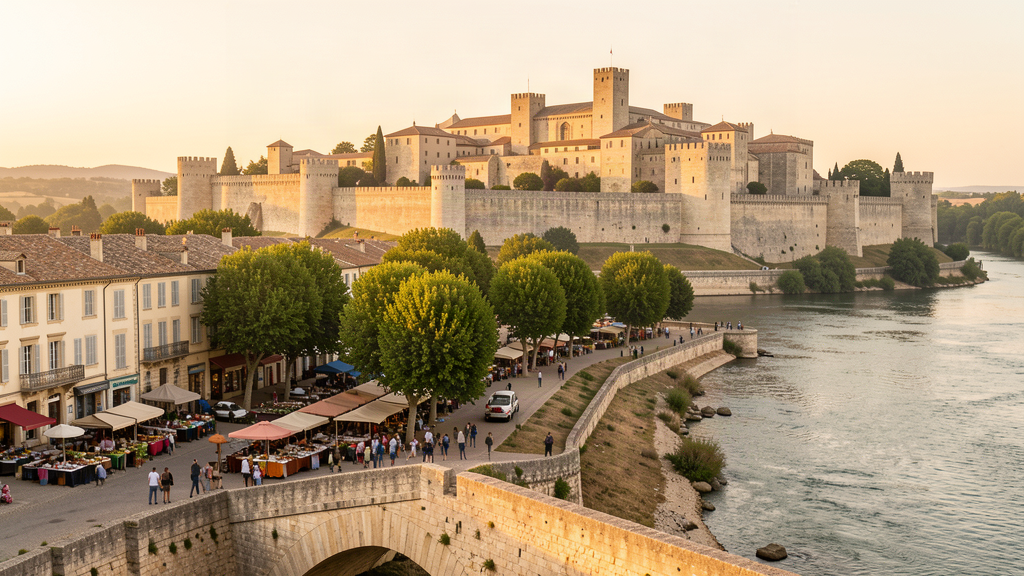
Carcassonne has two towns, and most visitors only really meet one of them. The Cité sits on the hill like a film set that forgot to strike: towers, double walls, day-trippers after breakfast. Below, across the Aude and the Pont Vieux, the Bastide Saint-Louis keeps ordinary hours. Grid streets. Plane trees. A marble Neptune on Place Carnot watching people fill tote bags with peaches and goat cheese.
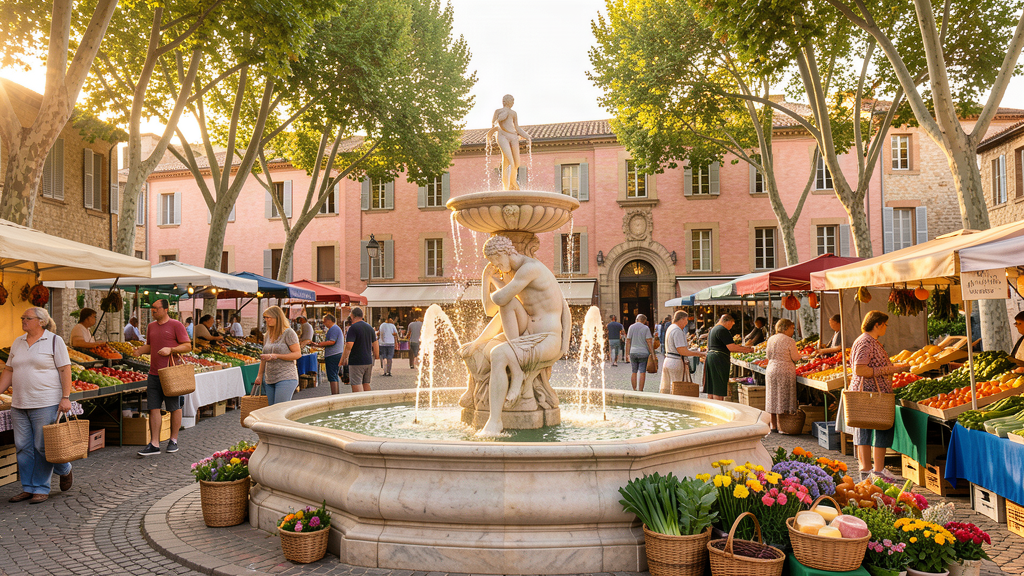
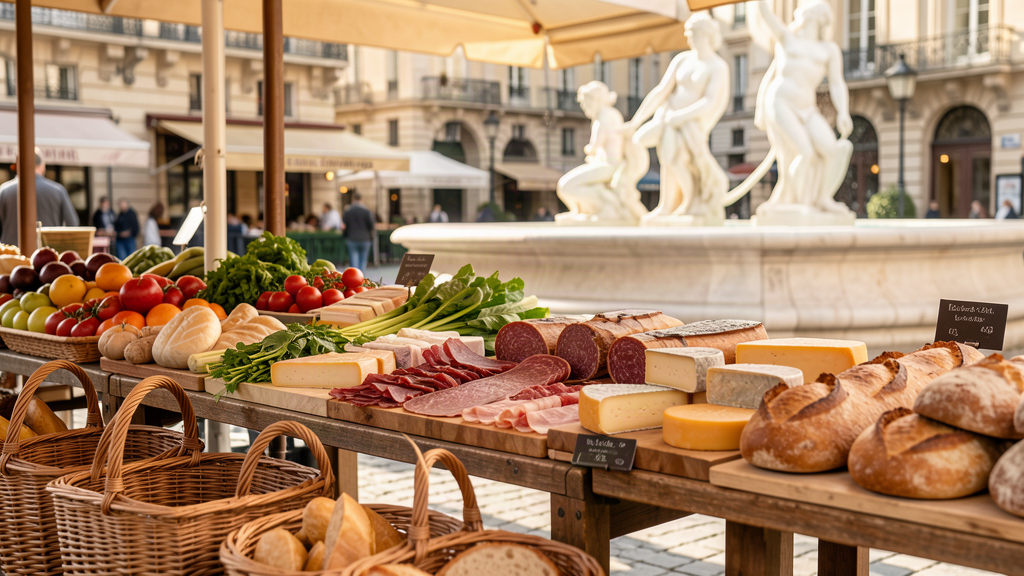
That square is where I start. Not because it is quieter than the ramparts (Saturday mornings it isn’t), but because it still belongs to people who live here. Crates hit the pavement before nine. Knives flash through baguettes. Someone argues softly over the last bunch of herbs. The Cité will wait. It always does.
Place Carnot before the heat
Place Carnot is the Bastide’s living room: shade, café tables, Neptune’s fountain stuck in the middle like furniture nobody quite likes but won’t move. Markets run Tuesday, Thursday, and especially Saturday mornings. Bigger days spill toward the boulevards. Quieter ones keep fruit and flowers under the plane trees while locals finish their lists before the sun turns mean.
Arrive with empty hands. Buy what smells like itself: strawberries in season, olives that oil the paper, cheese that will not survive a hot afternoon bag. Stand a minute without shopping. Listen to Occitan vowels mix with French and the scrape of metal chairs. This is grocery day with better light.
When the stalls thin, cafés reclaim the edges. Coffee or something cold. Watch delivery vans replace market vans. Kids cut through on bikes. The fountain keeps doing its quiet marble job whether anyone photographs it or not.
Bastide streets that still run errands
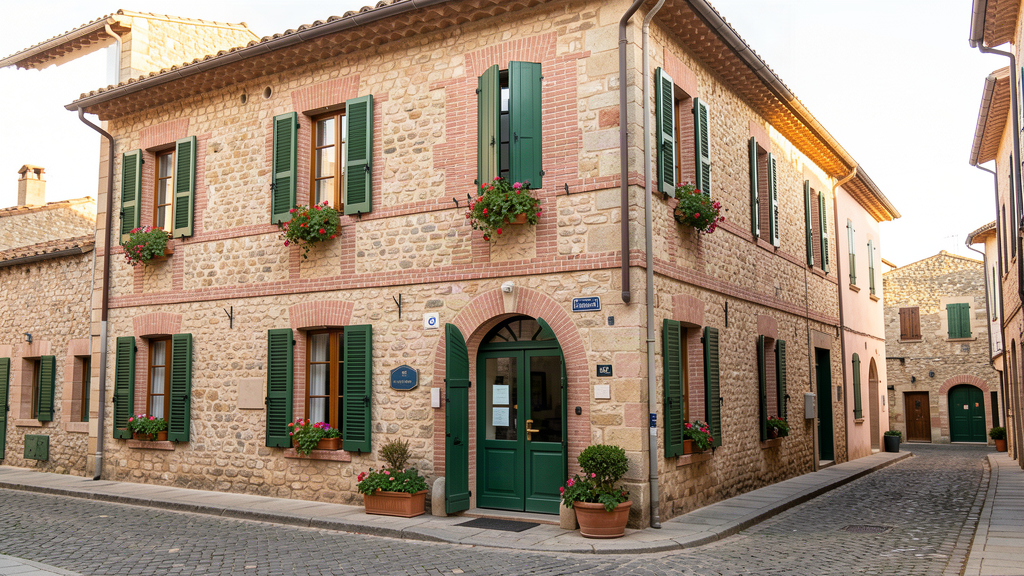
The Bastide was laid out in the thirteenth century on a clean grid after the lower town needed a plan. You feel that geometry underfoot: straightish lines, crossed axes, old drapers’ houses mixed with shops selling phone cases and hardware. Rue Courtejaire runs toward the Canal du Midi if you keep going. Side streets hold bakeries where the line is half errand, half gossip.
I walk without a checklist here. Courtyards when doors stand open for deliveries. Ochre façades, some fresh, some peeling. The Musée des Beaux-Arts in the old Présidial if you want a cool hour. The cathedral of Saint-Michel anchors another edge with less fanfare than Saint-Nazaire up the hill.
This is the Carcassonne that empties at midday and fills when the heat breaks. Siesta here is mostly physics. Find shade. Eat properly. Come back out when the stone stops radiating.
The short bridge between two cities
You can’t write about this place and skip the hill. The Cité is why trains stop and tour buses circle. Go once, early or late, when the main lanes aren’t a jam. Walk the ramparts if your knees allow. Step into the basilica of Saint-Nazaire for the glass and the sudden quiet. Then leave before the afternoon crush makes you resent a pretty good piece of military architecture.
The walk I prefer stitches both halves. Start at Place Carnot. Drift the grid to the river. Cross the Pont Vieux and climb through Trivalle, the strip between water and walls where hotels tuck into the slope and laundry still hangs upstairs. Enter the Cité by a quieter gate if you can. Slow circuit. Descend the same way, or peel toward the canal towpath when you want flat ground and fewer costumes.
The Aude runs between the stories. So does the Canal du Midi on the Bastide’s far edge: green, slow, a UNESCO label locals mostly use as a bike path. Rent wheels for a half-day, or walk until city noise thins and water hits the lock gates.
A loop that works when friends visit
Two nights, loose shape: market morning on Place Carnot if the day lines up, aimless Bastide wandering with a practical lunch, late afternoon across the Pont Vieux into the Cité, dinner back in the grid or halfway up the slope. Next morning, the canal or a second pass at whatever you rushed.
That is enough. Lastours and the Corbières hills wait if you have a car. They are not required to justify the ticket.
Places to stay
Three bases, three budgets, all walkable between Bastide and Cité without decoding bus apps.
Hôtel de la Cité – MGallery (splurge)
Place Auguste Pierre Pont, 11000 Carcassonne
Inside the medieval walls: gardens, heavy stone, rooms that make the ramparts feel almost private. You pay for location and polish. Step out after dinner into emptying lanes while day-trippers are already on the autoroute. Book early for festival season and high summer.
Hôtel du Pont Vieux (mid-range)
32 Rue Trivalle, 11000 Carcassonne
A small three-star between river and walls, the practical middle. Some rooms catch rampart views; garden and terrace help with the heat. Minutes up into the Cité, or across toward the Bastide on foot. My default when people want atmosphere without the MGallery bill.
ibis Carcassonne Centre la Cité (value)
5 Square Gambetta, 11000 Carcassonne
Straightforward chain comfort on the town side, between the canal axis and the climb toward the monuments. Clean bed, predictable breakfast, euros left for cassoulet and train fares. Not romantic. Solid first-night base if you want orientation over design magazines.
Summer weekends and the Festival de la Cité fill rooms fast. Shoulder months (April–June, September–October) are kinder on rates and on patience in narrow lanes.
Where to eat
Reserve. Carcassonne is smaller than it looks on a map of France, and the good tables know it. Walking in hungry at 20:30 in July is mostly a tour of full dining rooms.
Chez Fred
17 Place Carnot, 11000 Carcassonne
Right on the market square, perfect or slightly chaotic depending on your tolerance for square life. Regional plates, house cassoulet without the theatrics, a room that expects locals after work as much as visitors. Market morning loop: shop, coffee, later a proper meal when the stalls are gone and the plane trees take back the light.
Restaurant Comte Roger
14 Rue Saint-Louis, 11000 Carcassonne
Up in the Cité on a busy lane, with a kitchen that takes the food seriously: cassoulet among other things, vegetarian options when the table is mixed. Use it when you have done the walls and want dinner without descending and climbing again. Book ahead; the address is no secret.
Auberge des Lices
3 Rue Raymond Roger Trencavel, 11000 Carcassonne
Near the basilica and open-air theatre end of the Cité. Terroir cooking, a softer evening pace after day crowds thin. Good if you sleep inside the walls or will walk back down under streetlight. Check closing days; the calendar is not a chain template.
For lunch without white tablecloths: bakery sandwich on a bench, a market tomato over its own bag, or a simple café formula on Place Carnot where the waiter is not explaining the region to you.
Getting here, getting around
The airport is small and useful when routes line up; more often you train into Gare de Carcassonne. The station sits near the canal. From there it’s a short, slightly unlovely walk into the Bastide, or a quick ride with heavy bags.
Once here, walk. The story is the slope between lower town and Cité, and you feel it in your calves. Bikes suit the canal. A car helps for hill ruins and vineyard roads; it is a nuisance for parking near anything you want on foot.
French gets warmer service. English appears in hotel lobbies and at the main Cité gates. On Place Carnot at 8:40 a.m., a few phrases and a willingness to point at cheese beat a phone held between you and the vendor.
Spring and autumn treat you best: warm stone, generous markets, lanes that still allow a shoulder to pass. Midsummer works if you respect the heat (early walls, long lunch, late wander) and accept sharing the drawbridge. Winter can be stark and good if you like empty ramparts and shorter days.
What you take home
Carcassonne is easy to misread as a single postcard on a hill. Give it the lower town and the bridge and it becomes a daily rhythm: fountain, grid, river, walls, back again. Place Carnot is that hinge for me. Not because Neptune is a masterpiece, but because on market mornings the square still gathers people shopping for dinner, not for a story.
Leave with dusty shoes, something oily in a paper bag, and the sense that the Bastide was busy being open while the towers held their silhouette against the sky.
