
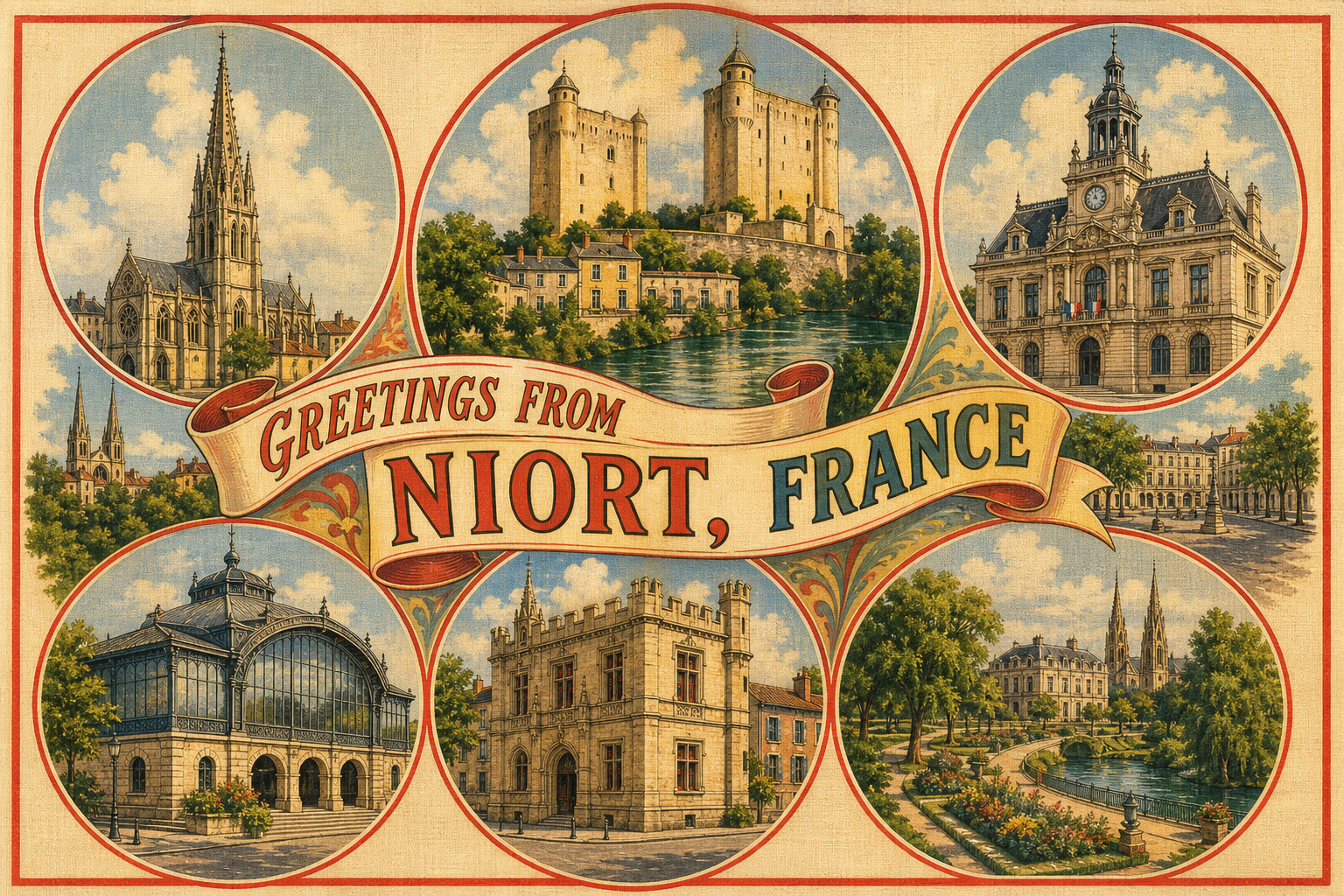
People treat Niort like a parking lot for the Marais Poitevin. Arrive by train, rent a car, drive straight to Coulon or some boat dock in the Venise Verte, come back dusty and proud. Fair enough. The marsh is the draw. But the town on the Sèvre Niortaise has its own grain, mostly along an old factory quay that used to smell like wet leather.
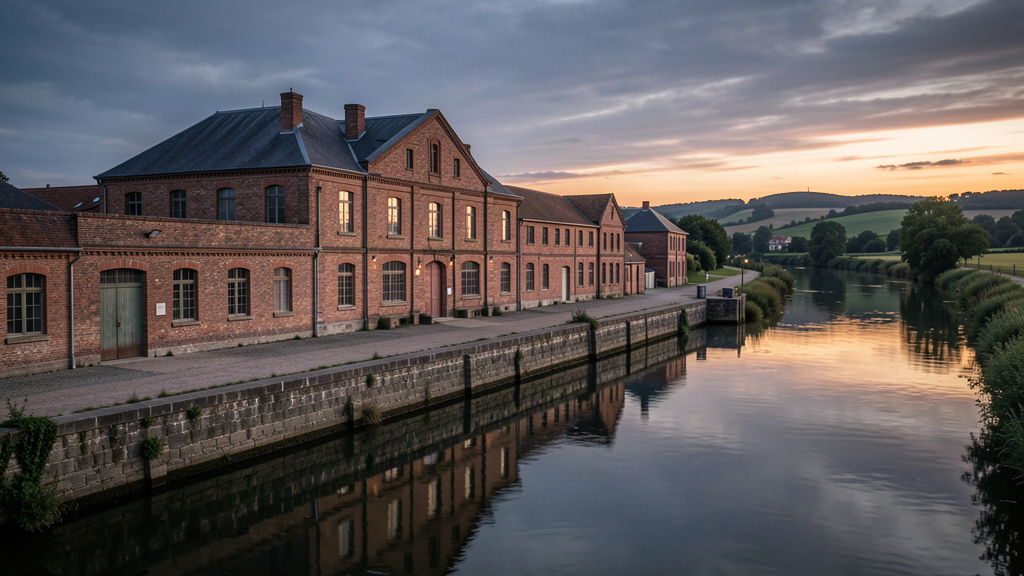
Port Boinot is that quay. Brick, water, a park where chamoiseries once ran, and a street still called Rue de la Chamoiserie. If you only came for green canals, this stretch will feel almost too ordinary. That is why I stay.
What the glove town left behind
Niort made money on chamois leather and gloves for a long time. Factories along the Sèvre turned skins into soft goods bound for Paris and farther. Boinot was one of the big names. Production wound down, the site went quiet, street-arts groups moved in for a few years, and then the city rebuilt the bank into a public park of about two and a half hectares between the Ponts Main and the river.
You still read industry in the brick. Long walls. Wide floors that once held machines. People clocked in here long before anyone sold day trips from the station. I like the paths in late morning, when office workers cut through and the river looks green-brown under the trees. Kids on scooters. Someone eating a sandwich on a bench that faces water instead of a façade.
Rue de la Chamoiserie is not a museum street. It is just a name that stuck. Stand there and look toward the Sèvre and you get a short read on Niort: a trade river, hard work, and a softer life after the machines stopped.
Twin keeps and the river under the passerelle
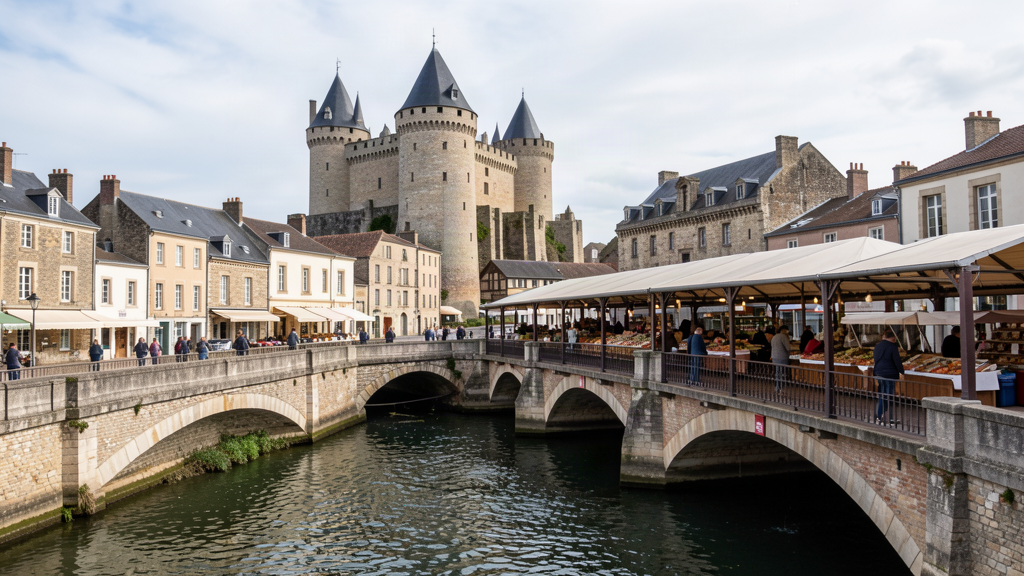
Uphill from the quay, the Donjon still holds the skyline. Two square keeps linked by a central body, started under the Plantagenets when this was contested ground. Henry II’s people built for control. From the north terrace on a clear day you get old-town roofs and a clean line toward marsh country beyond.
I go up for the rooms and the view, then come back down faster than the brochure suggests. The better hour is on the passerelle over the Sèvre, looking back at the stone. The keep sits heavy. The river moves slow. Office glass and ordinary apartments crowd the edges. Niort is an insurance town now as much as a tourist base, and you feel that mix in the streets: serious weekdays, markets that still matter, a keep that never got turned into a costume drama.
Below the donjon, the Halles on Rue Brisson keep the center fed. Thursday, Saturday, and Sunday hit hardest. Cheese, fish, vegetables, people who know which stall to trust. I buy fruit I can eat walking and something cured for later. The covered market is ordinary in the best way. Locals still shop there.
A slow loop that stays in town
My preferred day barely leaves the commune. Morning coffee near Place de la Brèche, then downhill toward the Halles while the light is still flat. Market first if it is open. Then the lanes that fall toward the Sèvre and the donjon mass.
After that, Port Boinot. Walk the full park. Sit. Watch the water go about its business. If legs allow, follow the river path a little west and feel how quickly the urban edge loosens. The Marais proper starts farther out, but the mood begins here: humidity, green banks, boats somewhere in the next conversation.
Musée Bernard d’Agesci can take an indoor hour if weather turns. Optional. The quay and the keep already give you enough. Afternoon, I climb back toward the center for a drink and remember this is a working prefecture with errands and office hours, not a weekend set piece.
Summer weekends push day-trippers through. Shoulder seasons open tables and thin the paths at Port Boinot. Winter is wet and honest. Bring a layer even when the forecast looks kind; river towns keep their own chill.
Marsh day trips without emptying the town
You will hear Coulon, Arçais, Magné. Boat hires. Ash trees leaning over canals. Do it if you have a car or a patient bus plan. Just do not write Niort off as a morning footnote.
I like one full day mostly in town, one half-day in the marsh, sleep back by the Sèvre. Dinner tastes better when you skip three hours of parking in a village never built for rentals. Port Boinot at dusk after the marsh is a quiet reset. Brick holds the last light. The water goes dark first.
If you only have hours between trains, skip the full Venise Verte circuit. Do Halles, donjon exterior or terrace if open, Port Boinot end to end. That sequence is Niort without the brochure stretch.
Places to stay
Budget edge of town — B&B HOTEL Niort Sud Venise Verte 260 Avenue de La Rochelle, 79000 Niort Simple rooms, car-friendly, useful if you are looping the marsh and do not need a historic façade. You will bus or drive to the center. Fine for clean sleep and an early exit toward the canals.
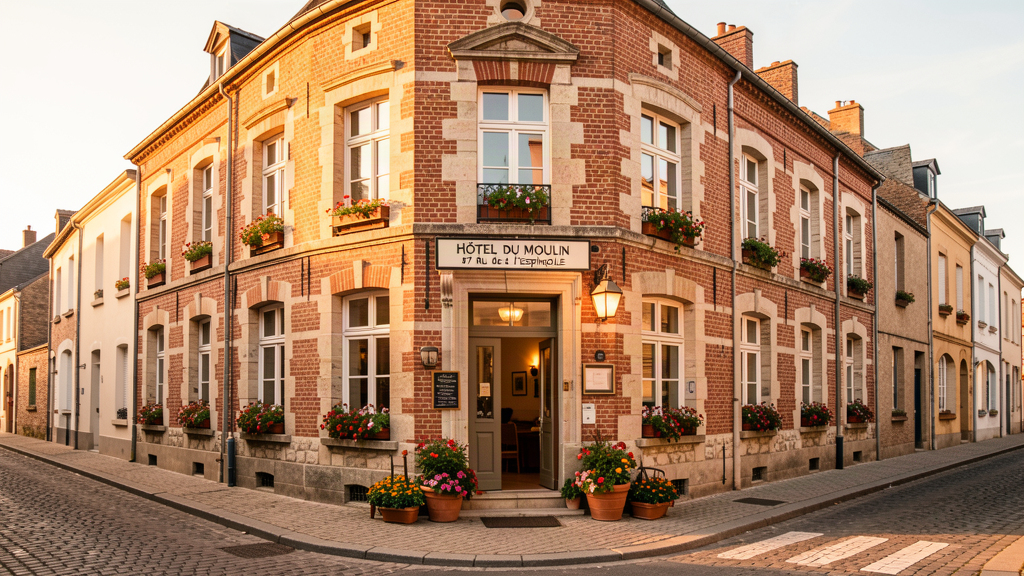
Near the quay — Hôtel du Moulin 27 Rue de l’Espingole, 79000 Niort This is the one I point friends toward when Port Boinot is the point. A short walk to the old factory park and the river, below the old town, close enough to the station that arrival is not a project. Quiet for the location. You can wake up and be on the brick paths before the day fully starts.
Central mid-range — Best Western Hôtel de la Brèche 9 Avenue Bujault, Place de la Brèche, 79000 Niort Right on the modern heart of town: cinemas, restaurants, the square that behaves like a living room after work. Easy walk to the Halles and downhill to the donjon. Choose this if you want evening options at the door and do not mind a little more noise.
Once you are settled, feet cover the useful Niort. Save the car for the marsh day.
Where to eat
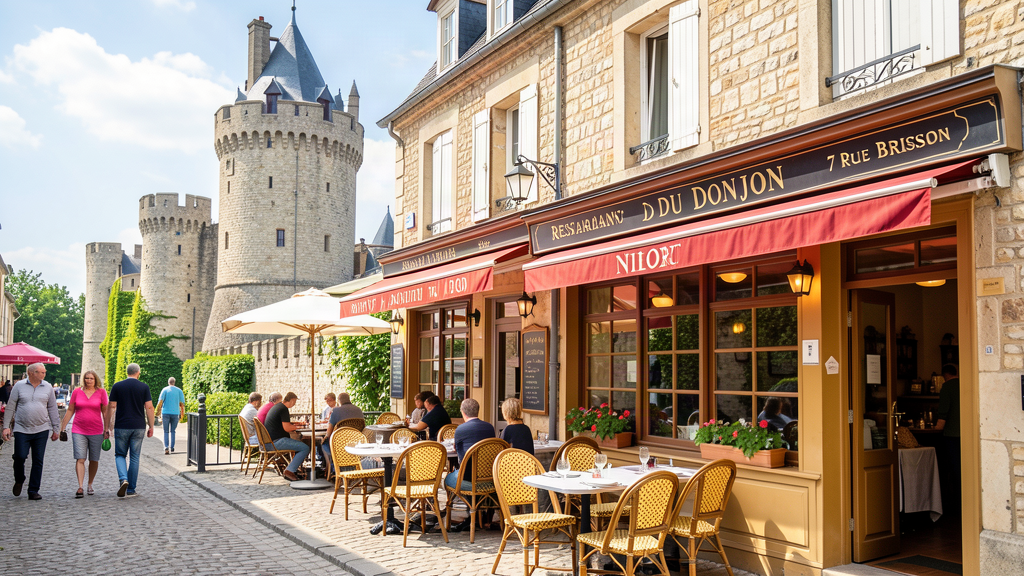
Restaurant du Donjon 7 Rue Brisson, 79000 Niort Traditional French cooking a few steps from the Halles, in the pedestrian zone under the keep. Long-running and still useful if you want a proper sit-down after the market. Order a normal lunch, not a tasting tour. Reserve when the town is busy.
Auberge de la Roussille 30 Impasse de la Roussille, Saint-Liguaire, 79000 Niort On a green bend of the Sèvre in the Saint-Liguaire side of town, this is the longer meal: modern French, garden air, a setting that feels farther out than the map suggests. Come when you have time and an appetite. Book ahead. It is the dinner I save for the night I did not rush.
Le Patio 17 Rue Condorcet, 79000 Niort More bar than white-tablecloth, open into the evening, good for a drink and something simpler after a day on foot. Useful when you have already done a full restaurant and still want a table that does not ask much of you.
Between those, the Halles handle picnic supplies. Fruit, cheese, a half baguette, and a bench at Port Boinot will beat a mediocre menu near a parking lot.
Getting here and moving around
Niort sits on the main line between Paris-Montparnasse and the Atlantic, with easy links toward La Rochelle. The station is walkable to the center if your bag is light; otherwise a short taxi. Bordeaux and Poitiers are easy rail hops on a Nouvelle-Aquitaine loop.
In town, walk. The slope from Place de la Brèche down to the Sèvre is real but manageable. Buses cover farther neighborhoods. For the Marais villages, a car is simplest; bikes work if you like longer, flatter rides and check the wind.
A day that ends on brick
One full day is enough to understand the town; two nights are kinder. Morning: Halles if open, coffee, then the donjon for stone and height. Midday: lunch near Rue Brisson or a market picnic. Afternoon: Port Boinot without hurrying, maybe a short river path extension. Early evening back up toward la Brèche for a drink, then either Restaurant du Donjon if you want center energy or a taxi out to la Roussille if the night is for a longer table.
I left with damp shoe edges from the quay paths and a paper bag from the Halles crushed in my pack. Niort will keep selling itself as the door to Green Venice. True enough. What stays with me is smaller: factory brick along Port Boinot, the twin keeps over the slow Sèvre, and a market street that still smells like food instead of souvenirs. The marsh can wait an extra morning. The quay does not mind if you sit.
