
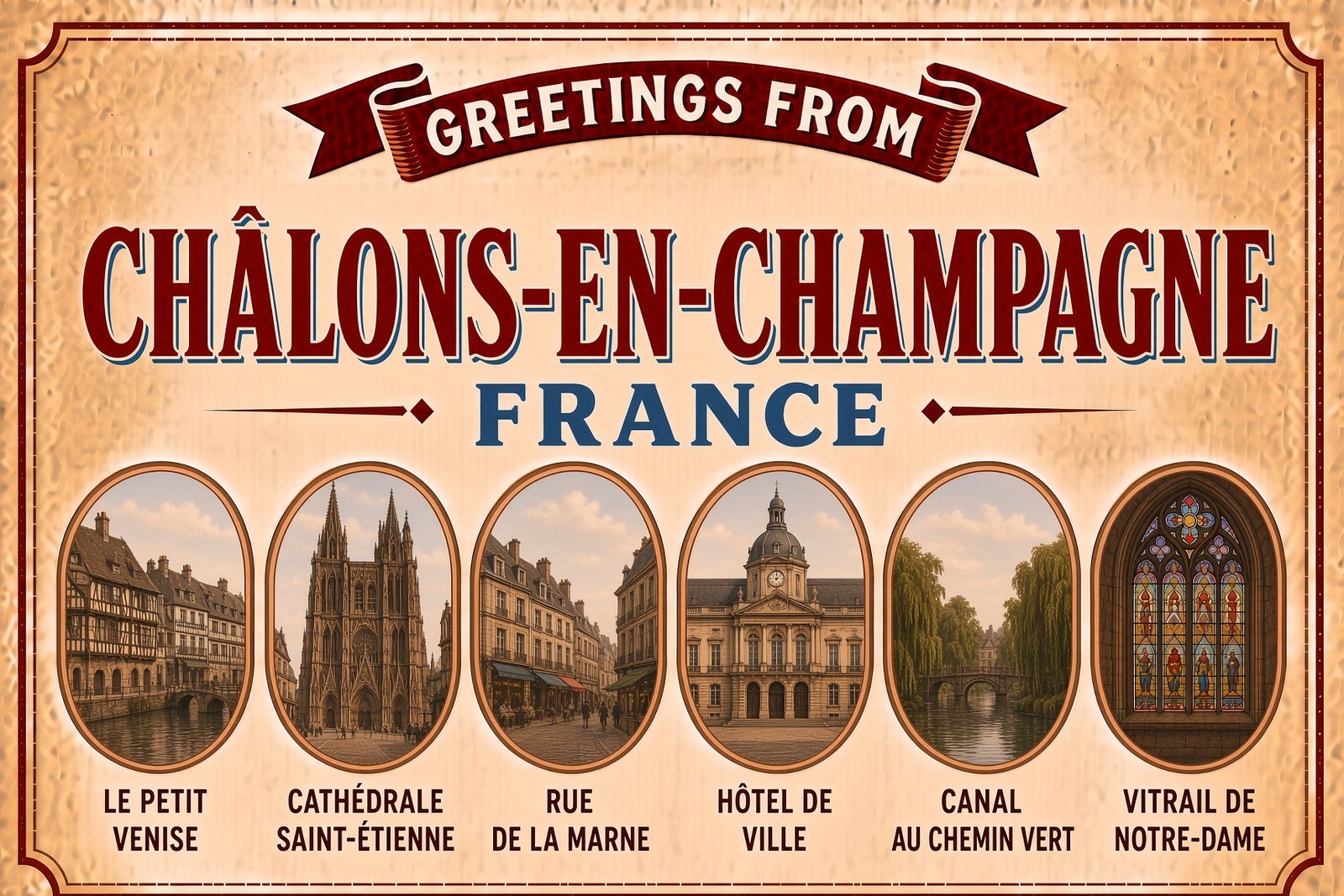
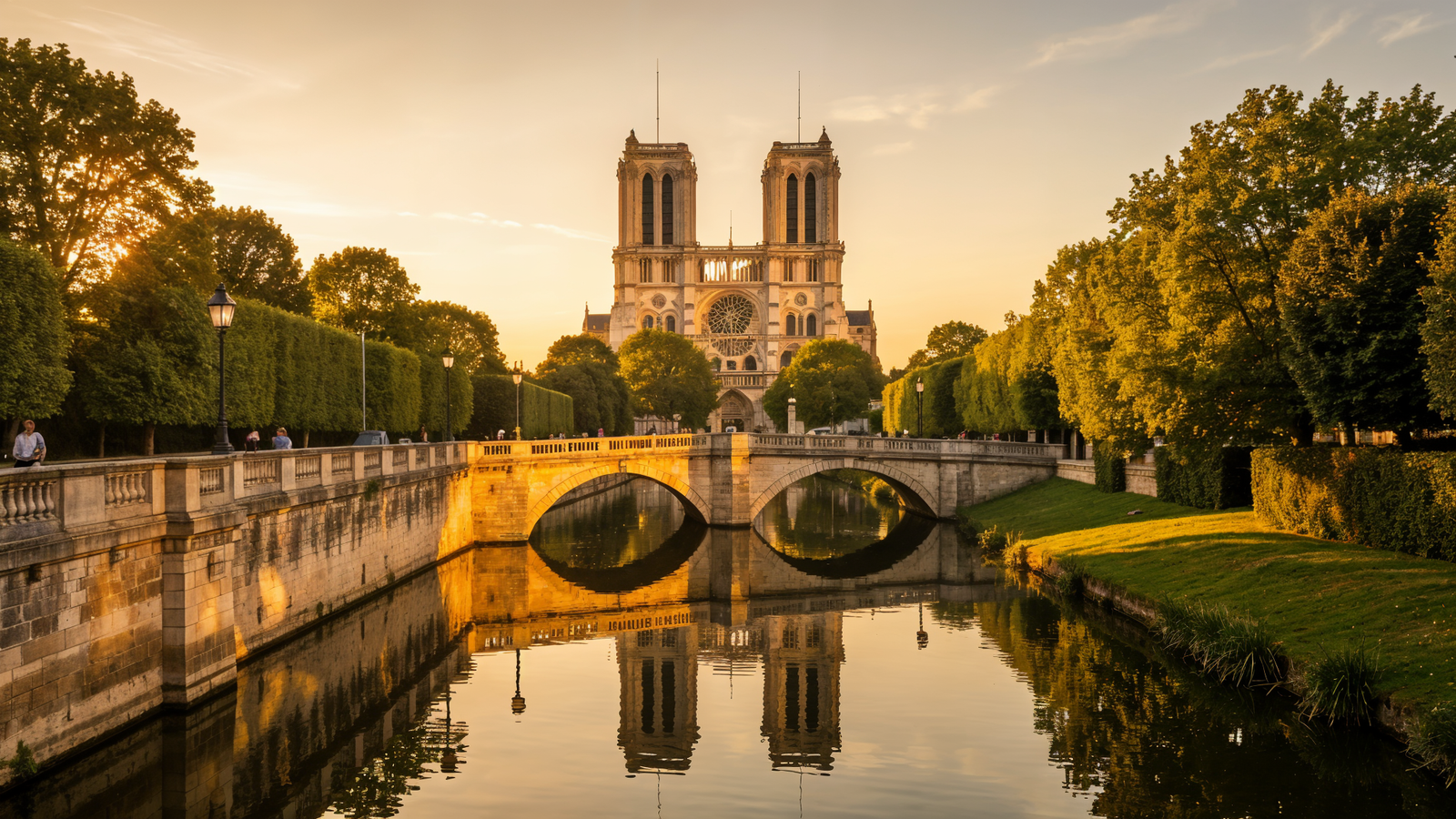
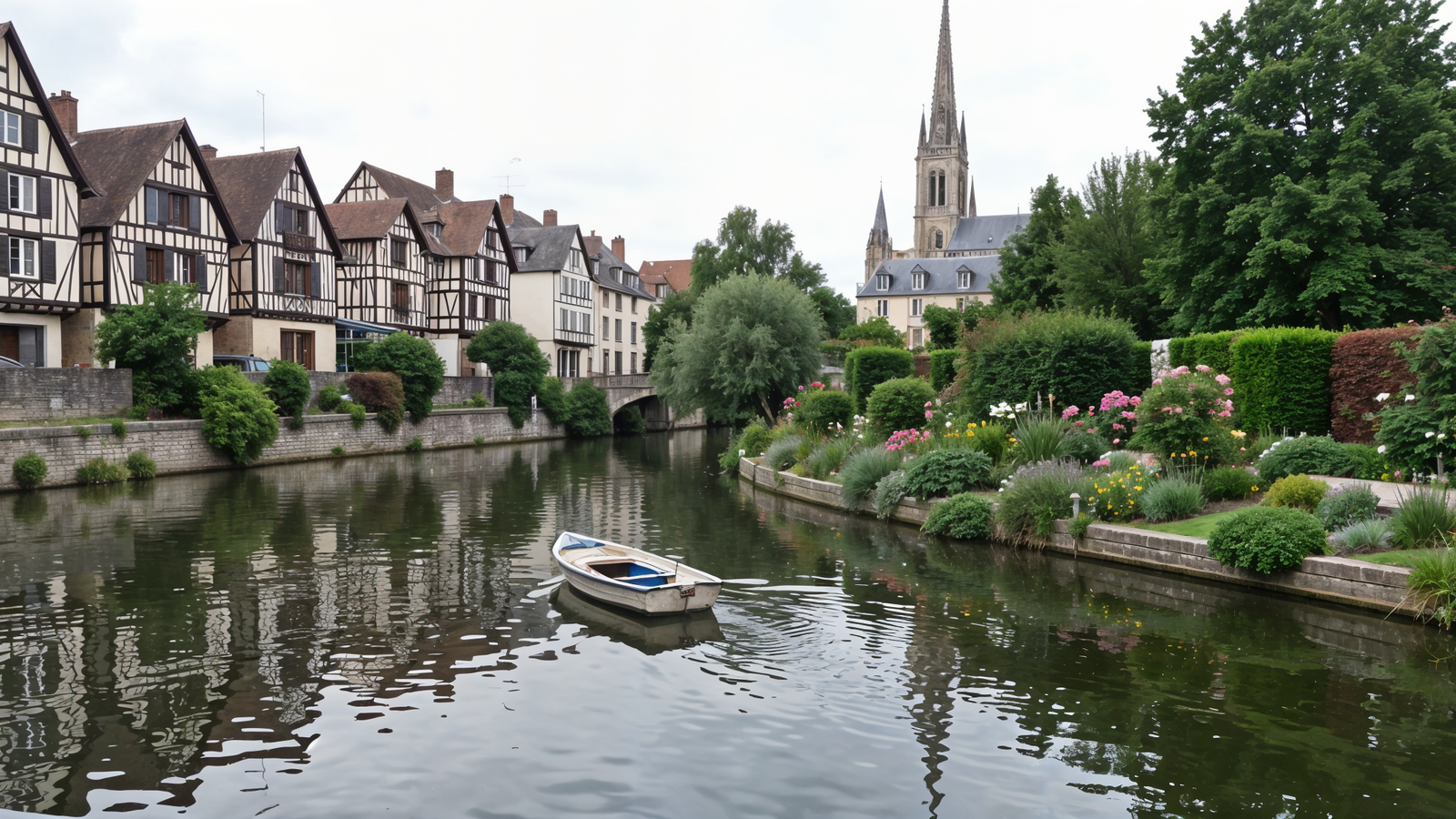
Skip the Champagne house gates for your first look at Châlons-en-Champagne. Walk the long green of the Grand Jard until the path hits water, then step onto the footbridge that links the Grand Jard to the Jard Anglais. Behind you: plane trees and a bandstand. Ahead, the canal cuts a clean line and the towers of Cathédrale Saint-Étienne rise over the rooftops.
Reims has the coronation story. Épernay has the long avenue of labels. Châlons does the departmental capital work — courts, offices, markets, a historic core laced with the Mau and the Nau. People still live over the shops. Bikes rattle over stone. On a quiet morning you can stand on that footbridge with almost nobody else and watch the light move on the cathedral stone.
The jards, the canal, and the cathedral line
Give the gardens more than a photo stop. The Petit Jard, Grand Jard, and Jard Anglais run together as a green belt through the centre. Statues of the seasons sit in the Petit Jard. Paths in the Grand Jard drift toward the bandstand. The English garden eases into water and wood. In winter, low ground can flood and turn the middle of town into a temporary lake. Locals treat it as weather, not a show.
Cross the footbridge, then cross it again. From the middle you get the park, the canal, and Saint-Étienne in one frame. Photographers show up for sunset. Early morning is kinder if you want the view without negotiating tripods.
From there, walk toward the cathedral rather than looping back through the same allée. Cathédrale Saint-Étienne is Gothic, a little severe from some angles, generous with stained glass when the sun cooperates. Go inside when the door is open and let your eyes adjust. Outside again, follow the water. Pleasure boats run on the Mau and Nau in season. Even if you skip the cruise, the towpath changes how the town reads. Facades reverse. Back gardens appear. The cathedral keeps showing up between trees.
Notre-Dame-en-Vaux is the other church worth the detour. The old collegiate has Romanesque weight and Gothic lift, sixteenth-century stained glass, and a cloister museum next door that is worth a slow half hour. On an ordinary afternoon it feels like a working city’s great church: doors open, footsteps, someone lighting a candle. If you have a car or half a day extra, the Basilica of Notre-Dame de l’Épine stands about eight kilometres east in flamboyant Gothic. Save it for after the centre has already settled in your head.
Half-timber, white stone, and ordinary streets
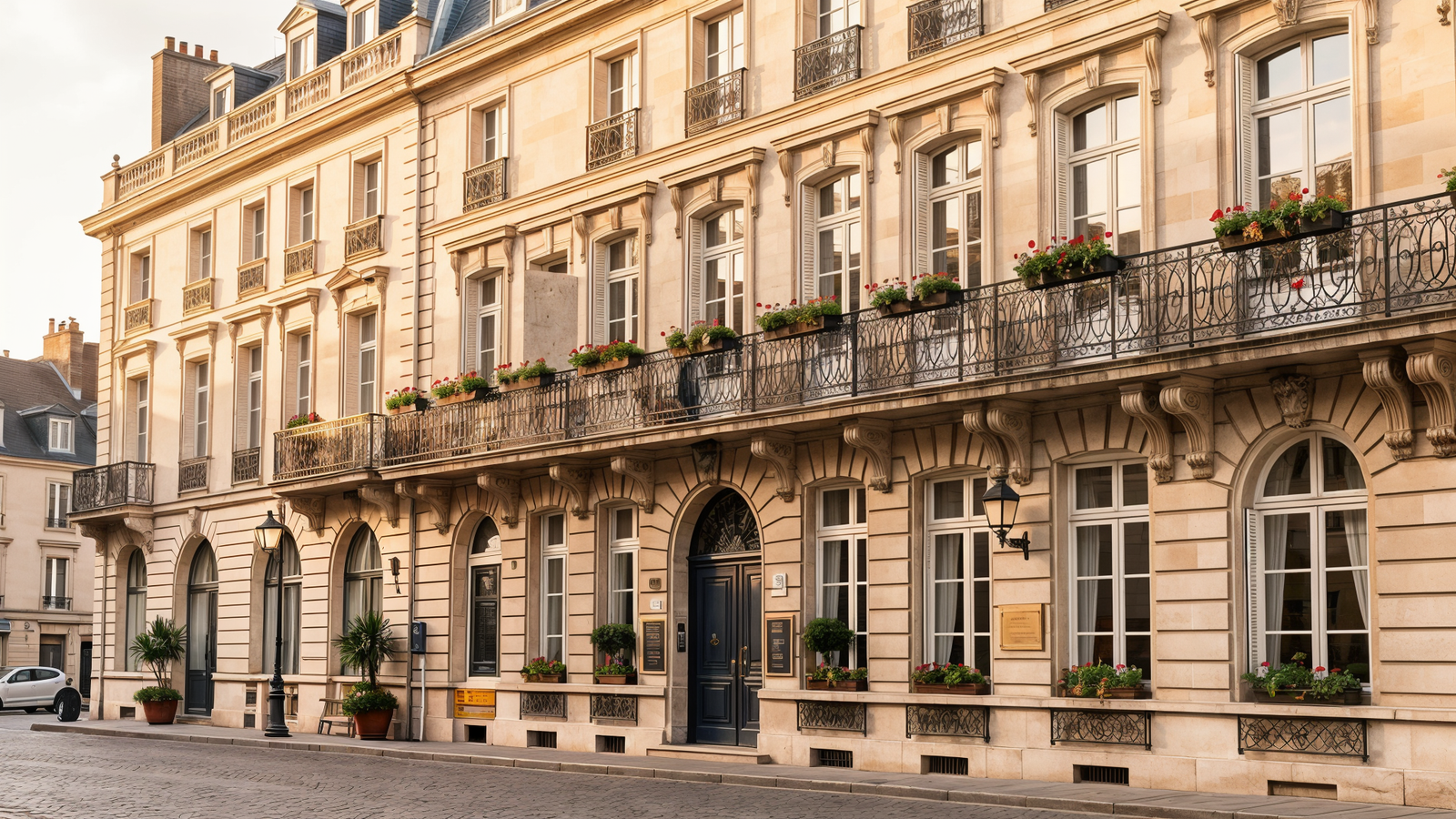
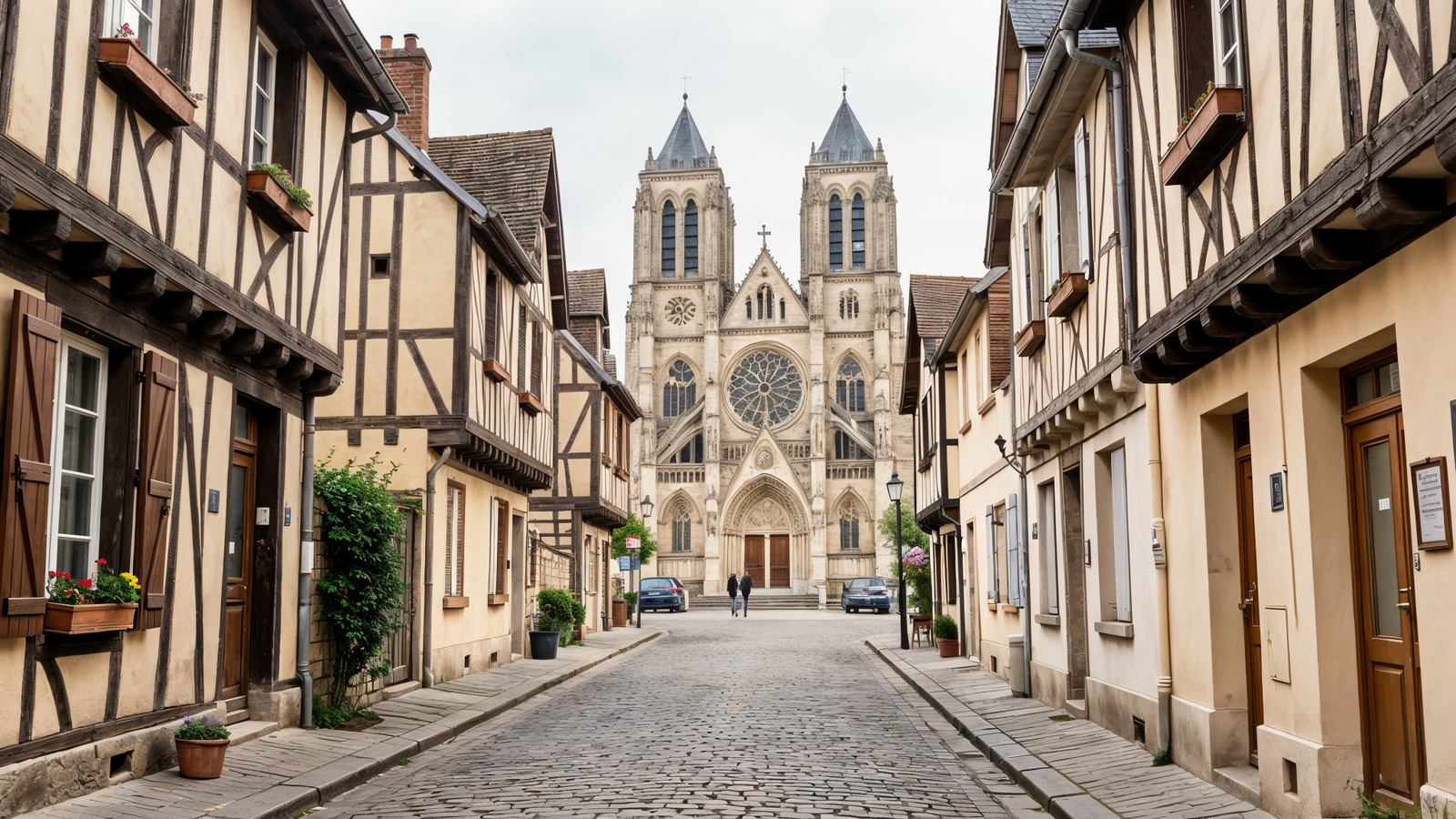
Châlons mixes half-timbered houses with brick and pale stone in a way that never quite settles into one postcard look. That works in its favour. Walk from Place Monseigneur Tissier toward the town hall and the lanes that feed Place de la République. You will pass shopfronts that still sell ordinary things: hardware, bread, pharmacy goods. Porte Sainte-Croix marks an older edge of town and is a simple orientation point when you loop back to the hotels on the square.
Musée Garinet, in a nineteenth-century townhouse, holds Jules Garinet’s personal collection: furniture, art, oddities. It feels like a municipal museum that trusted you with someone’s house. The Musée des Beaux-Arts et d’Archéologie covers a longer arc if you want more than one hour indoors. An hour in one museum, then back to the canal, is enough.
Street plaques remember people the rest of France may only half know: Oehmichen, Pierre Dac, Cabu. Noticing the names while you walk is enough.
Food without the tasting-room circuit
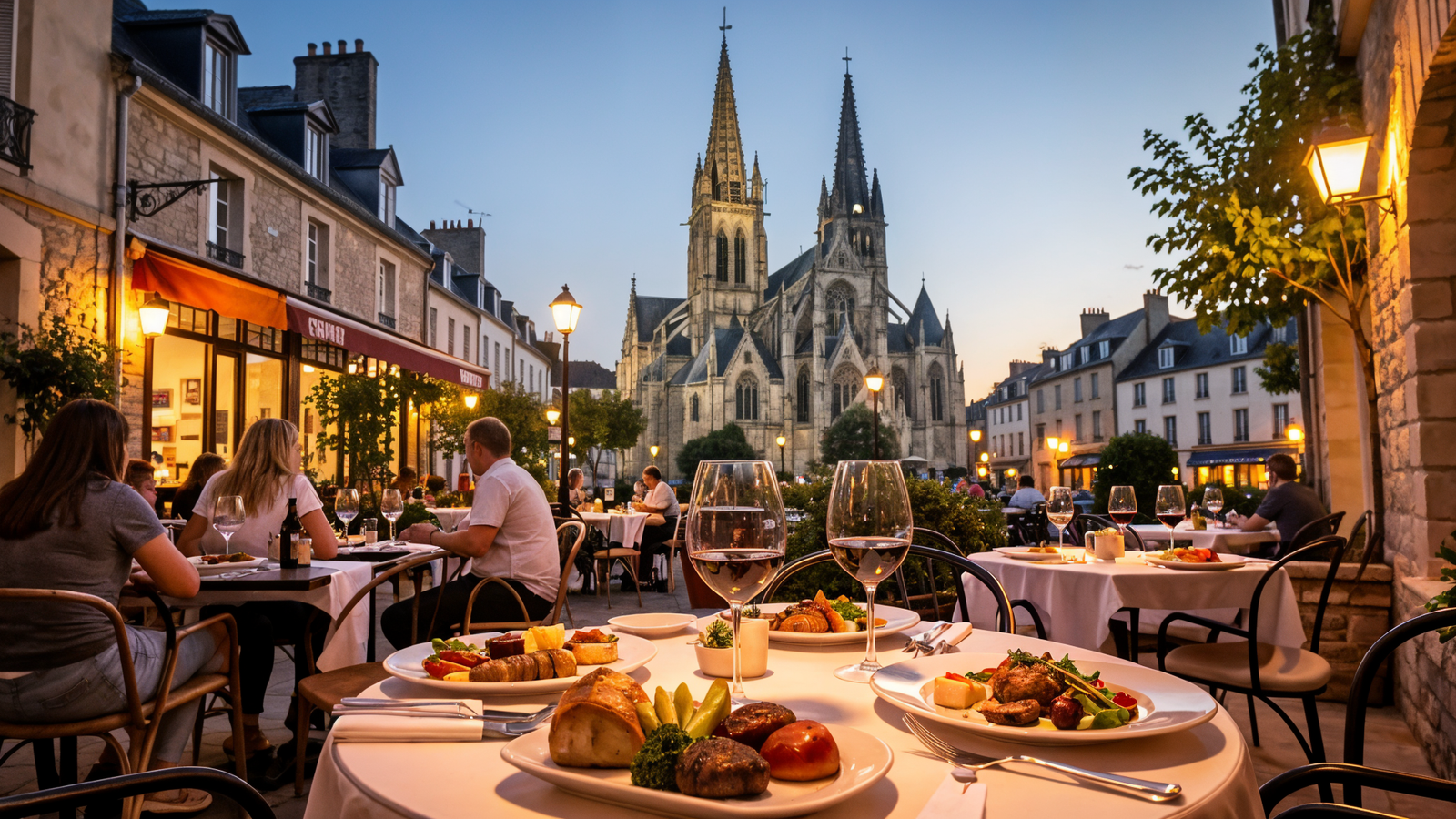
You can drink serious Champagne in Châlons, including at houses and cellars that run tastings in town. The daily pleasure is sitting down to food that fits a prefecture city more than a brand campus.
Restaurant Jérôme Feck at Hôtel d’Angleterre is the special-evening table: 19 Place Monseigneur Tissier, 51000 Châlons-en-Champagne. The room is calm, the cooking precise, the wine list built for people who already know what they like in the region. Book ahead. This is not a casual walk-in after the footbridge unless you get lucky.
For something looser under the same roof, Les Temps Changent works the bistro side at the same address, 19 Place Monseigneur Tissier. Wood, stone, seasonal plates, a room that still feels tied to the square outside. Good when you want care in the kitchen without the full tasting pace.
Le Petit Pasteur sits a short walk away at 42 Rue Pasteur, 51000 Châlons-en-Champagne. It is a bistrot room in the best sense: house cooking, regulars, lunch service that fills with people who have somewhere to be afterward. Order whatever looks freshest on the board and a bottle that does not need a speech. If the terrace is open, take it.
If those three are full, the restaurant at Hôtel & Spa Le Renard, 24 Place de la République, runs traditional French plates in a contemporary room and often has a table when the square is busy. In a town this size, flexibility beats chasing one reservation.
Between meals, bakeries and cheese counters along the centre streets will sort you out for a park bench lunch in the Grand Jard. Do that at least once. Eating with the cathedral in view is part of why you came.
Places to stay
Stay in the centre so mornings start with the jards, not a ring-road walk.
Hôtel d’Angleterre (upscale)
19 Place Monseigneur Tissier, 51000 Châlons-en-Champagne
A classic townhouse hotel facing the square by Notre-Dame-en-Vaux and the civic core. Rooms are polished without trying too hard; marble bathrooms, decent quiet once the square settles, and Jérôme Feck and Les Temps Changent downstairs. Book it when the meal is part of the stay.
Hôtel & Spa Le Renard (mid-range)
24 Place de la République, 51000 Châlons-en-Champagne
Four-star Logis comfort on the main square, with a spa for when cobbles and canal paths have done their work. A champagne bar if you want a glass without leaving the building, and an easy walk to the jards and the cathedral line. Solid base for a two-night pause rather than a pure transit stop.
ibis Styles Châlons-en-Champagne Centre (budget-friendly)
26 Place de la République, 51000 Châlons-en-Champagne
Straightforward modern rooms on the same square as Le Renard, breakfast usually in the rate, underground parking if you arrived by car. You give up townhouse atmosphere and gain predictability and a short walk to everything that matters. Fine for a solo night or a practical stop between larger Champagne towns.
Getting there and getting around
Châlons-en-Champagne sits in the Marne, on rail lines toward Paris and the rest of Grand Est. The station is a walk or short taxi from the centre depending on luggage. By car, follow Centre / Cathédrale / République signs; once you are near Place de la République or Place Monseigneur Tissier, park and stop driving. The pleasure is continuous and small: garden path, footbridge, nave, side street, another stretch of water.
For a weekend you barely need buses. Bikes help if you want to ride out toward l’Épine or along longer canal paths. Wear shoes that forgive damp grass and uneven stone.
Joseph Perrier and other producers keep a presence in and around town if you want a structured tasting without relocating to Avenue de Champagne. Pair one visit with the gardens. Châlons works better when champagne is a glass after the walk, not the whole reason you came.
A loose day that still covers the ground
Morning: coffee near Place de la République, then straight into the Grand Jard while the grass is still cool. Cross the footbridge, turn around, cross it again if the light just changed. Walk on to Saint-Étienne and sit in a side aisle for ten minutes.
Midday: Le Petit Pasteur if you booked, or Les Temps Changent if you want to stay by the square. Leave room for a later glass.
Afternoon: Notre-Dame-en-Vaux and the cloister museum, then either Musée Garinet or an open hour on the canal path. If the boats are running and the day is warm, take the short water loop once. If not, the towpath is enough.
Evening: Jérôme Feck when you want the long meal, or Le Renard when you want something closer to the square and an earlier night. Walk back across a corner of the jards if they are still open. The cathedral bulk stays in the skyline longer than you expect.
Châlons will not compete with Reims for drama or with Épernay for brand density. What you get is a capital scaled to footbridges and parish stone: water through the middle of town, glass in two serious churches, and a park that shows you the cathedral before any brochure does. Start on the Grand Jard span. The rest falls into place from there.
