
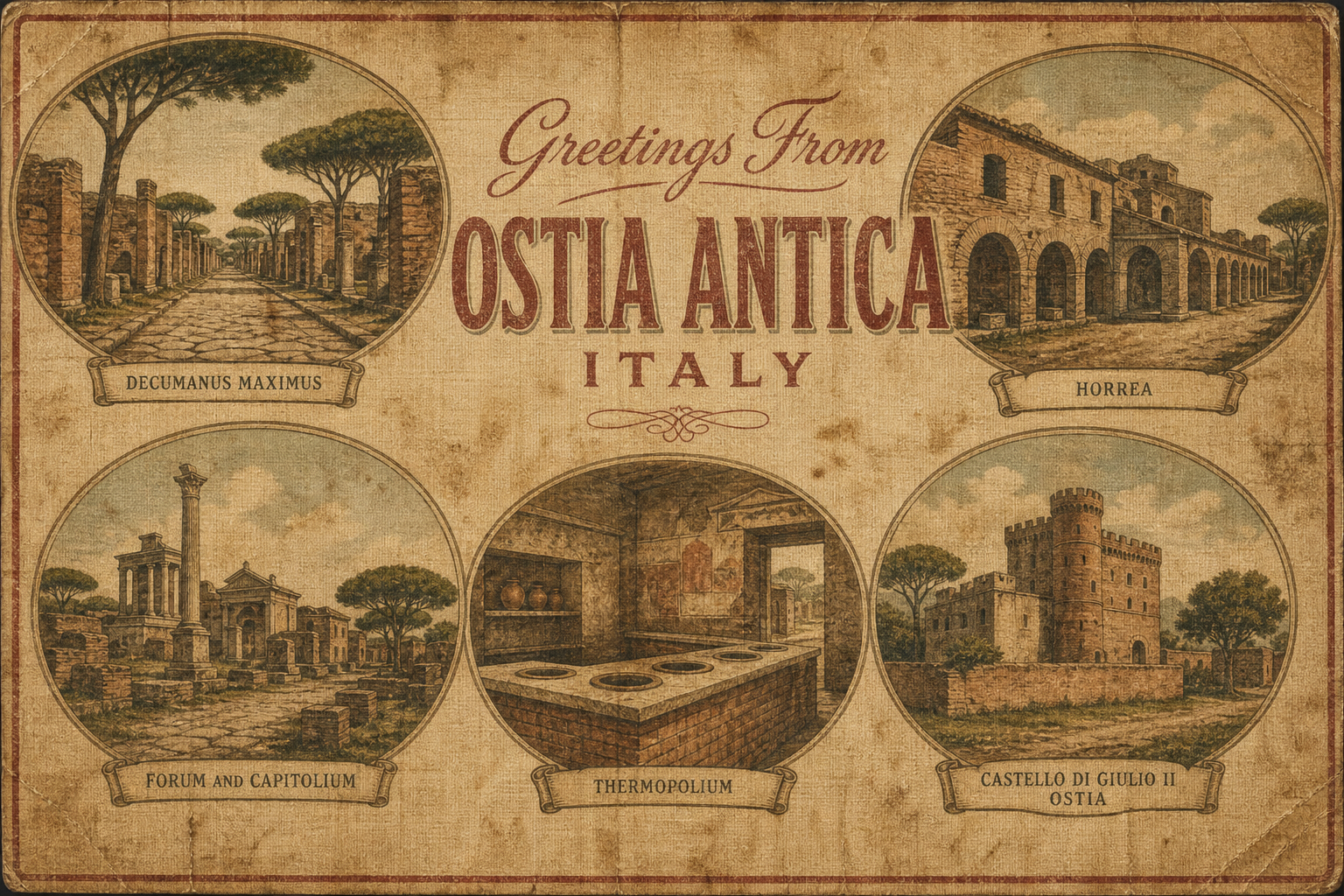
You feel the shift before you see the stones. Ten minutes after the train leaves Piramide, apartment blocks thin out. Pine and scrub take their place. Then the doors open at Ostia Antica station, and the air smells like river mud and cut grass instead of bus exhaust. The harbor city sits a short walk past the ticket gate. For long stretches of the day you can have whole streets almost to yourself.
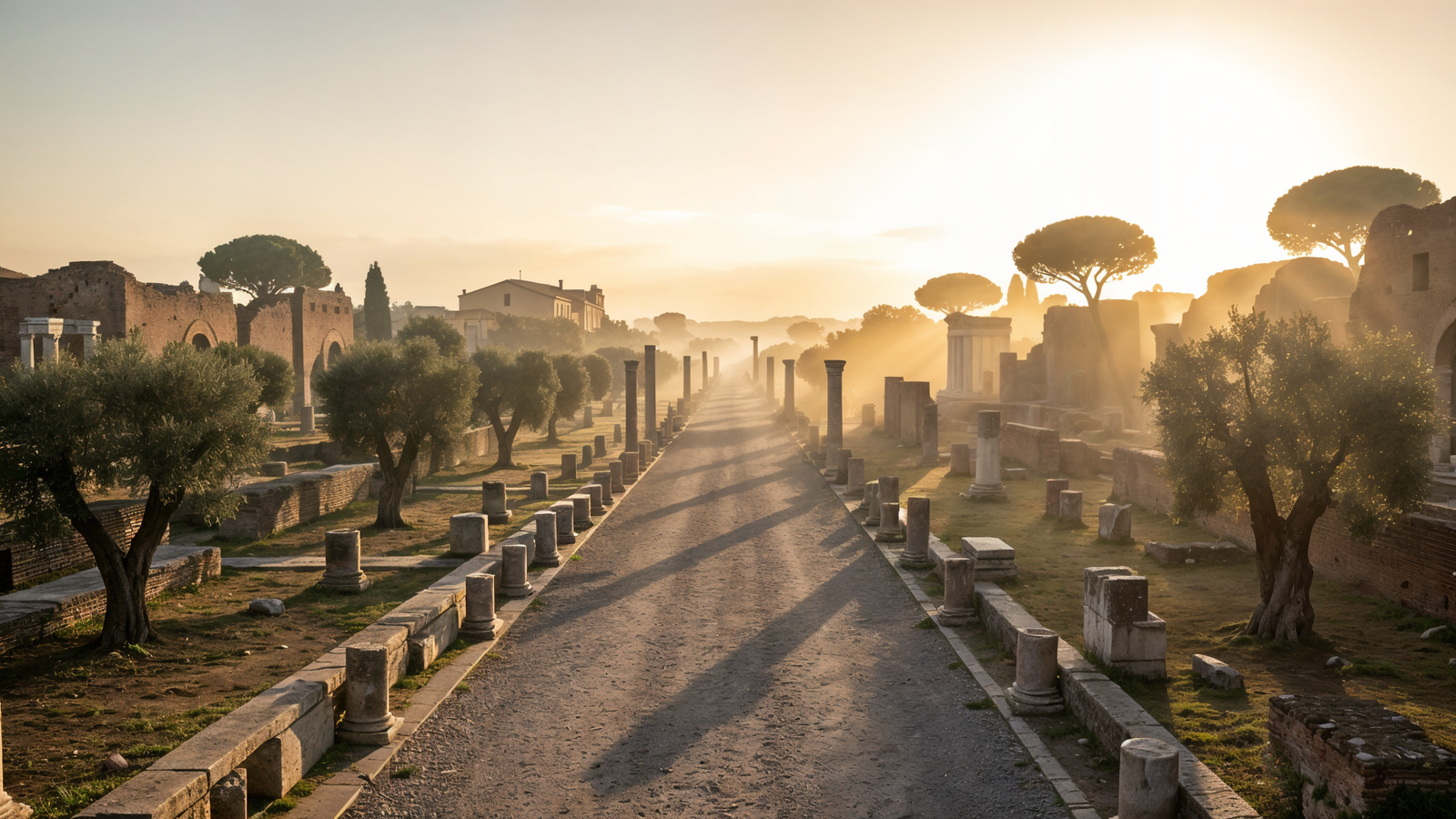
Ostia was Rome's mouth — ostium — where the Tiber once met the Tyrrhenian and grain ships fed the capital. The sea has wandered west. The river has changed course. What remains is not a postcard pier but a floor plan you can still walk: apartment blocks two stories high, bath complexes with the heating exposed, shopfronts whose marble counters look ready for lunch. If Pompeii is drama frozen mid-sentence, Ostia Antica is the ordinary day that kept going until the silt closed the door.
Start on the long straight road
Most visitors enter and drift toward the first photogenic wall. Better to keep walking. The Decumanus Maximus runs straight through the site, a broad worn road that once carried carts, sailors, bakers, and customs clerks. Give yourself twenty quiet minutes on it before you open a guidebook.
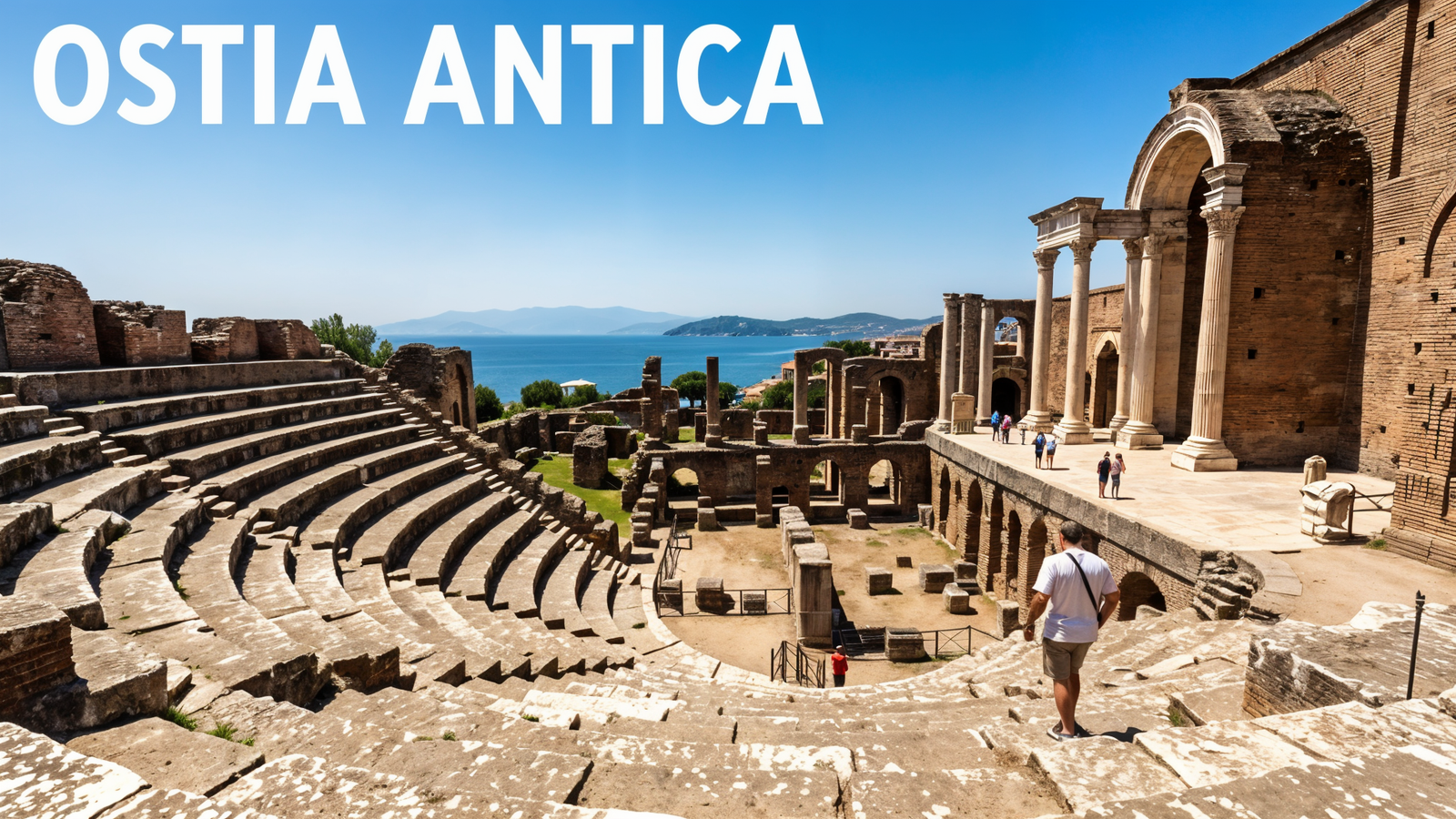
On either side, brick and tufa open into courtyards. Staircases climb to floors that aren't there anymore. You pass the theater early, a neat semicircle that still hosts summer shows, and just beyond it the Piazzale delle Corporazioni, the square of the shipping guilds. This is where Ostia stops feeling abstract. Black-and-white mosaics name the trades: grain from Africa, wild animals, rope, shipowners from distant ports. Kneel if the light is right. You can still read the ads under your feet.
From there the city deepens. Insulae — Roman apartment houses — line side streets with a density that surprises people who only know Rome through temples and forums. The House of Diana shows the pattern clearly: shared courtyards, shops at street level, private rooms upstairs. Nearby thermopolia still hold the counters where hot food was sold. The marble is cool even in July. Someone once leaned here with a bowl and watched the street the same way you are watching it now.
Baths, gods, and the working harbor
Ostia was a port town, so it had many gods and many baths. The Forum Baths and the Baths of Neptune reward slow looking. Yes, the sea-creature mosaics, but also hypocaust pillars, drains, and the cold-to-hot sequence that structured a Roman afternoon. Bring water. Shade is patchy, and enthusiasm outruns hydration fast.
Look for the mithraea if you like quieter cult spaces. These half-hidden rooms dedicated to Mithras sit off the main shuffle — small, dim, specific. Sailors and clerks brought their beliefs with their cargo. Official temples share the city with eastern cults and neighborhood shrines. Nobody cleaned that layering up for your visit.
Toward the western reaches you sense water more than you see it. Warehouses (horrea) open in long rows. Grain once filled these chambers; now they hold air and the occasional lizard. Stand in one on a windy day and the logistics almost rebuild themselves: carts from the river, ledgers, the low panic of a late convoy. The coast retreated. The architecture still argues with emptiness. This was infrastructure, not scenery.
The medieval borgo after the ruins
When your legs start bargaining, leave the park for the medieval borgo around the Castello di Giulio II. It is not a theme-park extension of the ruins. It is a lived place with a piazza, a few restaurants, and the kind of afternoon quiet Rome's center rarely offers. Sit with a coffee facing the castle walls. Let the scale shrink from empire to neighborhood.
If you have a second half-day and a car or taxi, the Isola Sacra necropolis across the river adds another register: tombs of merchants and middling families, less imperial swagger, more personal carving. Optional, and worth it if the main site left you curious. Otherwise stay put. The borgo and a long lunch are enough.
Getting there without turning it into a project
From central Rome, take Metro B to Piramide, then the Roma–Lido train from the adjacent Porta San Paolo station. Get off at Ostia Antica (not Ostia Centro, not Cristoforo Colombo). The walk to the entrance is short. A standard metro-style ticket covers the ride. Check fares and park hours; the site closes Mondays and shifts last entry with the seasons.
Arrive when the gates open if you can. Midday groups thicken around the theater, then thin. Wear shoes you trust on uneven basalt. There is a café near the entrance, but pack water anyway. Summer heat sits low over the stones. Spring and autumn are kinder: green between the walls, fewer cameras, enough cool to keep walking.
Places to Stay
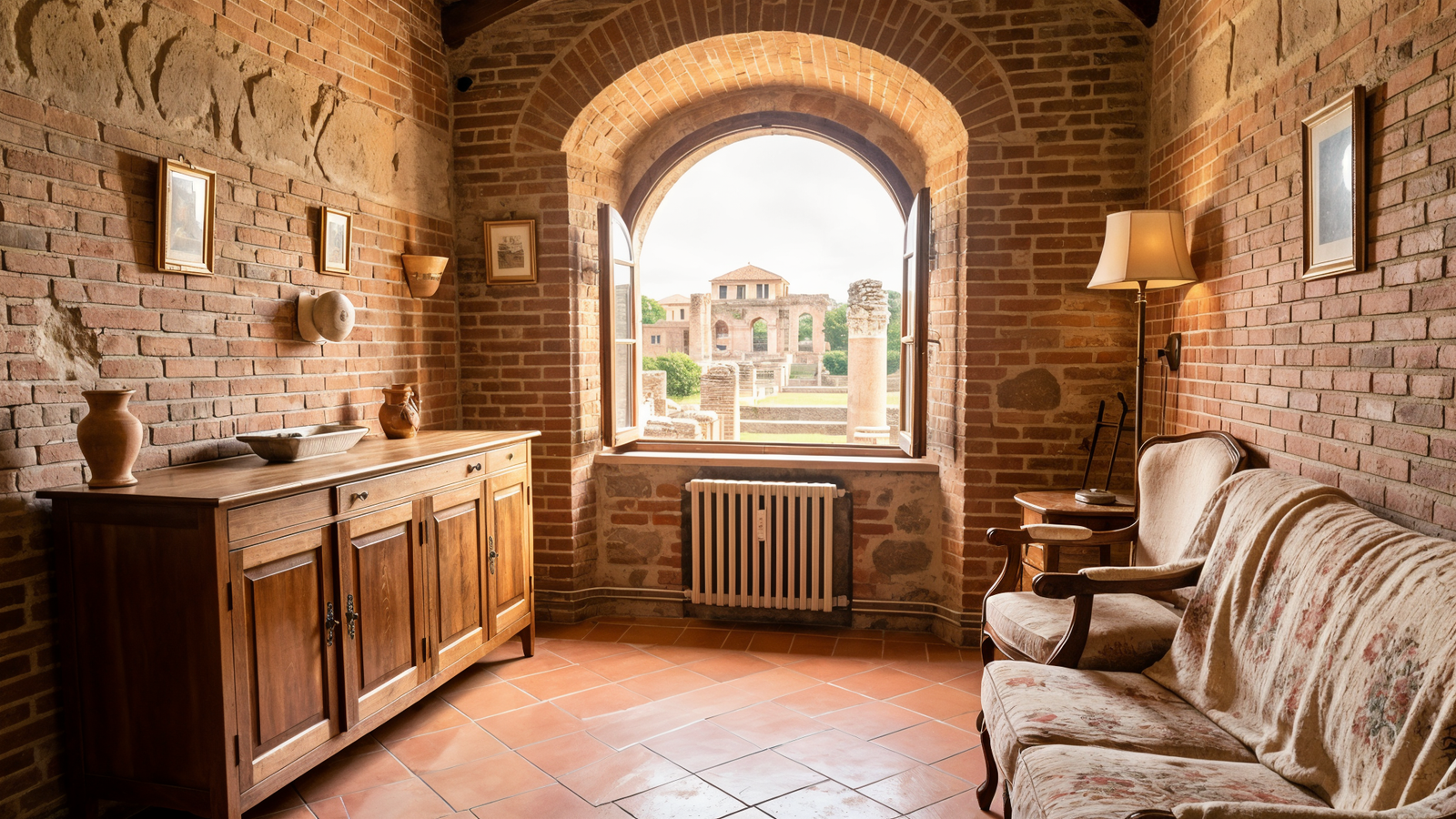
You can day-trip from Rome easily. Staying near Ostia Antica or on the Lido changes the rhythm: evening walks when the ruins close, seafood without a taxi back across the city, a morning train that feels like a commute.
Ostia Antica Suite B&B — Via Anselmo Banduri 57, 00119 Ostia Antica, Roma.
A simple, close-in base if you want the borgo and the park more than the beach strip. Rooms are straightforward; the value is location and dinner where locals eat. Good budget pick when morning access matters more than spa menus.
Ostia Antica Park Hotel & Spa — Viale dei Romagnoli 1041/A, 00119 Lido di Ostia, Roma.
Mid-range and practical, between the archaeological zone and the modern Lido. Useful if you are driving, landing at Fiumicino, or pairing ruins with a coast night. Pool and spa when your feet are done with basalt.
Hotel La Scaletta — Lungomare Paolo Toscanelli 130, 00121 Lido di Ostia, Roma.
On the seafront promenade, a short hop on the same Roma–Lido line toward the water. Ruins by day, lungomare evening: gelato traffic, beach clubs in season, salt in the air. Not next to the ticket gate, but linked by train on purpose.
Where to Eat
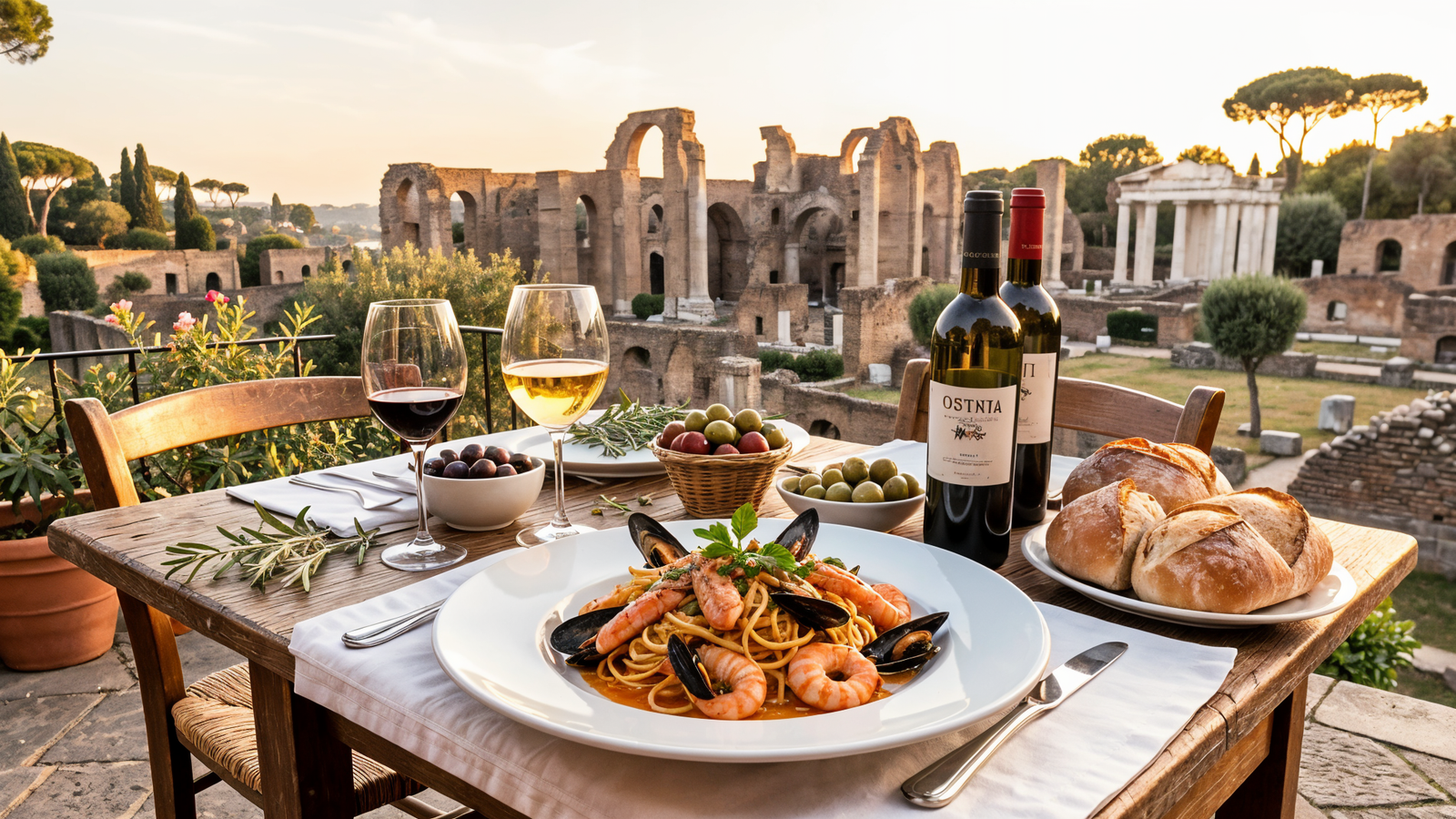
Eat in the borgo or along Viale dei Romagnoli. The food here is Roman-coastal: fried starters, seafood pasta, simple pizza, wine without ceremony.
La Fraschetta del Borgo — Viale dei Romagnoli 761, 00119 Ostia Antica, Roma.
Casual and close to the train-and-site axis. Pizza, cured meats, Roman plates that do not need a speech. Regulars get greeted; travelers who order simply get fed well. Ideal midday reset with dust still on your shoes.
Ristorante Monumento Dal 1884 — Piazza Umberto I 8, 00119 Ostia Antica, Roma.
The long-timer on the square by the castle walls. Seafood is the point: raw starters when the catch is right, pasta with local shellfish, tables facing medieval brick. Book dinner if you stay the night; lunch works after a full morning in the park.
Allo Sbarco di Enea — Viale dei Romagnoli 675, 00126 Roma (Ostia Antica).
A short walk along the same corridor; fish and seasonal Italian cooking rather than snack-bar speed. Proper sit-down that still feels tied to the name on the train schedule. Share antipasti, take the pasta course seriously, and let the afternoon slow down.
A practical day, not a checklist
One honest pattern works. Early train from Rome. Coffee near the station or in the borgo. Four to five unhurried hours inside the park: Decumanus first, guild square mosaics, a residential block, one major bath complex, then whatever side street pulls you. Lunch at La Fraschetta or Monumento. If energy remains, castle walls and gelato. If not, the train back while brick patterns are still sorting themselves out.
Ostia Antica is better when you stop performing "day trip" and walk like someone on a long errand. Read the shop signs in stone. Notice how an apartment stair turns. The Tiber moved. The sea moved. The street under your feet did not forget what it was for.
A few stations past modern Rome you get something rarer than another monument: a whole working city left open, main road straight through the middle. Eyes up. No hurry to be impressed.
