
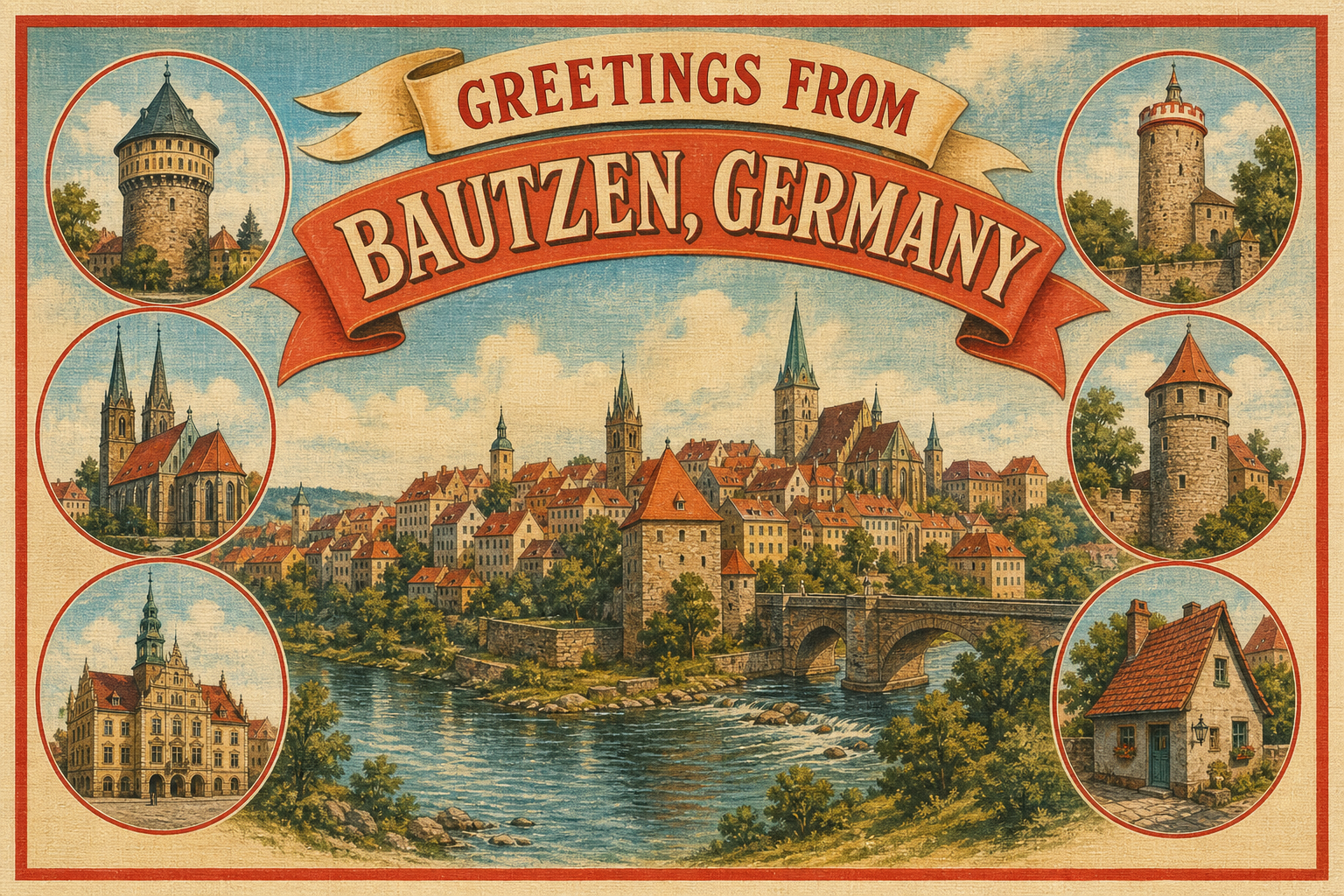
Most people treat Bautzen as “Stadt der Türme,” take the postcard shot from the Friedensbrücke, buy a jar of mustard, and leave for Dresden or Görlitz. Fine if you only have two hours. I start lower, on the Spree itself, under the Alte Wasserkunst, where the river cuts a real gorge and the old town stacks on the bluff.
Bautzen sits in Sachsen’s Oberlausitz. German and Upper Sorbian share street signs, church names, and dinner tables without much ceremony. Budyšin is the Sorbian name for the place. That is an ordinary local fact, not a special exhibit. The day makes more sense once the Spree, the water tower, and the climb to Ortenburg are in your legs.
Spree gorge, Alte Wasserkunst, and the climb
The Alte Wasserkunst is the round tower on the cliff above the river. It is a fortification, old waterworks, and viewpoint in one building. From the water path you see why the town grew here: defensible height, a river that still smells like stone after rain, walls that never fully turned into museum display.
I walk the lower Spree paths first when the light is soft, and dog walkers are already on the bank. The gorge is short. It is enough.
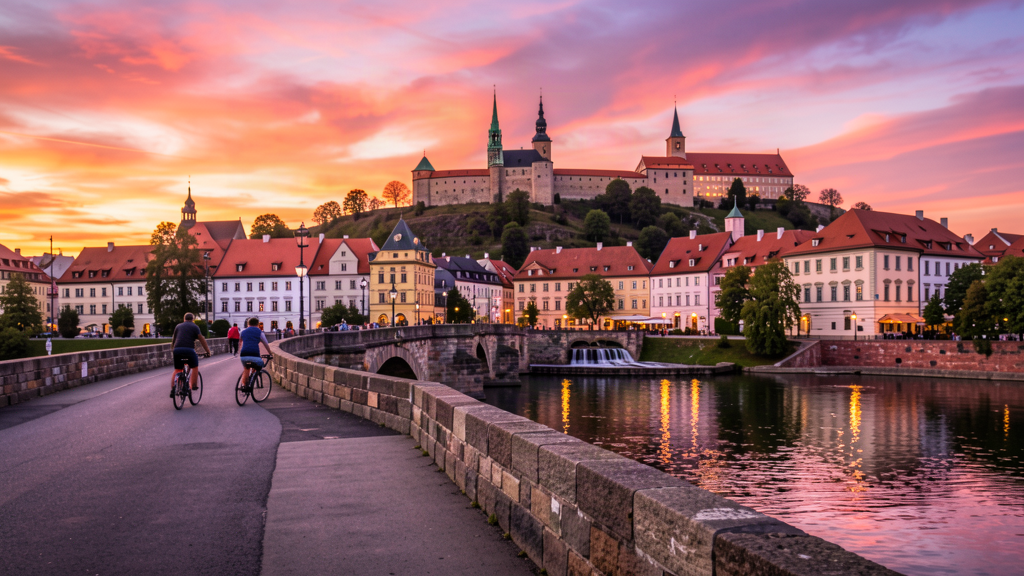
Look up. Roofs and tower tops sit in a vertical stack you cannot fake from a ring-road lot. Then climb. Stairs and lanes pull you from river cold into Altstadt stone. The Friedensbrücke is the wide-angle shot everyone knows: a long arch and a clean look back at the bluff. I use it once in late light and once in the morning. Midday tour buses love it too. I do not fight them for the same rail.
The climb resets the day from water to market height. Cobbles hold overnight damp. Shoes with grip matter more than a clever packing list. One water-level pass and one high pass beat three tower queues.
Ortenburg, Dom St. Petri, and the bilingual core
Ortenburg sits on the high ground: castle complex, courtyard, and the Sorbian Museum in the old Salt House when you want indoor context. Entry to the grounds is free. You can wander without a timed ticket. The Matthias Corvinus relief over the gate marks Bohemian and Hungarian layers from long before this corner of Sachsen became a tidy day trip. I walk the courtyard for orientation. Spree west and down. Cathedral spire east.
Dom St. Petri on Fleischmarkt is the tall marker and one of Germany’s large Simultankirchen. Catholic and Protestant congregations have shared the building for centuries. You can still read that split across the nave. The Sorbian name sits near the door: Tachantska cyrkej swj. Pětra. Ten quiet minutes inside is enough unless a service holds you. Outside, the square faces the Rathaus. Ordinary errands still cut through the tourist traffic.
Reichenturm leans a little off vertical on the eastern edge of the old town. Climb if legs allow. Skip it if the Alte Wasserkunst already gave you the roof line. I pick one tower a day, maximum.
Wendische Straße and the lanes around Kornstraße still carry bilingual life without turning it into a show. I buy bread, glance at a mustard shelf, and keep moving. Sorbian is a living minority language here.
How the town moves, and a clean day arc
Bautzen Hauptbahnhof sits a walk or short bus hop from the Altstadt. Practical, not pretty. Regional trains link Dresden and the wider Sachsen net. Check current tickets rather than assuming one app covers every side trip. Inside the core, walk. The historic center is compact, steep toward the Spree, and unfriendly to aimless driving. Park once at a signed garage or hotel lot and forget the car.
Buses cover longer hops toward the station. For a two-night stay focused on the gorge, Ortenburg, and the markets, I rarely need them. Cyclists use the Spreeradweg. Rain turns stone slick. Winter days shorten museum hours and kitchen service together, so confirm before you build a rigid lunch plan.
A clean day if bags are already down: Spree path under the Alte Wasserkunst early, climb to the Ortenburg courtyard and a short Dom St. Petri pass, coffee on or near Reichenstraße or Wendische Straße, optional Reichenturm or Sorbian Museum if weather traps you, late light on the Friedensbrücke facing the bluff, dinner locked. Second morning, reverse the order, or walk quieter residential edges when you want fewer storefronts.
Confirm rest days. Parish hours, museum desks, and kitchens do not share one calendar. Weekend dinners want a reservation more often than weekday lunches. The gorge path does not.
Food here leans Saxon and Sorbian: linseed oil with quark, wedding soup, river fish on good days, pork and dumplings when you want ballast, and Bautzener Senf in more forms than most visitors expect. I lock one serious Sorbian table and leave lunch flexible. Bakeries cover the early river walk.
Places to Stay
Pension Stadtwall (value, quiet near the wall and Spree path)
Flinzstraße 4A, 02625 Bautzen
Simple pension rooms a short walk from the Altstadt, free parking on the lot, easy reach of the Spreeradweg and the lower paths without sleeping on the loudest square. Practical beds. I use it when budget matters and the day already points toward the gorge and the climb. Book ahead around summer weekends and Christmas market weeks.
Schloss-Schänke Hotel garni (mid, Burgplatz by the Ortenburg side)
Burgplatz 5, 02625 Bautzen
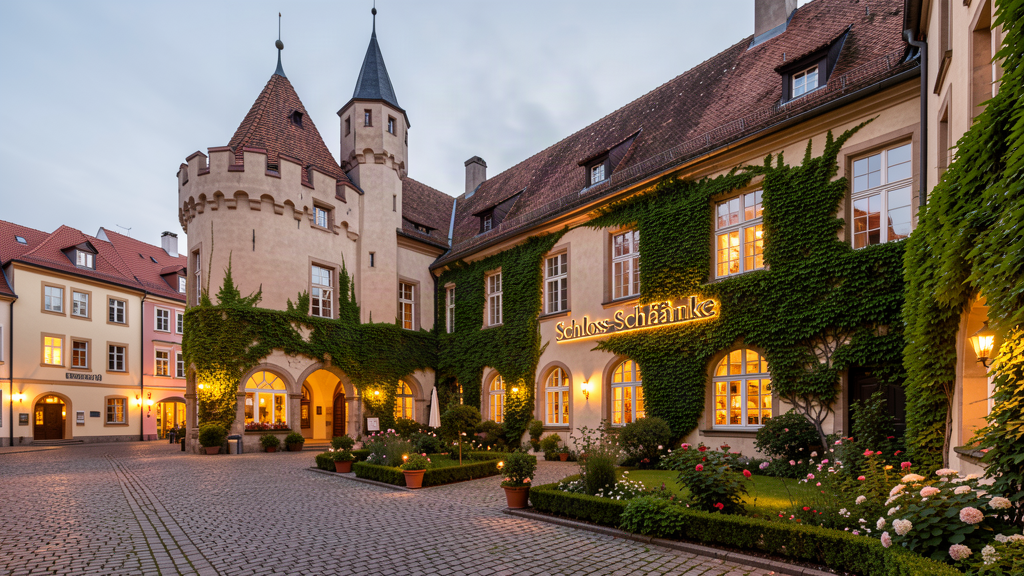
Family-run hotel garni in a house with medieval bones near the castle height. Walkable to Ortenburg, Dom approaches, and evening tables without a ring-road shuttle. Breakfast that does the job. Rooms that feel like a town stay rather than a conference annex. My default when I want the high ground at night and the Spree path in the morning without dragging bags across half the monument zone. Limited doorstep parking. Unload and use a nearby lot when the square is tight.
MOMENTS Boutique Hotel (upper, Altstadt on Goschwitzstraße)
Goschwitzstraße 27, 02625 Bautzen
Four-star boutique rooms behind a historic façade in the old-town core. Proper finish, breakfast restaurant, courtyard quiet when you need it, wine cellar if the evening runs long. You pay for fabric and service more than for a view suite. Short walk to Reichenstraße errands, Dom approaches, and the lanes that drop toward the Spree. Book when the stay itself should feel like part of the Altstadt night, not only a bed near it.
Restaurants and food
Wjelbik – Sorbisches Restaurant (mid, Kornstraße vaults)
Kornstraße 7, 02625 Bautzen
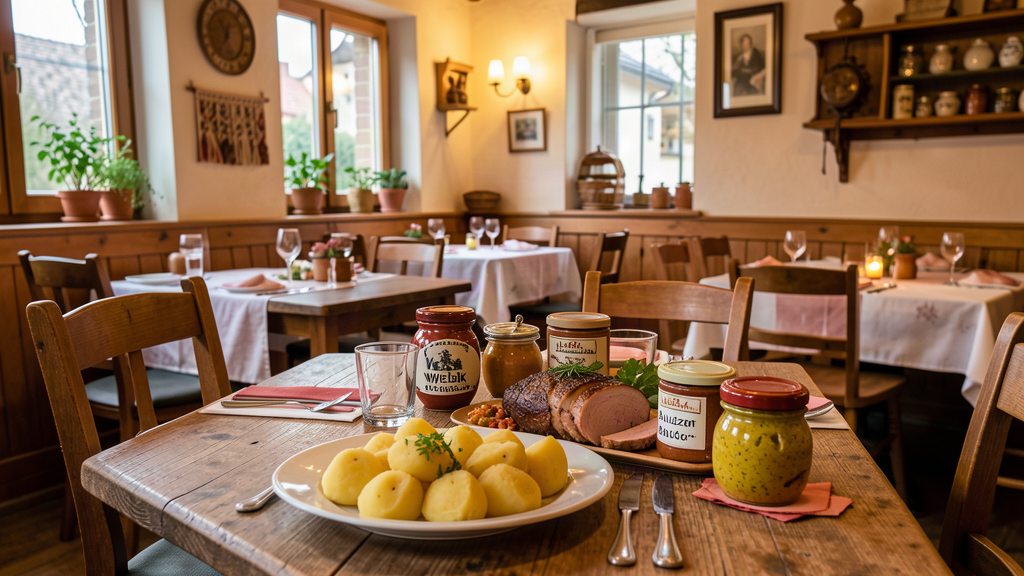
Sorbian and Lausitz cooking in a centuries-old stone vault a short walk from Dom St. Petri. Wedding soup, quark with linseed oil, Schlachteplatte when you want the full regional weight, Saxon wine and local beer without the pageant. The name points at a pantry. The room still feels like a working Gasthaus. My pick when the day already touched bilingual signs and I want the table to match. Closed Sunday and Monday. Reserve evenings, especially weekends. Kitchen winds down earlier than big-city hours. Check last order.
Bautzener Senfstube (mid, Schloßstraße)
Schloßstraße 3, 02625 Bautzen
The town’s mustard restaurant in the climb zone toward castle and gorge views. Local Senf worked through sauces, meats, and sides. It stays honest if you order with restraint. Handy after a Friedensbrücke walk when you want something specifically Bautzen rather than generic Saxon. Tour groups know it. An early seat or a reservation still beats a walk-up at peak. Confirm midday service if you are counting on a full lunch.
Mönchshof zu Bautzen (mid, Burglehn near the high wall)
Burglehn 1, 02625 Bautzen
Hearty regional cooking in a house set into the old wall. Beer, solid plates, the kind of room that fills with locals after work when the postcard light has left the bridge. I use it when Wjelbik is closed or full and I still want height and stone instead of a mall food court. Portions run generous. Call ahead on Friday and Saturday nights. Walk-ins work better midweek early.
Bakeries and simpler Gaststätten fill gaps when the three above are closed. A jar of Bautzener Senf for the train is fine. A whole suitcase of it is not required. Bautzen food stays grounded: bread first, Spree air second, white tablecloth only when you choose it.
Walk the Spree under the Alte Wasserkunst early, while the gorge is still quiet. Climb once to Ortenburg without turning every tower into a checklist. Stand on the Friedensbrücke long enough to see the town as a bluff over a working river. That is enough Bautzen for two nights, and it beats another same-day sprint from Dresden with a camera roll of skylines and no sense of the water.
