
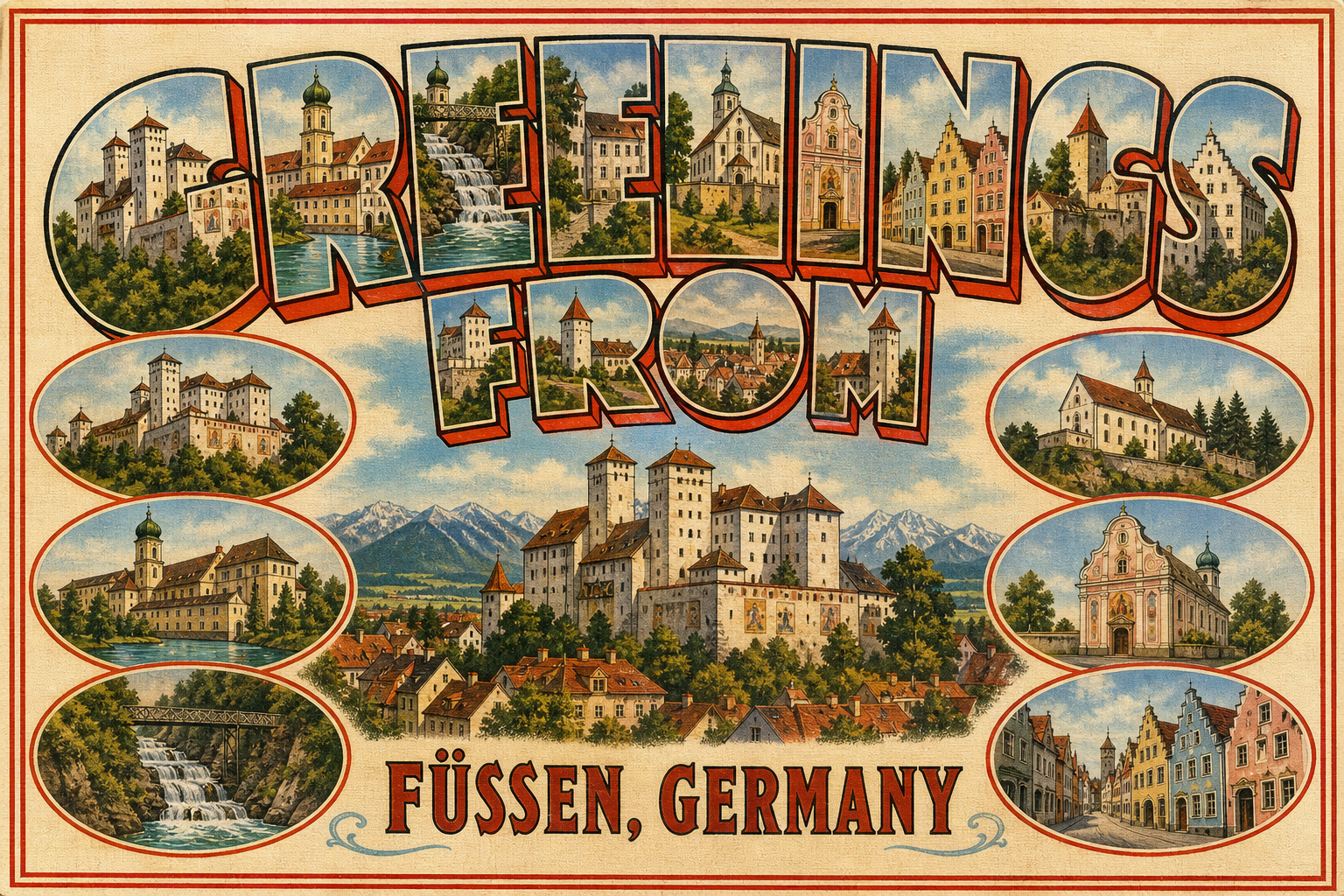
Most people treat Füssen as a parking lot with a bus number to Neuschwanstein. They buy a pretzel on Reichenstraße, photograph the High Castle from the wrong angle, and leave before the Lech turns that milky turquoise color that only shows when the light is low. I stay for the Benedictine complex of St. Mang on the river terrace. Europe’s first lute makers’ guild still has rooms of instrument ribs and bowls, plus the old migration charts, and the water below still looks like it could float a raft of spruce down toward Augsburg.
Füssen sits at the south end of the Romantic Road in the Ostallgäu, Bavaria’s high edge against the Tyrol border. Castles get most of the attention. After the day-trippers thin, the Altstadt goes back to people carrying market bags past frescoed façades, kids on scooters under the Hohes Schloss, and shopkeepers locking up without putting on a show.
Lutes before castles, workshops before tickets
I start at Kloster St. Mang, not the ticket center in Hohenschwangau. The former Benedictine monastery rises on the high bank of the Lech; parish church, town offices, and the Museum der Stadt Füssen share the same stone. Inside, the Kaisersaal shows off baroque confidence, the oval library holds its painted ceiling, and a quieter suite of rooms tells the craft story that actually put this town on European maps.
In 1562, Füssen founded the first lute makers’ guild on the continent. Mountain spruce, the Via Claudia Augusta, and the navigable Lech carried wood and finished work outward. Caspar Tieffenbrucker’s name still turns up in the cases — instruments that reached Lyon and courts far from this river bend. Under glass you see strips fused into a bowl rather than carved violin plates. The museum’s map of luthiers spreading across Germany, Italy, France, and beyond reads like a diaspora chart more than a tourist brochure.
If you only have an hour, take it here. The Dance of Death cycle in the St. Anna Chapel (1602) is Bavaria’s oldest surviving set — pope, emperor, merchant, usurer, all claimed. Pair it with the instrument rooms and the town stops feeling like a castle gateway alone.
Turquoise under Maxsteg
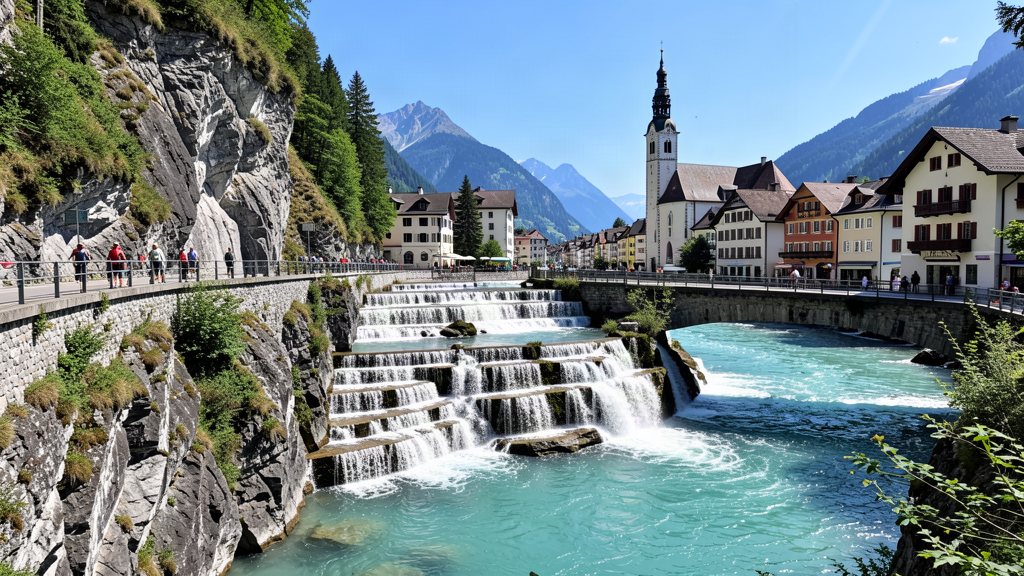
From the monastery terrace, the Lech pulls the eye south. Follow the bank path upstream toward the Lechfall, fifteen minutes if you do not stop for every bend. The water is glacial mineral turquoise, not dye, and it compresses into a narrow gorge where an 1780s weir drops the river over stepped levels about twelve meters. Maxsteg crosses above the foam; a bust of Maximilian II watches from a niche like a civic afterthought.
The falls are flood control as much as scenery — built after catastrophic high water to protect mills and the town below. Rafts once ran this stretch with less predictability. Locals walk the bridge for air and the sound; tour groups sometimes arrive late and leave fast. Go early or near dusk when the gorge holds shadow, and the water noise does most of the talking.
Downstream, the bank path continues toward summer Forggensee and Bad Faulenbach’s small lakes if you want swimming without a castle queue. In winter Forggensee drains for melt; the land goes spare. Either season the Lech stays the town’s real axis: old trade route, craft supply line, flood threat, and the walk people take after work.
Reichenstraße, Schrannenplatz, and the lanes that still work
Reichenstraße is the pedestrian spine — pastel houses, painted details, cafés when the weather holds. It works as the town living room more than a photo corridor. Look for the trade fountains: bread figures for the miller and baker, and the lute maker fountain most day-trippers walk past unread. The High Castle sits above the roofs, late Gothic with courtyard illusion paintings that fake bay windows and stone. Climb when legs allow; the courtyard beats another distant castle silhouette.
Schrannenplatz was the grain market. The 1483 late Gothic granary still holds its clock tower; vaults downstairs opened as a Markthalle in the late 1990s after the fire station moved on. Bread, fish, fruit, wine, small plates — Saturday is the lively day. Thursday mornings the Wochenmarkt fills the Morisse lot (P3) on Kemptener Straße from eight to one: asparagus in season, berries, mushrooms, cheese, Landkreis vegetables. Less pretty than the hall, more useful for a rented kitchen or a Lech picnic.
Slip off Reichenstraße toward the Franciscan monastery and St. Sebastian’s cemetery on the rise above the river — gravestones, wall fragments, fewer voices. Baumgarten park sits close enough that fresco becomes tree cover in minutes. I use it when rolling suitcases fill the pedestrian zone, and I still want some quiet.
Places to Stay
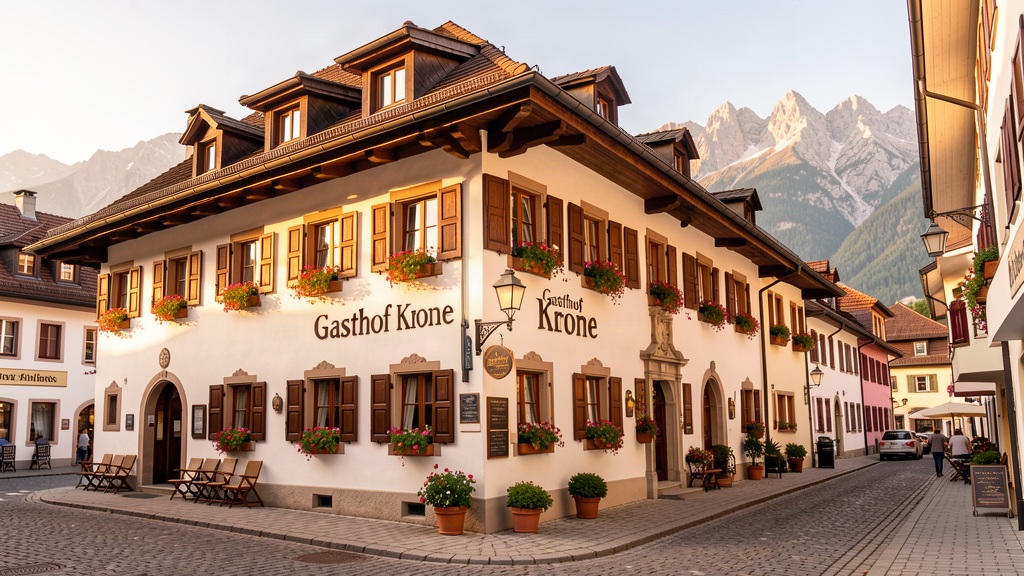
Gasthof Krone — Schrannengasse 17, 87629 Füssen A small pension above a working Altstadt gasthof: five simple rooms, shared-bath practicality, prices that still make sense when castle-town hotels inflate for the weekend. You sleep steps from Schrannenplatz and wake to bakery smells within a hundred meters. Choose it if location and a plain bed matter more than a spa menu.
Altstadthotel Zum Hechten — Ritterstraße 6, 87629 Füssen Family house under the castle for more than three centuries, mid-range rooms with real wood and a ground-floor kitchen that feeds locals as well as guests. Navigation tip: approach via Hintere Gasse 2 / Kemptener Straße when summer traffic rules block the other side. You walk out into the lanes, not a ring-road parking deck.
Hotel Hirsch — Kaiser-Maximilian-Platz 7, 87629 Füssen Four-star Jugendstil hotel on the edge of the old town, four generations in the same family, rooftop views toward the Hohes Schloss and the Ammergau line. Hirschgarten under chestnuts in summer; proper restaurant at night. Stay here when you want polish without leaving walking distance of St. Mang and the station.
Where to Eat
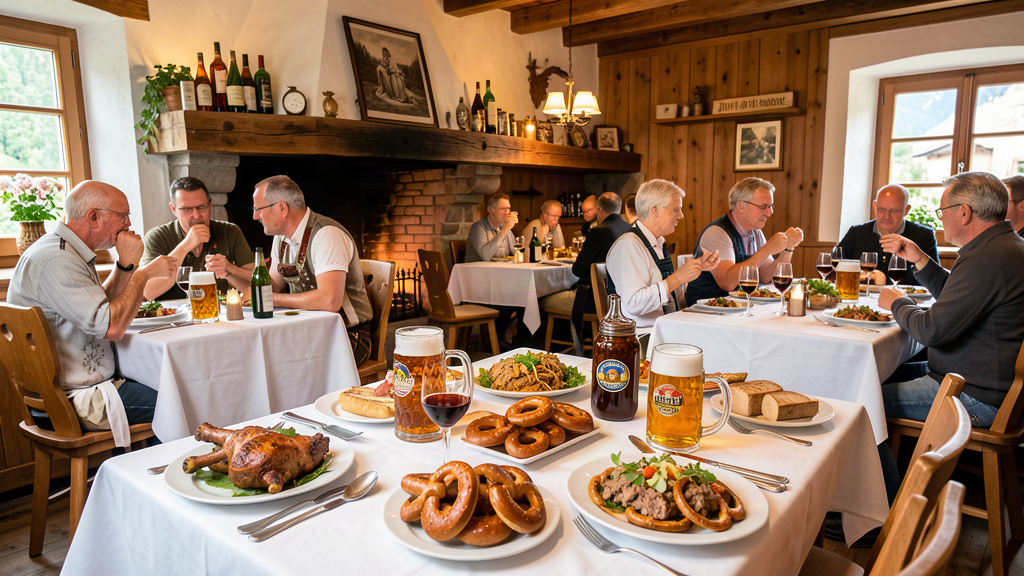
Gasthof Krone — Schrannengasse 17, 87629 Füssen Medieval-leaning rooms and solid Bavarian plates — Käsespätzle, grilled joints, house beer — in the middle of the old grain-market lanes. Tour groups know it, so go earlier or later than the main rush. Useful after a museum morning when you want substance over a river-view markup.
Gasthof Woaze — Schrannengasse 10, 87629 Füssen One of the older gastwirtschaften still working the same block, regional cooking and König Ludwig beer, with a small garden out back and terrace space on Schrannenplatz when the weather holds. Locals use it for ordinary evenings; so can you.
Altstadthotel Restaurant Zum Hechten — Ritterstraße 6, 87629 Füssen Allgäu kitchen without the performance — regional plates, fair prices, rooms that seat neighbors as easily as overnight guests. Handy after the Lechfall walk; check rest days before you count on it.
For a longer supper, Hotel Hirsch at Kaiser-Maximilian-Platz 7 leans Bavarian-modern with regional product. Coffee along Reichenstraße; a table near Schrannenplatz if market bags need a landing.
Getting there, and how long to stay
Füssen Bahnhof is the end of the line from München — regional trains, no drama, a short walk or bus hop into the Altstadt. Drivers should park outside the tight lanes; summer access rules change by street and hour. Buses 73 and 78 run toward Hohenschwangau when you decide the castles deserve a half-day rather than the whole trip. Many stays include a Füssen Card with local bus use; ask at check-in.
One full day covers St. Mang and the lute rooms, a slow Reichenstraße and Schrannenplatz loop, and the Lechfall out-and-back before blue hour on the bank. Two nights are better: one morning for the Thursday or Saturday market, one late walk when castle day-trippers have gone, and the High Castle lights sit above quieter stone. Three days add Bad Faulenbach lakes, a Forggensee boat in summer, or a Tannheim-side day without stuffing the schedule.
I leave Füssen the way I try to enter it — not from the castle bus bay, but from the monastery terrace above the Lech, lute bowl still in mind and the river the same mineral color workshops once shipped wood down. The castles will draw the next coach. I keep the guild rooms and the stepped gorge.
