
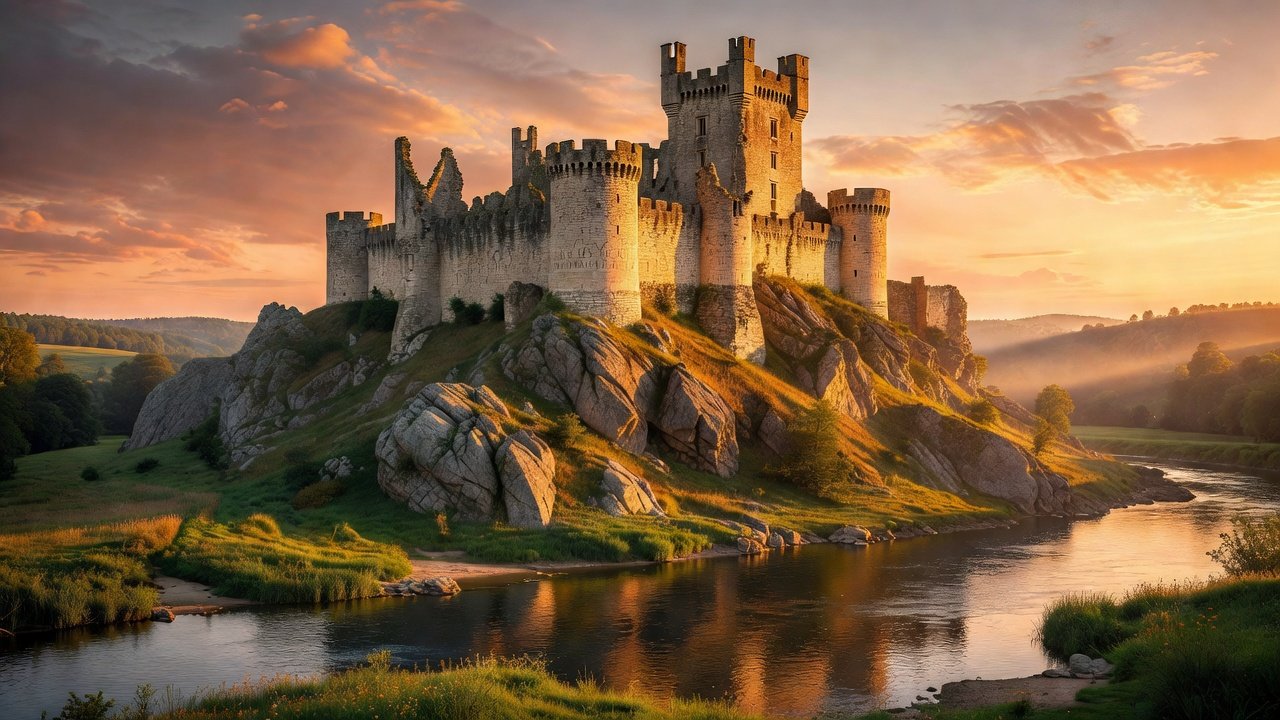
I came into Loches from the Indre side, not the fortress road. The river was low and green, the public garden paths empty enough that I could hear my shoes on the gravel. Above the trees, the keep rose like a blunt stone tooth, tuffeau in late morning light, slate roofs stacked under the citadel spur. Most visitors aim straight for Porte Royale. I walked the bank first, then climbed when I was ready for the cool dark of the donjon.
Loches sits in southern Touraine, Centre-Val de Loire, south of the big Loire châteaux circuit. Trains and buses reach it from Tours; cars fill the lower lots on summer weekends. Day-trippers do the royal city ticket, a rampart photo, and leave. What held me was the cut between spur and river: a working medieval town under a brutal keep, prison marks still scratched into soft stone, and lanes that still carry bread and mail between the plaques.
Indre banks before the climb
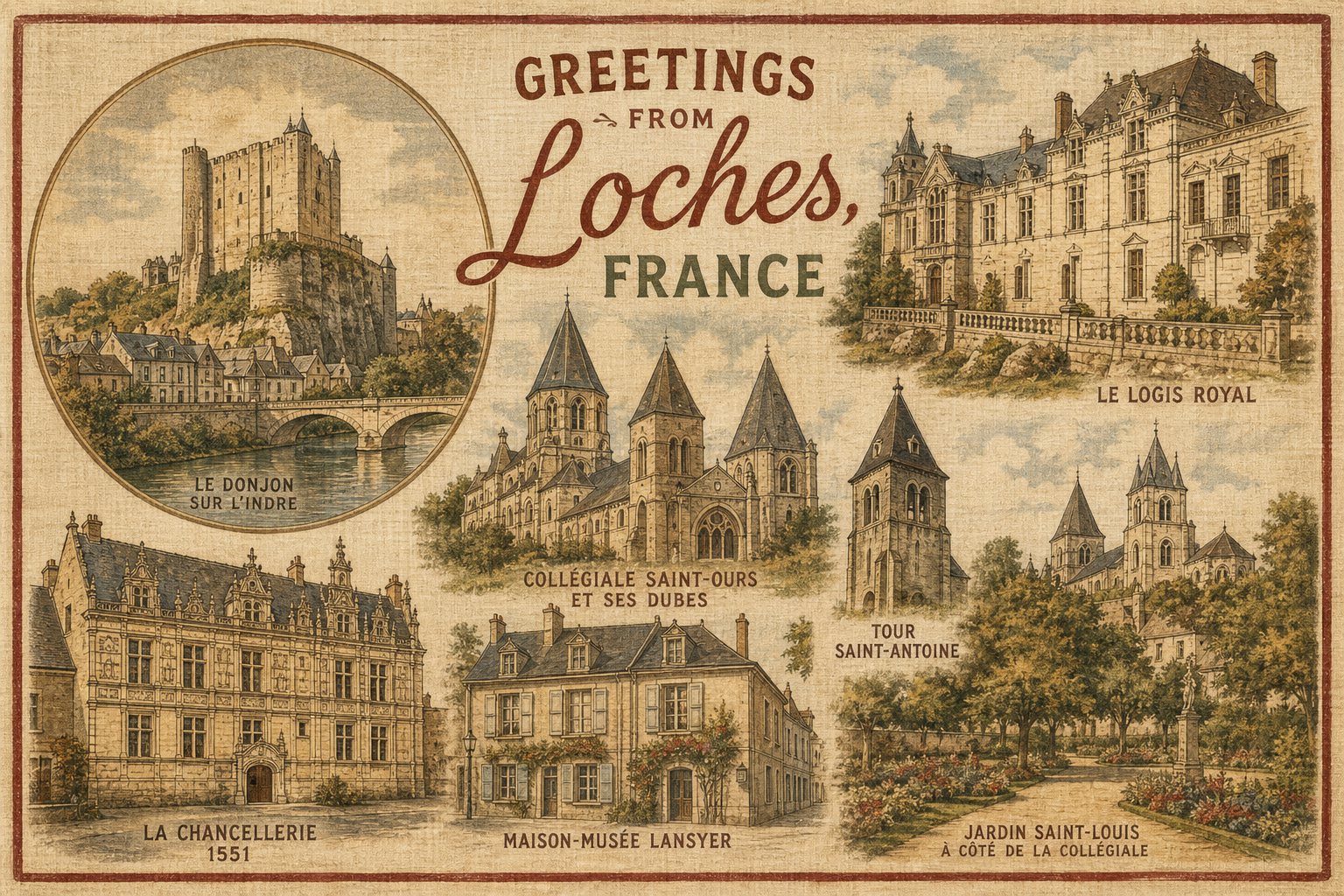
The public garden along the Indre is where Loches loosens. Locals walk dogs. Kids chase each other near the water. From the paths you get the full silhouette — Logis Royal, Collegiate Saint-Ours, the 11th-century donjon Foulques Nerra raised like a warning. It is a green edge that happens to face a royal fortress, not a manicured Loire quay postcard.
I used the garden as a reset between citadel loops. Morning mist hangs low in shoulder season; summer evenings pull people to benches with ice cream. If you only have an hour before a train, do this bank and one slow street inland rather than a rushed keep ticket.
Porte des Cordeliers pulls you toward Beaulieu-lès-Loches if you want a longer walk through the Prairies du Roy. I stayed closer: coffee in the lower town, then the climb.
Porte Royale, lanes, and tuffeau
Above the shops, the old center tightens. Rue du Château and the lanes toward Porte Royale climb in short, uneven pitches — timber upper floors, tuffeau ground floors, shutters in faded blues and greys. Courtyard doors sometimes stand open on washing lines and geraniums. I treated the historical markers as optional. Better moments were a warm baguette, a cat in a window, cool stone when you turn off the sun.
Porte Picois still frames the lower medieval streets. Porte Royale is the main mouth into the citadel. Inside, the royal city feels more village than museum once the first coach wave thins. Saint-Ours holds Agnès Sorel’s tomb — Charles VII’s favorite, carved with a calm that undercuts the fortress drama outside. The little Saint-Louis garden beside the collegiate is worth five quiet minutes. Lansyer’s house-museum sits nearby if you want Courbet’s pupil and rooms that still feel lived in.
The Logis Royal draws the Renaissance crowd. Go for the rooms if that is your pace, then leave time for the keep. Loches splits its ridge: court elegance on one end, raw military stone on the other.
Inside the donjon
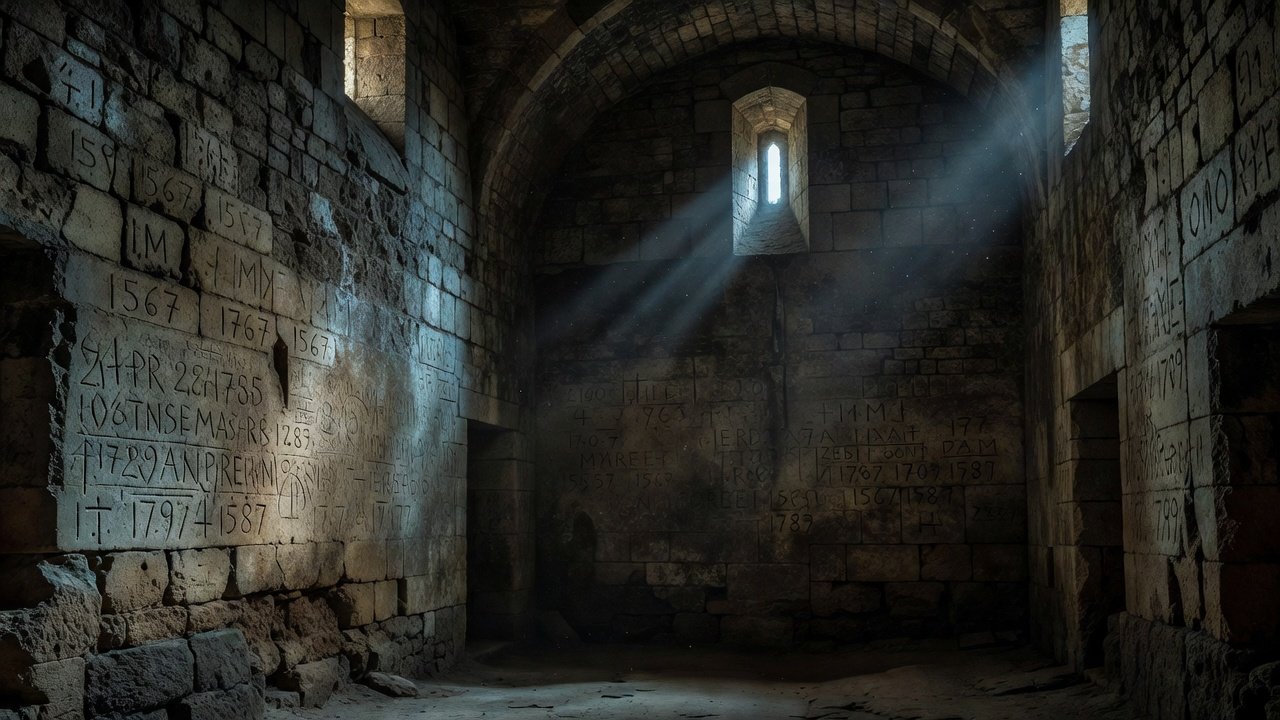
The donjon is why I came up. Forty-four meters of 11th-century keep, raised by Foulques Nerra, later stuffed with prisoners, towers, and corridors that drop the temperature the moment you step in from the courtyard. Dark stairs, dust, old lime. People climb for the view from the top — town roofs, Indre bends, forest edges. I climbed for the walls.
Prisoners left marks. Names, dates, crude drawings, prayers scratched into tuffeau when the stone was soft enough to take a nail or a knife tip. You do not need a full audio guide to feel it. Stand in a cell corridor with a thin slit of light and read what someone needed to leave behind. It is not curated street art. It is the residue of a building that spent centuries holding people.
Tour groups bunch at the main story panels. Slip a room behind or ahead and the keep goes quiet. That quiet is the point. Loches sells royal romance hard — Agnès, Charles VII, the pretty Logis. The donjon is the other half of the same ridge: power without much polish.
When you come back into daylight, the rampart walk steadies you. Look down on ordinary roofs and the river garden you started from. The fortress stops reading as a silhouette and turns into a map of the town.
Ordinary Loches between the legends
Agnès Sorel and Foulques Nerra are on every brochure. Lean into them once, then let them go. This is a small southern Touraine place with a huge spur on its shoulder and a market that still fills the lower streets on Wednesdays and Saturdays.
Bakeries matter more than another souvenir crest. Pharmacies, a bookshop, kids on scooters after school keep the half-timber from freezing into a set. Evenings, the lanes off Grande Rue and the squares take the dinner crowd. Citadel floodlights look fine from the Indre garden if you already did the keep by day.
You do not need a car inside the old core. You may want one for Montrésor, the Loches forest loops, or a canoe put-in on the Indre. Ask the hotel about parking; bikes fit the greenways out toward the woods.
Places to stay
Budget-friendly town base — Logis Hôtel de France
6 Rue Picois, 37600 Loches
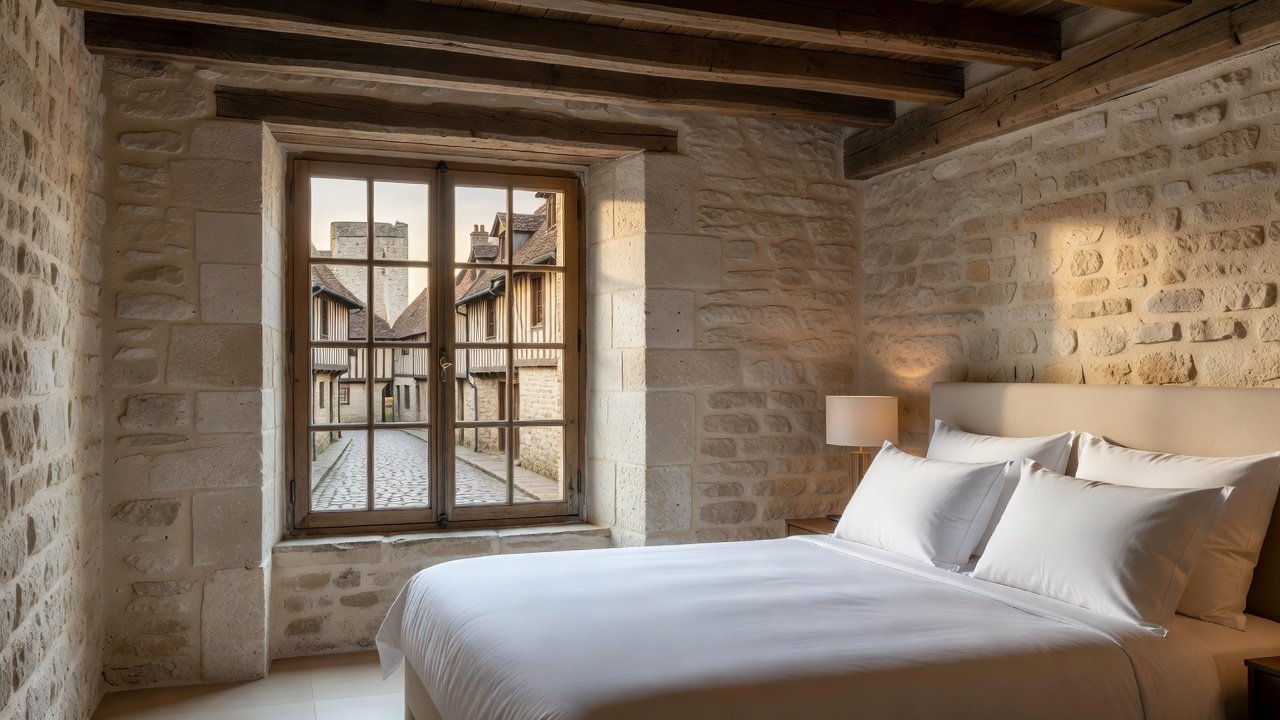
Small Logis hotel at the foot of the medieval center, close to Porte Picois and a short walk up toward the citadel. Rooms are simple and personal. Fine if you want street noise at a human level and a flat walk to dinner. Ask about parking and quieter rooms off the road.
Character mid-range — La Maison de l’Argentier du Roy
21 Rue Saint-Ours, 37600 Loches
Bed and breakfast on the old walls, a few steps from the château entrance and Saint-Ours. Historic rooms, a calm courtyard, the kind of place where you wake already inside the stone pattern rather than driving up to it. Stairs and old layouts come with the building; pack light and check access if mobility is tight.
Comfort mid-high — Best Western Premier Hôtel de la Cité Royale
12 Place de Verdun, 37600 Loches
Former courthouse turned hotel with spa and restaurant, right on the square under the citadel. Larger rooms, more buffer, easy base if you want a proper bed after keep stairs and a meal downstairs without another walk. Useful when the town is full, and you still want to walk everywhere that matters.
For a longer stay with a kitchen, Le Moulin des Cordeliers (Pierre & Vacances) sits near Porte des Cordeliers on the river side.
Where to eat
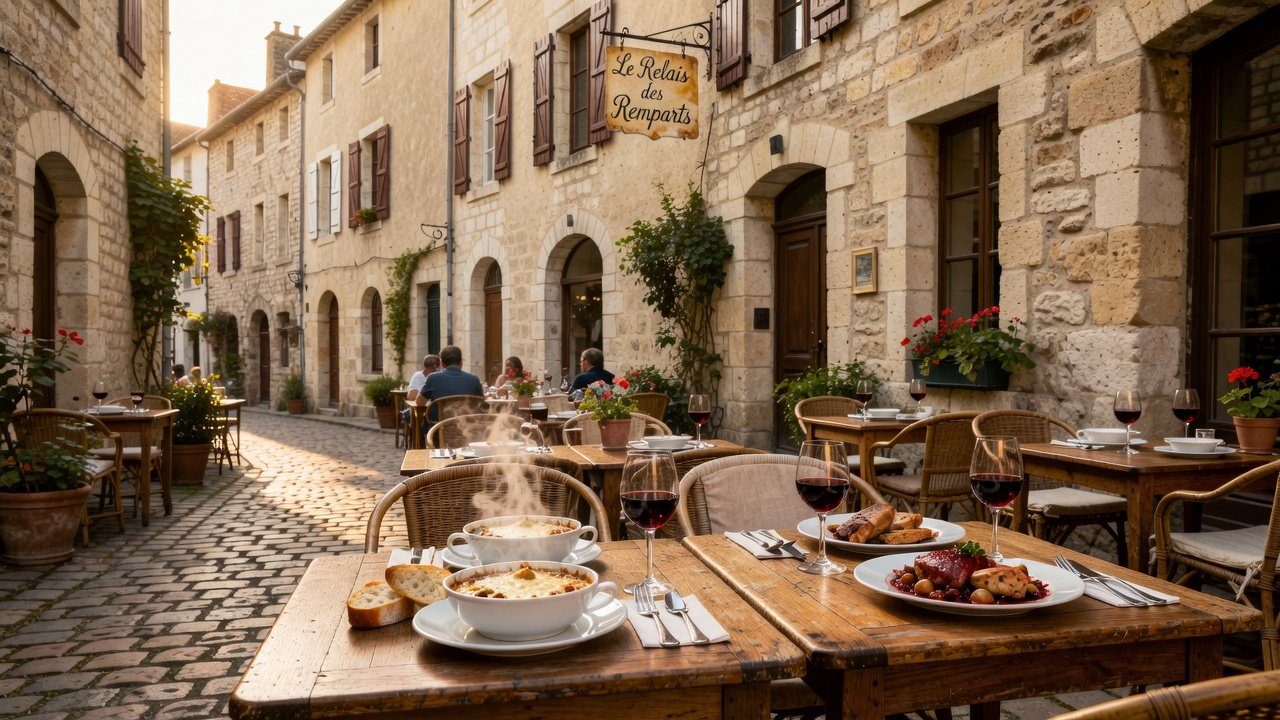
Le P’tit Restau
6 Grande Rue, 37600 Loches
Small room, seasonal plates, locals book it when they want a real dinner without ceremony. Closed some midweek days — check before you build a night around it. Reserve by phone when the town is busy. Pair it with a Touraine wine and stop overthinking the list.
Le Prosper
4 Place de la Marne, 37600 Loches
Bistro and wine energy on the square: French plates, good for lunch or dinner after stone corridors. Solid stop once the day-trippers thin. Check hours; weekend tables go first.
La Cour des Saveurs
2 Rue Gonzague Saint-Bris, 37600 Loches
Hotel restaurant in the old courthouse complex on Place de Verdun — traditional French cooking, terrace when weather allows, a step up if you want a slower meal under the citadel. Reserve in season. Brunch shows up some Sundays if your timing matches.
For a special-occasion plate, Arbore & Sens holds the Michelin star in town; book well ahead. Cheaper pauses: morning bakery queues, market snacks on Wednesday or Saturday. Skip mediocre “menu touristique” boards hard against the Porte Royale funnel.
A day that keeps the river in play
One night works; two if you want Beaulieu, a forest loop, or a canoe morning without rushing the keep. Start on the Indre garden in early light. Climb through the lower lanes to Porte Royale mid-morning, before the heat and thick groups. Logis and Saint-Ours first if you like soft stone and tombs; donjon while your legs still have patience for stairs and dark. Long lunch on Grande Rue or Place de la Marne. Afternoon back on the river or out toward the Prairies du Roy. Early evening near the square; dinner at Le P’tit Restau, Le Prosper, or La Cour des Saveurs.
Summer stacks visitors on the royal city ticket and the keep stairs. Shoulder seasons mean easier tables and emptier side lanes. Winter is sharp on the ridge; the donjon still holds its cool and the graffiti still reads if the light is with you.
I left with Indre damp on my shoes and tuffeau dust on my cuffs, a photo of a scratched name on a cell wall I never looked up. Ridge above, river below. The keep was still throwing its blunt shadow across ordinary roofs when I walked back to the station.
