
Bevagna does not climb. That is the first thing to recalibrate when you roll in from Assisi or Spello expecting another Umbrian ridge town. It sits low on the Topino floodplain, walls wrapping a flat grid, Roman stone still underfoot, and the square that holds the town together feels more like a working room than a lookout.
I came for the marine mosaics everyone mentions in half a sentence. What kept me was the stretch between those mosaics and dinner — columns built into house corners, a river that still feels like a crossing instead of a fortress backdrop.
Piazza Silvestri first
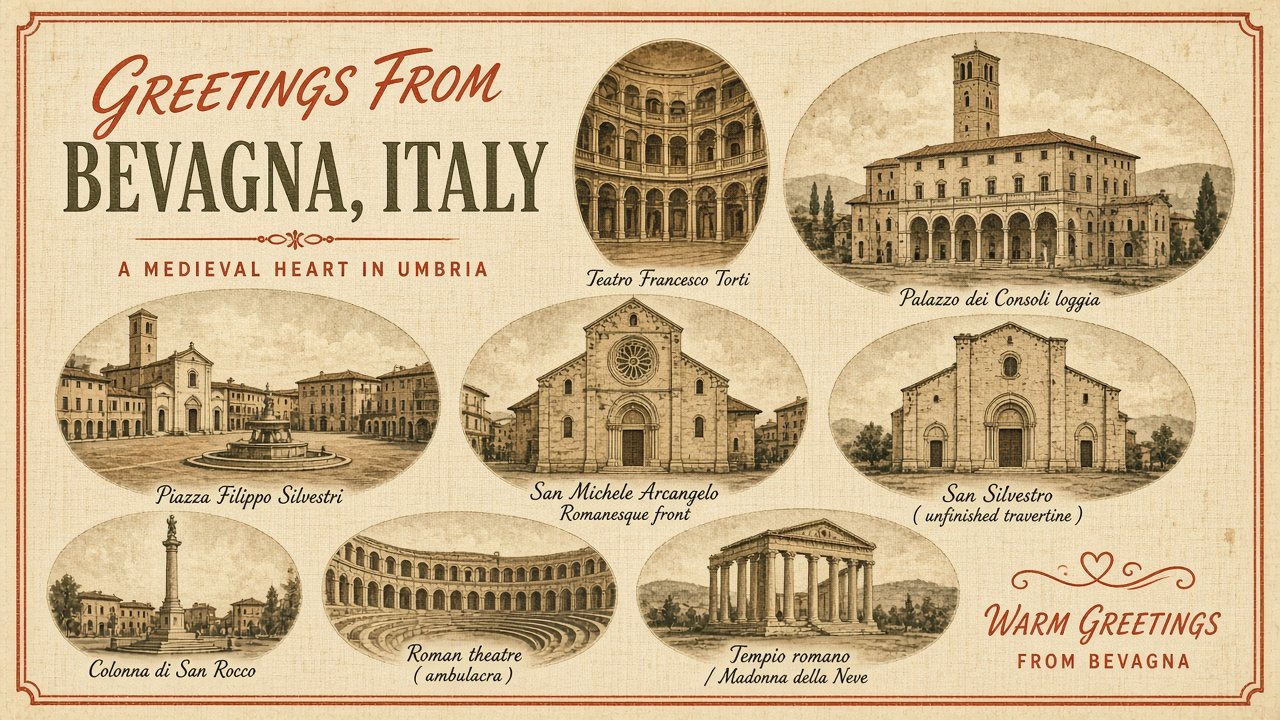
Start in Piazza Silvestri. Two Romanesque churches face each other across the paving — San Silvestro and San Michele — with the Palazzo dei Consoli closing one side. Sit on a step if the light is good. Watch delivery vans thread the square with more confidence than the rental cars. This is not a panoramic balcony. It is stone furniture and errands.
San Silvestro feels older inside than the postcards suggest: cool air, spare nave, the kind of quiet that makes your shoes sound rude. San Michele holds more decoration and more people when groups drop in from Foligno. You do not need a long museum circuit. Twenty unhurried minutes and a willingness to look up at the façades will do.
From here the town opens in short, level streets. Corso Matteotti is the spine. Side lanes feed you toward the walls, the old theatre curve, and the river edge. Because Bevagna is flat, you walk farther without noticing — a gift after a week of hill-town stairs.
The baths under the floor
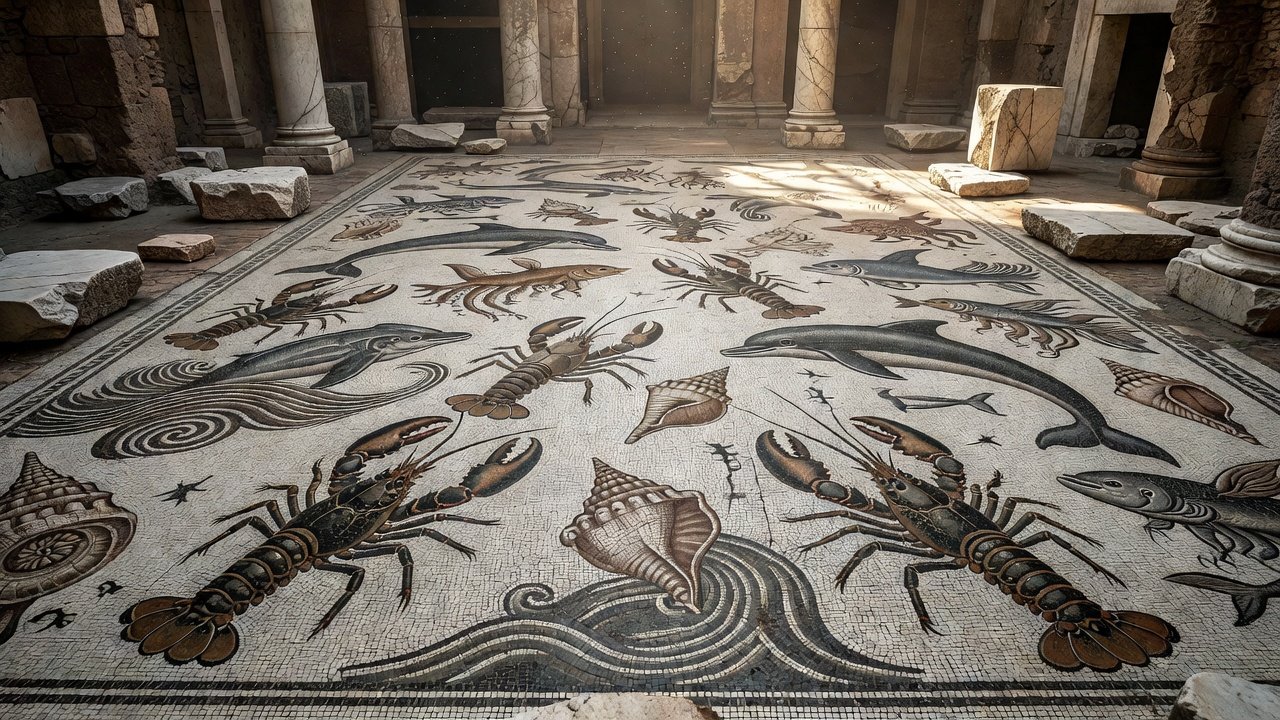
The Roman baths are why people who care about mosaics put Bevagna on a map. What remains includes a frigidarium floor in black-and-white tesserae: tritons, dolphins, lobsters, sea creatures swimming in a room that once cooled bodies after heat. The walls were marble. Niches held statues. You are standing in a cold room that used to hold water, not a full reconstruction of it.
Go when the room is not crowded. The mosaics reward slow looking — the weight of a lobster claw, the curve of a dolphin, sea life laid out in a landlocked plain. Bevagna was Mevania under Rome, a stop on the Flaminia corridor. The marine floor is not random decoration; this valley sat on a real route.
Nearby, temple and theatre fragments keep turning up in ordinary life. Houses follow the curve of the old theatre. Columns show up in stories people still retell. You do not need every ruin labeled. Notice how much of the medieval town sits on someone else’s plan.
Walls, river, and the flat walk
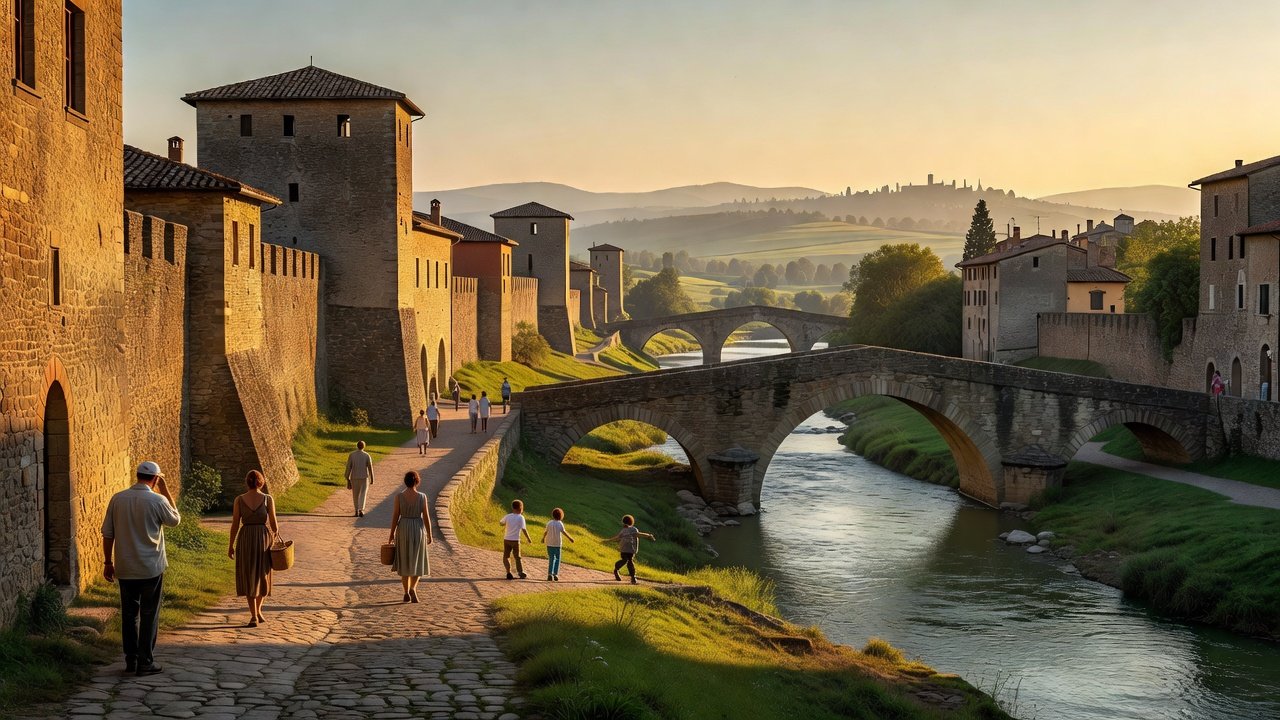
Walk the wall circuit when you can. The fortifications still make a legible ring, gates acting like gates, the Topino reminding you that floods and trade shaped the site more than cliff defense. Late afternoon softens the brick and stone; early morning belongs to residents with shopping bags and dogs that know every corner.
The river is not a scenic gorge. It is a working watercourse at the edge of town — green in summer, serious after rain. Stand on a bridge long enough and the hill towns on the horizon make more sense: Spello’s pink line, Montefalco’s ridge, Assisi as a pale suggestion when the air is clean. Bevagna is Umbria at valley level. That is the character, not a flaw you have to apologize for.
If you hit town in late June, the Mercato delle Gaite turns the centro into a living craft calendar. The four gaite — historic quarters — compete with workshops, food, and medieval trades done with enough seriousness that it stops feeling like costume. Crowded, and worth planning around — join it or dodge it if you came for empty lanes. Outside festival week the same streets go back to ordinary errands. That quieter Bevagna is the one I prefer for a first stay.
Wine and oil without the ridge lecture
You are in Sagrantino country even if you are not on Montefalco’s rail. Cellars and agriturismi sit a short drive out. In town, drink what the kitchen is pouring with food. Montefalco Rosso is often the friendlier first glass. Straight Sagrantino can wait for a steak or a night when you are not driving the next morning.
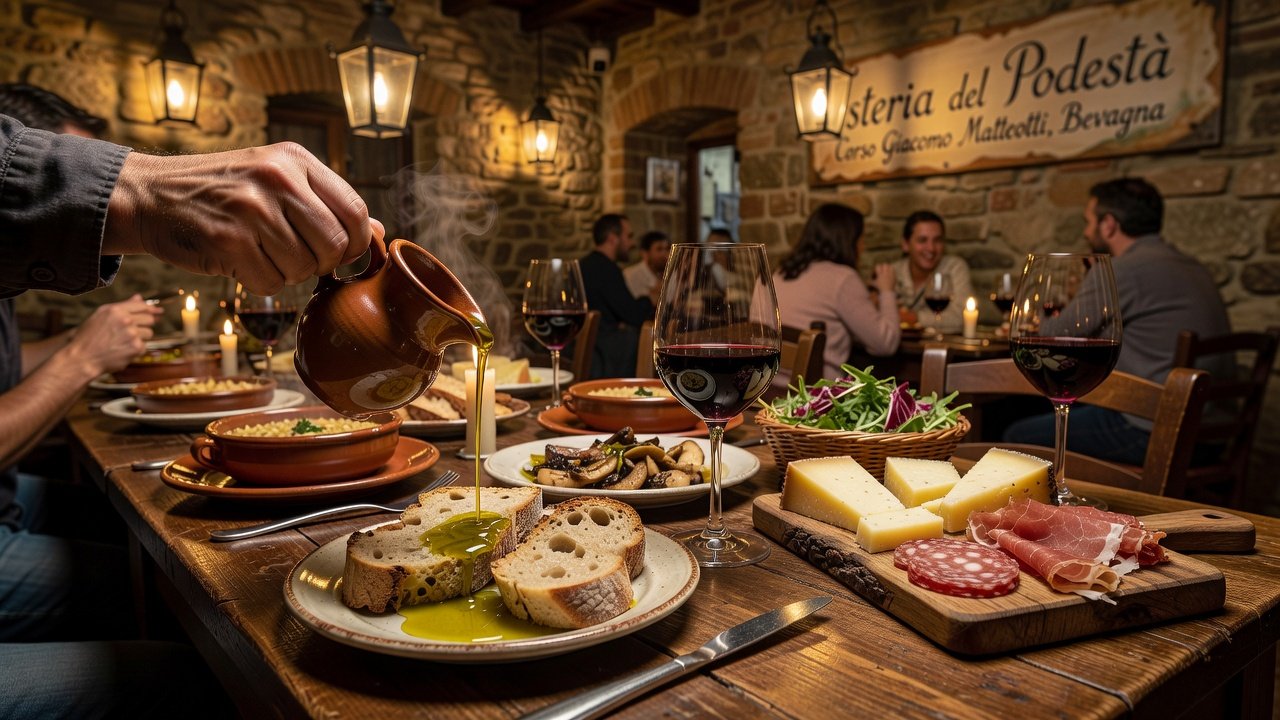
Oil shops matter here as much as wine lists. Ask for new oil in season. Bread and a green pour tell you more about the plain than another brochure map. Truffles appear when the calendar agrees; do not force them in months when they are a freezer story.
Where to eat
Osteria del Podestà
Corso Giacomo Matteotti 67, 06031 Bevagna PG, Italy
On the main corso, close enough to the square that you can walk off dinner without a plan. Umbrian plates, honest portions, a room that fills with locals and overnight guests in the same hour. Good first-night choice when you want traditional cooking without paying for a set-piece room. Book in high season and on Gaite weekends.
Ristorante Redibis
Via del Teatro Romano 3, 06031 Bevagna PG, Italy
Dinner inside the curve of the Roman theatre — the address matters as much as the menu. More formal than a corso osteria, the kind of place you save for a night you want to mark, food that aims higher than tourist default. Go when you want the ruins to be more than a daytime photo stop. Confirm hours.
Ottavius Hosteria d’Autore
Via del Gonfalone 1, 06031 Bevagna PG, Italy
A smaller, deliberate table in the historic center — seasonal Umbrian cooking with a careful hand, useful when you want a quieter room than the corso edge. Check seasonal closures before you build a night around it. Pair with a slow walk back through Piazza Silvestri when the façades are lit.
Between meals, stand at a bar for espresso and whatever is under the glass. If someone is pouring oil on plain bread, say yes.
Places to stay
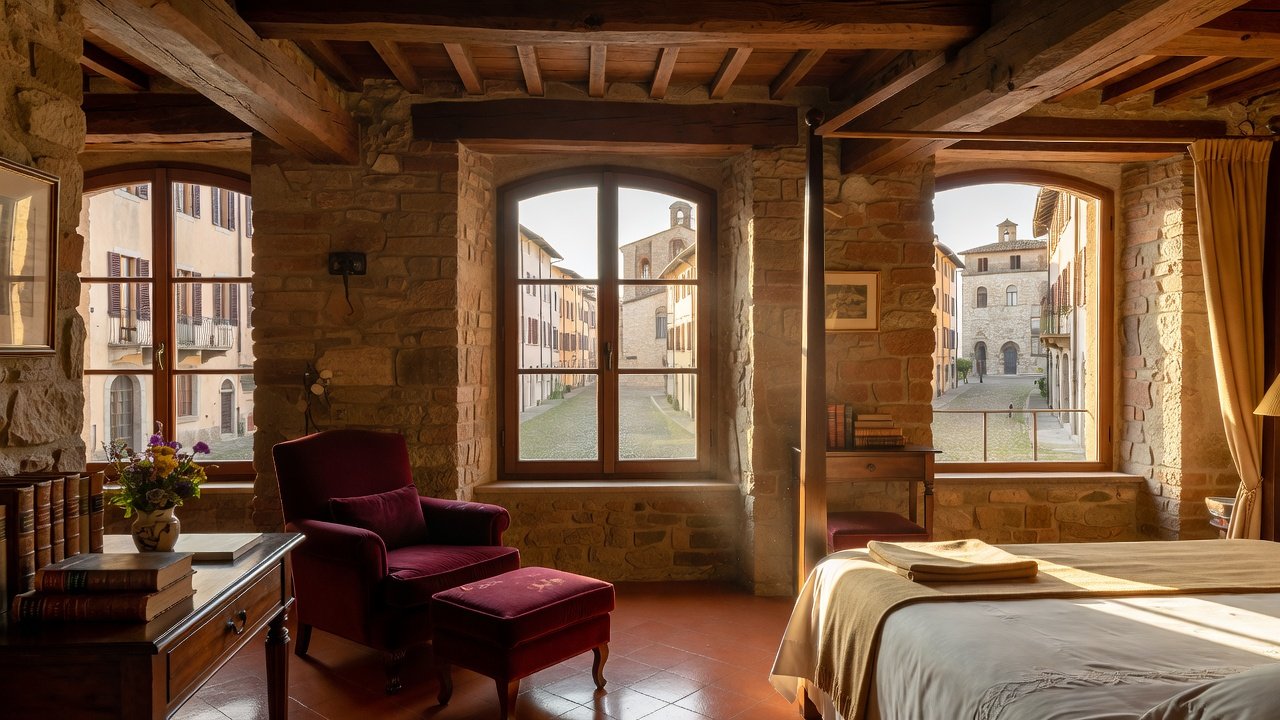
Sleep inside the walls if you want bells, short walks to the baths, and the square before day-trippers. Sleep just outside the gate if you want a car, a garden, and slightly quieter nights. Bevagna is compact; the bad choice is mostly the one that has you circling the ZTL out of stubbornness.
Residenza Porta Guelfa — value / practical, edge of the centro
Via Ponte delle Tavole 2, 06031 Bevagna PG, Italy
Apartment-style rooms a short walk from the historic core, green space around the buildings, easy with a car yet close enough that dinner does not become a project. Best when you want kitchen flexibility and a calmer night without leaving Bevagna behind.
Hotel Palazzo Brunamonti — mid-range, on the corso
Corso Giacomo Matteotti 79, 06031 Bevagna PG, Italy
A boutique stay in a historic palazzo a few minutes from Piazza Silvestri. You are on the town’s spine: mosaics, churches, and dinner on foot. Good base if you want the flat centro without a countryside transfer after dark.
L’Orto degli Angeli — splurge, garden and stone in the center
Via Dante Alighieri 1, 06031 Bevagna PG, Italy
A restored mansion-house hotel with original fabric — beams, fireplaces, garden calm — and a serious restaurant on site. You pay for atmosphere and location. Worth it if Bevagna is the stay, not a lunch stop between bigger names.
Two nights beat one. One night turns the mosaics into a checkbox and the square into a coffee stop. Give yourself a baths morning, a wall-and-river loop, an empty hour in San Silvestro, and a dinner you do not rush.
Getting there and moving around
Bevagna sits in the province of Perugia, in the plain west of Foligno and a short hop from Montefalco and Spello. A car is the practical choice if you are linking hill towns and estates. Trains serve Foligno; buses exist but want a current schedule, not wishful thinking.
Park outside the tightest core and walk. The centro is small and mostly level — rare mercy in Umbria. In summer the stone holds heat; hit the mosaics earlier or later and save the open square for shade and aperitivo. In winter some kitchens go quiet midweek. Confirm before you bet dinner on a single door.
Day trips will pull you toward Assisi, Spello, Montefalco, or Trevi. Fine. Just do not treat Bevagna as the flat place you skip for lack of a ridge selfie. The lobsters under the frigidarium floor only make sense if you give the town a full afternoon and an evening on the corso.
Bevagna does not need a festival weekend to justify the stop, though June’s Gaite will try to convince you otherwise. Stay with the black-and-white sea creatures until they stop being a fun fact. Then walk the walls, listen for the Topino, and take a table where the cooking still sounds like the plain. The town sits low for a reason. Meet it there.
