
Dinham Bridge frames the castle weir on the Teme in Ludlow
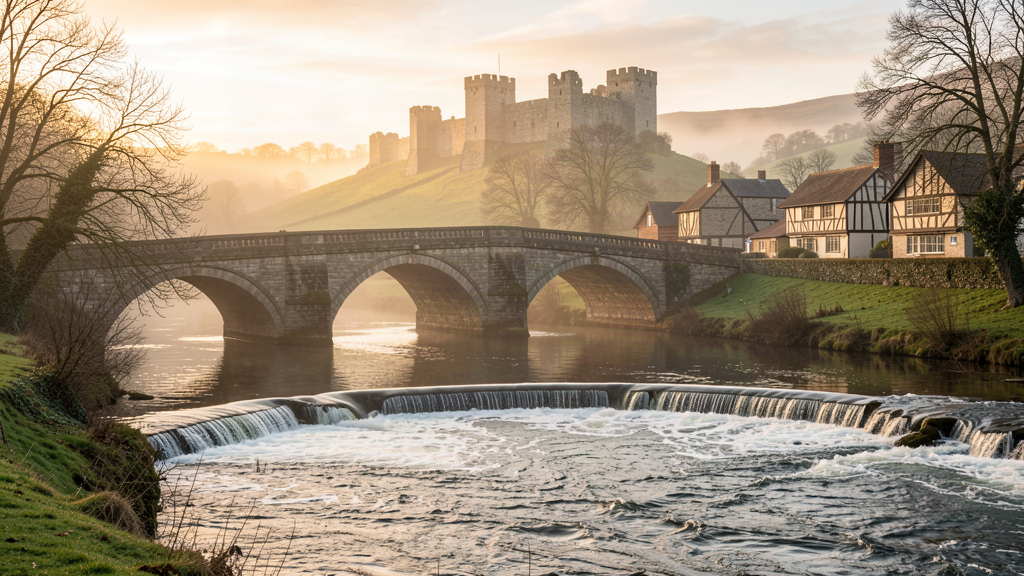
Ludlow gets sold as a food town with a castle. Fair enough — the Michelin years left menu talk that still follows you into half the independent shops. What I keep coming back to is the western edge: Dinham Bridge over the River Teme, the weir below the old mill site, and the castle on the bluff as if it still expects trouble from the Welsh Marches. Stand on the stone span and the market streets stop reading as one shopping loop. You get water noise, Whitcliffe on the far bank, and a castle profile that belongs to the river more than to Castle Square.
I give the first clear stretch to the bridge and the Breadwalk. Save the castle ticket for when the light is decent. The quieter half is mill race, common paths, and lanes that drop from Dinham toward the Teme rather than gift-shop glass.
Dinham Bridge and the Teme weir
The present Dinham Bridge is early nineteenth-century stone — 1823 work carrying the road west toward Whitcliffe. A crossing has mattered here longer; the castle needs a river approach, and the Teme has always been the working edge of the bluff. You do not need a guided monologue for that. What lands first is simpler: castle wall above the water, weir breaking the current, herons treating the mill pool like it has always been there.
I cross the bridge more than I photograph it. Mid-morning works when vans have mostly cleared Dinham and light still reaches the surface. Look downstream toward the mill race and the green under the arches. Soft shoes are fine. The deck is ordinary road and pavement, shared with people just getting from one side to the other.
West of the span, Whitcliffe Common opens almost immediately — open ground and trees climbing away from the Teme. East, Dinham climbs back toward the castle walls and the tighter town grain. I cross it more than once in a day rather than ticking it once on a castle circuit.
The Breadwalk, Whitcliffe, and Ludford Bridge
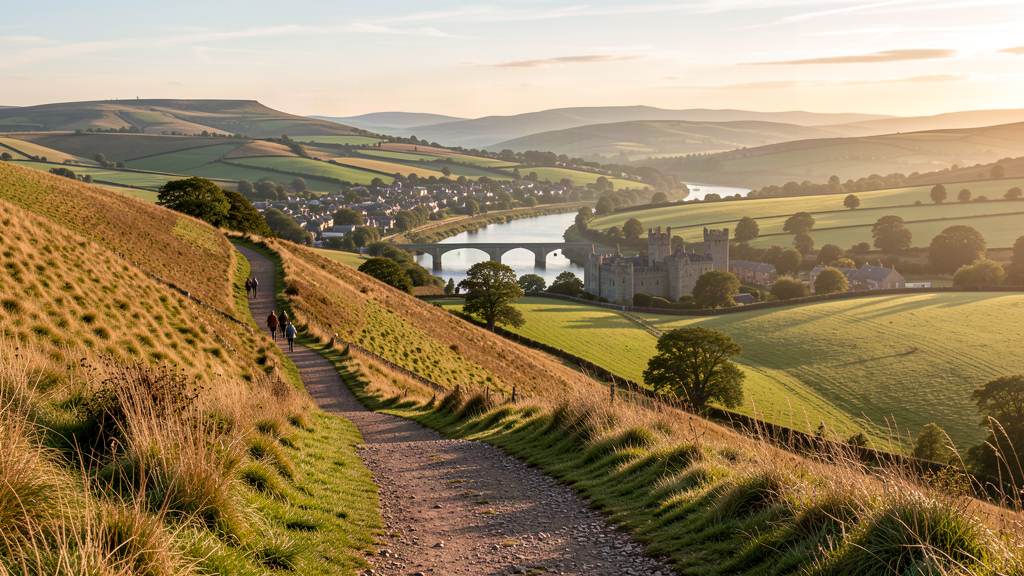
The Breadwalk is the path most visitors find after Dinham Bridge and then slightly underuse. It runs the Teme bank toward Ludford, under trees, river close enough that after rain you hear it before every bend. This is not park theatre. It is a working footway between bridge and bridge — dog walkers, people cutting home without climbing back through the market streets.
Whitcliffe Common sits above the path — common land with views back to the castle when the leaves allow. I climb a short way when I want air after too much timber framing, then drop again. No need to turn the common into a full hike. The river edge is the point, and the sense that Ludlow still has a green western face.
Ludford Bridge carries the southern road over the Teme — older stone, tighter to traffic, the other end of a sensible riverside loop. From there climb toward Broad Gate and Broad Street, or reverse and stay on the water. A loop that works for me: Dinham Bridge west onto the Breadwalk, Ludford for the southern crossing, Broad Gate into town, Castle Square when you want stalls and coffee. Shoulder-season weekdays beat summer Saturdays. If the sky cooperates, evening light on the weir under Dinham is a good close. If it does not, the path still holds.
Millennium Green under the bridge is the grass locals actually use — picnics, short sits, kids near the water. Soft landing after the path. Not a separate attraction with its own ticket office energy.
Castle Square, the market, and the timber streets
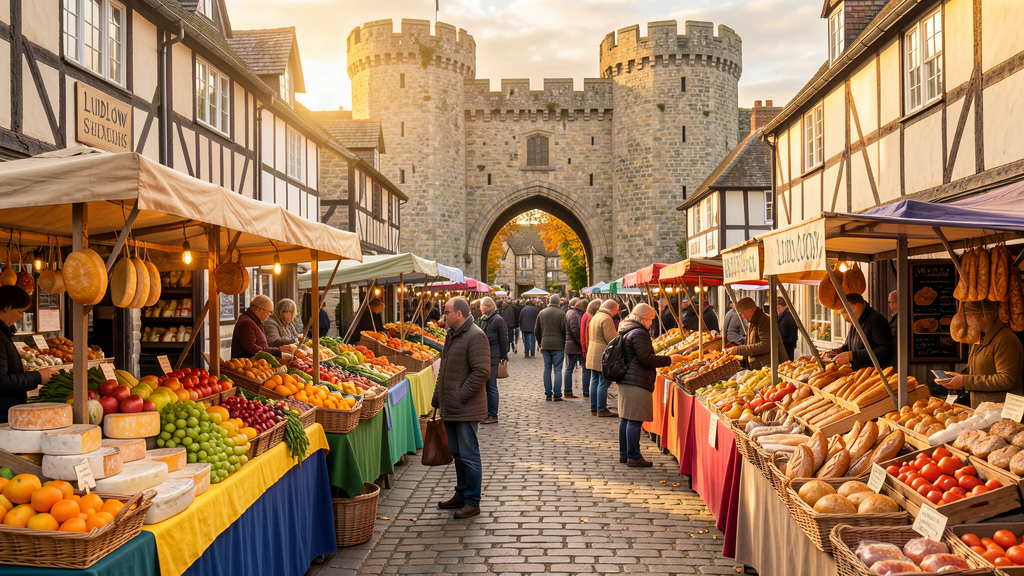
Castle Square is where Ludlow Market still pitches — Monday, Wednesday, Friday, and Saturday for most of the year, a town-council market rather than a weekend lifestyle pop-up. Stalls lean toward produce, cheese from the surrounding counties, plants, and craft that sits alongside the independent shops. I go early for eggs and bread before a river walk, later when the square empties and the castle wall takes the light.
The castle is why most people park. Norman origins, Marcher power, a ruin you can walk without studying curtain-wall vocabulary first. Pay in for the inner courts and Teme views. Walk the exterior paths free when you mainly want stone against river. One solid circuit is enough. The town is denser than the keep.
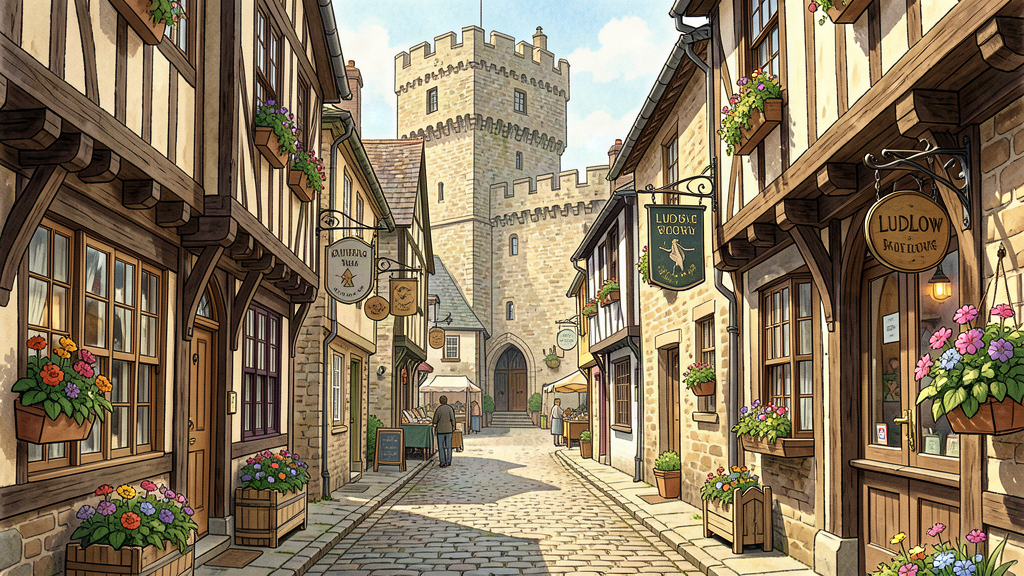
Broad Street drops toward Broad Gate — one of the surviving town gates, still pinching the south approach. Timber, brick, Georgian insertions, independent shopfronts that have not all become chains. Bodenhams and the other long-running names sit in that grain. I walk Broad Street once without shopping, once with a bag, and leave it there.
The Bull Ring and Corve Street pull into denser commercial fabric — The Feathers with its carved timber face, lanes that still feel like service routes. Duck into St Laurence if the door is open, then keep the street pattern as the main text. Yards and passages off the main runs are half the pleasure. Getting mildly turned around is part of it.
Stokesay Castle sits a short drive south if fortified manors are your reason for the trip. It earns a half-day. Keep the first full day inside Ludlow: Dinham, Breadwalk, Ludford, Broad Gate, Castle Square, one proper meal. Stokesay works better after the Teme edge has had its turn.
Places to Stay
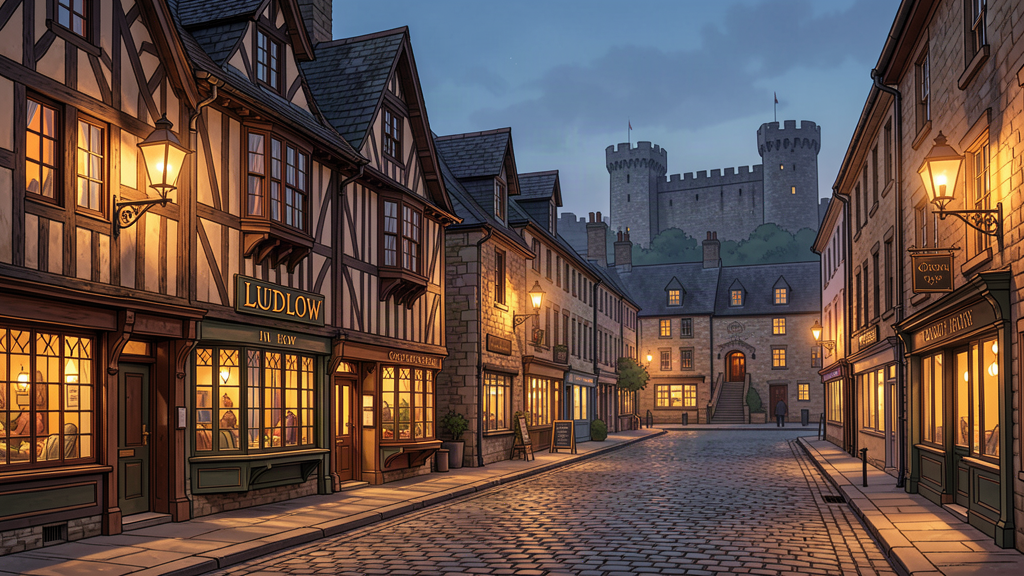
The Cliffe at Dinham — 6 Halton Lane, Ludlow, Shropshire SY8 2JE
Lower-to-mid inn on the Dinham side — rooms facing the castle and the Teme, restaurant downstairs, short walk to the bridge without crossing the whole market core first. Use it when the river edge is your daily walk and you want water noise rather than Bull Ring traffic. Ask about parking; the lane is tighter than a ring-road hotel.
The Feathers Hotel — 24-25 Bull Ring, Ludlow, Shropshire SY8 1AA
Mid-range timber landmark on the Bull Ring — carved façade, rooms above a working hotel restaurant, easy reach of Castle Square, Corve Street, and the shop grain. Handy when you want to wake inside the commercial core and walk to Dinham without moving the car. Book ahead for weekend peaks and festival weeks.
Fishmore Hall Hotel & Boutique Spa — Fishmore Road, Ludlow, Shropshire SY8 3DP
Higher-spend Georgian house on the edge of town — contemporary rooms, spa, dining that leans special-occasion, short drive or determined walk back to the centre. Use it when the stay itself is part of the trip and Castle Square is a daytime destination rather than the view from your window. Peak rates and dinner reservations need planning.
Where to Eat
CSONS at The Green Cafe — Mill on the Green, Linney, Ludlow, Shropshire SY8 1EG
Riverside cafe-restaurant under the castle line, overlooking the weir and Dinham Bridge — breakfast, lunch, cakes, and supper on selected evenings, outdoor tables when the weather allows. This is the meal that matches the walk: river noise, mill green, no climb back into the market first. Mornings and sunny lunches fill fast.
The Fish House — 51 Bull Ring, Ludlow, Shropshire SY8 1AB
Seafood counter and glasses in the commercial core — a lighter town-centre stop between Broad Street and the castle without a long tasting menu. Useful mid-afternoon after the Breadwalk. Check hours; it is not a late-night default.
Mortimers — 17 Corve Street, Ludlow, Shropshire SY8 2PG
Higher-end modern British and French plates on Corve Street — the night you dress the day up after common paths and market stalls. Book peak evenings. Arrive willing to walk from the Bull Ring rather than park on the doorstep.
For a simpler bite, bakery counters and cafes off Castle Square cover coffee and a bag for the Breadwalk. Pub rooms do the ordinary evening plate when Mortimers is full. Hours flex with season; Dinham after dark is a short walk from most core addresses.
Getting around and leaving room
Ludlow sits on the Teme in south Shropshire, with the Marches railway calling at the station below town and the A49 as the long road spine. Once here, Dinham Bridge, the Breadwalk, Ludford Bridge, Broad Gate, Castle Square, Broad Street, the Bull Ring, and Corve Street are a walking town. Cars help for Stokesay, Mortimer Forest, and village hops. They hinder if you chase every timber frontage by moving the vehicle each time.
Most visitors grab a castle ticket, a market photograph, and a cream tea the same afternoon. Stay long enough for Dinham Bridge to feel like a real crossing rather than a postcard backdrop, and for the Breadwalk to read as a river path still doing path work. The bit I would keep runs from the weir under the arches out to Whitcliffe trees, then back through Broad Gate into Castle Square — Marcher stone, a Teme that still frames the bluff, and ordinary Shropshire weather on common grass.
