
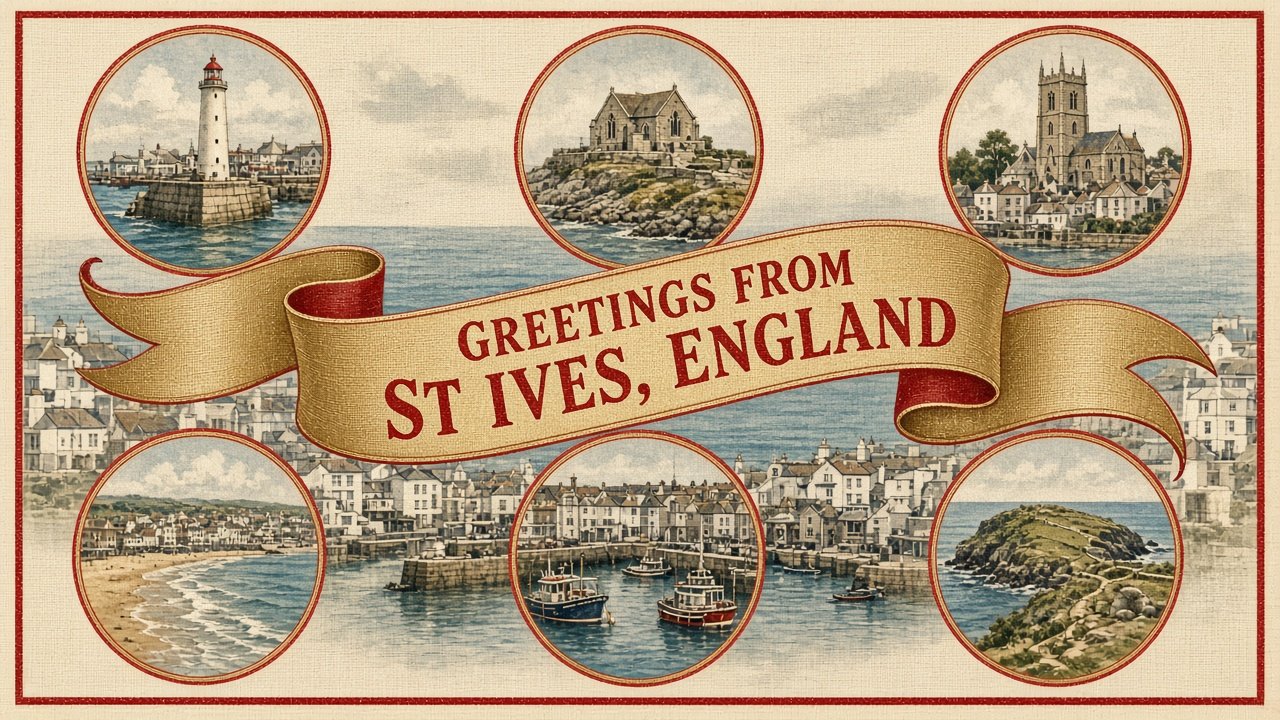
St Leonard's Chapel still keeps the fishermen's gate on Smeaton's Pier in St Ives
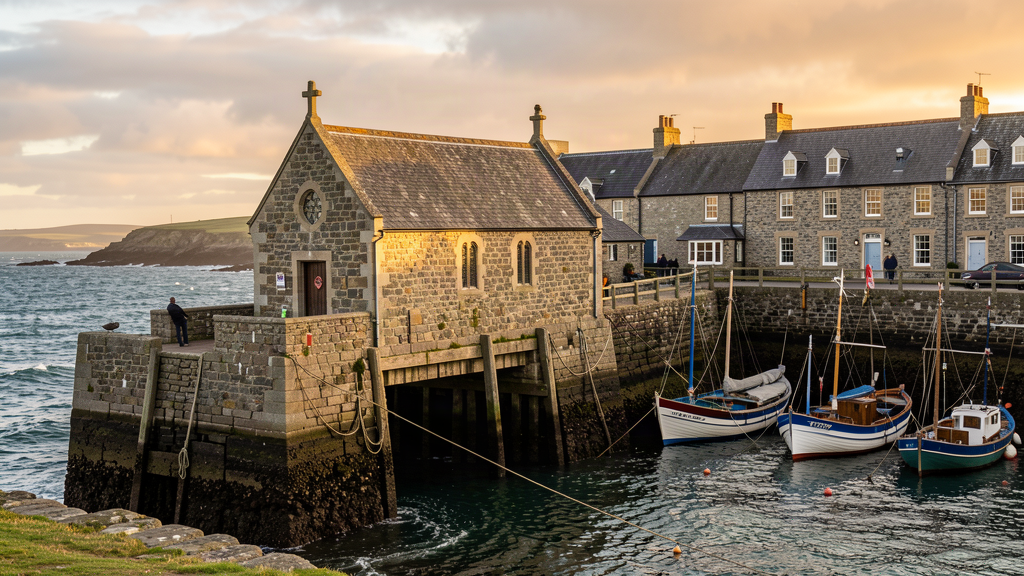
Most first visits to St Ives start the same way: Porthminster sand, a queue for the Tate, a pasty on the Wharf, a photograph of the white lighthouse at the end of the pier. Fair enough. What gets skipped is the working edge where St Leonard’s Chapel still sits at the foot of Smeaton’s Pier, handline boats still land mackerel into the harbour, and Downalong’s net lofts still smell of salt and rope when the galleries open their doors.
Give the pier a slow morning before another gallery ticket. Start at the chapel when the tide leaves room under the arches. Leave the Island headland for later.
St Leonard's, Smeaton's Pier, and the handline fleet
St Ives curls around a granite headland on Cornwall’s north coast, west of Hayle and the Godrevy light. The Island (not quite an island) divides Atlantic-facing Porthmeor from the sheltered harbour and Porthminster toward Carbis Bay. Between them the old fishing town still works a maze of lanes called Downalong, and the pier still carries real gear.
St Leonard’s Chapel is the small stone box at the entrance to Smeaton’s Pier — rubble walls, slate roof, a granite step. More fishermen’s memorial than tourist shrine. Records of repairs go back to 1577; the building is older than the 18th-century pier it greets. Fishermen prayed here before leaving, and a share of the catch once went to the chapel friar on safe return. Restored in 1971 as a museum and memorial to men lost at sea. When it is open, look in. When it is locked, still stand at the door. The harbour starts here, not at the gift-shop end of the Wharf.
Smeaton’s Pier takes its name from John Smeaton, who built the first length between 1767 and 1770. The original pier stopped at the short old lighthouse. In the 1890s the stone was lengthened and the taller white lighthouse went up at the end. At low tide, timber stumps of a failed wooden New Pier still show in the sand.
This is still a working pier. St Ives keeps the largest handline mackerel fleet on Cornwall’s north coast — small one-man boats, pots for crab and lobster stacked on the decking, winches, fish sheds. Most of the catch goes to auction at Newlyn. Walk carefully. Mind the gear. Dogs stop at the old pier line. The Cintra Anchor remembers the Great Gale of 1893, when the lifeboat could not launch and seven of that ship’s crew drowned. Sit on the refurbished benches if you want a view. Then watch a boat come in rather than another phone panorama.
Downalong, Porthmeor Studios, and the Island chapel
From the pier, slip into Downalong — the old fishing quarter of cobbles, whitewashed cottages, fish cellars, and yards that once cured pilchards. Fore Street and the Wharf take the day-trip bulk. Back Road East and Back Road West still feel like back-of-house St Ives: studios, net lofts, laundry on lines, galleries in former workshops. Norway Square holds the St Ives School of Painting.
Porthmeor Studios, facing the Atlantic beach, are where fishing and painting still share a roof. Former net lofts, fish cellars, and salt houses; four cellars are still used by fishermen. Painters work upstairs in the north light that pulled the colony here. Stand on Porthmeor sand early, look up at the studio windows, then walk the short rise past Barnoon Cemetery toward the headland.
The Island is the green promontory with St Nicholas Chapel on top — sailors’ chapel rather than St Leonard’s fishermen’s gate, rebuilt after War Office use and carrying Bernard Leach floor tiles. Climb once for the split view: harbour and Smeaton’s Pier one way, open Porthmeor the other. Go early or in shoulder season. Midday August is a conga line of ice cream.
Tate St Ives sits on Porthmeor. The Barbara Hepworth Museum and Sculpture Garden is a short walk inland on Barnoon Hill — studio and garden left as working space more than trophy hall. Joint tickets exist if you came for the art. Use them. Do not let the gallery hour replace the pier morning. St Ia’s parish church, begun in the 1430s with one of Cornwall’s tallest towers, sits near the old Market House. Pop in if the door is open.
Beaches without the full resort day
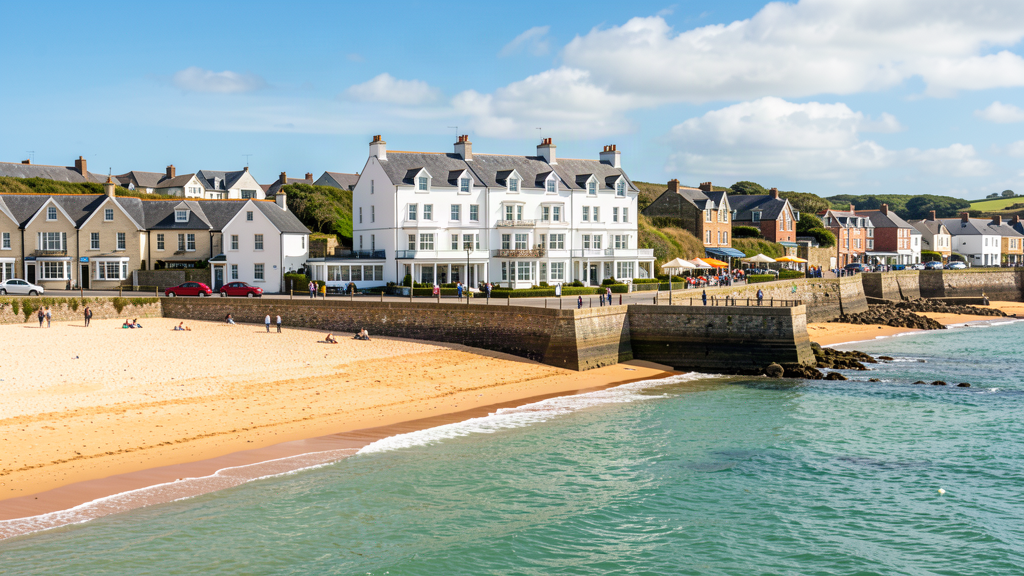
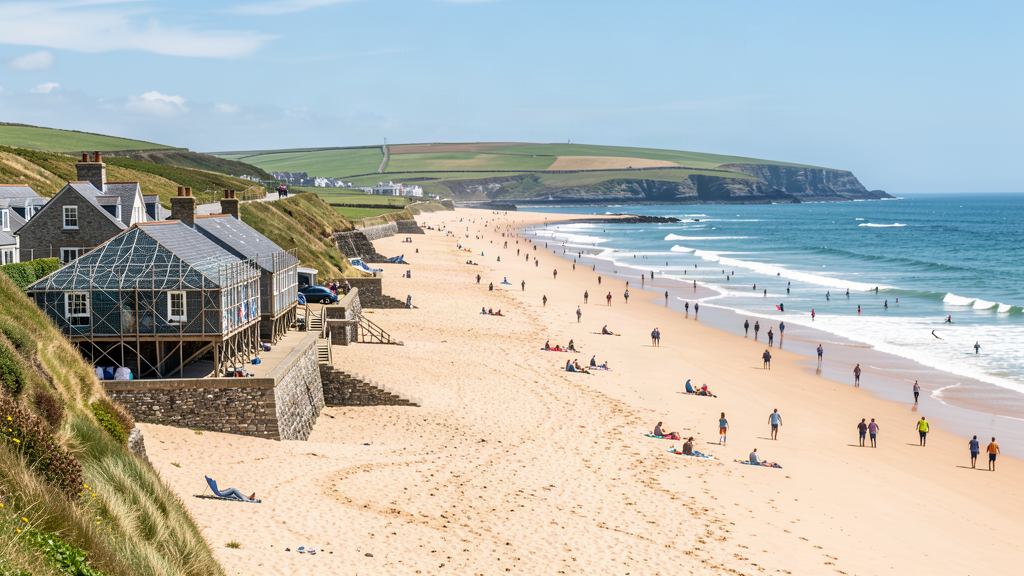
Porthminster, below the station and the terrace hotels, is the sheltered family strand — soft sand, palms above, Godrevy light sometimes visible across the bay. Porthmeor is the surf beach under the Tate. Porthgwidden tucks between the Island and the harbour end, smaller when the main sands are loud. Harbour beach appears and vanishes with the tide.
Swim if the flags and your judgment agree. Watch seals off the pier wall when bait is in the water. The coast path west toward Zennor is proper cliff — only if legs and weather hold. Skip the worst of the pasty-and-fudge strip if you can. What rewards time is ordinary harbour work: wet stone at St Leonard’s door, pots stacked past the dog line, a studio window open above a cellar still used for gear, chips or crab on a bench with the lighthouse in view.
Places to Stay
Queens Hotel — High Street, St Ives, Cornwall TR26 1RR Budget-to-mid pub-with-rooms in the town centre: ten bright bedrooms above a local dining pub, short walk downhill to the Wharf and Smeaton’s Pier. Sleep in the streets rather than on a cliff rate. Book early in school holidays.
Primrose House — Primrose Valley, St Ives, Cornwall TR26 2ED Mid-bracket Edwardian villa turned small hotel above Porthminster: short walk from the sand and station path, quieter than the harbour lanes, local breakfast, coastal rooms without full resort polish. Beach morning and pier afternoon without dragging bags through Downalong every night.
Pedn Olva Hotel — West Porthminster Beach, The Warren, St Ives, Cornwall TR26 2EA Higher-bracket cliff-edge stay on the rock between Porthminster and the harbour approach: sea-view rooms, outdoor pool in season, bar and restaurant facing the bay. Choose it when the room is part of the trip and you want boats and tide from the terrace after a day that started at St Leonard’s.
Where to Eat
Blas Burgerworks — The Warren, St Ives, Cornwall TR26 2EA Small independent burger kitchen on the Warren path between station and harbour: locally sourced patties, tight room, queues that move, no harbour-front theatre. Carry the paper toward Porthminster when you want a solid plate without a two-hour seafood booking.
The Mermaid — Fish Street, St Ives, Cornwall TR26 1LT Family-run seafood house in old Downalong: lobster in season, daily fish, meat for the non-seafood table, one of the older restaurants still working the lanes rather than only the Wharf frontage. Book. Good sit-down when Smeaton’s Pier was the morning.
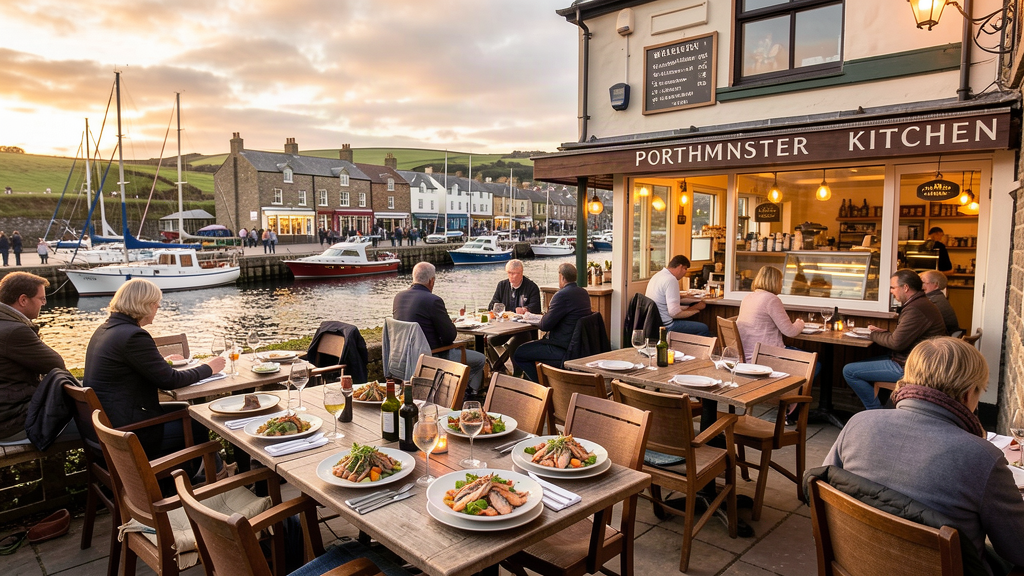
Porthminster Kitchen — Wharf Road, St Ives, Cornwall TR26 1LG Upper-floor harbour restaurant from the Porthminster Beach Café team: small plates and Cornish seafood, big windows over the working basin. Sister beach café sits on Porthminster sand (Porthminster Beach, St Ives TR26 2EB) for toes-in-sand lunch. Book either when you want the pier and fleet in view.
For a quieter bite, the Cornish Deli at 3 Chapel Street (TR26 2LR) covers sandwiches and local produce away from the Wharf crush. Save at least one meal for a harbour bench. Guard the chips from gulls.
Getting around and leaving room
St Ives station sits above Porthminster on the branch from St Erth — bay on one side, arrive and walk down. Park-and-ride and large edge car parks beat hunting spaces in season; once you are in, walk. Buses link Carbis Bay, Hayle, and Penzance.
Useful loop: station → Porthminster → Warren path into the Wharf → St Leonard’s and out Smeaton’s Pier → Downalong and Back Road West → Porthmeor Studios and beach → Hepworth if the garden calls → Tate only if the ticket still matters → Island and St Nicholas → food on Fish Street or Wharf Road. Skip driving the harbour edge in peak months. Unload, park once, use your feet.
The Tate façade, the postcard lighthouse, and the pasty queues will pull every first visit. Give them a slot if you must. Do not let them replace St Leonard’s door when the handline boats are still working the pier. Early on the stone beats midday in the gallery foyer.
St Ives sells the Tate wristband, the harbour selfie, and the fudge bag hard. Take them if you want. Then stand at St Leonard’s until the pier gear is close and the white lighthouse is only a mark at the end. Walk the working length carefully. Eat in Downalong or above the basin. Keep Porthminster for the soft sand and the sleep above it. The chapel still keeps the fishermen’s gate on Smeaton’s Pier — start there.
