
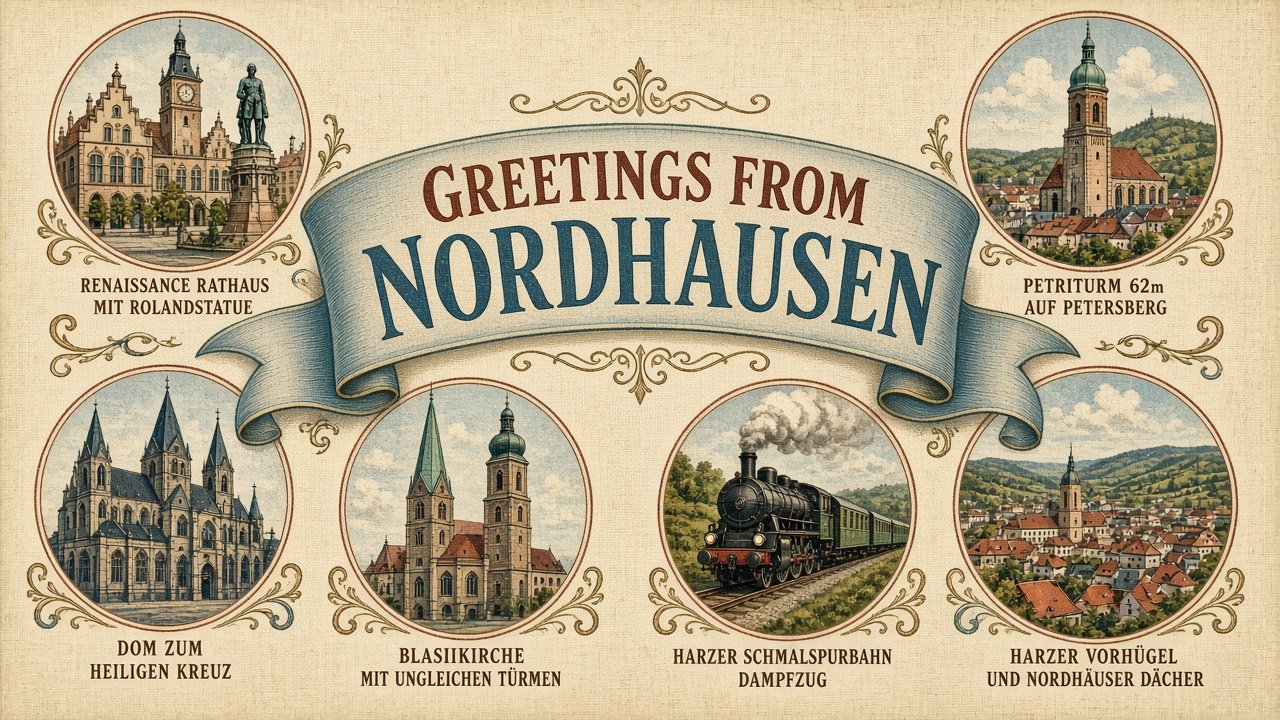
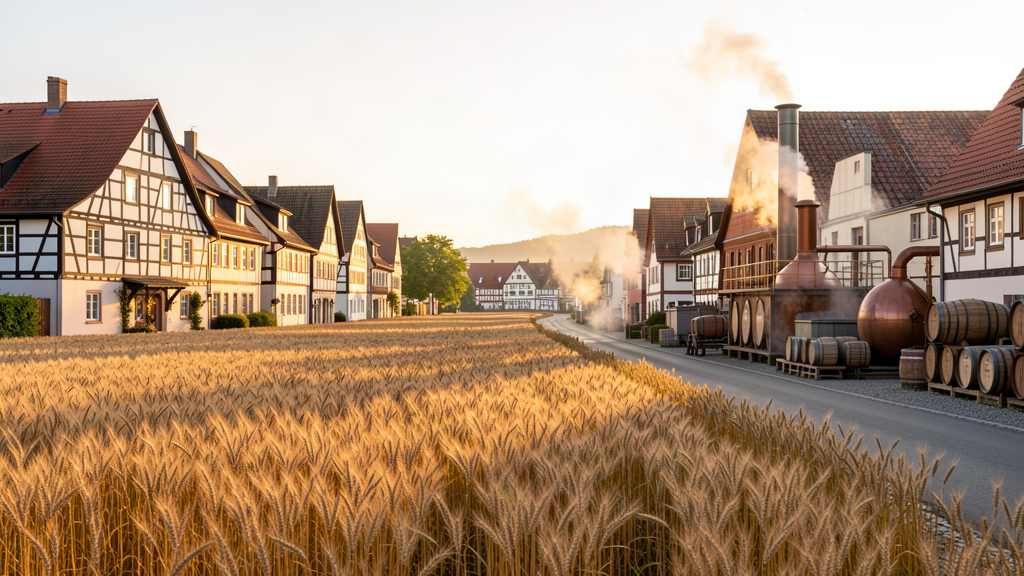
Nordhausen sits where northern Thüringen tips into the Südharz — Goldene Aue farmland on one side, forested rises toward the Brocken on the other. Most people come for steam trains and Harz day trips, then treat the town as a transfer. That skips the point. Grain spirit put this place on maps long before coaches queued for Brocken tickets, and the old core still feels like a working city: market stone, a Dom that never turned into a stage set, copper stills that turn local rye into something you can taste.
Give Nordhausen a night. Morning for the Brennerei and Domstraße, afternoon for Blasii and the Tabakspeicher. Later, a short tram or train hop if you want green air without leaving town behind.
From grain to glass on Grimmelallee
Echter Nordhäuser is not a gift-shop label cooked up for day-trippers. Grain distilling goes back a long way here — records to the early sixteenth century — and the Traditionsbrennerei at Grimmelallee 11 keeps the craft inside a Jugendstil industrial shell that already smells faintly of mash before the tour starts. You walk production rooms at early-twentieth-century scale: the mill floor where rye runs through the hand, fermentation cellars, a still house that can still run a burn, a barrel cellar cool enough that you keep the jacket on.
The motto is plain: vom Korn zum Korn. Field grain to drinking Korn. Guided tours usually end with a tasting for adults — Doppelkorn, a few variants, the clean heat of proper grain spirit rather than cocktail theater. Check current hours; afternoon tours and the shop are the practical window. I like the place because it stays tied to the land. The Goldene Aue grew the rye. Nordhausen burned it. The bottle is local industry with a museum face, not folklore cosplay.
Domstraße, Holy Cross, and the older floor plan
A short walk brings you to Dom Zum Heiligen Kreuz on Domstraße. Queen Mathilde founded a women’s foundation here in 961 on ground that had already been fortress and widow’s seat under Heinrich I. The name comes from cross relics once held, later lost, then partly restored in modern memory — messy history, not one clean story. What matters in stone is clearer than the relic tale: Romanesque lower work, crypt, and cloister fragments from around 1130, then a tall late-Gothic nave that rebuilt ambition without wiping out the older bones.
Founder statues, carved choir stalls, and a space that stayed Catholic through Reformation pressure and wartime damage give the Dom a different feel from the big Protestant halls across Thüringen. April 1945 bombing burned the roof and wrecked the glass; postwar repair brought the structure back without turning it into a glass-box memorial. Visit outside service hours. The crypt is the part I return to — cool, low, older than the tourist route. It is the room that makes the Altstadt feel continuous, gaps and all, instead of a pure rebuild.
Blasiikirchplatz, Roland, and the market day pace
St. Blasii anchors the Protestant skyline on Blasiikirchplatz, a few minutes from the Dom through lanes that mix rebuilt façades with older footprints. Nordhausen took heavy wartime hits. The Altstadt is not a frozen half-timber museum like Quedlinburg, and that is part of why it works. You get a working district, Rathaus presence on the market axis, and the civic Roland that marks free-city pride the way so many Thuringian markets do — local shorthand more than costume.
Sit for coffee when the deliveries thin out. Watch who shops for groceries. Theater Nordhausen and the small cultural circuit pull evening life without anyone selling you a nightlife pitch. If Rolandsfest or a seasonal fair is on, the square fills the way a Kreisstadt square should: loud, temporary, mostly for people who live here.
Tabakspeicher and the other local vice
On Bäckerstraße 20 the Tabakspeicher museum sits in a former tobacco warehouse — another trade that once mattered in this corner of Thüringen. The name promises pipes. The rooms deliver broader city history, industrial memory, and the texture of who lived here when leaf and spirit both moved money. Pair it with the Brennerei if you like museums that smell of work rather than velvet rope. Neither needs a full day. Both beat racing to a single church photo and leaving.
Steam north: Nordhausen-Nord and the Harzquerbahn
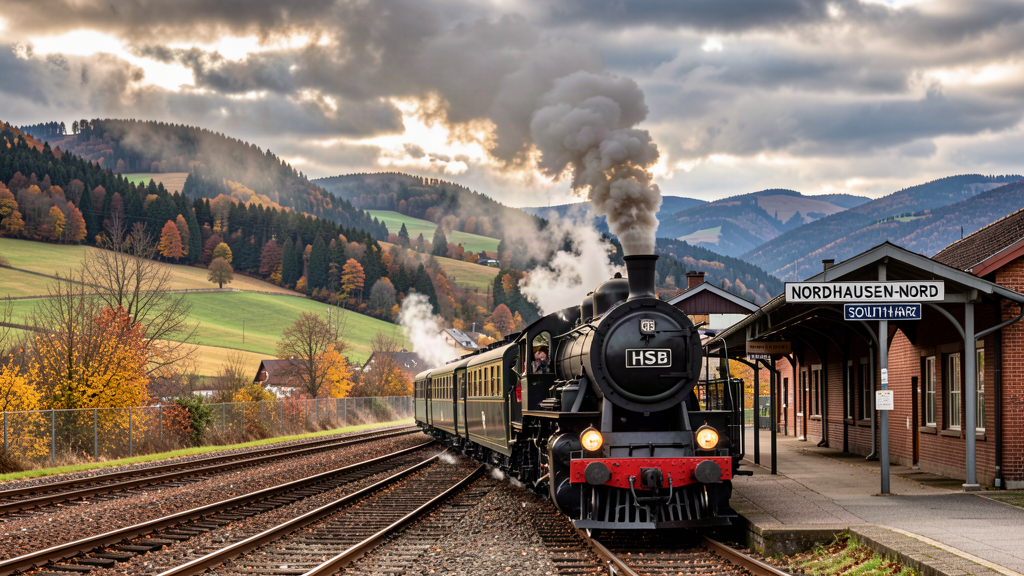
Nordhausen is the southern hinge of the Harzer Schmalspurbahnen. From Nordhausen-Nord, meter-gauge tracks climb the Harzquerbahn toward Ilfeld, Eisfelder Talmühle, and the larger HSB web that eventually reaches Brocken country. Steam days draw the cameras. Hybrid Combino Duo cars also share the lower section with the town’s small Straßenbahn net toward Krimderode and the forest fringe.
You do not have to summit the Brocken. A short ride into the wooded grades is enough to feel why the town faces two ways — Aue grain and Harz timber. Check HSB times before you romanticize a same-day round trip. Steam slots fill, and winter fog changes the mood.
Northwest of town, the Mittelbau-Dora memorial on the Kohnstein slope is a different kind of stop for anyone ready to face forced-labor and camp history tied to the V-weapon works. It is not a casual add-on between coffee and Korn. Go with time and silence, or leave it for a dedicated half-day.
Places to Stay
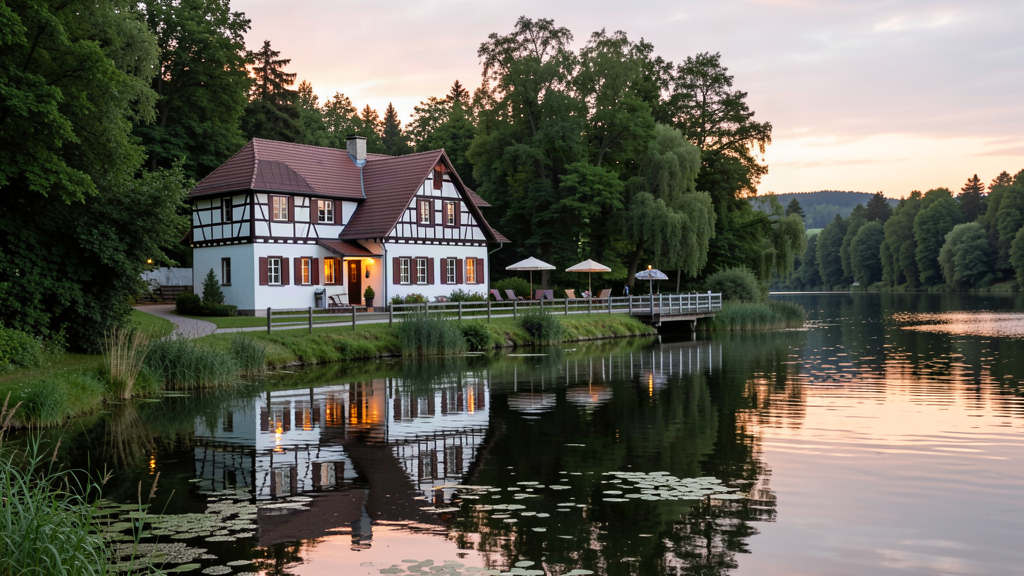
Pension am Sundhäuser See — Uthleber Weg 27, 99734 Nordhausen Simple guesthouse rooms a short hop from Sundhäuser See, quieter than the Bahnhof strip and priced so museum tickets and dinner still fit. Good with a car or a brief ride into the Altstadt. Morning light on the lake beats a courtyard of delivery vans.
Hotel Nordhausen — Freiherr-vom-Stein-Straße 48, 99734 Nordhausen Mid-range base between station energy and the walk toward Dom and Brennerei. Plain comfortable rooms, desk service when you need it, logistics that keep Altstadt errands and the A38 sane. Choose this for a real hotel without design-hotel rates.
Nordhäuser Fürstenhof — Bahnhofstraße 12-13, 99734 Nordhausen 1920s-styled design hotel by the main station — lounge hours and Charlie’s restaurant under the same roof if you want dinner without a second map pin. Stay here when the train is your hinge and you want a composed room after stone and steam. Garage parking is paid; Markt and Domstraße are an easy walk.
Where to Eat
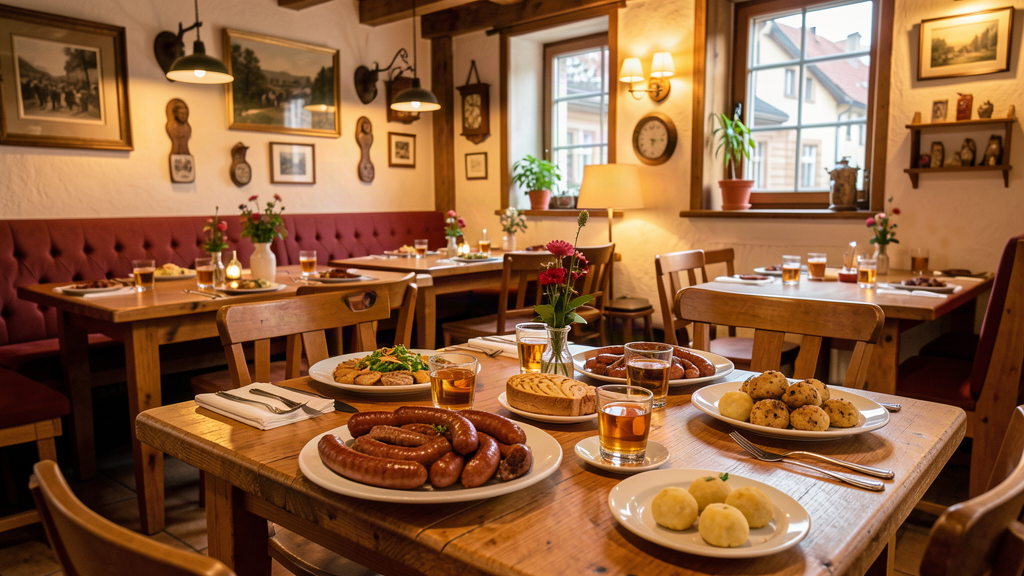
Restaurant Schoko — Gumpertstraße 6, 99734 Nordhausen Altstadt room with a playful name and a kitchen that runs from regional plates to more composed evenings — chocolate as a theme without turning every course into dessert. Useful after Domstraße when you want a proper sit-down in the core rather than a Bahnhof default.
Charlie’s — Bahnhofstraße 13, 99734 Nordhausen Hotel restaurant at the Fürstenhof address: cleaner service rhythms, a full dinner near the trains for travelers and locals alike. Book on busy weekends. Walk the evening Markt afterward if you still have legs.
Café Jacobsohn — An der Salza 8, 99734 Nordhausen Konditorei-café for coffee, cake, and the mid-morning reset between Brennerei and Blasii. Not a tasting-menu destination — bakery-café pace that matches how Nordhausen eats between errands. Take something sticky for the platform if HSB steam is later.
Getting around and leaving room
Walk the triangle of Dom, Blasii/Markt, and Grimmelallee first. Tabakspeicher slots in without drama. Straßenbahn covers longer hops; Deutsche Bahn links Erfurt, Halle, and the Harz fringe, while HSB owns the narrow-gauge northbound. Drivers use the A38 and park once. Tourist information near the core hands out Brennerei tour times and memorial hours without ceremony.
Do not reduce Nordhausen to a Brocken staging post. Sit in the Dom when the nave is empty. Let rye dust and copper stills set the day’s scent on Grimmelallee. Ride one short Harzquerbahn grade if the timetable smiles. Then eat in the Altstadt like the market still matters. Rye becomes Doppelkorn here because the fields and the stills never quite stopped, and the Kreisstadt kept working habits when prettier neighbors took the postcards.
