
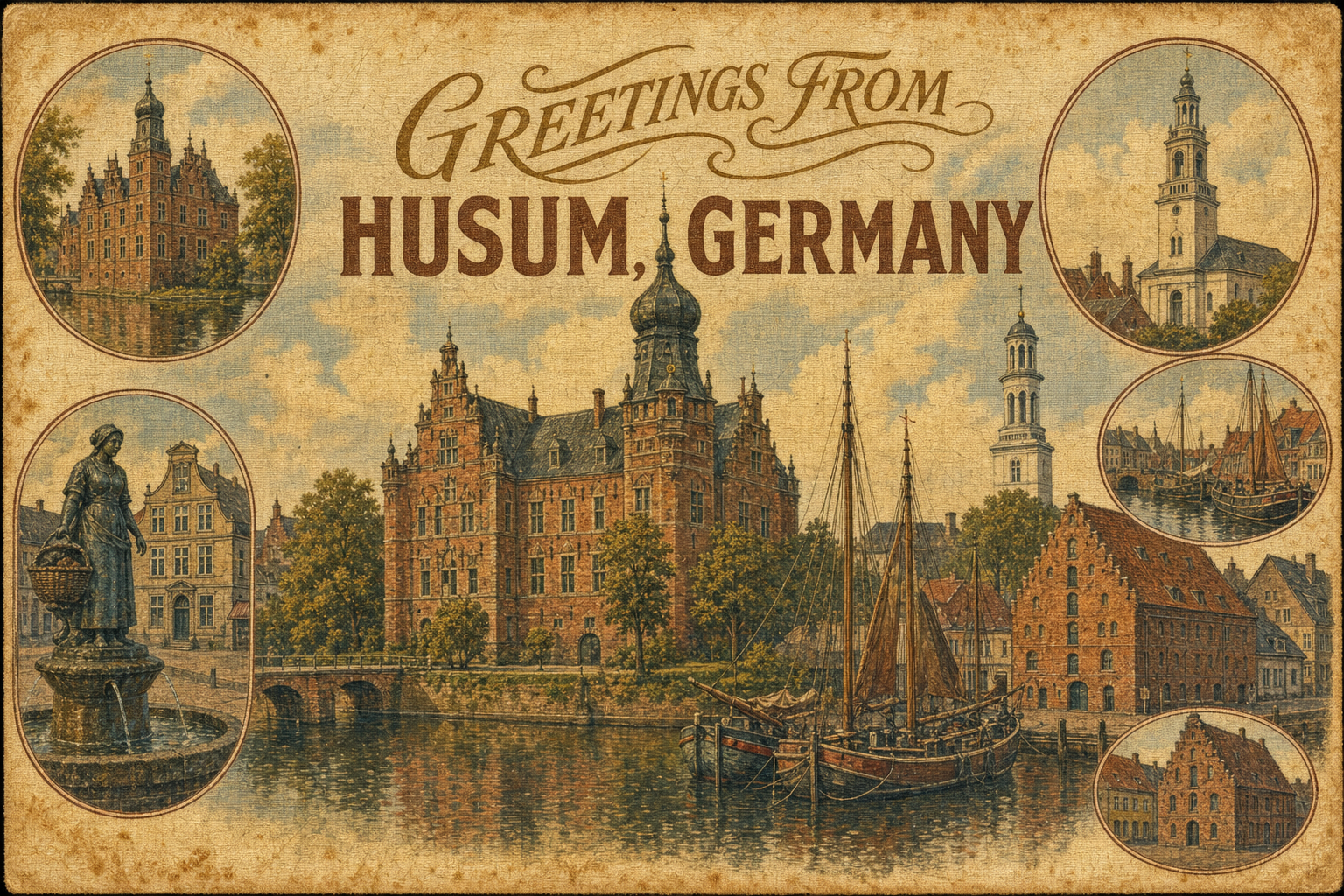
Husum does not pretend to be a resort strip. It sits on the North Frisian coast of Schleswig-Holstein where the sea comes in sideways, through locks and channels, and mud goes silver when the water drops. Theodor Storm called his birthplace the grey town by the sea. The phrase still fits on a flat Tuesday when cloud sits low and the Binnenhafen smells of diesel, salt, and crab. You come for tide, cutter masts, and a town that still faces west toward the Watt rather than inland toward the motorway.
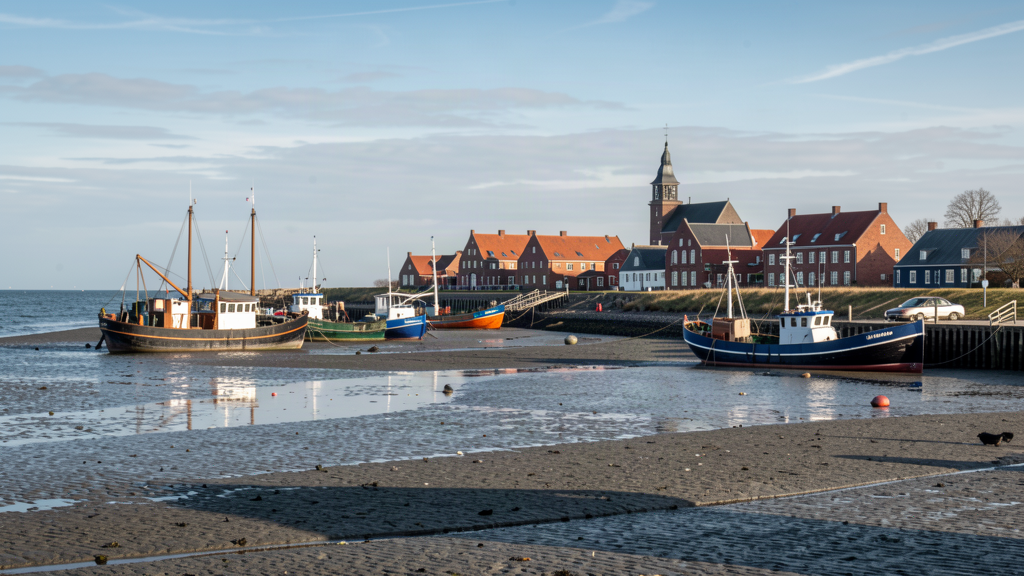
The centre is compact. Markt to Schiffbrücke is a short walk. Wasserreihe still holds Storm’s house and garden. Beyond the quay, the Außenhafen opens toward the North Sea and the Wadden Sea flats. Stay for a full tide cycle if you can: high water against the walls, then the slow reveal of mud and gulls. Let the rest of the day follow that rhythm.
Binnenhafen, Schiffbrücke, and the turn of the water
Start at the inner harbour. The Binnenhafen is where Husum actually gathers: boats, café fronts, the low brick of a working North Sea town. Schiffbrücke runs along the water with tables that fill when the weather holds and empty the moment wind comes off the flats. Morning is practical. Deliveries, people cutting through toward market, gulls already loud. Late afternoon the light softens and the water goes pewter.
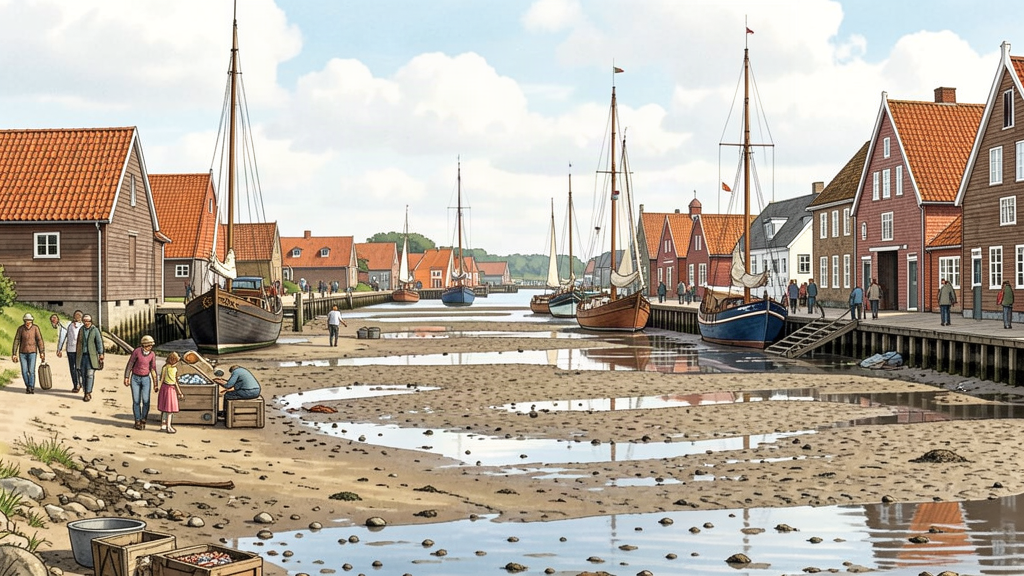
Watch a tide change once without treating it as a show. When the basin drops, the harbour becomes a different place: wet banks, reflected masts, boats sitting lower against the quay. Locals barely pause. Visitors stop and photograph. Husum’s best hours track water height more than opening times.
Walk the short circuit from harbour up toward the market and back down another street. The Schifffahrtsmuseum Nordfriesland sits near the water. Small, dense, useful if rain arrives or if you want the coast in models and wreck stories rather than only in wind. Pair it with outdoor time. Museums here work best as weather insurance and context, not the whole day.
If energy remains, keep going toward the Außenhafen: cutter boats, harbour industry, fewer souvenir angles. Dinner out there still carries salt in the air.
Wasserreihe, Storm’s house, and the grey-town walk
Theodor Storm is not a side note in Husum. The town still runs on his weather. Wasserreihe 31 holds the Storm-Haus, rooms where he lived and worked in later years, with a garden he shaped and a research wing at Wasserreihe 35. Go for quiet interiors and a sense of how the coast got into the sentences: the Schimmelreiter room, the study scale, the garden path between museum and archive.
You do not need nineteenth-century novellas to benefit from the walk. Wasserreihe is a lived-in street, not a reconstructed set. Continue through older lanes toward Marienkirche and the market. The church is plain in the North Sea way: light, proportion, less gilt than southern Germany. The Markt is the other hinge. Stalls on market days, everyday shopping otherwise, the Tine fountain as a meeting point rather than a monument you circle with a guidebook raised.
Storm’s grey-town line can sound like marketing until you stand under a genuine grey sky. Then it just reads true. Brick, water, low horizon, wind that does not care about your itinerary. Harbour, lanes, literature rooms, and weather still fit the same way they have for a long time.
Nissenhaus, dikes, and the Watt beyond town
Herzog-Adolf-Straße 25 holds the Nordfriesland Museum Nissenhaus: coast, Frisian culture, storm surges, dike building. It explains why the land looks the way it does. Polder logic, flood memory, the long negotiation with a sea that does not stay put. Go on a wet morning. Leave with better eyes for the flat country outside town.
Husum is also a gate to the Schleswig-Holstein Wadden Sea National Park. You do not need a full expedition. A short trip toward the outer coast or a guided Watt walk on a safe tide changes the scale of the harbour day. Mudflats at low water are working ground for birds and for anyone walking with a guide who knows the timing. Do not walk far onto the Watt alone. The tide comes back faster than most people expect.
Closer in, Schloss vor Husum and its park give green relief without leaving town. The castle is more civic landmark than fairy-tale pile, useful when the harbour goes loud on weekends. Use it as a reset between museum density and another loop back to Schiffbrücke.
Places to Stay
Sleep inside the walkable core if you can. Husum rewards evening returns to the harbour more than long drives from the edge.
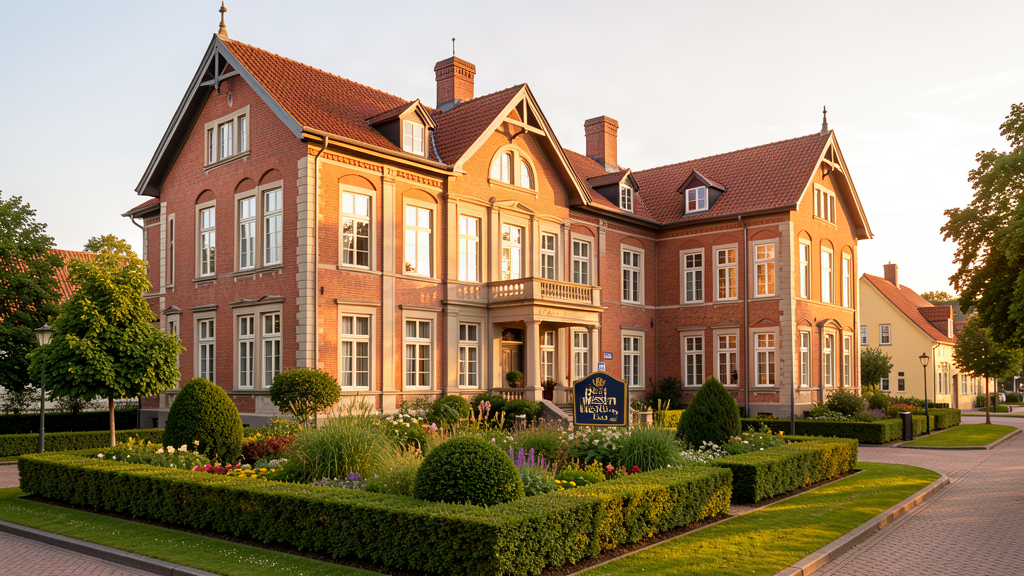
Best Western Plus Theodor Storm Hotel, Neustadt 60-68, 25813 Husum, is the practical mid-town base. Jugendstil bones and newer floors, short walk to harbour and lanes, brewery energy after the wind. Good when the day is outside and you need a solid bed and a fast morning exit toward Schiffbrücke.
Boutiquehotel Myn Utspann, Schleswiger Chaussee 65, 25813 Husum, sits a little off centre with parking ease and a calmer night: bike minutes into town rather than harbour noise under the window. Choose it for boutique quiet, house restaurant 1877, and a short ride instead of pure quay-side bustle.
Genießer Hotel Altes Gymnasium, Süderstraße 2-10, 25813 Husum, is the stay when you want the old school building turned into serious comfort. Spa floors, careful rooms, walking distance to market and Marienkirche. More brick memory than fisherman’s-inn fantasy. Pair it with harbour walks so the polish does not become an indoor holiday.
Restaurants / Food
Eat with the harbour in mind. Crab rolls, fish plates, and coffee with masts in view tell you more about Husum than a generic inland schnitzel strip.
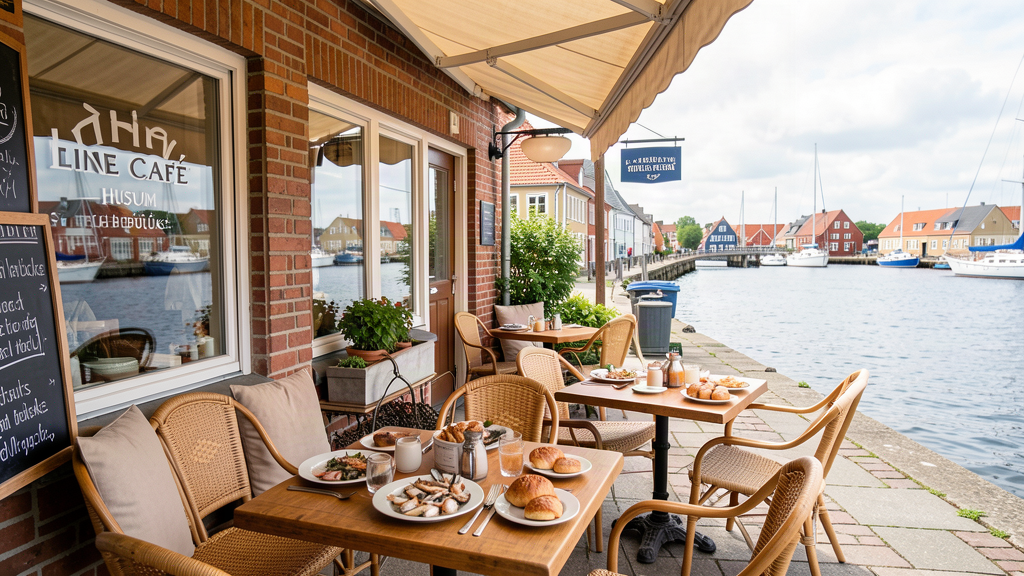
Tine Café, Schiffbrücke 17-19, 25813 Husum, covers the light end: breakfast and cake steps from the Binnenhafen, a pause between tide-watching and museum hours. Go early if you want a seat when the quay wakes up.
Tante Jenny, Schiffbrücke 12, 25813 Husum, is the long-running harbour table. Two floors, fish and solid North German plates, a room that has outlasted several fashion cycles. Book or arrive with patience on fair evenings. Land here after a walking day when you want tradition without ceremony.
Dragseth’s Gasthof, Zingel 11, 25813 Husum, claims the oldest inn story in town (roots to 1584) and still sits near the water with courtyard seating when weather allows. Modern North Frisian cooking with history in the walls. Reserve for dinner. A good counterweight after Storm’s rooms if you want a meal that is not pure tourist-harbour noise.
A clean arc: café on Schiffbrücke, museum or Watt midday, Dragseth’s or Tante Jenny at night. Krabbenbrötchen from a harbour stand still count as legitimate lunch if the wind is up between tides.
Getting around without fuss
Husum Bahnhof links into the Schleswig-Holstein rail net. Hamburg is a realistic longer hop; west-coast towns and island connections fan out by season and service. The centre is foot scale once you leave the station. Harbour, market, Storm-Haus, Nissenhaus all sit inside an easy walking day.
Bikes help for the Schlosspark edge and outer harbour. Local buses cover what feet will not. A car helps if you stitch Husum with Eiderstedt villages, Friedrichstadt’s canals, or a Watt-guide meeting point, but it is unnecessary for a pure town-and-harbour weekend.
Shoulder months, May–June and September, are kind: long light, workable quay tables, fewer peak crowds. High summer brings Hafentage energy and fuller terraces; book beds early. Winter is grey water, museum hours, steamed café glass, a harbour that still works when tourists thin out. Check tide tables the way you would a train schedule.
Why linger
If you only stop for a crab roll and a photo of masts, you will leave with almost nothing. Give the water the hours instead. Morning coffee on Schiffbrücke while the basin is still high. An hour in the Storm-Haus garden when the lanes are quiet. Nissenhaus if rain opens the sky. A guided step onto the Watt when tide and guide line up. Late light back at the Binnenhafen once the water has dropped and the mud banks show.
Stay overnight if you can. A same-day dash mostly gets the quay and a hurried museum stamp. The longer stay gets literature rooms on Wasserreihe, cutter smell on the wind, mudflats that change the horizon twice a day. Stand once at low tide without rushing. Husum stops reading like a grey name on the way to Sylt and starts looking like what Storm already knew: a small coastal town facing the sea straight on, asking you to match your day to the water.
