
Most visitors pin Köln on a Dom-and-Rhine loop: cathedral steps, love locks on the Hohenzollernbrücke, a chocolate museum selfie, one tourist Brauhaus near the Altstadt. Fine if Gothic stone is the whole trip. Thin if you want the city that actually lives west of the spires — Venloer mornings, Heliosstraße walls that never freeze, Friesenstraße Kölsch in a 0.2-liter Stange, and veedels that ask where you sleep before they ask what you saw.
I start when Heliosstraße is still damp. Walk the murals before the station rush fills Venloer Straße, drift east through Belgisches Viertel coffee and side-street paste-ups, then let Friesenstraße pour the first honest Kölsch of the day. Paint first, Dom second. Coaches on the riverfront can wait.
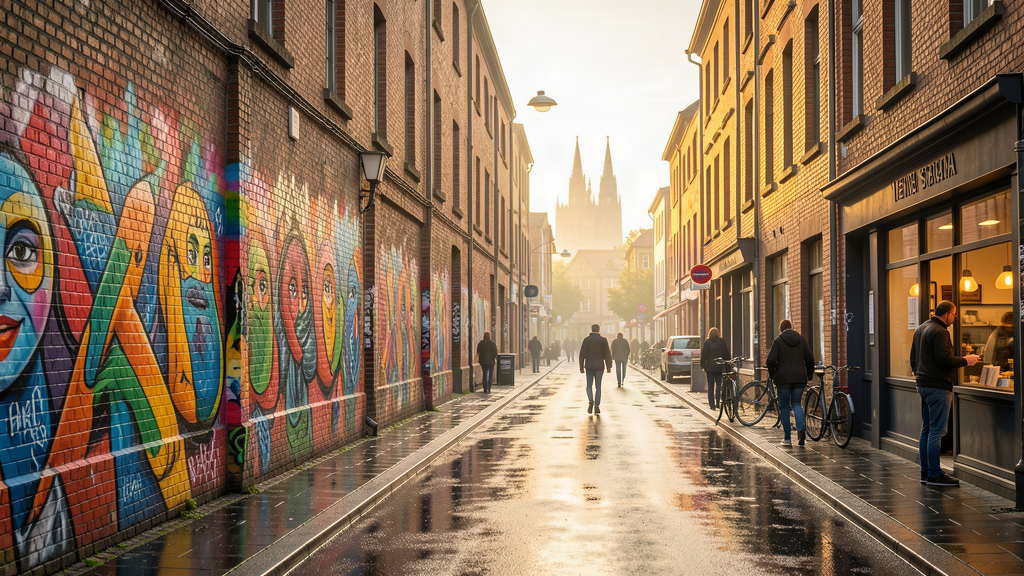
Heliosstraße, Venloer light, and walls that refuse to stay finished
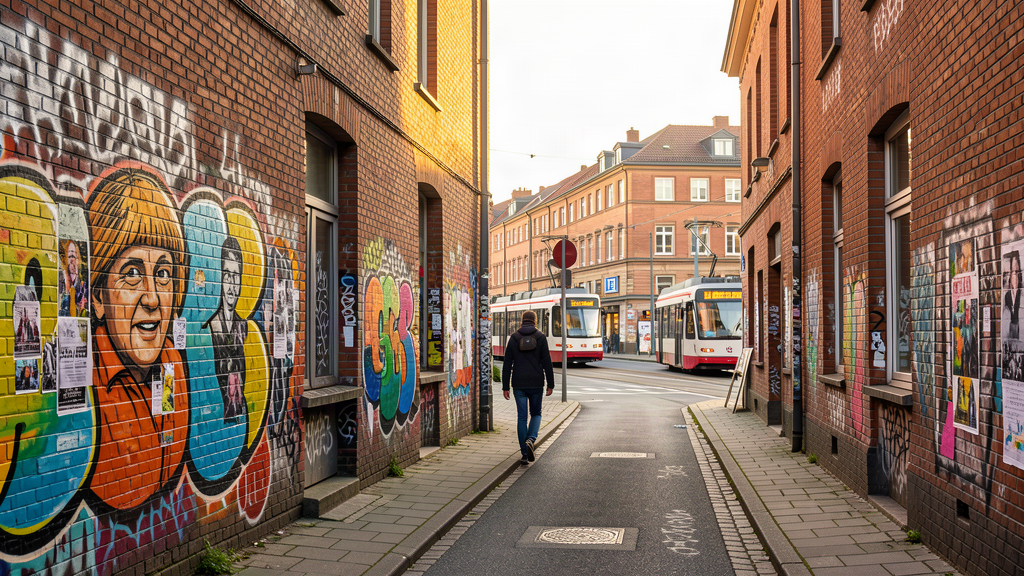
Köln sits on the Rhine in Nordrhein-Westfalen, a working river city with Roman bones under postwar rebuild and a cathedral that took six centuries to finish. The Dom still owns the skyline. West of the rings the texture is simpler: old industrial fabric turned neighborhood, street art that changes between visits, and Venloer Straße feeding Ehrenfeld with bakeries, bars, and ordinary errands instead of ticket queues.
Heliosstraße is the lane I return to first. Drop at Köln-Ehrenfeld station or Venloer Str./Gürtel on the Stadtbahn and you are already inside the open gallery. The Street Art Wall here is not a curated museum hour. It is exterior brick and former factory skin where painters keep rewriting the same short stretch. Some panels last months; others get covered in a weekend. Stand long enough to read layers under layers, then follow whichever side street looks more interesting — Körnerstraße, Lichtstraße, the rail-adjacent surfaces north of the station. Wet paint after rain. Delivery bikes sharing the air with photographers. A tower silhouette from the old Helios works holding the skyline when the murals go quiet.
Venloer Straße is the neighborhood’s main breath. Walk it as a morning spine: coffee windows opening, international groceries, Büdchen corners, people buying bread. The stretch between the Gürtel and the inner rings shows Ehrenfeld’s mixed grain better than any brochure. Side alleys hold quieter murals and smaller cafés. This is still a residential district with a creative edge, not a street-art theme park. Treat it that way.
From Ehrenfeld it is an easy walk or short tram hop east into Belgisches Viertel — the Belgian Quarter around Brüsseler Platz, Aachener Straße, and the streets named for Belgian cities. The scale tightens: boutiques, wine bars, paste-ups on doorframes, tables on the pavement when weather holds. Brüsseler Platz is where I sit once without photographing every corner. The quarter connects the creative west to the Rings and, eventually, the Dom. The pleasure is staying long enough that Friesenplatz feels like a next chapter, not a stamp.
Friesenstraße Kölsch, Südstadt markets, and a Dom that can wait
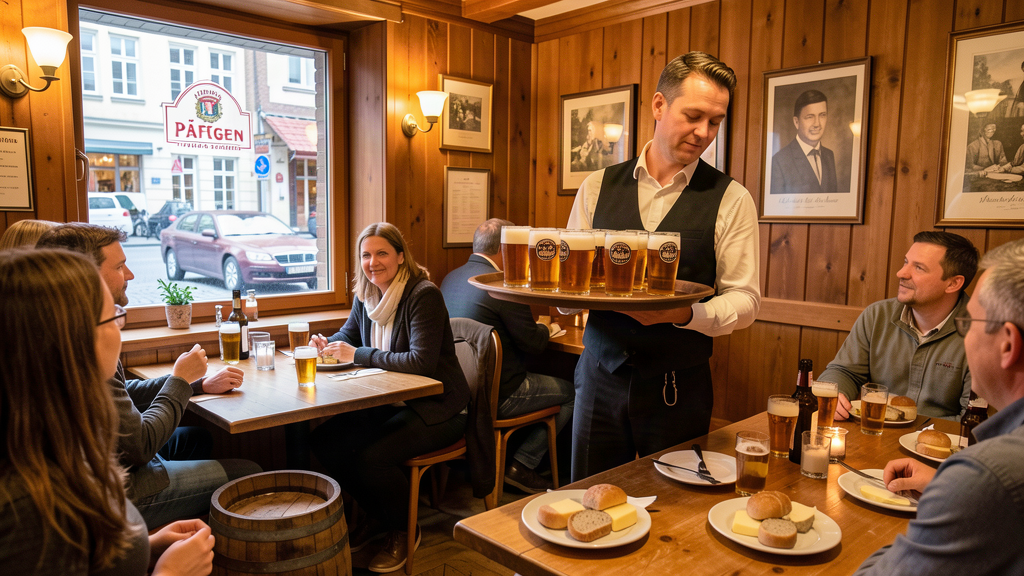
Päffgen on Friesenstraße is the Kölsch contact I trust when Altstadt brauhaus crowds thicken. Friesenstraße 64–66, just off Friesenplatz, still pours the house brew from the barrel in the traditional small Stange; the Köbes keeps circulating until you cover the coaster. House-brewed Köln beer with Rhineland plates on the side — not a museum show. Come hungry for simple things: Halve Hahn (rye roll, cheese, mustard — not half a chicken), Himmel un Ääd when it is on, a Happen between glasses. Reservations are phone-only and limited; walk-ins work better early or with patience. The room is loud in the good way. Let the Dom wait until after your second Stange.
If the day still has legs, swing south to Südstadt. Chlodwigplatz sits under the Severinstorburg, one of the old city-gate towers, and hosts a weekly market that feels lived-in rather than staged. Severinsstraße keeps independent shops and evening tables without Altstadt coach density. Volksgarten is the green pause after brick and paint. Südstadt is where families, students, and long-time locals share the same square. Useful when Ehrenfeld’s edge and the Belgian Quarter’s polish both need a quieter counterweight.
The Dom remains worth the look. Climb the tower if legs and ticket line agree; otherwise stand on the Domplatte once in real light, then leave before the square owns the afternoon. Hohenzollernbrücke locks and Rhine promenade photos can fill a sunset if you still want river air. Kolumba and the Romanesque church ring are stronger second-day options than another chocolate-museum loop. Helios to Venloer to Friesen beats another checklist stamp from Hauptbahnhof.
How Köln moves, and a clean day arc
Hauptbahnhof dumps you under the Dom — useful, and also the easiest way to never leave tourist gravity. KVB Stadtbahn and S-Bahn lines stitch the veedels; Venloer Str./Gürtel and Köln-Ehrenfeld put you in mural country in ten to fifteen minutes from the center. Friesenplatz hinges Belgian Quarter, Rings, and the walk toward Ehrenfeld. Day tickets beat single fares if you hop districts. Inside each veedel, feet beat cars. Confirm brauhaus patterns, Chlodwigplatz market days, and kitchen hours before you invent a perfect evening onto locked doors. Two nights beat a single Dom sprint between ICE connections.
If I had two nights: early Heliosstraße while paint is still damp, Venloer coffee and a slow mural loop, Belgisches Viertel tables on Brüsseler Platz, unhurried lunch, afternoon Friesenstraße Kölsch or a Südstadt drift past Severinstorburg, Dom light only when the day already has neighborhood weight, dinner toward Aachener Straße or the Zülpicher edge, sleep close enough for another Ehrenfeld dawn. Summer fills outdoor seats. Autumn clears mural walks. Karneval rewrites the city — book early.
Day-trip gravity pulls toward Bonn, Brühl’s palaces, or a Rhine boat. Hold at least one full day in Köln proper west of the Dom. Paint to coffee to Kölsch beats another spire photo from the station forecourt.
Places to Stay
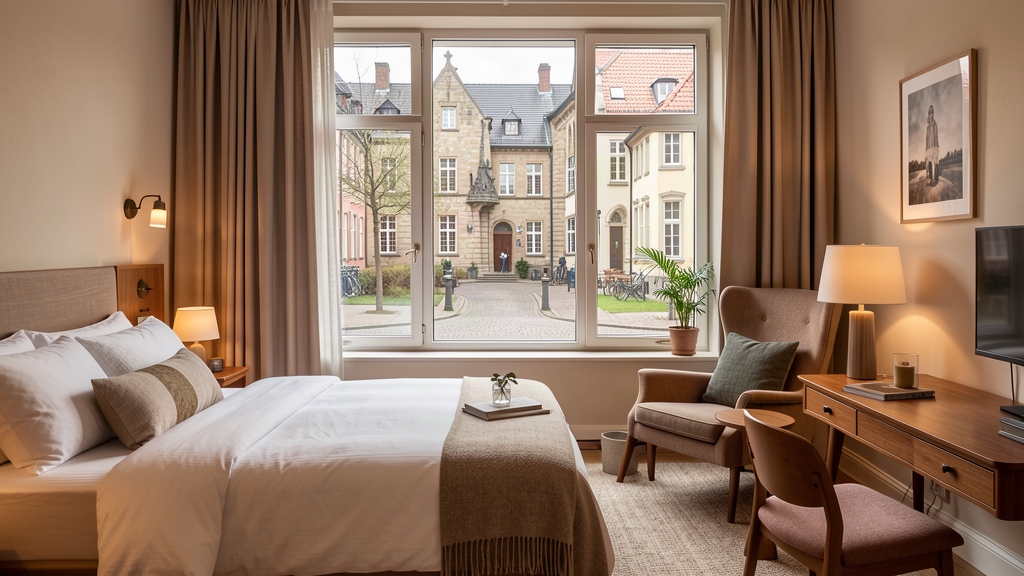
Motel One Köln-Neumarkt (value, clean base near the Rings)
Cäcilienstraße 32, 50667 Köln
Practical design-hotel rooms a short walk from Neumarkt trams and an easy hop toward Belgisches Viertel or the Dom — compact, reliable Wi-Fi, better rates than cathedral-front hotels when you still want central rails. Book when the trip is neighborhood walking first and luxury second. Ask for a quieter side if street noise bothers you, and use the KVB instead of paying for core parking.
Maison Marsil – Boutique Hotel Köln (mid, Hahnenviertel character)
Marsilstein 25–27, 50676 Köln
Family-run rooms in a late-nineteenth-century house between the Belgian Quarter edge and the old-town approach — individually dressed spaces, courtyard pause when weather allows, breakfast worth adding. Choose it for a human-scale base a walk from Brüsseler Platz and Friesenplatz without full design-hotel prices. The Dom is reachable on foot; Ehrenfeld is a short tram when mural morning comes first.
THE QVEST hideaway (upper, design stay in former monastery fabric)
Gereonskloster 12, 50670 Köln
Design-hotel rooms inside historic monastery walls near St. Gereon — mid-century pieces, gallery calm, a quieter pocket north of the loudest Altstadt lanes. Pick it when the trip is short and you want the stay itself to feel considered after Helios paint and Friesenstraße noise. Rates climb with trade-fair weeks and holiday markets; book early.
Restaurants and food
Frittenwerk Köln Ehrenstraße (value, fries without ceremony)
Ehrenstraße 94, 50672 Köln
Belgian-style fry shop on the edge of the Belgian Quarter — loaded cones, quick counters, the kind of walking lunch that fits between mural loops and Brüsseler Platz coffee. Good when you want something hot and casual without a reservation mood. Peak hours queue; off-peak is kinder.
Brauhaus Päffgen (mid, last house brewery pour)
Friesenstraße 64–66, 50670 Köln
House-brewed Kölsch from the barrel, Köbes service, Rhineland plates in a room that still feels local west of the Dom tourist belt. Come for the Stange rhythm and a simple meal after Ehrenfeld walking. Phone reservations only after midday when they take them; otherwise arrive early, share tables if asked, and cover your coaster when done. Busy weekends are part of the deal.
Bei Oma Kleinmann (upper-casual, schnitzel institution in Kwartier Latäng)
Zülpicher Straße 9, 50674 Köln
Long-running Gaststätte famous for oversized schnitzel, photo-lined walls, and kölsche corner-pub warmth that still seats strangers together. Useful for a proper sit-down after Südstadt or Zülpicher evening energy. Reserve or arrive at opening; walk-ins wait. Portion sizes are the point — plan accordingly.
Regional food stays honest: bakery rolls for a Heliosstraße bench, coffee off Venloer before the murals warm up, a Halve Hahn with your Kölsch, market fruit on Chlodwigplatz when the week lines up. Dom-plate ice cream and coach-menu schnitzel can wait until you have already watched paint dry on Heliosstraße once in real morning light. Sit long enough to feel Rhine-city damp after industrial brick. Köln works better as mural lane to Belgian tables to Friesen Stange than as another half-day cathedral stamp from the Hauptbahnhof.
